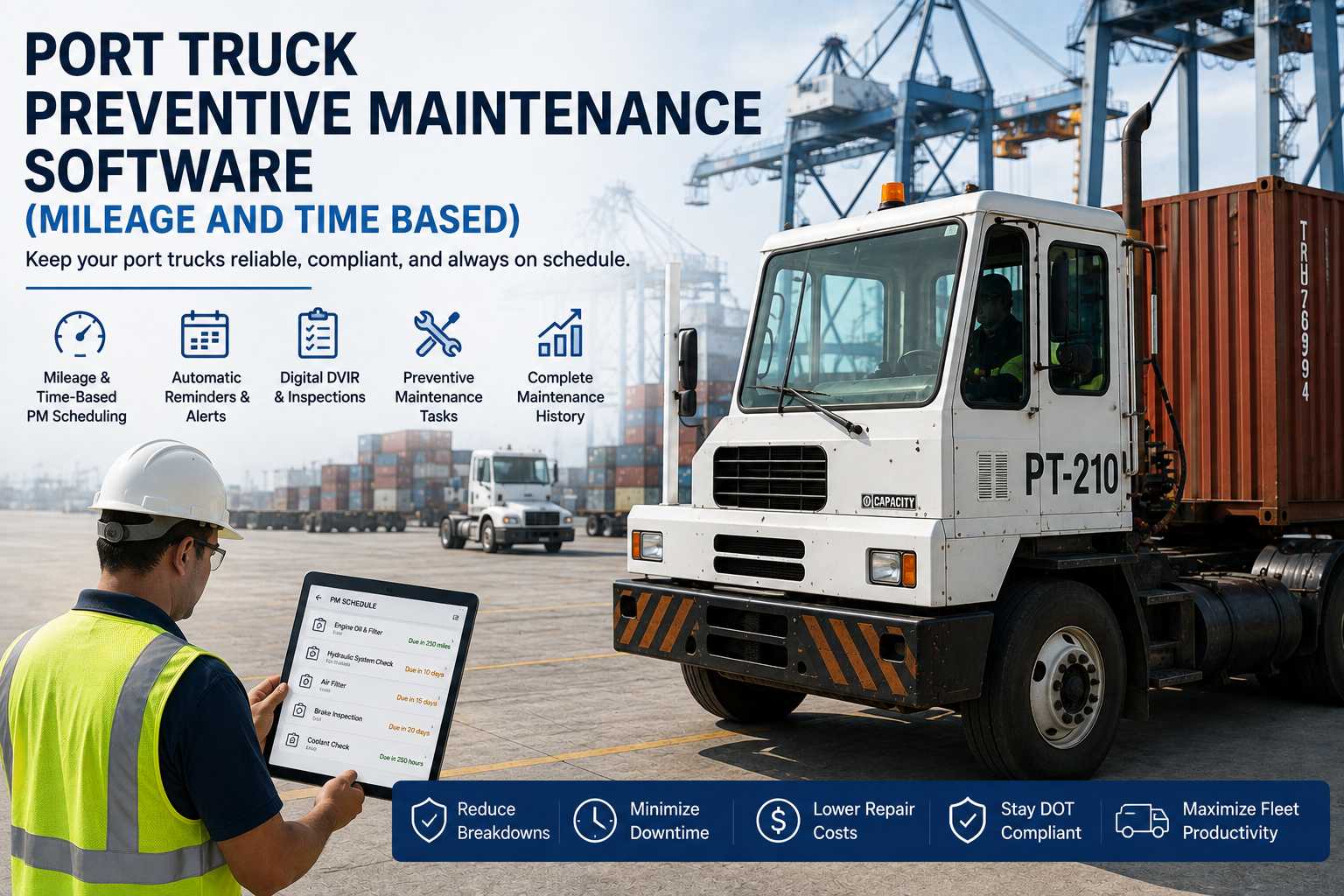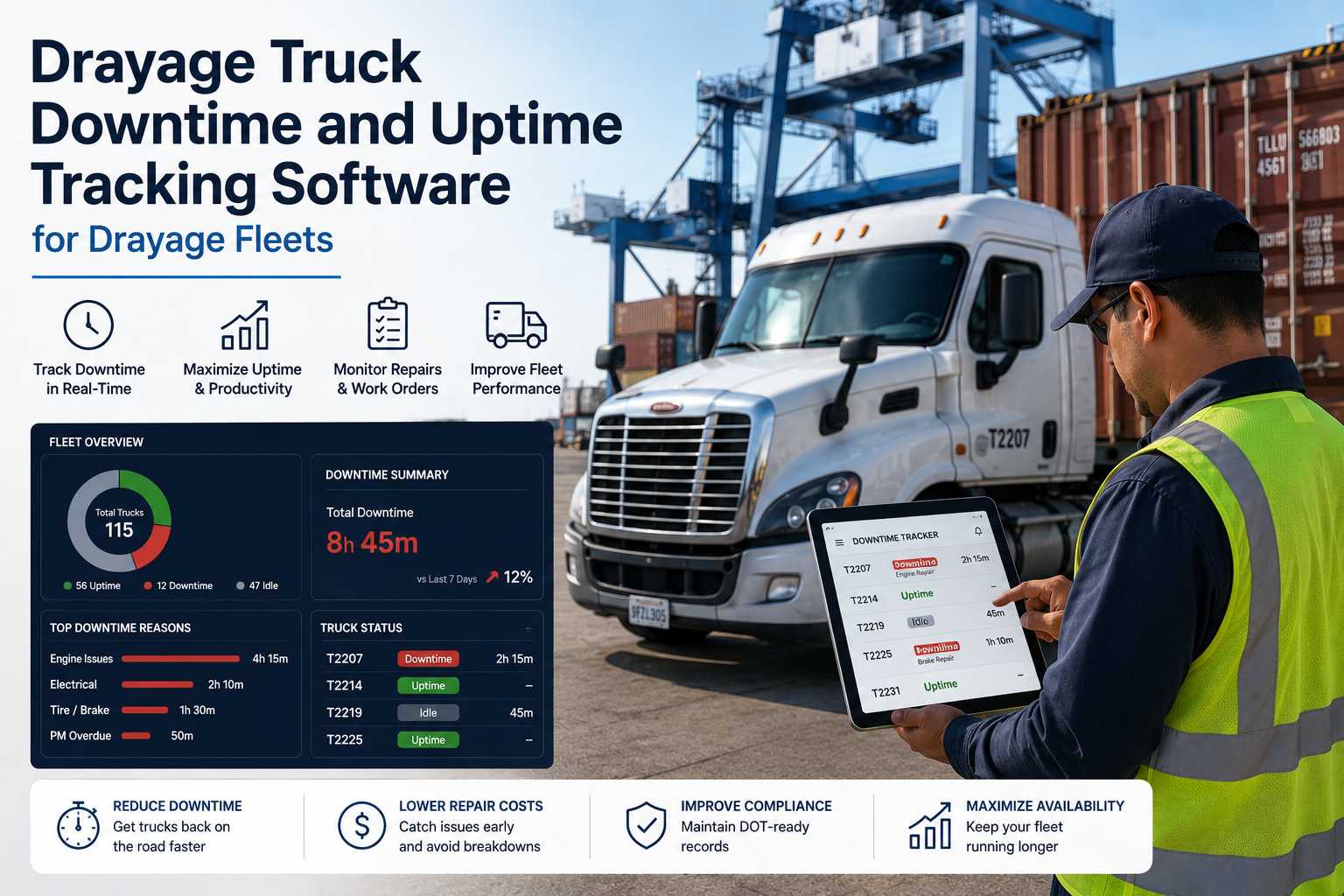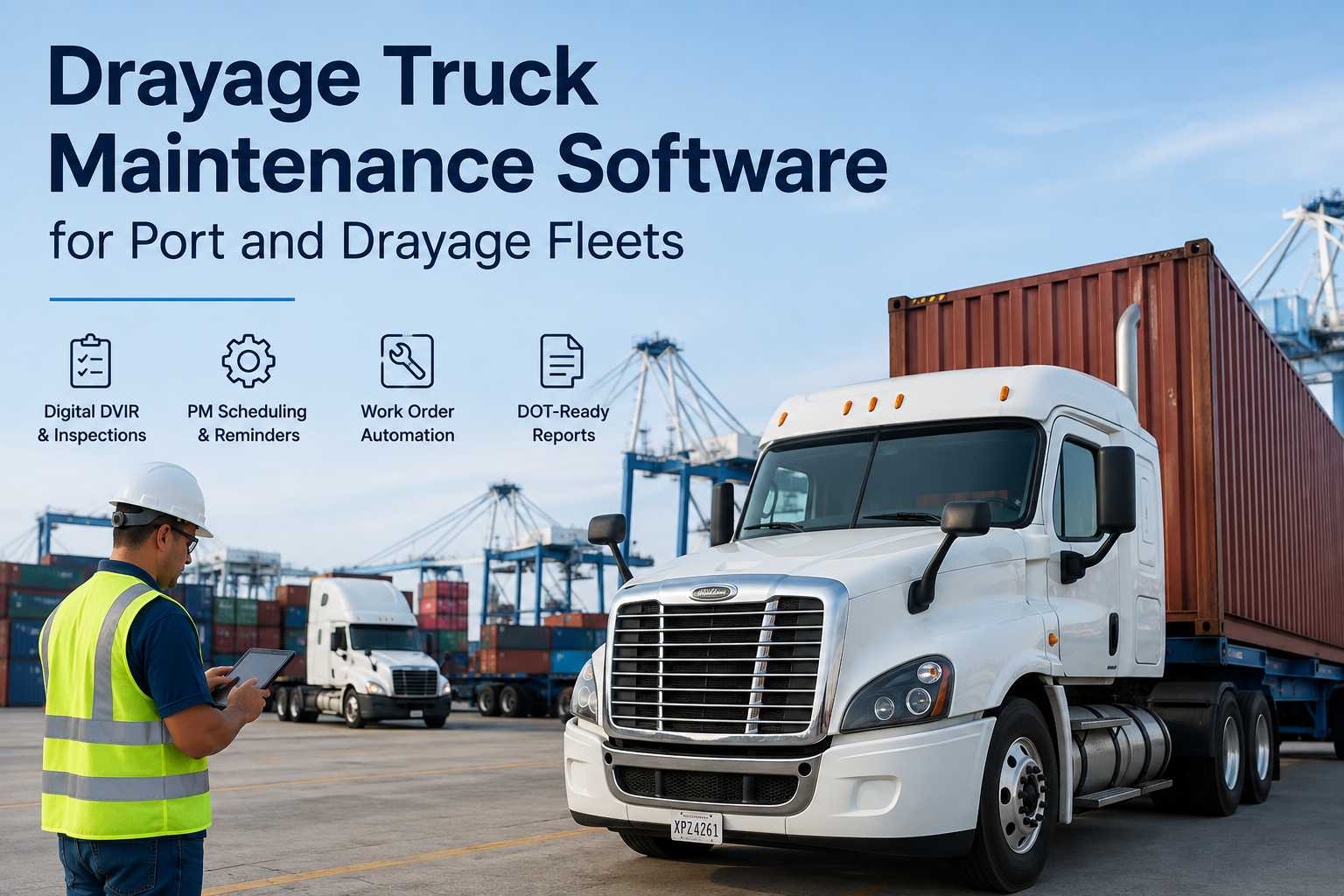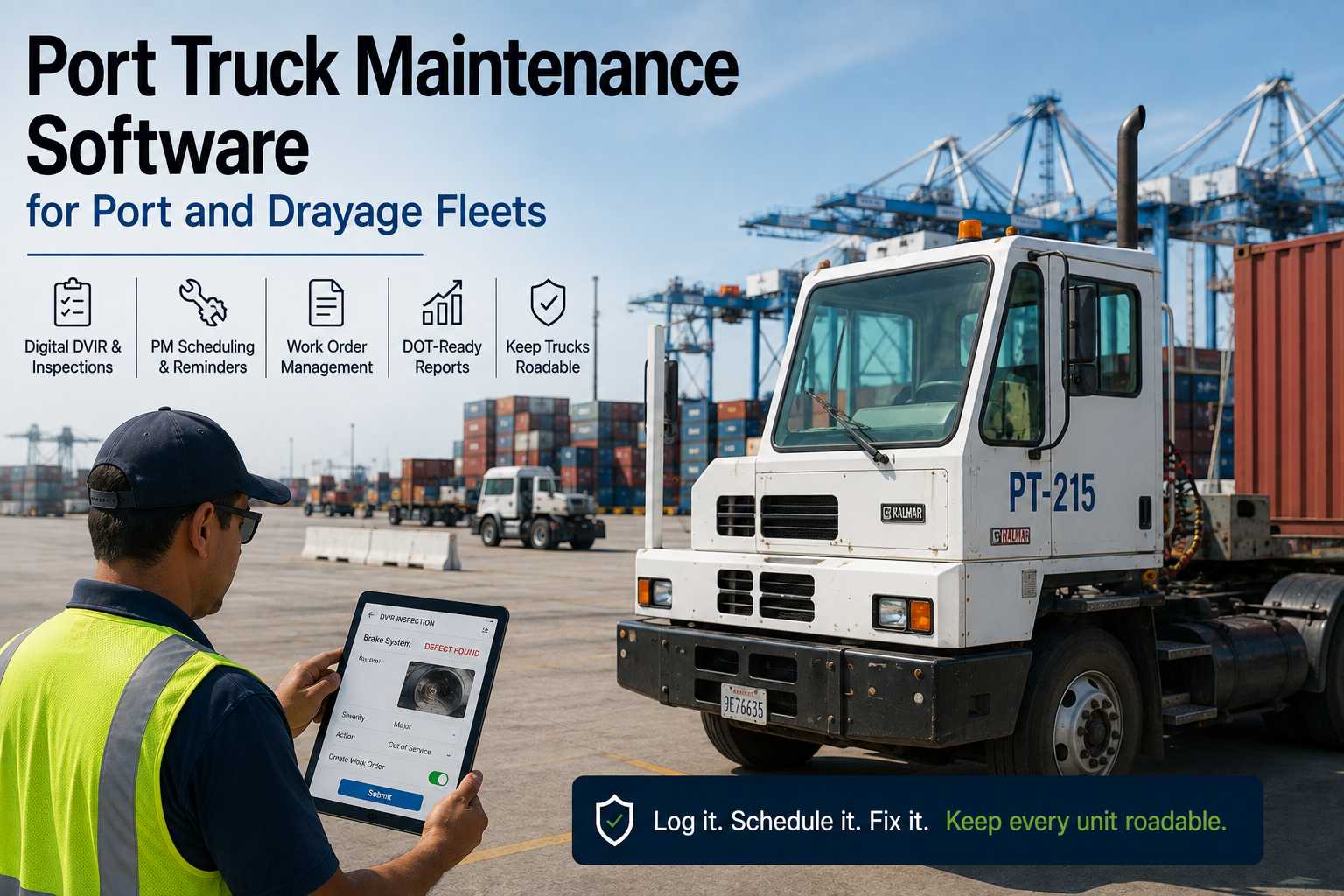
Intermodal harbor fleets, marine terminal carriers, and port maintenance directors operate heavy container tractors under intense enforcement scrutiny: brake violations represent the top out-of-service category at ocean terminal gates and California Highway Patrol (CHP) inspection bays. When air brake pushrod travel, S-cam drum wear, gladhand seal degradation, and fifth-wheel jaw play remain documented on loose paper gate receipts or shop whiteboards, harbor motor carriers face costly terminal gate turnaways, missed container rail cut-offs, and crippling demurrage penalties. Fleet Rabbit delivers specialized port truck maintenance and roadability software built for drayage operations, combining photo-verified mobile DVIRs, automatic defect-to-work-order triage, idle-aware PM scheduling, and low-bandwidth pier-to-depot synchronization. Eliminate brake-related out-of-service orders, verify roadability before drivers hit marine terminal pedestals, and maintain complete FMCSA Part 396 audit trails completely offline across dense container terminal dead zones with zero cellular signal. Book a Demo to see Fleet Rabbit port truck maintenance software in action.
DRAYAGE INTERMODAL HERO CONSOLEPort Truck Maintenance & Roadability Compliance Software
Eliminate terminal brake turnaways, convert roadability DVIR defects into instant shop work orders, automate idle-aware PM schedules, and maintain audit-proof port records.
Why Paper Inspection Sheets Fail High-Frequency Harbor Fleets
Port drayage trucks endure severe stop-and-go terminal queues and heavy container transfers; paper inspection sheets fail to catch brake wear and hub leaks before terminal enforcement stops.
Out-of-Service Brake Stroke & Drum Heat Violations
Dragging 80,000-lb ocean containers through terminal queues causes excessive brake heat and rapid lining wear. Brakes are the #1 out-of-service violation at port gates; paper DVIRs lacking stroke measurements invite immediate red-tag orders and missed vessel cut-offs.
Terminal Inbound Gate Roadability Turnaways
Marine clerks and ILA interchange mechanics inspect air hoses, gladhands, and chassis twistlocks at inbound pedestals. When minor air weeping or a cracked light cord is missed on a paper check, drivers face gate turnaways, detention pay, and severe demurrage.
Unrecorded Third-Party Chassis Pool Damage
Drayage drivers hook equipment pool chassis daily. Without timestamped photo-verified pre-trips documenting pre-existing bent bolsters, frozen slider pins, or chafed brake hoses, motor carriers are wrongfully billed for equipment pool damage.
Container Terminal Canyon Cellular Dead Zones
Operating inside 4-high stacked steel container yards creates cellular dead zones across marine terminals and rail transfer yards. Cloud-only apps lock up, preventing drivers from uploading defect photos or receiving shop repair sign-offs.
Engineered for High-Velocity Harbor Container Logistics
Fleet Rabbit bridges the gap between terminal drivers, dispatch desks, and shop maintenance bays with an intermodal maintenance console. Request a 1-on-1 walkthrough.
Port Roadability Digital DVIRs
Fast digital walkaround checklists customized for port tractors and chassis, covering pushrod stroke, brake lining thickness, air lines, gladhand seals, and fifth-wheel jaws with photo proof.
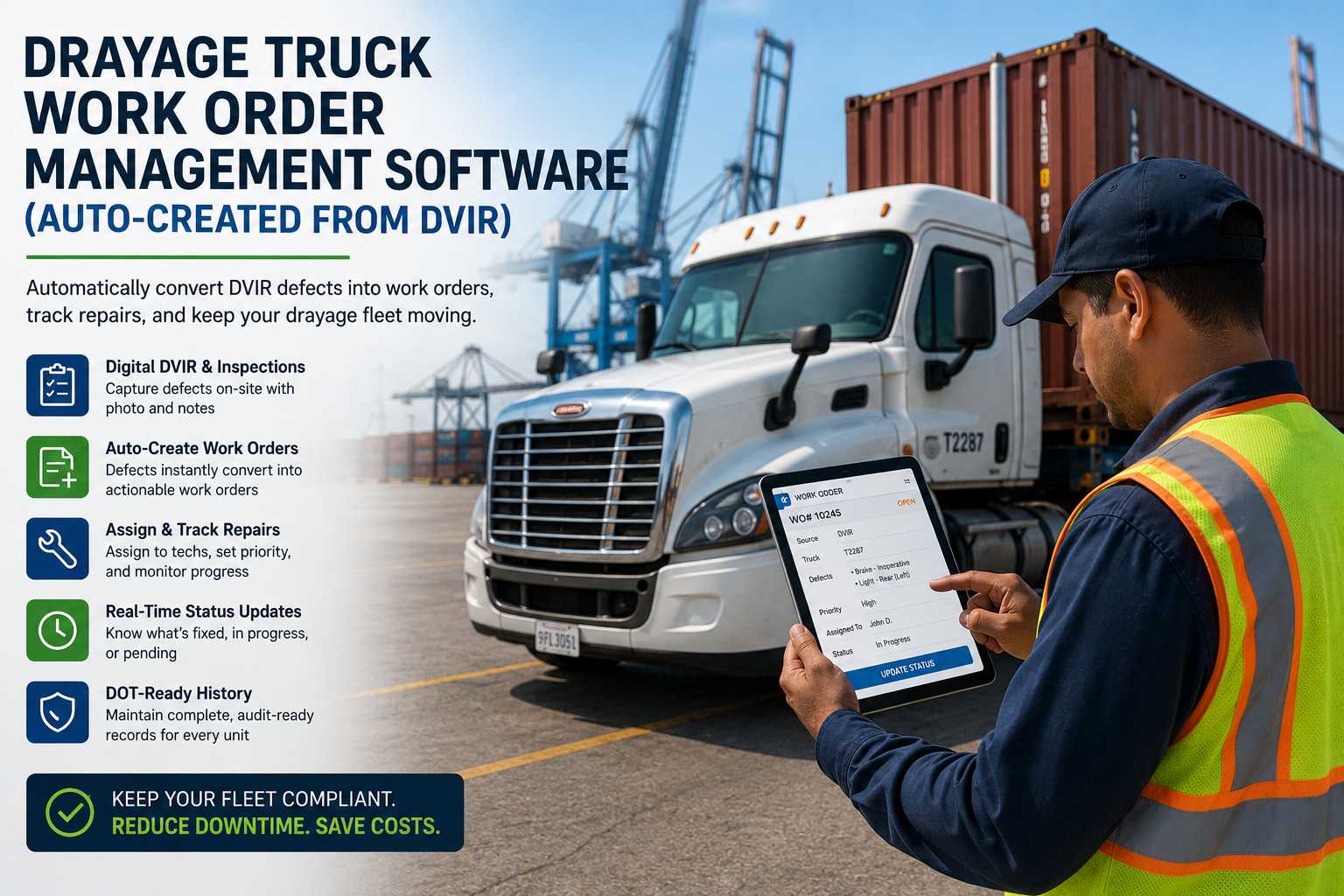
DVIR-to-Work-Order Automation
Failed items on pre-trip walkarounds—such as leaking hub seals or cracked drums—instantly convert into prioritized shop work orders with driver photos, enabling mechanics to stage parts immediately.
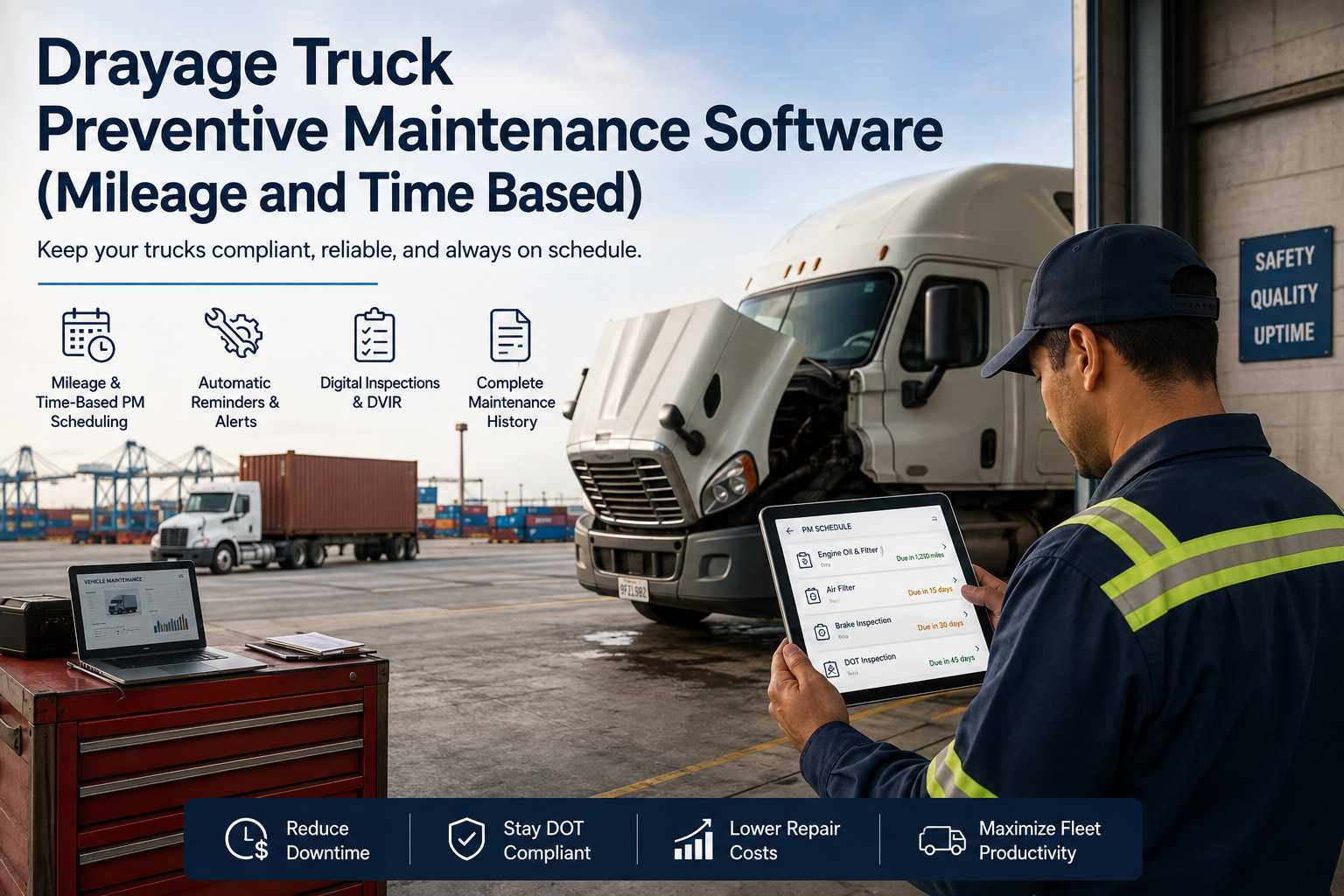
Terminal Queue Idle-Aware PMs
Trigger oil changes, DPF filter cleanings, and valve adjustments by engine runtime hours rather than road miles, protecting tractors from soot-choked aftertreatment derates during queue waits.
Chassis Pool Dispute Protection
Capture timestamped, high-resolution photos of pre-existing chassis pool defects at initial interchange, shielding your fleet from unjust equipment provider billing claims.
Offline Container Yard Micro-Sync
Drivers complete pre-trips and mechanics close work orders inside shielded container stacks with zero cell signal; all data caches locally and syncs automatically once back in range.
DOT & Port Registry Vault
Centralize annual FMCSA 49 CFR Part 396 periodic inspection files, Clean Truck Program stickers, and terminal concession permits with automated 90/60/30-day renewal countdown alerts.
Federal DOT, Intermodal Roadability & Port Concession Alignment
Fleet Rabbit’s port truck maintenance workflows ensure continuous compliance with federal motor carrier regulations, intermodal roadability rules, and clean port initiatives.
Direct compliance with closed-loop inspection mandates: drivers review prior repair records, technicians sign off on corrective work orders electronically, and red-tagged units remain locked out until cleared.
Supports Intermodal Equipment Provider (IEP) roadability regulations, maintaining digital pre-trip records and photo evidence for combined tractor and container chassis moves.
Targeted prevention of the #1 port violation category by monitoring air chamber stroke limits, brake drum cracks, and lining contamination before trucks reach terminal gates.
Tracks DPF differential pressure flushes, emissions hardware work orders, and clean truck registry tags to guarantee continuous gate access across major coastal port authorities.
Port Truck Maintenance Software Comparison
A specialized evaluation focused on port drayage fleets, roadability brake compliance, and offline terminal yard synchronization as of 2026. Request a technical comparison.
| Capability | Fleet Rabbit | Samsara | Fleetio | Shop Whiteboards |
|---|---|---|---|---|
| Pricing (per truck/month) | $5/month | $27–$60/month | $4–$8/mo (base tier) | Costly gate turnaways |
| Dedicated Port Brake & Chassis DVIRs | Pre-built IEP templates | Generic commercial only | Custom build required | Manual paper slips |
| DVIR Defect-to-Work-Order Automation | Instant & photo-verified | Manual conversion | Manual work order creation | Lost clipboards |
| Terminal Queue Idle-Aware PM Triggers | True engine runtime hours | Mileage-biased system | Manual text entry | Guessed intervals |
| Container Yard Offline Micro-Sync | Full offline sync engine | Limited data caching | Partial offline mode | Paper only |
| Free Trial | 14 days, up to 3 assets | Demo only | 14 days | None |
| Contract Commitment | Monthly or annual | 3-year contract lock-in | Annual contract | None |
5-Step Implementation Roadmap
Fleet Rabbit deploys quickly without interrupting active harbor container moves, taking your drayage fleet from reactive repair delays to automated roadability command in two weeks.
Fleet Profiles & Part Catalog Ingestion
Import tractor VINs, port RFID license plates, engine hours, and common shop wear parts (brake shoes, gladhand seals, slack adjusters) into your database.
Port Roadability DVIR & Auto-Triage Setup
Activate pre-configured mobile inspection checklists for fifth-wheel locks, chassis twistlocks, gladhand seals, and air brake stroke measurements.
Critical Defect Red-Tag & Lockout Rules
Establish automated vehicle grounding rules for severe mechanical faults—such as fifth-wheel jaw slack, blown brake chambers, or active hub seal oil weeping.
Drivers & Shop Mechanic App Rollout
Equip drayage drivers and shop technicians with the offline mobile app for completing daily pre-trips, signing off on repairs, and logging parts usage.
Port Maintenance Dashboard Go-Live
Activate the live fleet dashboard, view real-time PM countdowns across all tractors, track open work orders, and export 1-click compliance reports for port authorities.
2-Week Deployment Plan & Milestones
Modernize your drayage truck maintenance operations and eliminate terminal gate bottlenecks with zero disruption to active container moves. Request an onboarding plan.
Week 1: Setup & Fleet Data Ingestion
- Import tractor specifications, port RFID numbers, current engine hours, and odometer readings
- Configure defect severity triggers and auto-work-order routing rules for the shop
- Set up 90/60/30-day alerts for Clean Truck Program registrations and annual DOT periodic inspections
- Assign user access roles for Drayage Driver, Shop Mechanic, Dispatcher, and Safety Director
Week 2: Shop Pilot & Operations Launch
- Conduct 15-minute driver orientation on completing mobile roadability pre-trips and defect photo tagging
- Validate offline store-and-forward syncing in shielded container yards and terminal shadow zones
- Verify instant defect-to-work-order triage for flagged air leaks and fifth-wheel wear notes
- Launch the live fleet maintenance dashboard across dispatch desks and shop technician tablets
Protect Your Port Trucks from Brake Violations and Terminal Gate Rejections
Standardize roadability DVIRs, convert brake defects into instant repair orders, and maintain audit-proof records. Start today at $5/truck/month with a 14-day free trial.
Real-World Port Drayage Fleet Results
Operational outcomes reported by intermodal motor carriers and harbor container drayage fleets. Request the drayage fleet case study.
Zero Brake Out-of-Service Stops — 44-Tractor Fleet
A harbor carrier faced recurring CHP and terminal roadability citations due to overlooked brake stroke growth and thin linings on paper DVIRs. Fleet Rabbit enforced photo-verified brake stroke checks and automated work order creation, cutting gate turnaways by 100% and saving $26,000 in roadside repair callouts.
Repair Triage Slashed — 30-Truck Fleet
An intermodal carrier suffered communication lag between terminal drivers reporting damaged gladhand seals on paper slips and shop mechanics staging replacement hardware. Fleet Rabbit converted failed pre-trip items into instant photo-verified work orders, slashing defect turnaround times from 24 hours to under 25 minutes.
Brakes are what port inspectors look at first, and if your driver gets red-tagged at the gate pedestal, your appointment is blown and your day is ruined. Paper DVIR slips just weren't cutting it—drivers would check the box without measuring stroke or inspecting gladhands. Fleet Rabbit gave our drivers a fast 3-minute mobile checklist with photos. When a brake shoe is getting thin or an air line has chafing, our shop knows immediately and stages parts before the truck rolls back into the yard. It completely eliminated our brake turnaways and keeps our fleet roadable every single day.