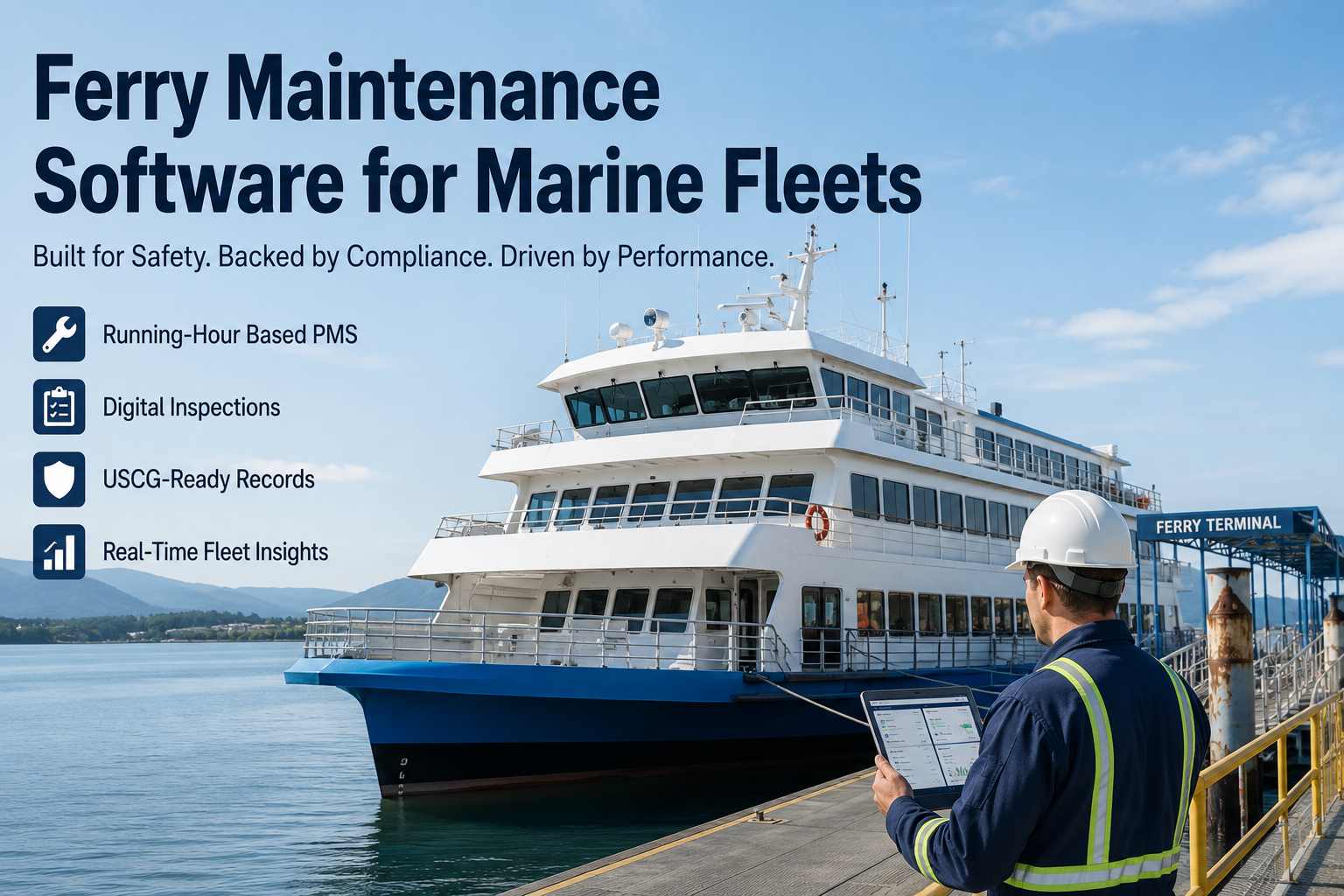
Municipal ferry authorities, passenger transit agencies, and private fast-catamaran operators navigate relentless turnaround timetables: cycling medium-speed diesel engines, waterjet propulsion units, hydraulic vehicle bow ramps, and passenger embarkation gangways through dozen-plus daily crossings. When engine running hours, waterjet impeller cavitation clearances, USCG Subchapter K/T life-saving appliance records, and watertight door compression checks are recorded on grease-stained engine room logbooks or standalone bridge PCs, marine superintendents face unexpected mechanical stalls in congested harbor channels, catastrophic ramp failures, and immediate USCG Form 835 deficiency hold orders. Fleet Rabbit delivers specialized passenger ferry maintenance software engineered for high-frequency marine passenger operations, unifying real-time tachometer running-hour PMS routines, automated USCG Certificate of Inspection (COI) countdown vaults, and low-bandwidth ship-to-shore synchronization. Eliminate passenger-disrupting mechanical downtime, streamline drydock survey items, and maintain verified seaworthiness across high-traffic marine routes with full offline execution. Book a Demo to see Fleet Rabbit passenger ferry maintenance software in action.
VESSEL BRIDGE TELEMETRY HEROPassenger Ferry Maintenance Software Explained with Benchmarks
Automate running-hour main engine and waterjet overhauls, schedule USCG Subchapter K/T life-safety audits, verify hydraulic bow visor locks, and manage offline ship-to-shore work orders across passenger vessel fleets.
Why Generic Maintenance Systems Fail Passenger Ferry Operations
Passenger ferries operate on fixed commuter timetables with minutes between dockings; calendar-based maintenance tools fail to manage rapid engine thermal cycles, passenger deck wear, and relentless Coast Guard oversight.
Waterjet Impeller Cavitation & Hydraulic Reversing Failures
High-speed ferries cycle reversing buckets and steering nozzles constantly during docking maneuvers; static calendar schedules miss severe hydraulic actuator weepage and cavitation erosion, risking harbor propulsion loss during rush-hour traffic.
Vehicle Bow Visor & Ramp Hydraulic Locking Blindspots
Ro-Pax vehicle ferries endure heavy dynamic wave forces against bow visors; unrecorded hydraulic dogging pressure drops or micro-fractures in ramp hinges create immediate flooding hazards that violate SOLAS and USCG regulations.
Lapsed Subchapter K/T Life-Saving Certification
Marine evacuation slides (MES), hydrostatic life raft releases, and emergency fire pump pressure tests logged across loose wheelhouse sheets get overlooked, resulting in immediate USCG Form 835 "no-sail" passenger orders.
Saltwater Slipway & Engine Room Network Dropouts
Machinery spaces beneath steel passenger decks and remote island slips lack cellular connectivity. Cloud-only tools crash, leaving Chief Engineers unable to sign off daily logs, verify spare part inventories, or submit urgent requisitions.
How Fleet Rabbit Powers Passenger Ferry Maintenance
Fleet Rabbit integrates propulsion running hours, vehicle deck hydraulic inspections, passenger safety gear vaults, and shoreside maintenance triage into one unified maritime system. Request a 1-on-1 walkthrough.
Running-Hour Engine & Waterjet PMS
Triggers engine oil laboratory analysis, fuel injector ultrasonic cleanings, waterjet steering cylinder repacks, and vibration testing based on actual tachometer hours.
Bow Visor & Ramp Hydraulic Audits
Standardized digital inspection checklists for bow and stern ramp locking pins, hydraulic dog cylinder pressure hold tests, hinge grease points, and rubber seal watertightness.
USCG Subchapter K/T Safety Vault
Centralize and schedule annual COI renewals, drydock survey milestones, life raft hydrostatic releases, MES deployment dates, and emergency fire pump flow records.
Harbor & Slipway Offline Mode
Engineers log daily fuel transfers, complete watertight door inspections, and record defect photos completely offline; lightweight data payloads automatically micro-sync in port.
Critical Spares & ROB Management
Track remaining-on-board (ROB) counts for fuel filters, raw-water pump impellers, injector nozzles, and hydraulic seals with automated re-order alerts to shoreside purchasing.
Shoreside Technical Work Orders
Deficiencies flagged during passenger crossings automatically generate prioritized repair tickets routed directly to evening port engineers and drydock contractors.
Statutory, Flag State & Class Society Alignment
Fleet Rabbit’s passenger ferry maintenance and safety workflows are engineered to satisfy statutory international and domestic regulatory frameworks across major operating regions.
Full alignment with USCG Title 46 CFR Subchapter T (Small Passenger Vessels under 100 GT), Subchapter K (Passenger Vessels carrying more than 150 passengers), and Subchapter H (Large Passenger Vessels).
Meets IMO High-Speed Craft (HSC) Code 2000 requirements, SOLAS Chapter II-1 machinery and electrical standards, and ISM Code Element 10 maintenance management mandates.
Supports IACS Continuous Machinery Survey (CMS) credits, high-speed catamaran hull bottom structural thickness gaugings, tailshaft condition monitoring, and auxiliary generator load bank tests.
Supports Transport Canada Marine Safety and Security (TCMSS) passenger ferry standards, Domestic Vessel Regulatory compliance, and UK Maritime and Coastguard Agency (MCA) passenger ship safety certifications.
Passenger Ferry Maintenance Software Comparison
A capability comparison focused on high-frequency passenger vessel fleets, USCG Subchapter K/T compliance, and low-bandwidth marine offline synchronization. Competitor data sourced from public records as of 2026. Request a technical comparison.
| Capability | Fleet Rabbit | Amos / DNV ShipManager | Samsara | Generic Spreadsheets |
|---|---|---|---|---|
| Pricing (per vessel) | $5/month | $500–$2,000/mo ($$$$) | $27–60/month | Manual overhead |
| Running-Hour Engine & Waterjet PMS Triggers | Native & automated | Native (high complexity) | Requires custom setup | Manual entry only |
| USCG Subchapter K/T & HSC Code Safety Checklists | Pre-built & specialized | Custom configuration required | Generic vehicle only | Not available |
| Vehicle Ramp & Bow Visor Hydraulic Audits | Native support | Module add-on | Not available | Manual binder |
| Harbor & Slipway Offline Mode & Micro-Sync | Full offline mode (VSAT/Cell) | Legacy database sync | Limited | Paper only |
| Free Trial | 14 days, up to 3 assets | Demo only | Demo only | None |
| Contract Terms | Monthly or annual | Multi-year enterprise lock-in | 3-year minimum | None |
5-Step Implementation Roadmap
Fleet Rabbit provides an accelerated deployment program engineered for passenger ferry operators, transitioning your fleet from paper logbooks to automated digital compliance in two weeks.
Ferry Particulars & Machinery Baseline Import
Import vessel Hull Identification Numbers, USCG documentation, engine models, waterjet serials, generator hours, and active COI inspection records.
Running-Hour PMS & Hydraulic Threshold Setup
Configure automated intervals for main engine oil flushes, waterjet nozzle wear checks, bow ramp hydraulic pressure tests, and steering gear maintenance.
Subchapter K/T Safety Checklist Setup
Activate pre-built digital inspection forms covering life rafts, lifejackets, MES chutes, fire dampers, bilge high-water alarms, and watertight doors.
Crew & Shoreside Engineering Rollout
Equip Masters, Chief Engineers, and shoreside port engineers with the intuitive offline-first mobile inspection and maintenance application.
Live Operations Dashboard Go-Live
Activate real-time fleet seaworthiness boards, automated USCG survey countdown ledgers, and 1-click Port State audit compliance reports.
2-Week Deployment Plan & Results
Modernize passenger ferry maintenance and USCG compliance tracking with zero disruption to scheduled commuter crossings. Request an onboarding plan.
Week 1: Setup & Data Migration
- Migrate legacy engine running hours, critical spare parts catalogs, and active USCG COI documents
- Configure automated 90/60/30-day renewal countdown alerts for annual hull, boiler, and safety equipment surveys
- Assign user permission roles for Master, Chief Engineer, Port Engineer, and Director of Marine Operations
Week 2: Shipboard Pilot & Go-Live
- Conduct quick 20-minute crew training on completing offline mobile pre-departure checks and engine logs
- Validate micro-sync data transmission across harbor Wi-Fi and mobile data networks
- Activate central shoreside dashboard with live USCG audit readiness indicators and work order queues
Protect Passenger Ferry Fleets from Costly Propulsion Failures and USCG Stoppages
Automate running-hour PMS routines, streamline USCG Subchapter K/T audits, and maintain verified seaworthiness across every crossing. Start today at $5/asset/month with a 14-day free trial.
Real-World Operational Results
Proven operational outcomes reported by municipal ferry transit agencies and private passenger vessel operators. Request the full maritime case study.
Engine Failure Elimination — 8-Vessel Fast Catamaran Fleet
A regional passenger transit authority operating high-speed aluminum catamarans experienced recurring waterjet reversing bucket hydraulic failures and turbocharger breakdowns caused by calendar-based servicing that ignored continuous high-RPM running hours. Fleet Rabbit deployed automated running-hour PMS triggers and daily mobile inspections, cutting mechanical crossing cancellations by 44% and saving over $95,000 in emergency charter and repair costs.
USCG Audit Readiness — 12-Vehicle Ferry Fleet
A vehicle and passenger ferry operator struggled with communication delays between shipboard crews logging hydraulic bow visor weepage on paper sheets and shoreside mechanics ordering seal kits. Fleet Rabbit converted failed pre-departure checks into instant photo-verified work orders, eliminating 100% of USCG Form 835 deficiency citations and reducing defect resolution time from 10 days to under 24 hours.
On a high-frequency commuter ferry route, thousands of passengers rely on our boats every single morning. Coast Guard inspectors board regularly to check our steering drills, fire dampers, and propulsion logs. Fleet Rabbit gave our Chief Engineers a simple offline mobile tool to manage running-hour PMS tasks right in the engine room and gave our shoreside technical team complete confidence that every boat is 100% seaworthy and audit-ready.
Frequently Asked Questions
Upgrade Your Passenger Ferry Fleet Maintenance in Less Than 2 Weeks
Automate running-hour propulsion PMS, streamline USCG Subchapter K/T audits, and ensure scheduled crossing reliability at $5/asset/month with a 14-day free trial.