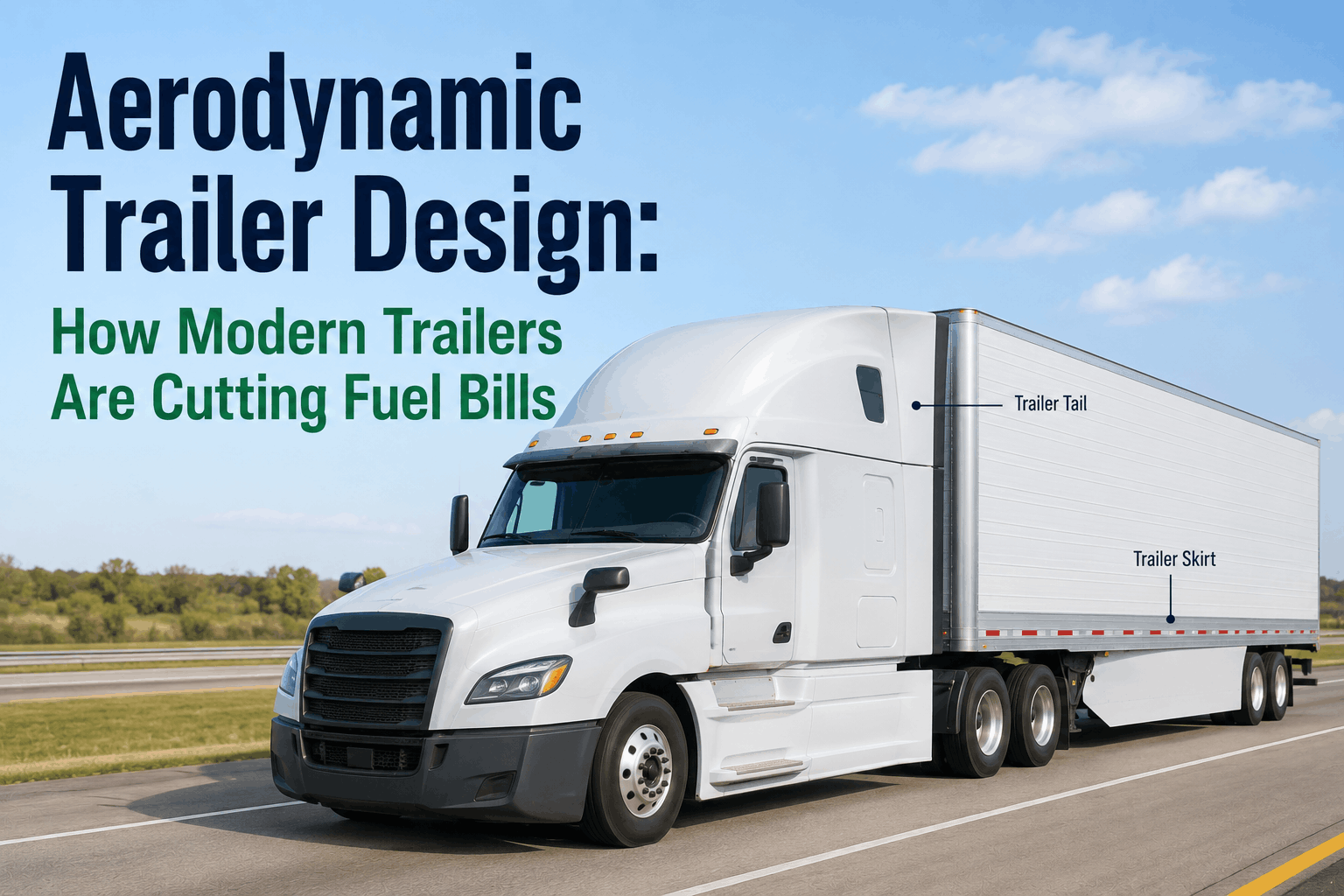
Have you ever noticed how much fuel disappears into thin air? For a heavy-duty truck cruising down the highway, fighting wind resistance isn't just a minor nuisance. This aerodynamic drag is a silent profit-killer, consuming over half of the engine's energy just to push through the air. For years, most fuel-saving efforts focused on the tractor, but a quiet revolution is happening behind the cab. Modern trailer design is now a frontline battleground for fuel efficiency, and the innovations are as clever as they are effective.
Aerodynamic Trailer Design: How Modern Trailers Are Cutting Fuel Bills
The Science of Saving Fuel
As a truck speeds up, the force of drag increases exponentially. Think of it this way: pushing air out of the way at 60 mph requires significantly more than double the effort needed at 30 mph. This force isn't just felt at the front; it's created by chaotic air turbulence under the trailer, in the gap between the tractor and trailer, and in the low-pressure wake at the rear. Modern trailer aerodynamic devices are engineered to manage airflow at each of these critical points, creating a smoother journey for the truck and your fuel budget.
The relationship between speed and drag is the reason aerodynamic devices deliver their greatest returns on highways and interstates. But even at moderate speeds, the cumulative effect over thousands of miles adds up to substantial fuel savings. Fleets that have invested in aero equipment consistently report improved fuel economy across their entire operation — and they're proving that the math works in their favor. To track the real-world ROI of your trailer aero investments, sign up with FleetRabbit and get data-driven insights on every vehicle in your fleet.
Turbulent air under the trailer creates significant resistance. Side skirts block this airflow, reducing drag and saving 5-7% in fuel costs per trailer.
The blunt back end of a box trailer creates a low-pressure zone that pulls the vehicle backward. Trailer tails collapse this wake, saving up to 5% on fuel.
The space between cab and trailer creates chaotic turbulence. Gap reducers smooth this transition, delivering incremental but meaningful fuel savings.
Exposed wheels and suspension components generate significant drag. Wheel covers and underbody treatments offer simple, low-cost fuel savings.
How Trailer Aerodynamics Actually Work
Modern trailer aerodynamics operate on three core principles: reducing frontal pressure, minimizing underbody turbulence, and eliminating rear vacuum drag. Each device targets a specific source of resistance, and when combined, they create a compounding effect that far exceeds what any single component can achieve alone.
Gap reducers and cab roof fairings direct air smoothly from the tractor to the trailer, reducing the high-pressure zone at the trailer's leading edge.
Trailer skirts block turbulent air from the undercarriage, reducing drag caused by exposed suspension, axles, and wheel assemblies.
Trailer tails and boat-tail panels extend the rear, allowing air to rejoin smoothly and eliminating the low-pressure suction that pulls the vehicle backward.
Combined devices deliver 10-12% fuel savings — translating to thousands of dollars per trailer annually, with payback typically within 12 months.
This layered approach is why modern fleets are retrofitting their trailers with multiple devices rather than relying on a single solution. The data is clear: an investment of $2,000 to $3,000 in aero equipment can generate annual fuel savings of $4,000 or more per trailer. If you're managing a fleet of 50 trailers, that's $200,000 in annual savings — money that goes directly to your bottom line. To see how your fleet's fuel consumption compares to aero-equipped benchmarks, book a demo with FleetRabbit and let our team build a tailored savings model for your operation.
Stop Paying for Air Resistance
FleetRabbit helps you track fuel consumption, compare aero performance across your trailers, and measure the ROI of every efficiency upgrade — all in one dashboard.
The Real-World Impact of Trailer Aero Upgrades
The numbers behind trailer aerodynamics are compelling, and they're backed by extensive real-world testing. The North American Council for Freight Efficiency (NACFE) has conducted multiple studies demonstrating that side skirts alone deliver 5-7% fuel savings, while trailer tails add another 4-5% improvement. When combined with gap reducers and wheel covers, total savings routinely exceed 12%. For a fleet running 100,000 miles per trailer annually, that represents over 1,200 gallons of diesel saved per trailer every year.
The adoption rate of aerodynamic trailer technologies has accelerated dramatically in recent years. Industry data shows that more than 60% of new trailers now ship with at least one aero device, and the trend is expected to reach 85% by 2028. Early adopters are already seeing the competitive advantage of lower operating costs, and fleets that delay are being forced to catch up. Whether you're running a mixed fleet of older trailers or investing in new equipment, the economics of aerodynamic upgrades are impossible to ignore. The best time to start tracking these savings is right now — sign up with FleetRabbit and get full visibility into your fleet's fuel performance.
Why Fleet Economics Favor Aero Trailer Investment
The business case for trailer aerodynamics has never been stronger. Diesel prices remain volatile but persistently high, and fuel represents the single largest operating cost for most fleets — often exceeding 35% of total expenses. Any technology that can reduce fuel consumption by 10% or more with a one-year payback is not just an efficiency upgrade; it's a competitive necessity.
What's often overlooked is the cumulative advantage across a fleet. A 50-trailer operation could see $200,000 in annual savings from aero equipment alone. Those savings can fund additional upgrades, expand your fleet, or simply drop to the bottom line as improved profitability. In a margin-sensitive industry, these numbers make a tangible difference in how you price freight, bid on contracts, and retain drivers through better equipment and more consistent operations. To see exactly how your fleet's numbers stack up, book a FleetRabbit demo and have our team model your current fuel spend against aero-optimized projections.
Better equipment isn't just about fuel savings. Drivers prefer to operate well-maintained, modern equipment that handles better on the highway — reducing fatigue and improving the overall driving experience.
Aero-equipped trailers reduce carbon emissions by 10-12%, helping fleets meet corporate sustainability targets and regulatory requirements without sacrificing operational efficiency.
Trailers with aero devices command higher resale values and sell faster on the secondary market. The equipment becomes a tangible asset that pays dividends even when you're ready to retire the trailer.
The Market Shift Is Already Happening
The global market for trailer aerodynamic devices was valued at over $1 billion in 2024 and is projected to reach nearly $3 billion by 2033, with a compound annual growth rate exceeding 10%. Major trailer manufacturers now offer aero packages as factory options, and aftermarket retrofit suppliers are expanding rapidly to meet demand from fleets looking to upgrade existing equipment.
This growth is driven by three factors: rising fuel costs, tightening emissions regulations, and the growing body of data proving the ROI of aerodynamic investments. Fleets that adopt early gain a sustained cost advantage over competitors who wait. The technology is mature, the savings are documented, and the adoption barriers — cost and installation time — continue to fall. The only question is when your fleet will make the move. To start your aero ROI analysis today, sign up for FleetRabbit and connect your telematics data in minutes.
Start Saving Fuel Before Your Next Haul
FleetRabbit gives you the data you need to track fuel consumption, compare trailer performance, and validate every efficiency investment — across your entire fleet.
What Trailer Aerodynamics Means for Your Operations
Beyond the direct fuel savings, aerodynamic trailer equipment delivers operational benefits that extend throughout your fleet. Vehicles with reduced drag experience less strain on the drivetrain, potentially extending component life and reducing maintenance costs. The smoother airflow also improves stability in crosswinds, a safety benefit that drivers appreciate, especially on long-haul routes.
And because these devices are passive — requiring no driver action or power source — they deliver savings automatically, from the moment the trailer starts moving. There's no training required, no behavioral change needed, and no ongoing maintenance burden beyond normal inspection. It's one of the few efficiency investments in fleet management that provides immediate, consistent, and measurable returns without adding complexity to your operation. To see how these savings accumulate over time, book a demo with FleetRabbit and review real-world fleet data with our team.