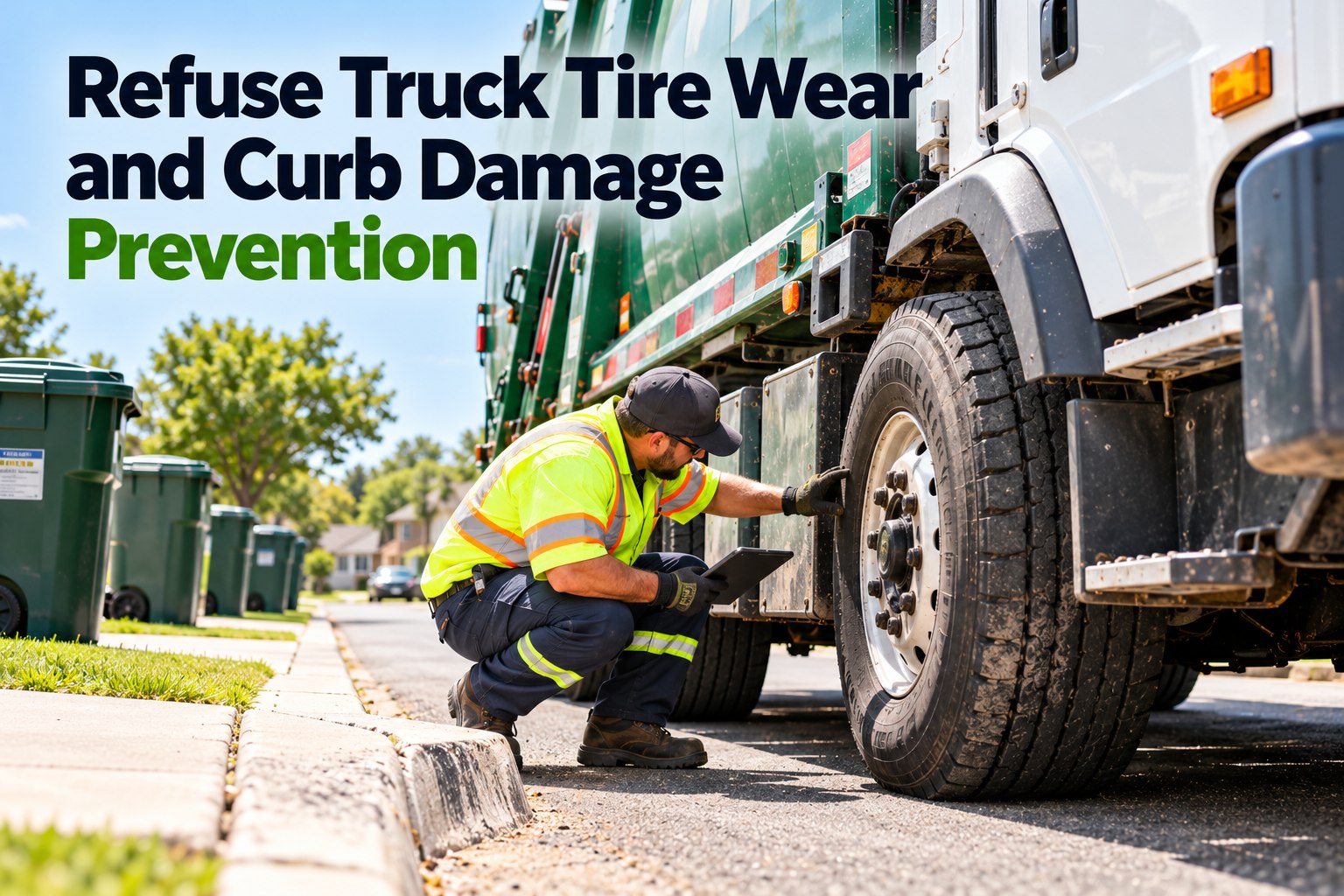
Refuse truck tires wear out faster than almost any other truck tire on the road. Garbage truck tire wear comes from tight turns at low speed, curb strikes, heat from constant braking and heavy loads that grow through the day. Mack's Steve Gitner told Truck Parts & Service that tires are "the number one maintenance item" on refuse trucks. Here's what causes the wear, how to spot curb damage that ends a tire's life, and the pressure, rotation and tread-tracking habits that cut tire cost per mile. Schedule a call to see tire checks and tread tracking in FleetRabbit.
Refuse fleet tire program
Get more hours from every tire by catching low pressure, curb cuts and uneven wear on the pre-trip.
Tread depth is measured in 32nds of an inch. These are the marks that matter on a garbage truck.
Tread depth, 32nds of an inch
2/32
Legal minimum, drive and tag tires
4/32
Legal minimum, steer tires
5/32
One hauler's pull point, for retreadable casings
Minimums from 49 CFR 393.75. Pull point used by Leck Waste Services, as reported by Waste Today.
Why Garbage Truck Tires Wear So Fast: Scrub, Curbs, Heat and Stop-and-Go Routes
Refuse tires work in a different world from line-haul tires. Waste Management's fleet leadership once told FleetOwner its average truck went through four sets of drive tires and three sets of steer tires a year. Four forces drive that wear.
Scrub on tight turns
Low-speed turns drag the tread sideways. Leck Waste Services' Dominic Greco says rear loaders working cul-de-sacs take the most abuse.
Curb strikes
Repeated curbing scuffs sidewalls and can cause pinch shock, crimping the tire's internal structure.
Brake heat
Michelin notes drum brakes on stop-start routes run hot enough to degrade the bead, costing retread chances.
Low pressure under load
Underinflated duals flex, rub against each other and build heat, the classic path to a blowout.
Rear Loaders, Front Loaders and Roll-Offs Wear Tires Differently
Greco ranks rear loaders worst for tire wear because of constant tight turning. Front loaders, side loaders and roll-offs wear less, but still need frequent checks. Route type should set how often each truck's tires are measured.
Curb Damage on Refuse Truck Tires: What to Look For and When to Pull the Tire
Not every scuff ends a tire, but some damage takes it off the road by law. Federal rules (49 CFR 393.75) bar running a tire with exposed ply or belt material, tread or sidewall separation, a cut exposing cords, or a flat or audible leak.
Log and watch
Surface scuffs
Rubber scraped on the sidewall with no cut into the cords. Photograph it so the next check can compare.
Pull for inspection
Bulges and pinch marks
A bulge or crease after a hard curb strike can mean internal damage. A tire shop should inspect it before more miles.
Out of service
Cuts to the cords
Any cut exposing ply or belt, any separation, or a flat or leaking tire. The truck doesn't leave the yard.
Teach Drivers Where the Curb Is
Most curb damage happens at the same stops: tight cul-de-sacs, high curbs and alley entrances. When drivers log curb strikes with a photo, the pattern shows which routes and stops are eating tires, and dispatch can adjust the approach.
Track Garbage Truck Tire Wear on Every Pre-Trip, Not Just at Replacement
Drivers record pressure, tread and curb damage with photos, and the shop sees which trucks are eating tires.
Tire Pressure on Garbage Trucks: Daily Checks and the 10 Percent Rule
Cooper Tire's Gary Schroeder calls proper inflation "the single most important factor in extending tire life." Michelin's guidance in Waste Advantage puts numbers on what happens when pressure falls.
At target pressure
Full tread life, even footprint
10% under
About 10% less tread wear
20% under
Treat as flat: remove and scrap
Below 50% of max
Out of service at roadside
Figures from Michelin North America, Waste Advantage, 2018. Set target pressure from the tire maker's load and inflation chart.
Check Pressure Cold, With a Gauge, Every Morning
Michelin recommends daily pressure checks in the pre-trip with an accurate gauge, checked against a master gauge in the shop. Some haulers run slightly above the rated pressure to offset load squat, but Cooper warns overinflation leaves tires more open to cuts and impacts, so set targets with your tire dealer.
Refuse Fleet Tire Program: Rotation, Matching, Alignment and Tread Tracking
A tire program turns one-off replacements into a routine. These steps come from fleets and tire makers that run refuse tires every day.
1
Measure tread on a set cycle
Leck checks its trucks every two to two and a half weeks and pulls tires before 5/32.
2
Replace by axle, not by tire
When both tires on an axle are within 3/32 of the pull point, Leck replaces the pair together.
3
Rotate side to side
Turning patterns wear one side faster. Michelin advises rotating only when wear is uneven between sides or axles.
4
Never mix diameters on an axle
Mismatched tread depths or sizes strain gears and other drivetrain parts, Greco warns.
5
Check alignment when steer tires wear unevenly
Michelin names toe misalignment the top cause of irregular steer tire wear, followed by rear axle skew.
Retreads and Tire Cost per Mile: Getting More Life From Every Refuse Truck Casing
The casing is where the money is. Michelin says refuse tires can be retreaded four, five, six or more times when casings are cared for, against once or twice for many line-haul tires. Cooper notes most fleets retread worn steer tires with a drive pattern and move them to the drive axle.
Tire cost per mile, or per hour
New tire + retreads + repairs
÷
Total miles or engine hours on the casing
Michelin notes refuse tire life is usually measured in hours, since trucks cover few miles. Track whichever your fleet uses for PM.
What a Tire Program Can Save
Specialized waste tires can cost up to $1,000 each, Greco told Waste Today, and Leck estimates its tire program has saved close to $40,000 compared with letting tires run until they fail. Pulling at 5/32 keeps casings fit to retread.
Refuse Truck Tire Inspection Checklist for the Daily Pre-Trip
Tires were 21.4% of vehicle out-of-service violations in CVSA's 2025 International Roadcheck. These checks catch most of them before the truck leaves.
Three Garbage Truck Tire Problems and How to Fix Them for Good
One truck keeps eating steer tires
Compare tread readings by truck. Fast, uneven steer wear points to toe alignment, so book an alignment and watch the next readings.
Schedule a call on uneven tire wearFlats and blowouts on the duals
Daily pressure entries on the pre-trip show which tires keep losing air before they run flat.
Log daily tire pressure freeTires pulled too late to retread
Recorded tread depths flag tires nearing your pull point, so casings come off while they can still be retreaded.
See tread pull alerts on a call
How FleetRabbit Runs a Refuse Truck Tire Program From Pre-Trip to Replacement
Tire checks in the DVIR
Pressure, tread and sidewall checks on drivers' phones, with photos of curb damage.
Defects to work orders
A cut or bulge opens a work order and holds the truck until the tire is checked.
Rotation and alignment PM
Scheduled on miles, hours or dates for each truck.
Tire costs by truck
New tires, retreads and repairs logged per unit, to compare cost across the fleet.
What the call covers
A tire check added to your drivers' pre-trip
A curb-damage photo turning into a work order
Rotation and alignment scheduled per truck
Schedule My Tire Program Walkthrough
Cut Refuse Truck Tire Costs With Daily Pressure, Tread and Curb Damage Tracking
Tire checks on every pre-trip, damage turned into work orders and a cost history for every truck in the fleet.
Free for up to 3 assets · No credit card needed
Refuse Truck Tire Wear: Questions Fleet Managers Ask
Why do garbage truck tires wear out so fast?
Refuse trucks turn tightly at low speed, stop and start hundreds of times a day, strike curbs and carry loads that grow through the route. That combination of scrub, impact, brake heat and flexing wears tread and damages casings far faster than highway driving does.
What is the minimum tread depth for refuse truck tires?
Under 49 CFR 393.75, steer tires need at least 4/32 of an inch in every major groove, and all other tires need at least 2/32. Many refuse fleets pull tires earlier, around 5/32, so the casing can still be retreaded.
Schedule a call on tread tracking.
How often should garbage truck tire pressure be checked?
Every day, cold, as part of the driver's pre-trip inspection, using an accurate gauge checked against a master gauge. Michelin notes a tire run 10% underinflated loses about 10% of its tread life, and one 20% under should be treated as flat.
When does curb damage take a tire out of service?
When a cut exposes ply or belt material, the tread or sidewall separates, or the tire goes flat or leaks audibly. Surface scuffs can stay in service but should be logged. Bulges or creases after a hard curb strike need a tire shop inspection first.
Can refuse truck tires be retreaded?
Yes, and often several times. Michelin says refuse casings can be retreaded four, five, six or more times with good care. Many fleets retread worn steer tires with a drive tread and move them to drive axles, which cuts tire cost per mile considerably.
How do you calculate tire cost per mile for a refuse fleet?
October 26, 2026
By Sam Parker
All Articles