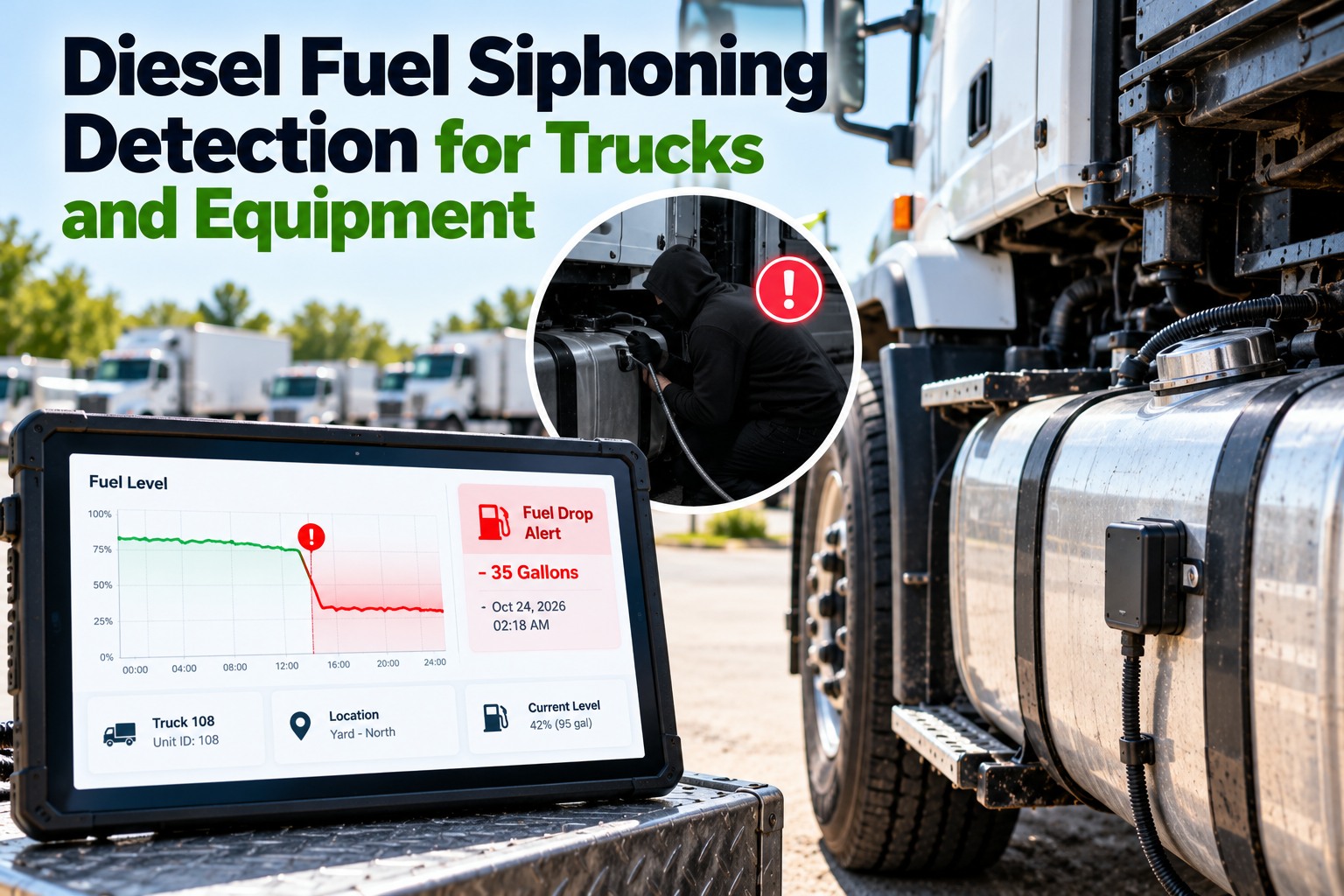
Diesel fuel siphoning rarely gets noticed when it happens. It shows up later as a tank that's lower than it should be, a fuel bill that doesn't match the miles, or a driver who swears he filled up. Fuel siphoning detection means catching that gap in your data quickly: tank sensors that flag a sudden fall while the truck is parked, fill-versus-burn checks that reconcile purchases against fuel used, and an evidence trail strong enough to act on. Schedule a call to see fuel-loss alerts and fuel reconciliation in FleetRabbit.
Fleet fuel security
A tank doesn't lose 30% overnight with the engine off. Your data should tell you the morning after.
Tank level over two days
Illustrative
Fuel Siphoning Detection: Five Signals That Separate Theft From Normal Fuel Use
Fuel levels move for honest reasons: slosh on a slope, cold nights, a long idle. Theft leaves a different shape. These five signals are ranked by how strongly they point to fuel leaving the tank without being burned.
Strong
A sharp fall while parked with the ignition off
Level falls fast with no engine running and no movement. The classic siphoning signature.
Strong
Card used where the truck isn't
A fuel purchase logged miles from the truck's GPS position at that time.
Medium
A fill smaller than the receipt
The tank rose by less than the gallons billed, or the receipt is bigger than the tank can hold.
Medium
Purchases outrunning fuel burned
Over a week or month, gallons bought keep beating gallons the engine reports using.
Check first
Fuel per mile or hour climbing
Could be theft, but often idling, a leak or a maintenance problem. Inspect before you accuse.
Rule Out the Leak Before You Call It Theft
A weeping fuel line, a cracked tank or a stuck return valve can look like slow siphoning. Send any truck with an unexplained, steady loss for an inspection first. If the tank and lines are sound, the loss becomes an investigation.
Fill-Versus-Burn Checks: Reconciling Diesel Purchased Against Diesel Used
The most reliable theft check doesn't need a special sensor. Compare what you paid for with what the engine burned, and account for what's still in the tank.
Gallons bought
Fuel card or bulk tank records
−
Gallons burned
Engine fuel-used data via telematics
−
Change in tank
Level at end minus level at start
=
Unexplained loss
Investigate when it keeps growing
Worked example, one truck over one week (illustrative figures)
Bought on the fuel card
310 gal
Burned, per engine data
262 gal
Tank level change, start to end of week
+8 gal
Expect Small Gaps, Watch for Growing Ones
Engine fuel-used figures and pump meters are never perfectly matched, so a few gallons of difference is normal. A gap that grows week after week on one truck, or appears on several trucks with the same driver, is the pattern worth investigating.
Catch Diesel Fuel Siphoning the Morning After, Not at Month-End
Fuel card transactions and tank data side by side, with alerts when the numbers stop matching.
Fuel Tank Sensors for Theft Detection: What Each Type Can and Can't Catch
Fleets read tank levels three ways. The right choice depends on how often you need to see a loss, and how precisely.
Swipe sideways to see every column
Sensor
How it reads
Catches siphoning?
Watch out for
Factory gauge via telematics
Uses the truck's own float sender
Large losses only
Coarse readings, slosh on slopes
Capacitive probe
Probe fitted inside the tank
Yes, including smaller losses
Needs fitting and calibration per tank
Ultrasonic sensor
Mounted under the tank, no drilling
Yes, on suited tanks
Mounting position and tank shape affect accuracy
A Sensor Needs the Ignition and GPS Data Beside It
A level fall on its own can't tell theft from a refuel at a different pump or a reading error. Paired with ignition state and location, the same fall becomes evidence: truck parked, engine off, level down, at a known place and time.
Building a Fuel Theft Evidence Trail You Can Act On
Suspicion isn't enough for a disciplinary meeting, a police report or an insurer. In France, an insurance industry representative told reporters that theft cover typically pays for a damaged lock or tank but not the fuel itself, so your own records carry the case. Gather these for every incident.
What Diesel Theft Costs Trucking Fleets: Survey Estimates and Real Cases
Fuel theft is hard to total because so much of it goes unnoticed. The figures that exist come from surveys and individual carriers.
One French carrier's stolen diesel, as reported by trans.info in 2026
All of last year
13,800+ L
January 2026 alone
5,207 L
Transports Quincé put January's loss at about €6,750. In Germany the same month, police reported around 1,600 litres taken from two trucks overnight at one service area.
Up to 5% of Fuel Spend, by Fleets' Own Estimate
In a survey commissioned by Motive and reported by Truck News in 2023, nearly half of fleet respondents estimated that up to 5% of their fuel spend was fraudulent. That covers card fraud and side fueling as well as siphoning, but it shows how large the gap can be when nobody reconciles.
Diesel Theft Prevention: Physical Barriers Plus Monitoring That Proves Loss
Locks slow thieves down; data proves what happened. Use both. Carriers in the trans.info report pointed to locking caps, anti-siphon screens, alarms, numbered seals and parking with the filler neck against a wall or another truck, in well-lit, guarded lots.
How FleetRabbit Brings Fuel Siphoning Detection Into Your Maintenance Records
FleetRabbit connects fuel card transactions and telematics or tank-sensor data from the providers you already use, then ties fuel findings to inspections and repairs.
1
Fuel data in one view
Card purchases and tank levels side by side for each truck and machine.
2
Pattern alerts
Losses while parked and fills that don't match receipts, flagged quickly.
3
Inspection first
An unexplained loss opens an inspection, so leaks are ruled out before theft is alleged.
4
A record you can use
Readings, transactions, photos and repairs kept on the unit's history.
On the call:
your trucks' fuel data in one view
a fuel-loss alert traced to time and place
a fill-versus-burn check for one unit
Stop Diesel Theft From Hiding in Your Fuel Bill With Fuel-Loss Alerts and Reconciliation
Tank data, card transactions and inspections on one record, so every missing gallon has a time, a place and a paper trail.
Free for up to 3 assets · No credit card needed
Diesel Fuel Siphoning Detection: Questions Fleet Managers Ask
How can I tell if diesel is being siphoned from my trucks?
Look for a sharp tank-level fall while the truck is parked with the ignition off, fills smaller than the receipt, and fuel purchases that keep outrunning the fuel your engines report burning. One signal is a lead; two or more on the same truck is a pattern worth investigating.
Do I need a fuel tank sensor to detect siphoning?
Not to start. A fill-versus-burn check using fuel card records and engine fuel-used data reveals losses over a week or month. A tank sensor adds speed and precision, flagging a loss the night it happens and showing exactly when and where.
Schedule a call to compare options.
What is a fill-versus-burn check?
It compares gallons bought with gallons the engine burned, adjusted for any change in tank level. The leftover is unexplained loss. Small gaps are normal measurement noise, but a gap that grows week after week on one truck or driver needs investigation.
Does insurance cover stolen diesel?
Often not the fuel itself. An insurance industry representative in France told reporters that theft cover typically pays for a damaged lock or tank but excludes the stolen fuel. Check your own policy, and keep time-stamped records, since they may be your only route to recovery.
What evidence do I need to act on fuel theft?
Collect the time-stamped tank reading before and after the loss, GPS location and ignition state, the day's card transactions, who had the truck and keys, photos of any damage, camera footage if available, and a police report number. Gather it quickly, before footage is overwritten.
How does FleetRabbit help detect fuel theft?
FleetRabbit brings fuel card transactions and telematics or tank-sensor data into one view, flags sudden losses and mismatched fills, and opens inspections so leaks are ruled out first. Every reading and repair stays on the unit's record.
Schedule a call to see it with your fleet.
October 26, 2026
By Derek Goes
All Articles