Roll-off truck tarp system maintenance comes down to four parts: arms, springs and pivots, the drive system, and the tarp itself. This guide gives an inspection checklist, explains why tarps roll crooked and breaks arms, and sets out the load-covering rules haulers need to check to avoid fines. Schedule a call to add tarp checks to your inspections.
Roll-Off Truck Tarp System Maintenance Starts With the Four Parts That Fail: Arms, Springs, the Drive System and the Tarp
Arm damage is the most common cause of tarp trouble, according to one equipment article
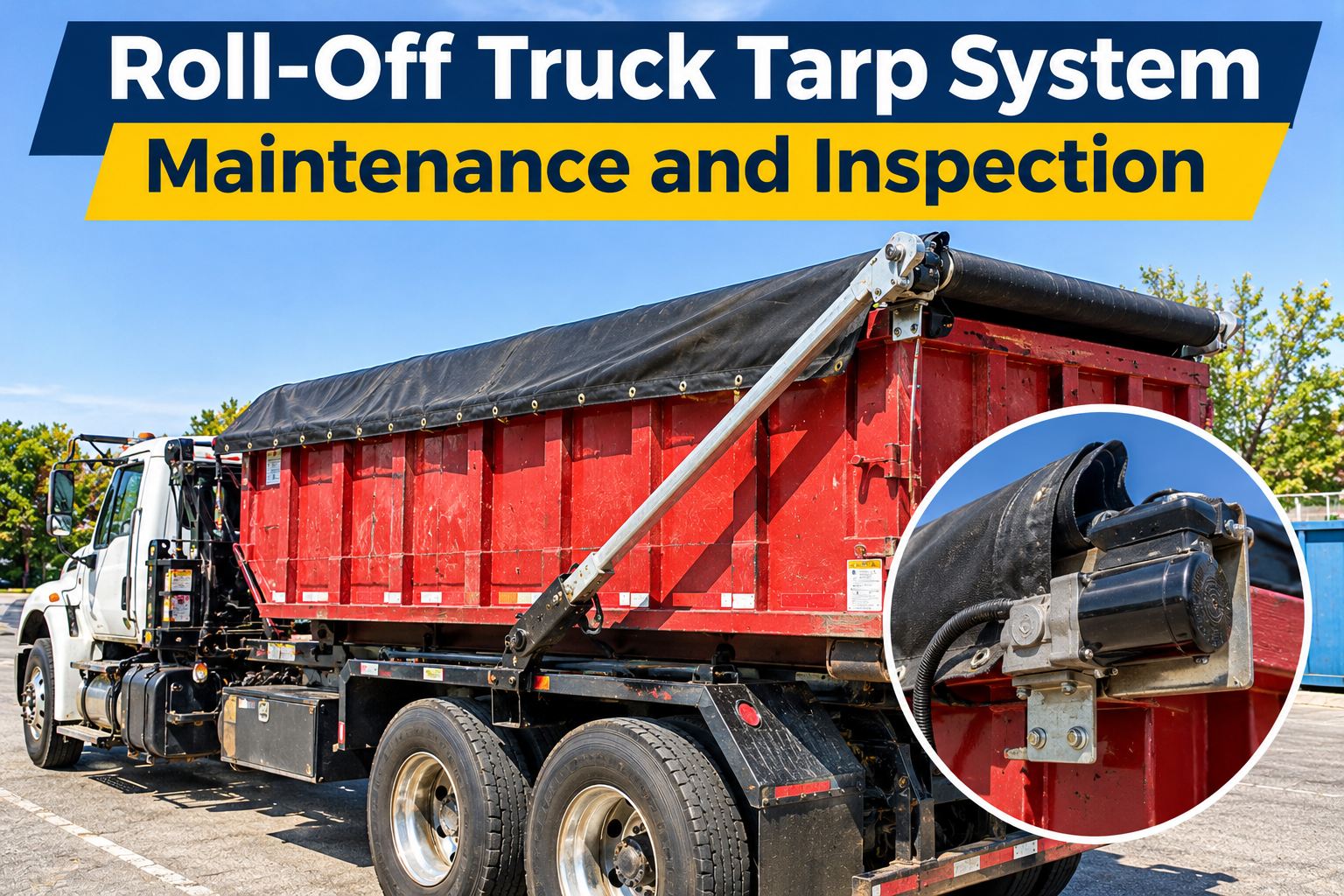
A tarp system is simple until one part drifts out of adjustment, and then the others suffer. Damaged tarps can make the arms pivot out of sync and roll up out of square, and unrepaired worn parts often lead to unplanned downtime. Two equipment makers wrote the sources we used here, so follow your own manufacturer instructions where they differ.
| Part | What to check | Notes |
|---|---|---|
| Arm springs | Breaks, deformation, loss of tension, attachment and alignment | From a tarp manufacturer article |
| Pivot pins | Grease steel pivot pins that have a grease fitting | Weekly in constant or heavy use |
| Arm and gantry framework | Grease the steel frames that extend and retract | Same routine as pivot pins |
| Hydraulic hoses and fittings | Cracking or leaks, on systems that use them | Follow the manufacturer |
| Electrical connections | Check components and connections | Motors and cables were not detailed in the sources we reviewed |
| Tarp | Tears, damage, repairs that shorten one section | Replace torn or damaged tarps |
| Arm bumpers and rest position | Arms should reach the container when deployed; secure them if they hang back | Use bungees or straps if needed |
Why Roll-Off Tarps Roll Crooked and Arms Get Damaged: Container Strikes, Wind, Uneven Ground and Weak Springs
Most problems start with how the container is set down, not with the tarp itself
One article recommends walkaround checks of the container for damage and protruding objects, awareness of overhead obstacles and lockout and tagout procedures during tarp work. Confirm those steps with your manufacturer.
A Roll-Off Tarp Maintenance Routine: Daily Checks, Weekly Greasing and Prompt Repairs
Short, frequent checks beat a yearly teardown
Operator habits that protect the system
The same manufacturer article gives a few operator tips. Do not operate the tarp near overhead wires, moving components or anyone near the container. If the tarp snags on a heaped load, free it following your company procedure. On windy days, position the truck facing into the wind. Spring arms should be secured on windy days and for highway travel, so build those steps into the pre-trip and the post-trip.
Roll-Off Load Covering Rules and Fines: What Haulers Need to Check Before Every State and City
There is no single national tarp rule for roll-offs, so check each jurisdiction
Federal cargo securement rules require cargo to be secured against spilling, blowing or falling, and states and cities add their own covering laws and fines. The Washington figures below are one example, not a national standard, and local ordinances may be stricter.
| Level | Rule | What it means for a hauler |
|---|---|---|
| Federal | 49 CFR 393.100(b) requires cargo to be secured against leaking, spilling, blowing or falling from the vehicle | The general rule for commercial vehicles; it does not name a tarp type |
| State | Varies; for example Washington requires loads to be covered and secured under RCW 46.61.655 | Check the statute for every state you haul in |
| Washington example | A $231 ticket for an unsecured load, and up to $5,000 plus possible gross misdemeanor if a load falls and causes damage or injury | One state only, per the state Ecology page |
| Local | Many cities and counties have ordinances stricter than state law, and some require facilities to charge a fee for unsecured loads | Ask the disposal site and the city |
How FleetRabbit Handles Roll-Off Tarp System Maintenance: Pre-Trip Checks, Not Dispatch Ready Rules and Repair Orders
What FleetRabbit says its roll-off tools do for tarp systems
| Tarp need | What FleetRabbit pages describe |
|---|---|
| Pre and post-trip checks | Digital DVIR forms for roll-off trucks include auto-tarp systems |
| Pass or fail rules | A failed auto-tarp item can lock the truck as Not Dispatch Ready |
| Repairs | Failed checklist items convert into prioritized work orders with photos, routed to mechanics |
| Downtime | Auto-tarp arm faults are pre-categorized as downtime reasons |
| PM | PM triggers run on PTO runtime for items such as winch cable and hoist cylinder seals; the page lists no tarp-specific interval |
FleetRabbit pages mention auto-tarp checks and faults, but they do not list tarp-specific PM intervals, so set those from your manufacturer and ask how motor and arm findings are recorded.
Roll-Off Tarp System Maintenance FAQs: Inspection, Greasing, Crooked Tarps and Covering Rules
Short answers for roll-off fleet managers
What should I inspect on a roll-off tarp system?
Check arm springs, pivot pins, frames, hoses and fittings where used, electrical connections and the tarp itself. Look for breaks, lost tension, leaks, tears and arms that do not reach the container. Follow your tarp manufacturer for motor and cable checks.
How often should I grease a roll-off tarp system?
One tarp manufacturer says weekly greasing of steel pivot pins and frames when the system is in constant or heavy use. Other checks are listed as daily, without an interval. Use your manufacturer instructions, and keep a record by truck.
Why does my roll-off tarp roll to one side?
Common causes are wind, uneven ground, a tear closed with a zip tie that shortens one section, weak spring pivots, broken roller springs and out-of-sync cylinders. Damaged arms on one side are the most common cause, one article says, so check both arms and both sides of the tarp before you blame the motor.
Does a roll-off truck have to be tarped by law?
There is no single national tarp rule for roll-offs. Federal rules require cargo to be secured against spilling, blowing or falling, and states and cities set covering laws and fines. Check each jurisdiction where you haul, and ask your disposal site.
What are the fines for an uncovered load?
They vary by state and city. In Washington the state page lists a 231 dollar ticket for an unsecured load and fines up to 5,000 dollars, with possible gross misdemeanor charges, if a load falls and causes damage or injury. Check your own state.
Where do I start with FleetRabbit?
Add auto-tarp items to your roll-off pre-trip, set pass or fail rules and let failed items open repair work orders. Ask how motor and arm findings are recorded and which tarp PM intervals you can set before rolling it out. Try tarp inspections in FleetRabbit.