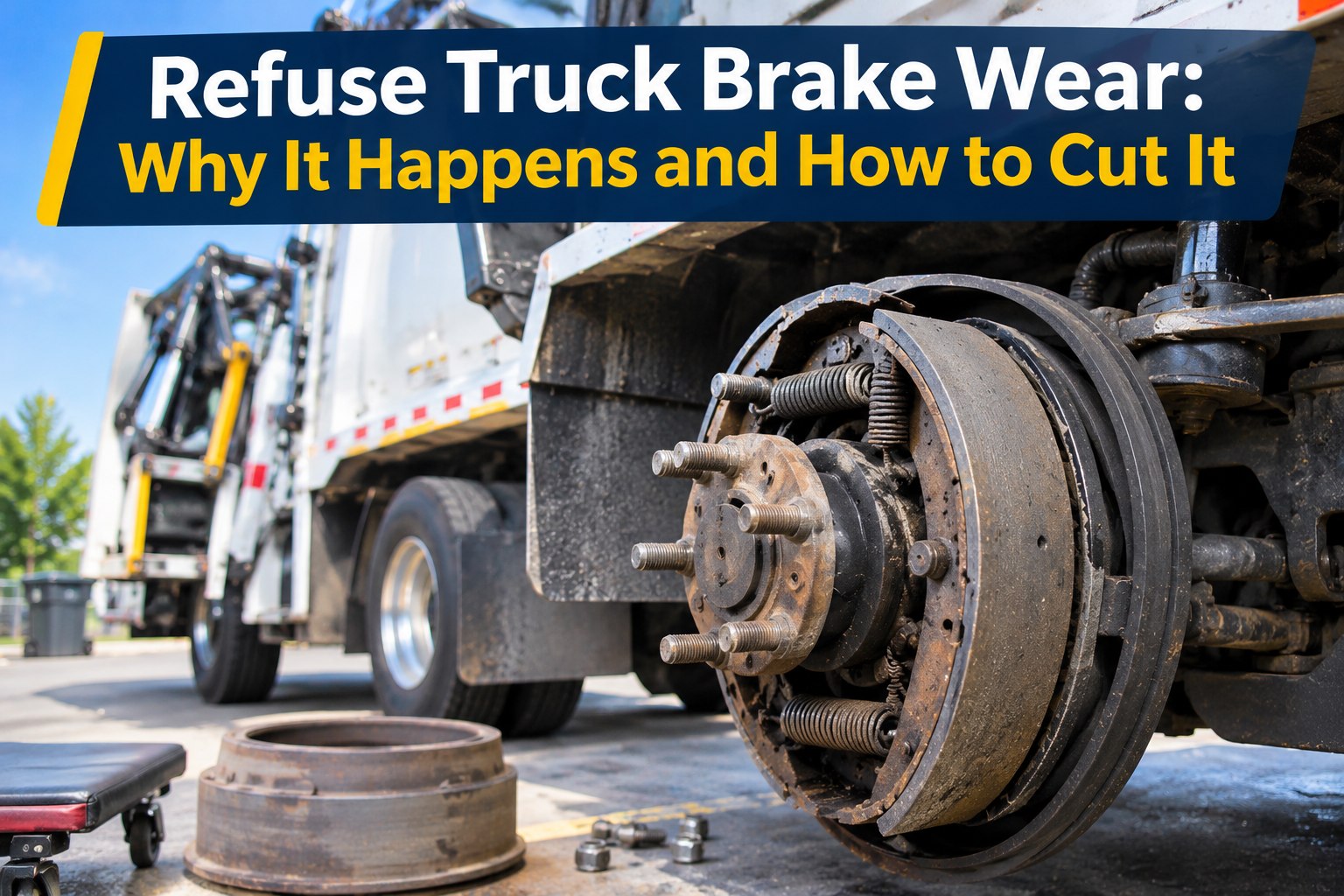
Refuse truck brake wear is fast because garbage trucks make hundreds of heavy brake applications per shift at high brake temperatures. This guide explains why it happens, what to inspect and measure, how to keep adjusters and lubrication from becoming the problem and how to track wear by truck so replacements are planned. Schedule a call to set your refuse brake inspection routine.
Why Refuse Truck Brake Wear Is So Fast: Hundreds of Heavy Stops a Shift at High Brake Temperatures
Stop-and-go duty, not distance, drives lining life on a garbage route
A waste industry article says refuse vehicles use their brakes more than any other vocational vehicle. A trucking trade article quotes brake suppliers who put a refuse truck at 200 to 300 heavy brake applications per shift, with brakes running 450 to 500 degrees Fahrenheit, against roughly two applications a day on the highway. The meta description of this page may suggest higher stop counts, but we found no source for a figure above that.
| Wear question | What the sources say | Caveat |
|---|---|---|
| Why brakes wear so fast | Duty cycle drives it: 200 to 300 heavy applications per shift at 450 to 500 F | Supplier estimates, not measured data |
| How long linings last | Refuse shoe linings can wear out in as little as two months | A minimum, not an average |
| What speeds wear | Low tire pressure creates heat that can wear brake parts early; de-icers can rust-jack linings | General guidance |
| What slows wear | Quality grease on adjusters and cam bushings, correct adjustment and fixing root causes | Supplier advice |
| Lining material choice | We found no independent comparison of lining materials | Ask your brake supplier for data on your duty cycle |
Refuse Truck Brake Inspection Item by Item: Chambers, Slack Adjusters, S-Cam Bushings, Shoes and Drums
Use the same checks for every truck, and measure stroke instead of guessing
The list below comes from a brake supplier article for waste fleets. The author works for a brake supplier, so confirm specifications with your manufacturer. Brake stroke limits depend on chamber size, so use the figures for your chambers.
| Component | What to check | Why it matters |
|---|---|---|
| Brake chambers | Straight pushrod, corrosion, cracks at the mounting base, weatherseal plug in place | A bent or cracked chamber causes uneven braking |
| Air hoses and fittings | Secured, not chafing, matching size and length from valve to chamber | Mismatched hoses cause brake imbalance |
| Slack adjusters | Wear, movement, corrosion and grease | An adjuster that does not index lets stroke grow |
| S-cam bushings | Play when you grasp the s-cam | Worn or corroded bushings cause overstroke |
| Shoes and drums | Oil contamination, discoloration and cracks | Oiled shoes should be replaced |
| Free play | Should not exceed one quarter inch | Excess is often a worn clevis pin |
| Air leakage | Air loss should not exceed 3 psi in 5 minutes | A leak points to a valve or chamber problem |
Brake Adjustment on Refuse Trucks: Check Stroke, Test the Adjuster and Find the Cause Before You Adjust
Overstroke is a symptom, and manual cranking of automatic adjusters can cause damage
One supplier article says adjusting only to correct overstroke is a temporary fix. Another trade article describes a wrench test: with a helper applying the brakes, the adjuster nut should index, and if the wrench swings the adjuster is working. Drivers may check adjustment but cannot work on brakes without the required training, so they should report out-of-adjustment brakes for repair.
How to Cut Refuse Truck Brake Wear and Cost: Six Habits That Protect Linings, Drums and Adjusters
Most savings come from preventing damage, not from a special lining
Track Brake Wear by Truck and Plan Replacements: A Simple Record for Refuse Fleets
Record when, how far and how fast linings wear on each unit
One supplier recommends using the manufacturer wear gauge and recording the in-service date and the mileage when the lining reaches 50 percent wear, then planning the next drum pull from that. His example is for highway trucks, so for refuse routes use engine hours or calendar time instead of miles. We found no reliable replacement cost figure, so track your own cost per brake job.
How FleetRabbit Handles Refuse Truck Brake Maintenance: Pre-Trip Checks, Scheduled Service and Work Orders
What FleetRabbit says its tools do for brake inspection
| Brake need | What FleetRabbit pages describe |
|---|---|
| Daily check | The daily pre-trip DVIR covers brakes and air, and FleetRabbit says brake checks belong on every pre-trip |
| Scheduled work | Brake work is scheduled by mileage in a system that triggers on whichever interval comes first |
| A-service | An A service at 150 hours or 45 days includes brake adjustment, a trigger the page attributes to Mack |
| Defects | Driver DVIRs and inspection failures open work orders |
| History | Service history is kept for DOT and audit review |
FleetRabbit pages do not describe a brake-specific wear tracker, so ask how lining measurements and stroke readings are recorded and which of your own intervals can be set.
Refuse Truck Brake Wear FAQs: Why It Happens, Inspection, Adjustment and Cost
Short answers for refuse shop managers
Why do refuse truck brakes wear out so fast?
Refuse routes are stop and go, so trucks make many heavy brake applications per shift. Brake suppliers quoted in one trade article put it at 200 to 300 applications with brakes at 450 to 500 degrees Fahrenheit, which is far harder duty than highway driving.
How long do refuse truck brake linings last?
It varies by route and truck. One article says refuse shoe linings can wear out in as little as two months, against much longer life on the highway. Use a wear gauge and record each truck so you can plan your own inspection schedule.
What should I inspect on refuse truck brakes?
Check chambers for straight pushrods and cracks, air hoses, slack adjusters, s-cam bushings, shoes and drums, free play and air leakage. Measure brake stroke instead of guessing, and log it with the PM so you can see the trend and catch a truck that is wearing faster than the rest of the fleet.
Should I adjust automatic slack adjusters by hand?
Generally no. An adjuster out of range is usually a symptom of another problem, and one article says manual adjustment can damage the mechanism and that safety bodies strongly prohibit tampering. Find the cause first, then repair it, and record the stroke before and after so the history shows what was done.
Which lining material lasts longest on refuse trucks?
We found no independent comparison of lining materials. Ask your brake supplier for data on your duty cycle, and compare your own wear records by truck so you can judge any change you make, not just trust a claim from a supplier or a sales sheet.
Where do I start with FleetRabbit?
Add brake checks to the pre-trip, schedule brake work by hours or miles and let inspection failures open work orders. Ask how lining and stroke measurements are recorded before you rely on it for wear tracking, and which intervals you can set yourself. Try brake inspections in FleetRabbit.