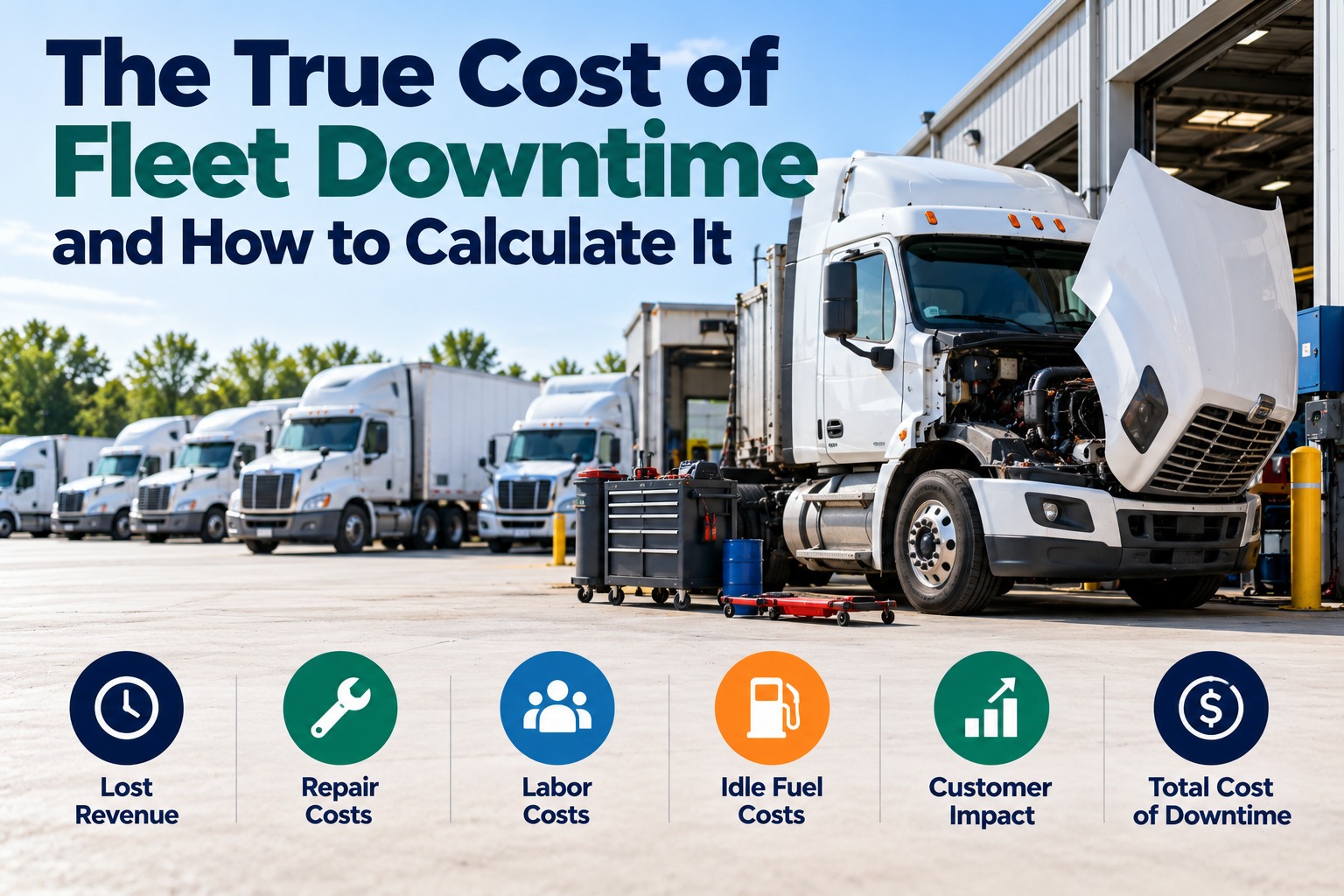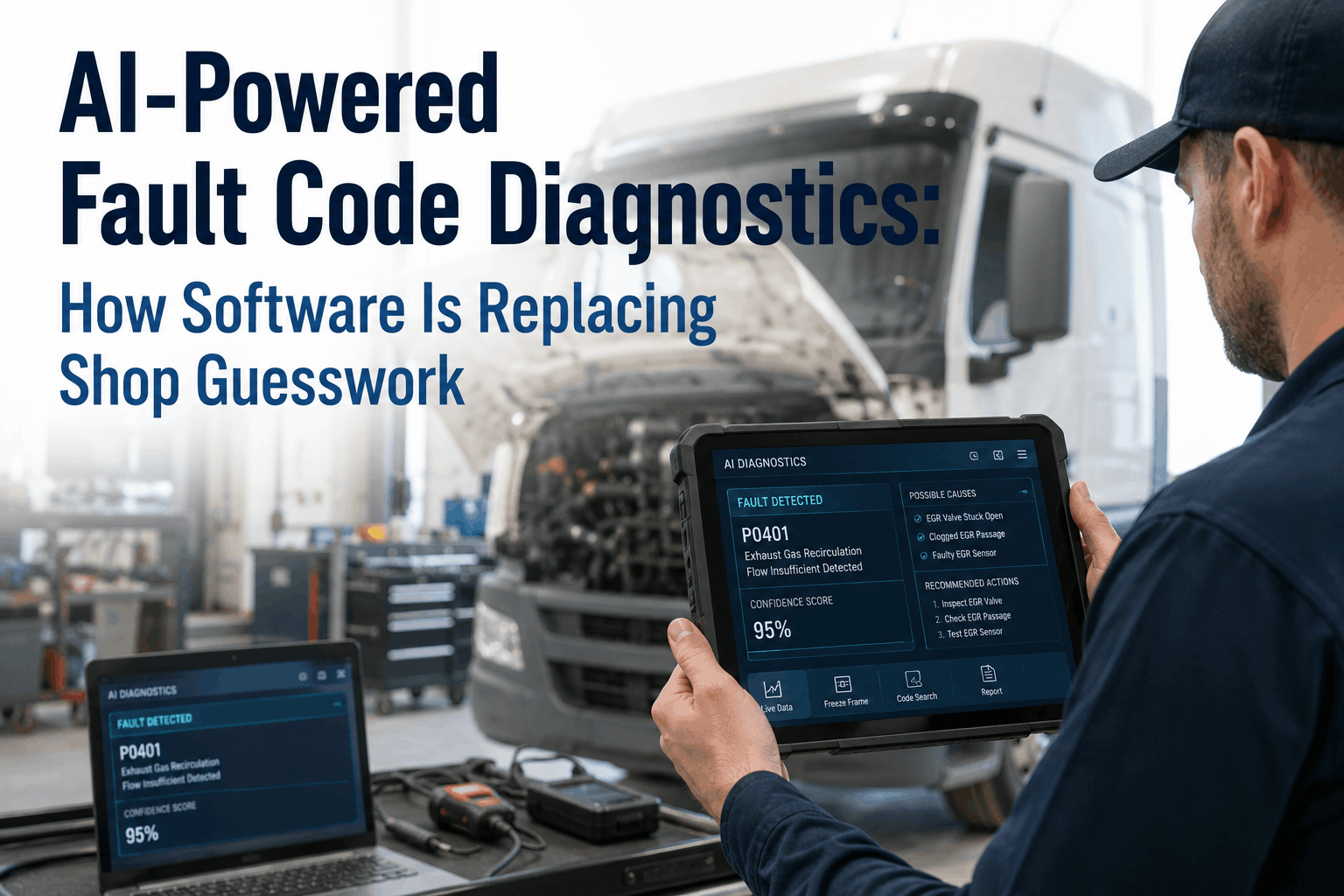
Fleet managers have long lived with a painful reality: a warning light appears, the vehicle gets towed, a technician plugs in a scanner, and hours later — sometimes days — a diagnosis finally arrives. Meanwhile, your truck sits idle, costing you between $448 and $760 per day in lost productivity. This is not a maintenance problem. It is an information problem. And artificial intelligence is solving it at scale.
AI-Powered Fault Code Diagnostics: How Software Is Replacing Shop Guesswork
The Problem With Traditional Fault Code Management
Every modern commercial vehicle is equipped with dozens of electronic control units (ECUs) that continuously monitor engine performance, emissions, braking, transmission, and more. These systems generate Diagnostic Trouble Codes (DTCs) — each one a signal that something may be wrong. But here is the catch: not all signals are equal, and without intelligent filtering, fleet managers are drowning in noise.
One study by data science experts at Uptake found that a single fleet vehicle can generate nearly 8,000 fault codes annually. That volume makes it nearly impossible for maintenance teams to distinguish a critical powertrain fault from a minor sensor glitch. The result is one of two costly outcomes: vehicles are pulled off the road unnecessarily for every blinking light, or they continue running until a small problem becomes a catastrophic breakdown. Neither outcome is acceptable. Fleets that have made the shift are already saving thousands per vehicle per year — sign up with FleetRabbit to stop reacting and start predicting.
Hundreds of low-priority codes mask the 5–10 genuinely critical faults that demand immediate attention each year per vehicle.
Without root-cause intelligence, technicians spend hours diagnosing issues that AI can pinpoint in seconds using pattern recognition.
Traditional diagnostics tell you what broke. AI diagnostics tell you what is about to break — giving you time to act on your schedule, not the vehicle's.
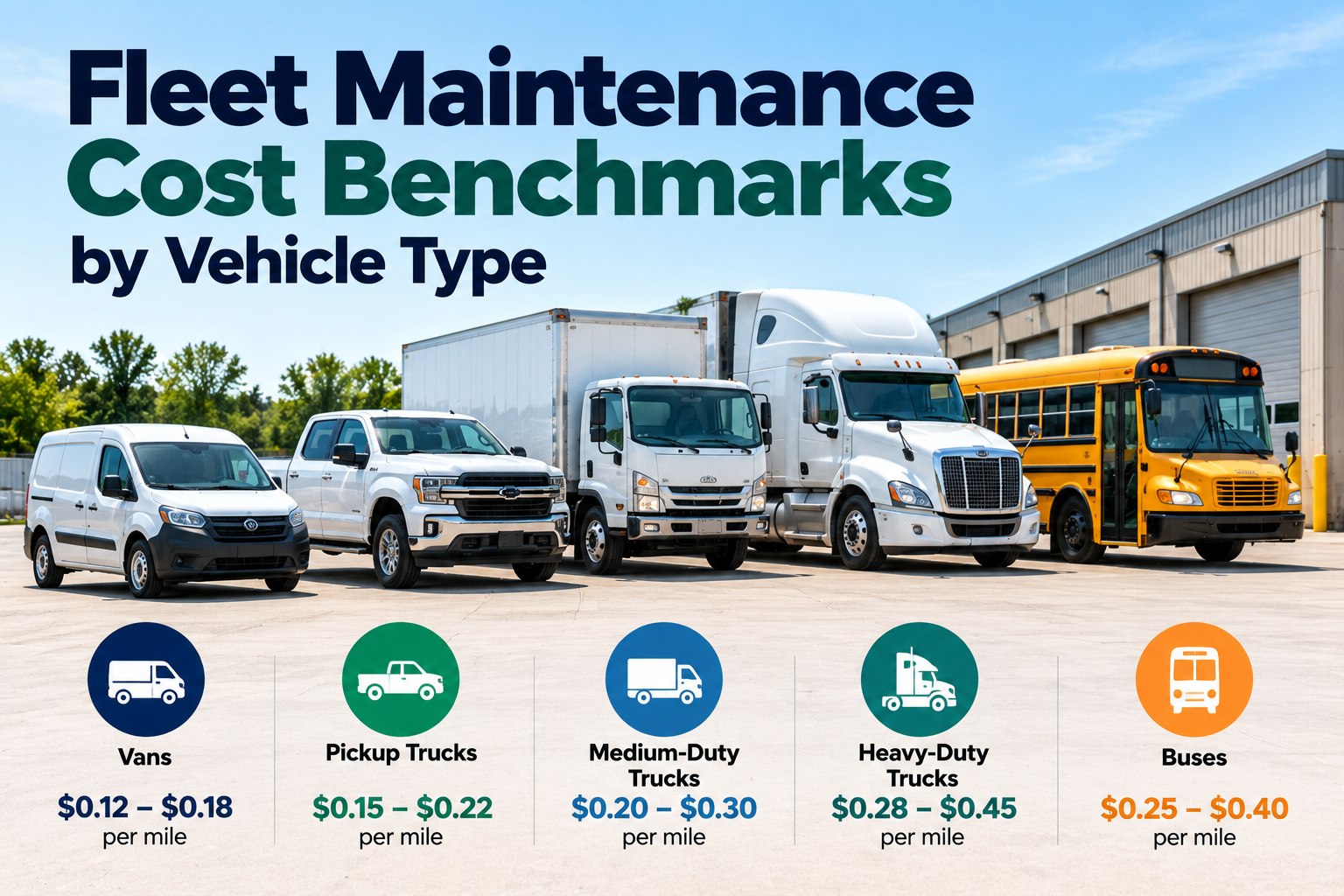
Mixed fleets with Ford, RAM, Mercedes, and Hino all use different fault code systems. AI unifies them into one actionable dashboard.
How AI Diagnostics Actually Work
AI-powered fault code diagnostics go far beyond simply reading OBD-II codes. The technology layers multiple data streams — sensor readings, ECU logs, telematics history, fleet-wide pattern libraries, and even manufacturer technical service bulletins — to build a real-time picture of vehicle health. When a fault appears, the AI does not just report the code. It ranks it by severity, maps it to likely root causes, and surfaces the most probable repair path for your technician.
OBD ports, telematics units, and ECU feeds stream live data to the cloud platform continuously.
Machine learning models compare incoming signals against millions of historical fault patterns across similar vehicles.
Codes are triaged automatically — critical faults trigger immediate alerts; minor issues are queued into scheduled maintenance.
Managers receive a ranked repair list with probable causes, estimated urgency, and suggested parts — before the vehicle even enters the shop.
This entire process happens in near real time. By the time your driver reports an issue, your maintenance team already has a diagnosis and a parts list ready. That single shift alone can cut vehicle downtime from two days to one — a result documented by fleets using AI-assisted diagnostic platforms. If you want to see this workflow in action, book a demo with FleetRabbit and walk through a live fleet scenario with our team.
Stop Losing Money to Preventable Breakdowns
FleetRabbit's AI diagnostics layer transforms your fleet's fault data into a clear maintenance action plan — reducing unplanned downtime by up to 50%.
The Real-World Impact on Fleet Operations
The numbers behind AI diagnostics adoption are striking. According to McKinsey research, predictive maintenance enabled by AI can reduce maintenance costs by up to 40% and cut downtime by up to 50%. Penske Transportation Solutions — operating a fleet of over 440,000 vehicles — prevented more than 90,000 breakdowns in a single year using AI-driven diagnostics. For mid-sized fleets, the impact is proportionally just as significant: operators using AI-enriched fault management have reported 30% reductions in maintenance expenses and a 50% increase in mean time between failures (MTBF).
AI diagnostics also directly improve fleet availability — one of the most important KPIs in commercial operations. Some operators have achieved availability rates of 93% or higher using these tools, compared to industry averages hovering in the low 80s. That additional uptime translates directly to revenue, on-time delivery rates, and customer satisfaction. The sooner your fleet makes this shift, the wider that advantage grows — sign up today and see the difference from day one.
Predictive vs. Reactive: Why the Difference Costs You
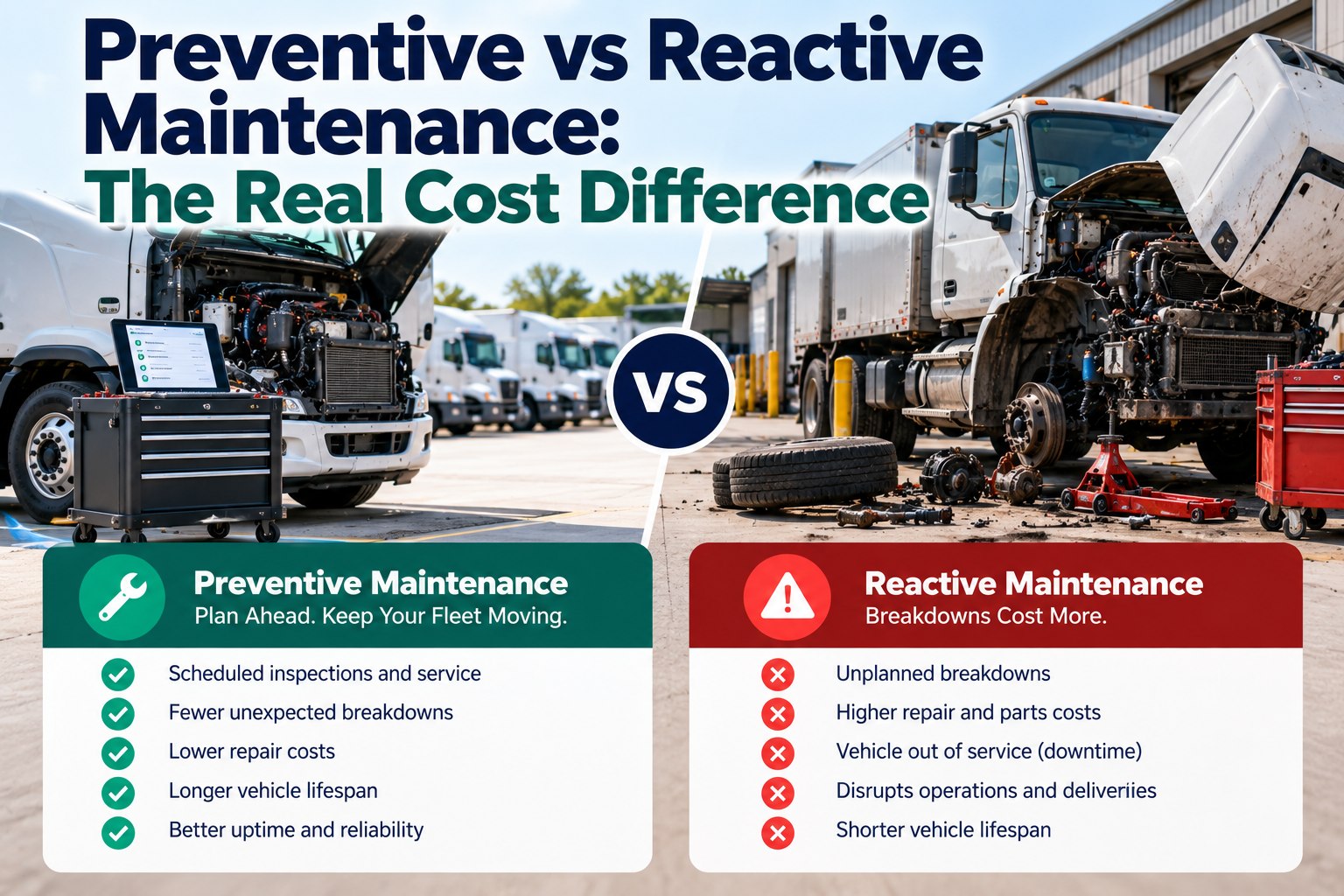
Most fleets still operate on a reactive maintenance model — fix it when it breaks. This approach made sense when vehicles were simpler and fault data was limited. Today, your trucks are computers on wheels. They are generating data signals every millisecond that, when properly analyzed, can predict engine failures weeks before they happen, flag deteriorating brake components before they become safety liabilities, and identify abnormal fuel consumption patterns that indicate injector or turbo issues.
The gap between reactive and predictive maintenance is not just a matter of philosophy. It directly affects your bottom line. Unplanned repairs cost significantly more than scheduled ones — emergency parts sourcing, overtime labor, roadside assistance, and the cascading schedule disruptions that ripple across your entire operation. You can see exactly how much your fleet stands to save when you book a FleetRabbit demo and have our team model your current fault data against predictive benchmarks.
AI systems flag emissions-related fault codes — EGR, DPF, SCR — that directly impact DOT and CSA compliance scores. Early detection avoids violations and out-of-service orders before they affect your safety rating.
With shrinking pools of skilled mechanics, AI diagnostic guidance allows less experienced technicians to perform complex repairs accurately using step-by-step VIN-matched instructions and wiring diagrams.
When a shop knows what part is needed before the vehicle arrives, parts are on the shelf. That single change cuts average repair turnaround from two days to one across documented fleet case studies.
The Market Shift Is Already Happening
The global automotive remote diagnostics market was valued at $19.23 billion in 2024 and is projected to reach $65.93 billion by 2032 — a compound annual growth rate of 16.7%. This is not a niche technology trend. It is a fundamental infrastructure shift in how commercial fleets operate. Major players like Bosch, Continental, and ZF are investing heavily in AI diagnostic platforms, and fleet operators who delay adoption are increasingly falling behind competitors who already benefit from this intelligence layer.
For fleets that run mixed-brand assets — the majority of commercial operations — AI platforms offer something even more valuable than diagnostics: a unified view of your entire fleet's health in a single dashboard. No more juggling multiple OEM tools. No more translating codes from different systems. Everything normalized, prioritized, and ready to act on. The fastest way to experience that unified view is to start your free FleetRabbit trial and connect your existing telematics in minutes.
Your Fleet's Health Dashboard Starts Here
FleetRabbit connects to your existing telematics and transforms raw fault data into clear, prioritized maintenance actions — across every vehicle in your fleet, every brand.
What AI Fault Diagnostics Means for Your Maintenance Team
One of the most underappreciated benefits of AI-powered fault code diagnostics is what it does for the people doing the actual repairs. Skilled technicians are increasingly difficult to recruit and retain. When those technicians spend hours diagnosing a fault that AI could have surfaced in minutes, that is wasted expertise and compounding labor cost. AI diagnostic platforms give technicians step-by-step repair guidance matched to the specific VIN, recommended parts lists, wiring diagrams, and historical service data — all before the wrench ever turns.
The result is faster first-time fix rates, less rework, and a maintenance team that feels supported rather than overwhelmed. Fleets that have deployed AI diagnostics report meaningful improvements in technician efficiency alongside their downtime reductions. The technology does not replace skilled mechanics. It makes them significantly more effective. Curious how it integrates with your current shop workflow? Book a demo and we will walk through the technician-facing tools side by side.