A trained driver's eye scans a truck in 15 minutes and catches the obvious — flat tires, broken lights, visible leaks. AI visual inspection scans the same truck in seconds and catches what eyes cannot: hairline cracks in brake drums, 1mm tread depth differences across 18 tires, nail punctures in sidewalls, corrosion progression under the chassis, and micro-leaks invisible at ground level. Companies like Amazon, Hertz, and Volvo are already deploying drive-through AI inspection systems across their fleets. For the rest of the industry, smartphone-based visual AI is making automated defect detection accessible to any fleet, at any scale. Start digital inspections with FleetRabbit.
Human Eye vs. AI Vision: What Each Can See
This isn't about replacing drivers — it's about augmenting what they can detect. Human inspection and AI vision have complementary strengths and very different blind spots.
Human Eye
Contextual judgment — "something feels off"
Mechanical feel — steering play, brake pedal feedback
Sound-based detection — squealing belts, air leaks by ear
Smell-based detection — burning fluid, overheating brakes
Fatigues after 10-15 minutes of careful inspection
Misses gradual wear (sees "fine" until it's not)
Cannot measure tread depth by looking
Inconsistent — quality varies by driver, time, weather
Cannot see undercarriage without getting underneath
AI Computer Vision
Measures tread depth to 0.1mm from photos
Detects uneven wear patterns indicating alignment drift
Spots nail punctures, sidewall tears, embedded debris
Tracks corrosion progression between inspections
Identifies fluid leak types by color and location
100% consistent — same standard every time, every truck
Compares current state against historical baseline
Cannot feel mechanical play or brake response
Cannot hear or smell problems
Best practice: combine both. AI catches what eyes miss. Drivers catch what cameras can't feel, hear, or smell. Together, defect detection rates exceed either method alone by 40-60%.
The 4 Scan Zones: Where AI Inspects Your Truck
AI visual inspection systems divide a truck into four scan zones, each with different camera requirements, defect types, and detection capabilities.
What AI detects
Dents
Scratches
Paint damage
Cracked glass
Missing mirrors
Broken lights
Reflective tape damage
Door seal gaps
Technology used
360-degree camera arrays with controlled lighting strips. Black-and-white stripe patterns reveal surface imperfections invisible under normal lighting. Detects damage as small as 2mm.
95-98% detection accuracy on exterior damage >2mm
What AI detects
Fluid leaks
Rust / corrosion
Exhaust damage
Frame cracks
Missing components
Brake line wear
Suspension damage
Foreign objects
Technology used
Ground-level high-resolution cameras (drive-through systems) or angled smartphone captures. AI stitches thousands of images into a complete undercarriage composite. Corrosion displayed as a severity heat map.
90-95% detection on leaks and structural damage
What AI detects
Tread depth (to 0.1mm)
Uneven wear
Sidewall tears
Nail/debris punctures
Bulges/bubbles
Wheel damage
Lug nut issues
Mismatched tires
Technology used
Dual-camera tire scanners (2 per side) analyze tread patterns, measure depth from shadow geometry, read tire date codes, and flag DOT minimum thresholds (4/32" steer, 2/32" drive/trailer). Amazon's AVI found that 35% of all detected issues stem from tires.
96-99% accuracy on tread depth and sidewall damage
What AI detects
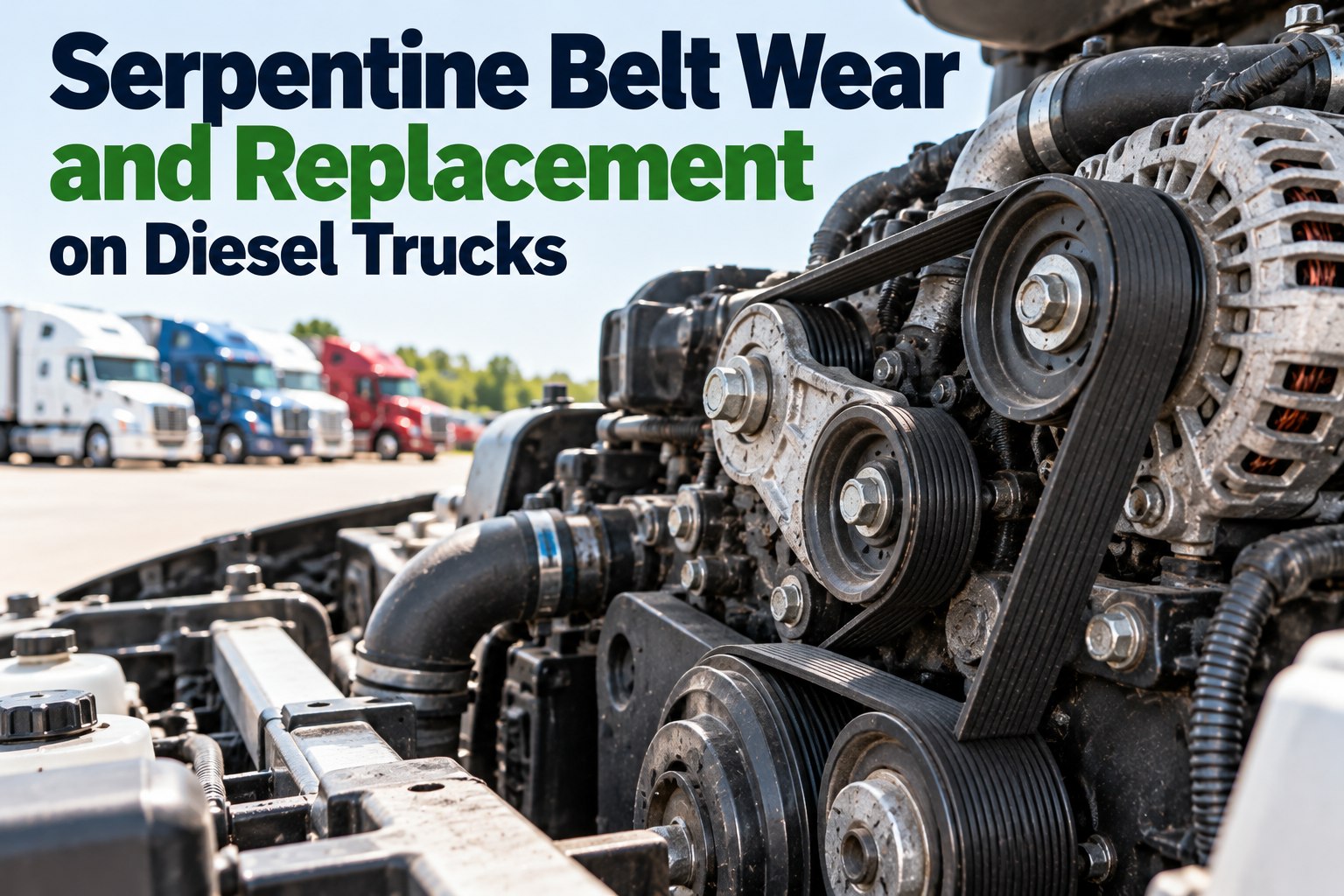
Belt wear/cracks
Hose deterioration
Wiring exposure
Coupling condition
Glad hand damage
Spring hanger cracks
Air line wear
DPF soot patterns
Technology used
Targeted close-up photos analyzed by component-specific ML models. AI trained on millions of images recognizes degradation patterns unique to each component type — different models for belts vs. hoses vs. wiring vs. coupling devices.
85-95% on visible component wear (varies by part type)
Visual Inspection Meets Maintenance Action
FleetRabbit connects inspection photo documentation directly to maintenance work orders, parts inventory, and PM schedules — so every defect detected is a defect resolved.
The Technology Spectrum: From Smartphone to Drive-Through
AI visual inspection exists on a spectrum. You don't need a $200K drive-through tunnel to get started — smartphone-based AI delivers 80% of the value at a fraction of the cost.
Tier 1
Smartphone Camera + AI App
$0-$50/vehicle/month
Driver uses their phone to capture guided photos during standard pre-trip inspection. AI app analyzes images on-device or in-cloud, flags potential defects, measures visible wear.
Zero hardware cost — uses existing phones
Works anywhere — yard, job site, truck stop
Integrates with eDVIR and maintenance platforms
Photo quality depends on driver and conditions
Cannot inspect undercarriage without effort
Best for: Fleets of 5-200 vehicles, distributed operations, mixed vehicle types
Tier 2
Fixed Camera Stations
$5,000-$25,000 setup + subscription
Mounted cameras at yard entry/exit capture consistent images of every vehicle at the same angles, lighting, and distance. AI compares each scan against the vehicle's baseline.
Consistent image quality every time
Automatic — no driver action needed
Baseline comparison detects gradual changes
Only works at equipped locations
Limited to exterior views from fixed angles
Best for: Central-yard fleets with 50+ vehicles departing from a single location daily
Tier 3
Drive-Through AI Tunnel
$100,000-$250,000+ setup
Full 360-degree scan including undercarriage, tires, and exterior in seconds as the vehicle drives through at 3-5 mph. Used by Amazon (100K+ vans), Hertz, GM, and Volvo. UVeye's system performs a complete 17-point inspection in under 10 seconds.
Complete vehicle scan in seconds — no driver time required
Undercarriage inspection without lifting the vehicle
Highest accuracy — controlled lighting and angles
Significant capital investment
Fixed location only — vehicles must pass through
Best for: Enterprise fleets with 500+ vehicles, centralized depot operations, OEMs
Most fleets start at Tier 1 and see immediate results. FleetRabbit integrates with smartphone-based inspection workflows — connecting photo documentation directly to maintenance work orders, compliance records, and fleet analytics. No hardware required. Schedule a demo.
Defect Classification: How AI Prioritizes What It Finds
Finding defects is only half the value. AI classification ensures the right defects get the right response at the right urgency.
Vehicle OOS until repaired
Tire tread below DOT minimum (4/32" steer, 2/32" other)
Brake component failure or severe wear
Steering linkage damage
Frame crack at structural point
Fluid leak on brake components
Non-functional headlights or taillights
Response: Dispatch blocked. Work order auto-created with URGENT priority. Maintenance team notified immediately.
Schedule repair within 7 days
Tread depth approaching minimum (6/32" - 4/32")
Minor fluid seepage (non-brake)
Cracked but functional clearance light
Belt showing early wear pattern
Surface corrosion on non-structural components
Door seal gap widening
Response: Work order created with SCHEDULED priority. Added to next PM cycle or earliest shop availability.
Track at next inspection
Even tread wear above 6/32" (normal degradation)
Cosmetic scratches or minor dents
Early-stage surface rust on non-critical parts
Slight hose softening without bulging
Reflective tape minor fading
Wiper blade streaking (not torn)
Response: Logged in vehicle history. AI compares against next inspection to track progression rate and predict when intervention needed.
Every Defect Gets the Right Response
FleetRabbit's maintenance platform integrates with visual inspection data to route defects to the right work order queue — urgent, scheduled, or monitored — automatically.
What the Leaders Are Doing
AI visual inspection isn't theoretical. The world's largest fleet operators are already running it at scale.
Amazon
100,000+ delivery vans
Deployed UVeye drive-through AVI (Automated Vehicle Inspection) systems at delivery stations across U.S., Canada, Germany, and UK. Drivers roll through a tunnel of cameras and sensors at end of shift. AI performs full scan in seconds, classifies severity, and sends results to fleet managers instantly. Key finding: 35% of all detected issues stem from tires — sidewall tears and embedded debris that manual inspections routinely missed.
Hertz
500,000+ rental vehicles
Partnered with UVeye in 2025 to deploy AI-powered camera systems for real-time automated inspections of body, glass, tires, and undercarriage across U.S. operations. High-resolution tire tread images analyzed instantly to determine replacement needs. System eliminates disputed damage claims between renters and provides transparent vehicle condition records at pickup and return.
Volvo Trucks
Global OEM program
Leverages AI for predictive maintenance in fleet service programs, using image and sensor data to identify wear patterns before they become failures. Installed UVeye Atlas inspection systems at assembly plants for quality control, catching defects invisible to human inspectors on the production line before trucks reach customers.
UVeye Heavy-Duty Platform
Class 6-8 trucks and buses
Launched in 2025 specifically for commercial fleets. Compliant with CTP AT17 requirements in U.S. and UK. Performs automated 17-point inspection in seconds as vehicles drive through at 3-5 mph. Detects tire wear, mismatched sets, underbody leaks, frame damage, and exterior defects across full tractor-trailer combinations.
Frequently Asked Questions
QHow accurate is AI visual defect detection compared to human inspection?
Current systems achieve 95-99% accuracy on visible external defects like tire tread depth, body damage, fluid leaks, and cracked lights. Human inspectors typically catch 60-80% of visible defects depending on experience, fatigue, and conditions. However, AI cannot detect mechanical issues requiring physical interaction — brake pedal feel, steering play, bearing noise. The optimal approach combines AI visual analysis with driver hands-on checks for the highest overall detection rate.
QDoes AI visual inspection replace the DOT-required pre-trip inspection?
No. FMCSA still requires drivers to personally inspect their vehicles and be satisfied they are in safe working condition before operating. AI visual inspection augments and documents the driver's inspection — it doesn't replace the regulatory requirement. However, AI significantly improves the quality and documentation of that inspection, providing photo evidence, measurements, and consistency that manual inspections alone cannot achieve.
QCan smartphone photos really work for AI defect detection?
Yes, with proper guidance. Modern smartphone cameras (12MP+) capture sufficient detail for AI to measure tread depth, identify leaks, detect cracks in lights, and assess body damage. The key is guided capture — apps that show drivers exactly where to point the camera and at what distance. Controlled conditions (drive-through tunnels) produce better results, but smartphone-based inspection delivers 80-90% of the detection capability at a fraction of the cost.
QWhat's the ROI of AI visual inspection for a mid-size fleet?
For a 50-truck fleet using smartphone-based AI inspection (Tier 1), the math typically shows: prevented breakdowns worth $38K-$76K/year (1-2 events/truck × $760/day), reduced repair costs of $42K-$62K/year from early detection, plus insurance savings of 5-10% from better safety documentation. Against software costs of $15K-$30K/year, most fleets see 300-500% ROI within 12 months. Drive-through systems (Tier 3) show even higher ROI for large centralized fleets due to near-zero driver time investment.
QHow does visual AI connect to fleet maintenance systems?
The best implementations connect visual inspection directly to maintenance management platforms like FleetRabbit. When AI detects a defect, it auto-classifies severity, generates a work order with photo evidence attached, assigns it to the appropriate technician, and tracks resolution. This closed-loop workflow ensures that every defect detected is a defect resolved — the missing link that turns inspection data into actual fleet improvement.
See What Your Eyes Can't. Fix What Your Inspections Miss.
FleetRabbit bridges the gap between defect detection and defect resolution — connecting digital inspections, photo documentation, and AI insights directly to maintenance work orders, PM schedules, and compliance records.
February 13, 2026
By James Henderson
All Articles