How autonomous decision engines automate operational planning, predictive maintenance, and real-time fleet optimization - transforming fleet leaders from reactive managers to strategic commanders in 2026
800+
Hours Saved Monthly
47%
Average ROI Increase
99%
Decision Accuracy
6 Months
Typical ROI Timeline
The era of reactive fleet management is ending. By 2026, autonomous decision support systems will handle scheduling, task routing, maintenance planning, and compliance reporting without human intervention, allowing fleet leaders to focus on strategy rather than daily firefighting. Geotab's 2026 trucking predictions confirm that AI will move beyond summarizing documents to actively running operations. With GPS tracking delivering 47% ROI and predictive maintenance reducing costs by up to 20%, the question isn't whether to adopt decision intelligence, but how quickly you can implement it. Discover your automation potential with our free decision intelligence assessment in 10 minutes, or schedule a personalized automation strategy session to see what autonomous decision support means for your fleet.
Unlock Your Fleet's Decision Intelligence Potential
See exactly which decisions can be automated and how much time your team will save. Our experts analyze your operations and build a custom automation roadmap.
What Is Autonomous Decision Support?
Autonomous decision support represents the evolution from AI that merely provides recommendations to AI that executes decisions independently. Unlike traditional fleet management systems that alert managers to problems, autonomous systems analyze data, evaluate options, and take action, all within parameters you define.
The 2026 Shift
According to industry analysts, 2025-2026 marks the transition from "AI that advises" to "AI that acts." Geotab predicts that AI will help run scheduling, task routing, and decision support as fuel on top of ongoing digitization efforts. Early operational use cases focus on tasks humans can verify, with checks in place before AI outputs drive real-world actions.
Traditional Systems
Role: Alert and recommend
Action: Manager decides and executes
Speed: Hours to days
Scope: Single-issue focus
Decision Support AI
Role: Analyze and suggest
Action: Manager approves
Speed: Minutes to hours
Scope: Multi-factor analysis
Autonomous Decision AI
Role: Analyze, decide, and execute
Action: AI acts within parameters
Speed: Seconds to minutes
Scope: Fleet-wide optimization
Decision Support Evolution: From Alerts to Autonomy
| Capability | Traditional | Decision Support | Autonomous AI | Business Impact |
|---|---|---|---|---|
| Route Changes | Manual dispatcher | AI suggests alternatives | Auto-reroutes in real-time | 10% fuel reduction |
| Maintenance Scheduling | Fixed intervals | Predictive alerts | Auto-schedules service | 50% less downtime |
| Driver Assignment | Manual matching | Ranked recommendations | Optimal auto-dispatch | 58% more stops/day |
| Compliance Reporting | Manual compilation | Pre-filled templates | Auto-generated reports | 800 hours/month saved |
| Fuel Purchasing | Driver discretion | Price trend alerts | Optimized fuel routing | 20% fuel cost savings |
| Exception Handling | Reactive response | Risk flagging | Proactive resolution | 70% fewer escalations |
Five Operational Areas Ready for Autonomous Decisions
Not every fleet decision should be automated. The highest-value targets are repetitive, data-rich decisions where AI consistently outperforms human judgment. Explore automation opportunities with our free operational audit tool in 15 minutes or book a decision mapping consultation.
Dynamic Route Optimization
AI continuously recalculates routes based on traffic, weather, delivery windows, and driver hours, executing changes without dispatcher intervention.
- Decision Speed: Sub-second adjustments
- Data Sources: GPS, traffic APIs, weather, HOS
- Human Override: Driver can request alternatives
- Measured Impact: 10% fuel savings, 15% more deliveries
Predictive Maintenance Scheduling
AI predicts component failures 4+ weeks in advance and automatically schedules service during optimal windows, coordinating with parts inventory.
- Decision Speed: Daily optimization cycles
- Data Sources: 8,000+ sensor data points
- Human Override: Maintenance manager approval for major work
- Measured Impact: 70% less unplanned downtime
Intelligent Driver Dispatch
AI matches drivers to loads based on location, qualifications, hours remaining, equipment type, and customer requirements, auto-assigning optimal pairings.
- Decision Speed: Real-time assignment
- Data Sources: ELD, qualifications, customer history
- Human Override: Dispatcher can reassign
- Measured Impact: 35% efficiency improvement
Automated Compliance Reporting
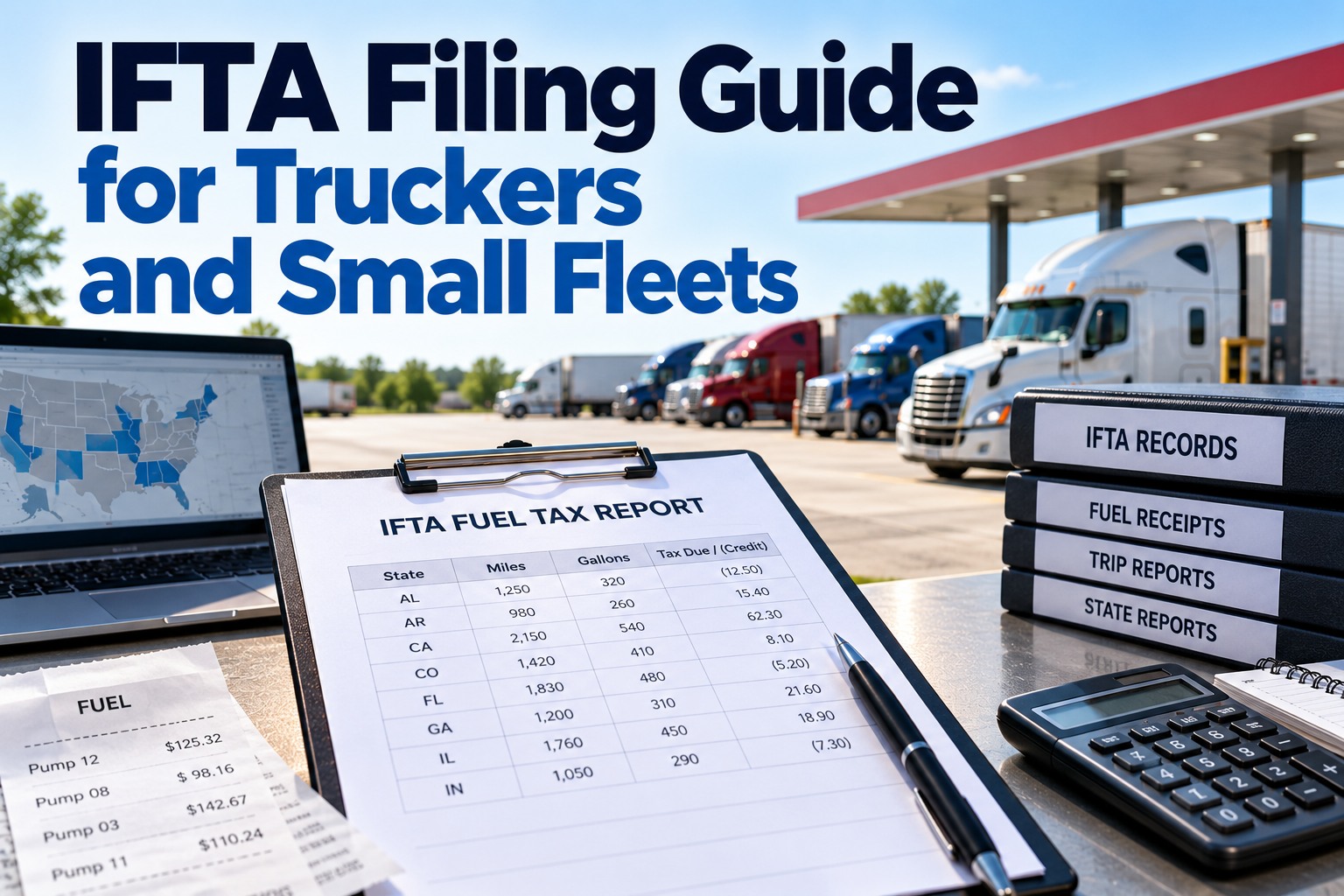
AI collects required data, generates reports, and submits compliance documentation automatically, eliminating manual IFTA, HOS, and emissions reporting.
- Decision Speed: Continuous collection, scheduled submission
- Data Sources: ELD, fuel cards, telematics
- Human Override: Review before submission
- Measured Impact: 800 hours/month saved
Real-Time Driver Coaching
AI monitors driving behavior, provides instant alerts for unsafe actions, and automatically triggers coaching workflows based on performance patterns.
- Decision Speed: Instant in-cab alerts
- Data Sources: Dash cams, accelerometers, telematics
- Human Override: Safety manager reviews incidents
- Measured Impact: 92% reduction in phone use violations
Fuel Cost Optimization
AI analyzes fuel price trends, routes, and consumption patterns to recommend optimal fueling locations and automatically route drivers to best-price stations.
- Decision Speed: Dynamic per-trip optimization
- Data Sources: Fuel price APIs, consumption data, routes
- Human Override: Driver can choose alternatives
- Measured Impact: 20% fuel cost reduction
Map Your Automation Opportunities
Identify which decisions in your operation are ready for automation and calculate the time savings. Our experts help prioritize implementation for maximum impact.
The Technology Behind Autonomous Fleet Decisions
Autonomous decision support combines multiple AI technologies working in concert. Understanding this architecture helps fleet leaders evaluate solutions and set realistic expectations. Access our free technology readiness checklist or schedule a technical architecture review.
Core Technology Stack for 2026
- Machine Learning Models: Predictive algorithms trained on fleet-specific data, continuously improving through operational feedback loops
- Real-Time Data Integration: Telematics, IoT sensors, and external APIs feeding unified decision engines at 10Hz+ refresh rates
- Edge Computing: In-vehicle AI chips (30+ TOPS at sub-5W) enabling local decisions without cloud latency
- Natural Language Processing: Conversational interfaces allowing managers to query data and adjust parameters in plain language
- Workflow Automation: Rule-based triggers connecting AI decisions to downstream systems (TMS, WMS, ERP)
Decision Engine Architecture
Data Ingestion
200+ data points per vehicle collected continuously from telematics, sensors, and external sources
Context Analysis
ML models correlate multiple data streams to understand current operational state and constraints
Decision Generation
AI evaluates options against business rules, constraints, and optimization objectives
Autonomous Execution
Approved decisions trigger automated workflows, notifications, and system updates
Critical Implementation Consideration
Geotab emphasizes that current AI models still hallucinate. Industry leaders expect early operational use cases to focus on tasks humans can verify, with checks in place before AI outputs drive real-world actions. Start with human-in-the-loop validation before enabling fully autonomous execution.
AI Accuracy Benchmarks by Decision Type
| Decision Category | AI Accuracy | Human Benchmark | Recommended Autonomy | Validation Method |
|---|---|---|---|---|
| Route Optimization | 98.5% | 82% | Full automation | Post-trip analysis |
| Predictive Maintenance | 94% | 71% | Auto-schedule with approval | Technician confirmation |
| Driver Safety Alerts | 99% | 65% | Full automation | Video review on escalation |
| Compliance Reporting | 99.5% | 89% | Full automation | Audit sampling |
| Load Matching | 92% | 78% | Ranked suggestions | Dispatcher review |
| Fuel Optimization | 96% | 74% | Auto-routing enabled | Cost tracking |
Measured Impact: What Autonomous Decision Support Delivers
The business case for autonomous decision support is built on quantifiable outcomes across time savings, cost reduction, and operational improvement. Calculate your potential impact with our free ROI projection tool.
Time Savings
- 800 hours/month saved on IFTA reporting (Cascade Environmental)
- 70% reduction in manual compliance tasks
- 85% faster dispatch decisions
- 60% less time spent on exception handling
Cost Reduction
- 47% ROI from GPS tracking and telematics
- 20% lower maintenance costs
- 10% fuel savings from route optimization
- $448/hour saved per avoided breakdown
Operational Improvement
- 50% reduction in unplanned downtime
- 72% decrease in asset theft/loss
- 70% improvement in trailer utilization
- 92% drop in driver phone violations
Safety & Compliance
- 99% compliance rate with automated reporting
- 3-4x more effective safety alerts vs. competitors
- 90-95% PM compliance in high-performing fleets
- Zero fines from compliance automation
ROI by Fleet Size: Investment vs. Returns
| Fleet Size | Implementation Cost | Year 1 Savings | ROI Timeline | 3-Year Net Benefit |
|---|---|---|---|---|
| 10-25 trucks | $20,000-$50,000 | $45,000-$95,000 | 4-6 months | $180,000-$350,000 |
| 25-50 trucks | $50,000-$125,000 | $120,000-$280,000 | 3-5 months | $450,000-$920,000 |
| 50-100 trucks | $100,000-$250,000 | $280,000-$620,000 | 3-4 months | $950,000-$2.1M |
| 100-250 trucks | $200,000-$500,000 | $650,000-$1.5M | 2-4 months | $2.2M-$5.2M |
| 250+ trucks | $400,000-$1M+ | $1.4M-$3.5M+ | 2-3 months | $4.8M-$12M+ |
Calculate Your Decision Intelligence ROI
Input your fleet data and see projected savings from autonomous decision support. Get a detailed breakdown of time, cost, and operational improvements.
Implementation Roadmap: From Pilot to Full Automation
Successful autonomous decision support deployment follows a structured approach that builds confidence while minimizing risk. Download our implementation checklist in 5 minutes or schedule an implementation planning session.
Foundation & Assessment
Weeks 1-4- Data Infrastructure Audit: Assess telematics coverage, data quality, and integration capabilities
- Decision Mapping: Identify all operational decisions and categorize by automation readiness
- Baseline Metrics: Document current performance for time, cost, accuracy, and outcomes
- Stakeholder Alignment: Define roles, approval workflows, and override procedures
- Technology Selection: Evaluate platforms against your specific decision automation needs
Pilot Deployment
Weeks 5-12- Limited Scope: Deploy decision support for 1-2 use cases on subset of fleet (10-20%)
- Human-in-Loop: All AI decisions require human approval during pilot phase
- Performance Tracking: Monitor accuracy, time savings, and user adoption daily
- Feedback Collection: Gather input from dispatchers, drivers, and maintenance teams
- Model Refinement: Adjust algorithms based on fleet-specific patterns and exceptions
Controlled Autonomy
Weeks 13-24- Graduated Automation: Enable autonomous execution for high-confidence decisions
- Expanded Coverage: Roll out to 50-75% of fleet and additional use cases
- Exception Handling: Define escalation triggers and human intervention points
- Integration Testing: Connect decision outputs to TMS, WMS, and ERP systems
- Training Programs: Upskill team on oversight, adjustment, and optimization
Full Operational AI
Month 7+- Fleet-Wide Deployment: Autonomous decision support across all vehicles and use cases
- Continuous Learning: AI models improve from ongoing operational data
- Advanced Analytics: Predictive insights inform strategic planning
- Process Optimization: Refine business rules and automation parameters
- Innovation Pipeline: Evaluate emerging AI capabilities for future adoption
Implementation Success Factor
Verizon Connect's research shows that fleets see ROI often within six months after implementation. The first prevented breakdown often pays for the entire system. Start with high-impact, low-risk decisions to build organizational confidence before expanding automation scope.
Real-World Success: Decision Intelligence in Action
Leading fleets are already demonstrating the transformative impact of autonomous decision support across diverse operational contexts.
Cascade Environmental: 3,000+ Vehicles
- Saved 800 hours monthly on IFTA reporting
- Consolidated fleet and spend management
- Automated compliance documentation
- Eliminated manual data entry errors
- Freed managers for strategic work
Lanes Group UK: 4,000 Vehicles
- 92% reduction in mobile phone usage
- AI-powered driver behavior monitoring
- Automated safety coaching workflows
- Real-time incident detection
- 7-month transformation timeline
JMS Transportation: 100+ Vehicles, 800 Trailers
- 30%+ improvement in trailer utilization
- 72% reduction in asset loss
- Real-time tracking automation
- Reduced idle time significantly
- Optimized asset deployment
Key Success Patterns
- Start with compliance and reporting automation for quick wins
- Use AI safety alerts to build driver acceptance
- Measure time savings to demonstrate ROI to stakeholders
- Expand automation gradually based on proven accuracy
- Maintain human oversight for high-stakes decisions
The 2026 Decision Intelligence Landscape
The autonomous decision support market is evolving rapidly. Understanding where the technology is heading helps fleet leaders make forward-looking investments.
Agentic AI Networks (2026-2027)
- Networks of AI agents collaborating on complex logistics challenges
- Tasks requiring human decisions outsourced to coordinated AI systems
- Self-healing supply chains responding to disruptions autonomously
- Cross-fleet optimization through federated learning
Conversational Fleet Management (2026)
- Natural language queries: "Who are our safest drivers this week?"
- Voice-activated reporting and status updates
- AI assistants providing personalized daily briefings
- Contextual recommendations based on manager preferences
Virtual Fleet Managers
Capability: AI assistants analyzing data
Interface: Natural language interaction
Timeline: Bridgestone piloting 2026
Impact: 24/7 decision support
Predictive Maintenance 2.0
Capability: 4-week failure prediction
Accuracy: 94%+ reliability
Action: Auto-scheduled service
Impact: 70% less downtime
Autonomous Compliance
Capability: Real-time regulation tracking
Coverage: HOS, IFTA, emissions
Output: Auto-generated reports
Impact: Zero violation risk
Market Differentiation Coming
According to Motive, 2025 and 2026 will be "the years of real differentiation in the market between companies focused on productivity benefits and those taking a more novel approach to the technology." 65% of maintenance teams plan to use AI by end of 2026, but only 27% currently use predictive maintenance.
Prepare Your Fleet for 2026 Decision Intelligence
Assess your readiness for autonomous decision support and build a technology roadmap that positions you ahead of competitors.
The Autonomous Decision Advantage
Autonomous decision support represents the most significant shift in fleet management since telematics. The technology has matured beyond pilot projects to deliver proven ROI: 800 hours saved monthly on compliance, 47% returns on tracking investments, and maintenance costs reduced by 20%. Fleet leaders who implement decision intelligence in 2026 will operate with unprecedented efficiency while competitors remain stuck in reactive management cycles.
The path forward is clear. Start with high-confidence, low-risk decisions like compliance reporting and route optimization. Build organizational trust through measured pilot programs. Expand automation as accuracy proves out. The fleets that master autonomous decision support will not just cut costs. They will fundamentally transform what fleet leadership means: from managing daily operations to directing strategic growth.
Action Steps for Fleet Leaders
- Audit your current decision-making processes to identify automation candidates
- Assess data infrastructure readiness for AI-powered decision engines
- Calculate potential ROI using time saved, costs reduced, and outcomes improved
- Identify pilot use cases that deliver quick wins with low risk
- Build stakeholder alignment on human oversight and override procedures
Begin your autonomous decision support journey with our free 10-minute assessment or book a strategy session with our decision intelligence experts.
Transform Your Fleet with Autonomous Decision Support
Join forward-thinking fleet leaders saving 800+ hours monthly while improving accuracy and reducing costs. Start your decision intelligence journey today.