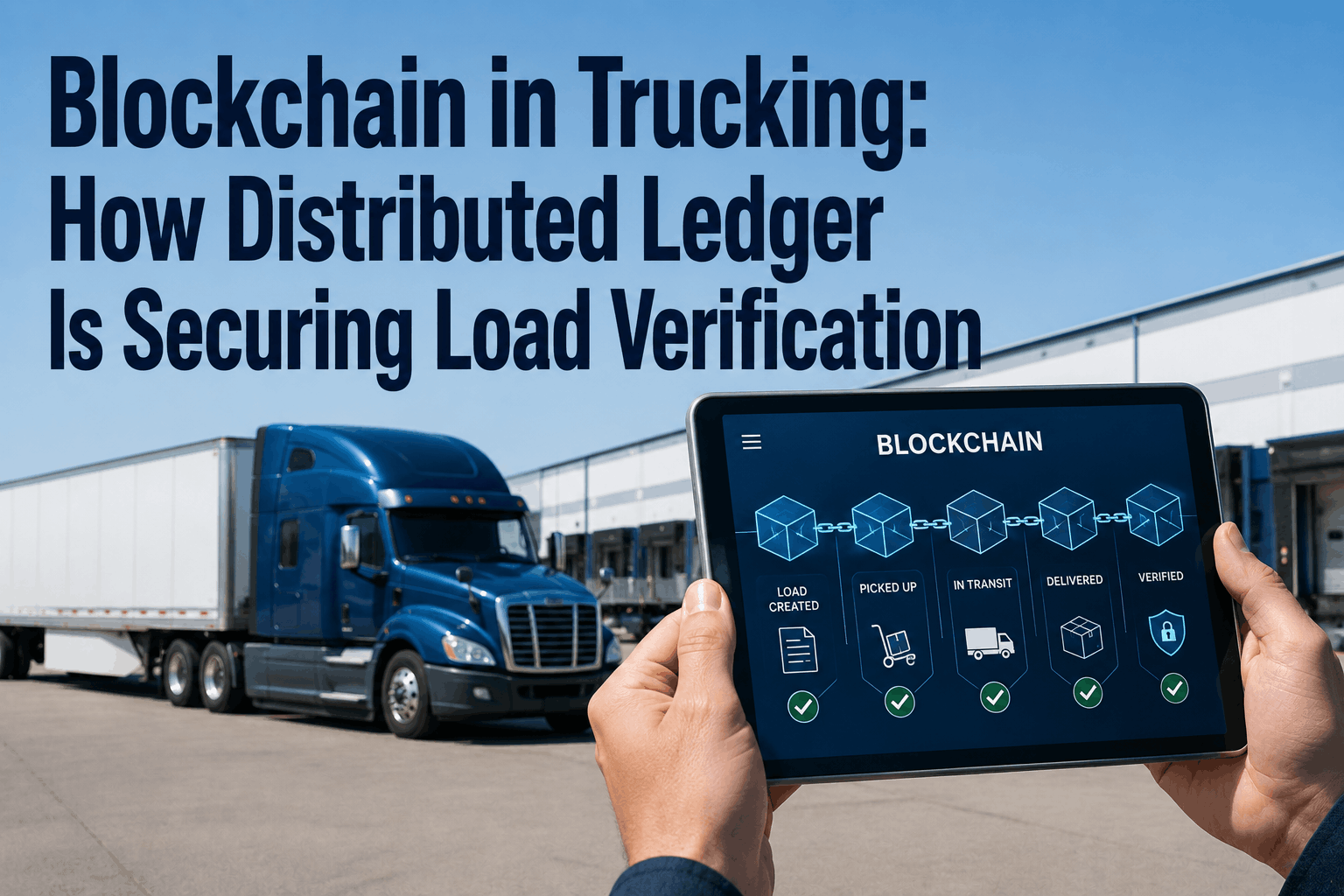
The trucking industry has long struggled with load verification fraud, disputed deliveries, and opaque supply chains. Blockchain technology—the same infrastructure that powers cryptocurrencies—is emerging as a game-changing solution. By creating an immutable, shared record of transactions, blockchain enables real-time load verification, automated smart contracts, and end-to-end visibility. This article explores how distributed ledger is securing load verification and reshaping freight logistics. sign up to access our fleet analytics platform and stay ahead of the curve.
Blockchain in Trucking: How Distributed Ledger Is Securing Load Verification
The traditional load verification process is fragmented: paper bills of lading, email confirmations, and manual check-calls create opportunities for errors and fraud. Blockchain replaces this with a single source of truth. Each transaction—from pickup to delivery—is recorded as a block, cryptographically linked to the previous one. Once recorded, data cannot be altered without consensus from all parties. This ensures that load status, weight, temperature, and delivery times are tamper-proof. book a demo to see how our platform integrates with blockchain-based verification systems.
How Blockchain Secures Load Verification
At its core, blockchain provides a decentralized ledger where every participant in the supply chain—shippers, carriers, drivers, and receivers—can view and verify transactions. For load verification, this means that the moment a driver scans a QR code or confirms pickup, that event is recorded on the chain. The system can integrate with IoT sensors to log temperature, humidity, and shock data, creating a comprehensive, verifiable record. This eliminates 'he said, she said' disputes and reduces the need for manual reconciliation. sign up to explore our blockchain-ready fleet management tools.
manual, paper-based, prone to errors
immutable, real-time, auditable
Smart Contracts: Automation and Trust
Smart contracts are self-executing agreements coded on the blockchain. In trucking, a smart contract can automatically release payment when a delivery is verified by IoT sensors and GPS data. This reduces payment cycles from 30-60 days to near-instant settlement. It also eliminates the need for factoring or third-party intermediaries. For carriers, this means improved cash flow; for shippers, it means reduced administrative overhead. book a demo to learn how our platform can help you leverage smart contracts.
Fraud Prevention and Cargo Theft Deterrence
Cargo theft and fraudulent pickups cost the industry billions annually. Blockchain's cryptographic security makes it nearly impossible to forge delivery confirmations or divert loads without detection. Each participant has a unique digital identity, and every transaction requires multi-party consensus. This creates a powerful deterrent against bad actors. Additionally, the transparent ledger allows insurers to verify claims instantly, reducing fraud-related premiums. sign up to access our security analytics dashboard.
Ready to secure your load verification with blockchain?
Get real-time, tamper-proof data with Fleetrabbit.
Our platform integrates with distributed ledger networks to give you instant visibility into load status, delivery confirmations, and payment triggers. Join the fleets that are already reducing disputes and improving trust.
Interoperability and Industry Standards
One of the challenges of blockchain in trucking is ensuring that different systems can communicate. Industry consortia like the Blockchain in Transport Alliance (BiTA) are working on standardized protocols to enable seamless data sharing across carriers, shippers, and brokers. Fleetrabbit's architecture is designed to be agnostic, supporting multiple blockchain frameworks and legacy systems. This ensures that you can adopt blockchain without overhauling your entire IT stack. book a demo to see how we handle interoperability.
Environmental and Operational Benefits
Beyond security, blockchain enables better load matching and route optimization by providing transparent, real-time capacity data. This reduces empty miles and lowers carbon emissions. The immutable record also simplifies compliance and auditing, saving hours of manual paperwork. Fleets using blockchain report up to 30% reduction in administrative costs related to load verification. sign up to track your operational efficiency gains.
Start your blockchain journey today
No commitment, just data-driven insights.
Fleetrabbit gives you a unified view of your load verification process, with blockchain integration that enhances trust and reduces friction. Join the fleet managers who are already securing their supply chains.
Blockchain is more than a buzzword—it's a practical tool for securing load verification and streamlining freight operations. From fraud reduction to instant payments, the benefits are tangible. Fleetrabbit's platform is designed to help you navigate this new technology, whether you're a carrier, broker, or shipper. book a demo to explore how we can help you integrate blockchain into your operations.
Frequently Asked Questions
How does blockchain improve load verification in trucking?
Blockchain creates an immutable, shared record of load transactions—from pickup to delivery. This eliminates disputes, reduces fraud, and provides real-time visibility to all parties.
What are smart contracts and how do they help?
Smart contracts are self-executing agreements coded on the blockchain. They can automatically release payment when delivery conditions are met, reducing payment cycles and administrative overhead.
Is blockchain integration expensive or complex?
While there is an initial investment, many platforms (including Fleetrabbit) offer interoperable solutions that work with existing TMS and ERP systems. The long-term savings from reduced disputes and faster payments typically outweigh the costs.
Can blockchain prevent cargo theft?
Yes. Blockchain's cryptographic security and multi-party consensus make it extremely difficult to forge deliveries or divert loads without detection. It also enables better tracking and verification.