How to Choose a CMMS for Heavy-Duty Fleet Maintenance
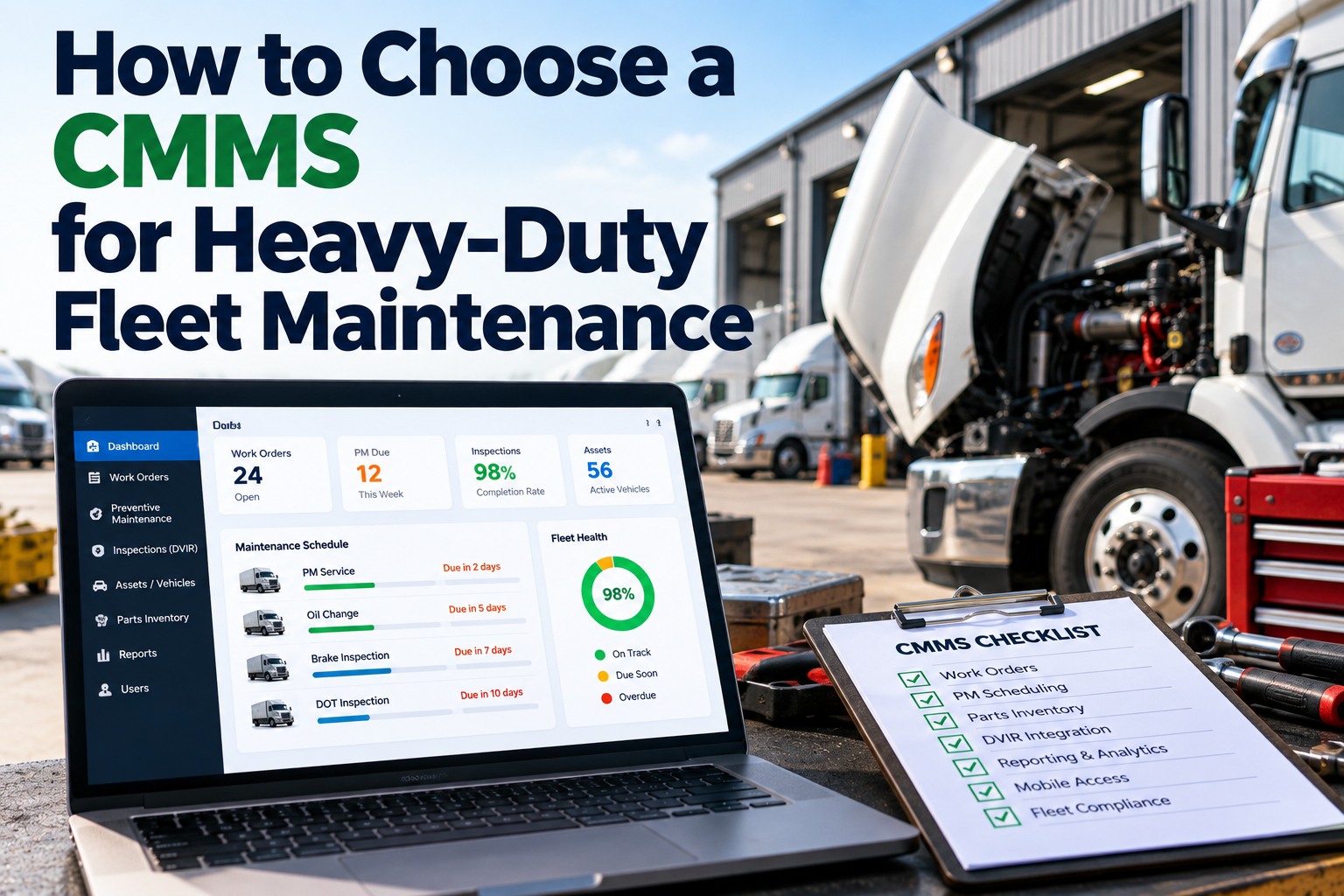
Choosing a CMMS for a heavy-duty fleet is less about the longest feature list and more about whether the system fits how trucks actually break, get inspected and get repaired. A generic maintenance system built for plant equipment won't understand DVIRs, mileage-based PM or VMRS codes, and a fleet tool without real work orders and parts control leaves the shop on spreadsheets. This guide sets out the 12 features a heavy-duty fleet CMMS has to have, grouped by when you'll need them, with the question that tests each one in a vendor demo. Tick each feature as a vendor proves it, and the scorecard keeps count. There's also a short demo script to run with your own data before you sign. To see FleetRabbit run through the same list, book a walkthrough with our team.
Fleet CMMS buyer's guide
Twelve features separate a fleet maintenance system from a work order spreadsheet
Four you need on day one, four that make the shop faster, and four that turn records into decisions and audit evidence.
Why the shop needs more from its software every year
Two pressures make the choice of maintenance software more important than it was a few years ago. The first is cost: ATRI's latest operational cost analysis put repair and maintenance at 21.5 cents per mile in 2025, up from 19.8 cents in 2024. The second is people. TechForce Foundation's supply and demand report estimated demand for 80,618 new diesel technicians in 2024, including 46,695 positions left unfilled from the previous two years.
Repair and maintenance cost per mile (ATRI)
2024
19.8¢
2025
21.5¢
Scale 0–25 cents per mile.
New diesel technician demand, 2024 (TechForce)
46,695 carried over unfilled
33,923 new and replacement
Total demand 80,618. The split shows how much of the gap is positions that went unfilled in 2022 and 2023.
Put those together and the job of a CMMS becomes clear. It has to make every technician hour count, catch cost growth unit by unit, and stop the slow leaks, such as repeat repairs, missed warranty and PM done late, that add cents to every mile.
The 12-feature scorecard: tick each one a vendor proves in the demo
Don't give a vendor credit for a feature they describe. Give it for a feature they show, on screen, using a scenario from your shop. Tap a card when a vendor demonstrates it, and the counter at the bottom keeps the score. Run one copy of this page per vendor.
Day-one essentials
Without these, the shop stays on paper.
Shop productivity
These decide whether technicians use the system or work around it.
Score FleetRabbit against the first eight right now
Open a free account, add a few units, file a DVIR and turn the defect into a work order. You'll know within an afternoon whether it fits your shop.
These turn maintenance records into audit evidence and replacement decisions.
Features this vendor has proven
Fleet CMMS, generic CMMS or spreadsheet: what each one really gives you
Many fleets end up comparing three options: keep the spreadsheets, buy a general-purpose CMMS built for facilities and plant equipment, or buy a system designed for vehicles. The differences show up in a handful of places.
Capability
Spreadsheets
Generic CMMS
Fleet CMMS
PM triggers
Manual date tracking
Calendar or meter, often one at a time
Miles, hours and calendar, whichever first
Driver inspections
Paper DVIRs filed separately
Usually not supported
DVIR defects flow into work orders
Repair coding
Free text
Facility asset codes
VMRS systems, components and reasons
Odometer and hours
Typed in
Typed in or custom integration
From telematics automatically
DOT records
Scattered files
Possible with custom forms
Built around 396.3, 396.11 and 396.17
Cost per mile
Calculated by hand
Cost per asset, not per mile
Per unit, per mile, by age
Run this five-step demo script with your own data, not the vendor's
A polished demo on sample data proves the software works for the sample company. Before the call, send the vendor three real units and a few real repairs, then ask them to run these steps live.
Step 1
A driver reports a defect
On a phone, with a photo. Watch how long it takes and whether it reaches the shop without anyone re-typing it.
Step 2
The defect becomes a work order
Assign it, add parts from stock, log labour, and close it with a repair certification.
Step 3
A PM comes due on miles
Change an odometer reading and see the PM trigger, without anyone checking a calendar.
Step 4
An auditor asks for records
Pull one unit's inspections, repairs and certifications for the last three months.
Step 5
The owner asks what a truck costs
Show repair cost per mile for that unit and compare it with the rest of the fleet.
Red flags that should end a CMMS evaluation early
"That's on the roadmap"
For any day-one essential. Buy what exists today.
No answer on data export
If you can't take your history with you, the vendor owns it.
Technician app as an afterthought
A desktop-first system becomes paperwork someone types in later.
DVIRs handled outside the system
Defects and repairs in two places means certifications get lost.
Pricing that punishes growth
Per-user fees that make you hesitate to give drivers and technicians logins.
A long implementation before any value
You should be filing inspections and closing work orders within weeks, not quarters.
Put four people in the evaluation, not just the person signing the contract
A CMMS is used by more people than the manager who buys it, and each of them will find a different weakness. Bring a technician to the demo to judge the mobile app and how fast a work order closes. Ask a driver to file a DVIR on their own phone. Have whoever handles DOT compliance pull a unit's records the way an investigator would. And ask finance whether the cost reports answer the questions they already ask about each truck. If any one of them can't do their job faster in the new system than in the old one, adoption will stall, however good the feature list looks.
Count the full cost of running the system, not just the subscription
The licence fee is rarely the biggest cost of a maintenance system. Ask each vendor what it will take to load your units and history, train drivers and technicians, connect telematics, fuel cards and accounting, and support the system once it is live. Check whether pricing is per vehicle or per user, because per-user pricing quietly discourages giving drivers and technicians their own logins, and those are the people who create the records. Finally, weigh the cost of the system against what it should recover: repairs caught before they become road calls, warranty claims that are actually filed, and PM done on time rather than late. With repair and maintenance running above 20 cents a mile, small improvements across a fleet add up quickly.
Plan the rollout before you sign: data, people and the first 90 days
Most CMMS projects that stall do so after the contract, not before it. Three decisions make the difference. First, decide what history to migrate: a clean unit list with VINs, specs and in-service dates matters more than years of free-text repair notes. Second, start where the data is created. Getting drivers filing inspections and technicians closing work orders on their phones in the first month produces the records every later report depends on. Third, set PM schedules last, once odometer and hour readings are flowing, so the first PM alerts are accurate rather than noisy. Review the scorecard features again at 90 days and check which ones your team actually uses.
FleetRabbit fleet maintenance software
FleetRabbit was built for the defect-to-repair loop that heavy-duty shops run every day
DVIR to work order in one step
Drivers report on a phone; defects open jobs and hold the unit until it's certified.
PM by miles, hours or date
Schedules per unit type, with alerts before service falls due.
Parts and labour on every job
Costs post to the unit, so cost per mile is calculated, not estimated.
Audit-ready records
Inspections, repairs and certifications searchable by unit and date.
What's the difference between a CMMS and fleet management software?
A CMMS manages maintenance: work orders, PM, parts and repair history. Fleet management software often adds telematics, fuel and dispatch. For a heavy-duty shop, the maintenance side has to be strong, whichever label the vendor uses.
Which CMMS features matter most for a small fleet?
The four day-one essentials: work orders, PM scheduling, DVIR integration and parts tracking. They create the records every other feature depends on.
Why does VMRS coding matter?
VMRS gives every repair a standard code for the system, assembly and component, plus the reason for repair. That makes failures comparable across units and makes warranty claims easier to support.
How long should a fleet CMMS take to implement?
You should be filing inspections and closing work orders within weeks. Full PM schedules and reporting follow once readings and history are in the system.
Does a CMMS help with DOT compliance?
Yes, if it keeps the records 396.3 requires, links DVIRs to repair certifications and stores annual inspection reports, so they can be produced quickly during a review.
Put FleetRabbit through all 12 features before you decide
Bring your own units and repairs. We'll run the demo script live and you keep the scorecard.