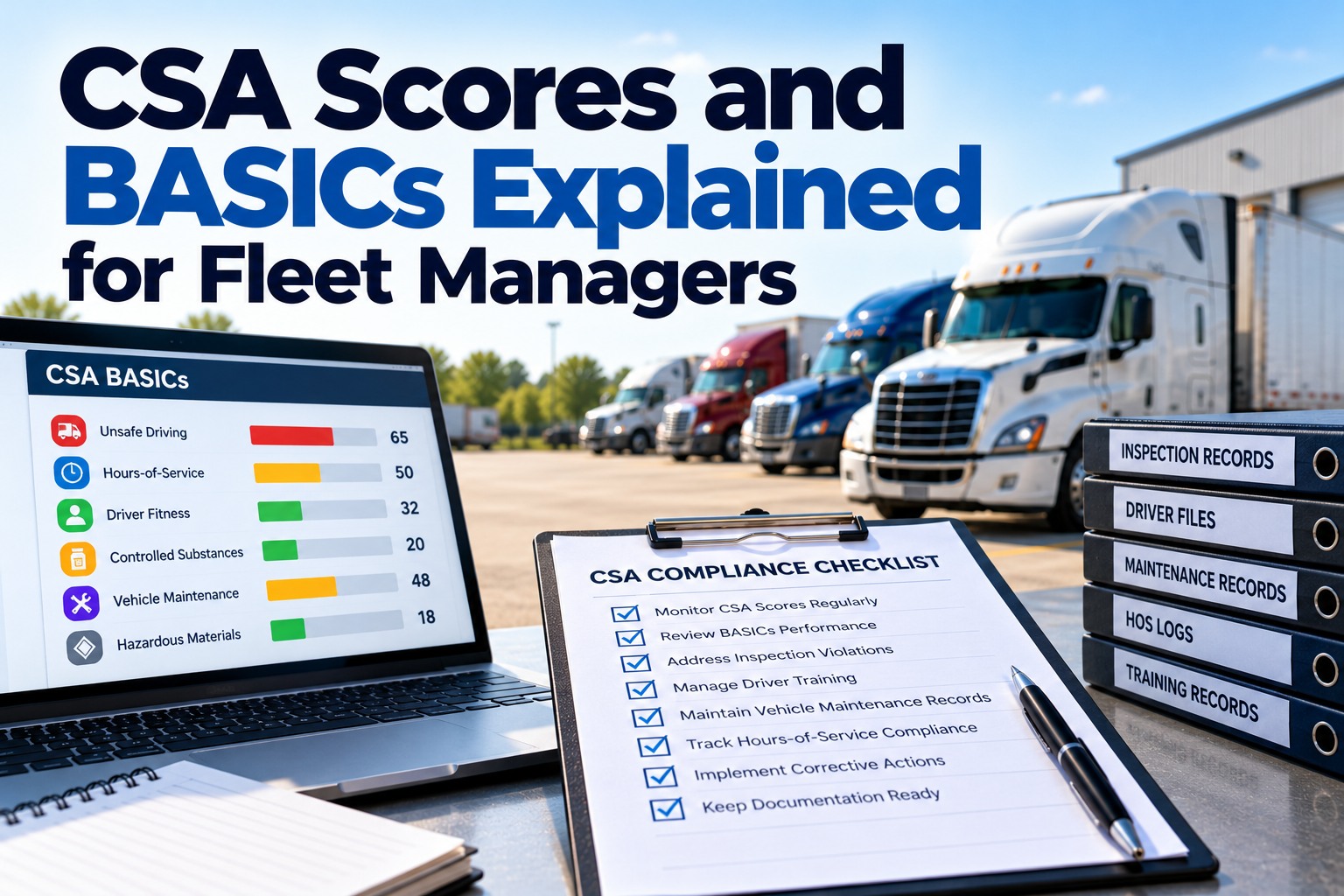
A carrier’s CSA scores are built from roadside inspections, crash reports and investigations, sorted into seven categories called BASICs, and turned into percentiles against similar carriers. Shippers, brokers and insurers look at them, and FMCSA uses them to decide who to warn or investigate. The vehicle category is the one a maintenance program controls most directly: most of its violations are lamps, tyres and brakes a good pre-trip would have caught. This guide explains the seven BASICs and their thresholds, how a score is calculated, how time and severity weigh in, the approved changes still to launch, how to dispute a wrong record, and a monthly checklist you can use as a template. To see how FleetRabbit fits, book a short demo with our team.
The seven BASICs and their intervention thresholds for general carriers
BASIC stands for Behavior Analysis and Safety Improvement Category. Each one groups related violations, and each has a threshold above which FMCSA may intervene. Thresholds are lower for passenger and hazmat carriers.
| BASIC | What it measures | Threshold |
|---|---|---|
| Unsafe Driving | Speeding, lane changes, texting, seat belts | 65% |
| Crash Indicator | Crash history from state reports | 65% |
| HOS Compliance | Hours-of-service and log violations | 65% |
| Vehicle Maintenance | Brakes, lights, tyres, load securement defects | 80% |
| Controlled Substances/Alcohol | Use or possession at roadside | 80% |
| Hazmat Compliance | Placards, shipping papers, packaging | 80% |
| Driver Fitness | Invalid license, medical card, qualification | 80% |
Some BASIC percentiles for property carriers aren’t shown on the public site, but FMCSA, and the carrier itself, can see them, and the underlying inspection data is public.
How a CSA score is calculated: severity, time and inspections
For each violation, the system multiplies a severity weight by a time weight. For most BASICs it adds those up and divides by a measure of exposure, such as the number of relevant inspections or, for Unsafe Driving and crashes, the carrier’s size and miles. The result is ranked against carriers with similar exposure to give a percentile.
Currently, severity weights run from 1 to 10, with 2 points added when a violation puts the vehicle or driver out of service. Time weights fall as violations age.
Two things follow. A violation from last month counts three times as much as the same one from last year, and every clean inspection makes the denominator bigger and the vehicle measure lower.
The vehicle violations that drive scores, on tractors, trailers and chassis
FMCSA’s approved changes split Vehicle Maintenance into defects a driver could reasonably see on a walkaround and everything else. That split puts the daily inspection front and centre.
Inspection level matters as well. A Level 1 inspection is the full check of driver and vehicle, including getting under the truck to measure brakes. A Level 2 is a walk-around of the driver and vehicle without going underneath, and a Level 3 checks the driver and paperwork only. Under the approved changes, the new Driver Observed category is built around the violations a Level 2 walk-around would find: the same lamps, tyres, mud flaps, air lines and coupling items a driver checks on a proper pre-trip. That makes the daily inspection the cheapest way to keep that category low, because the driver and the inspector are looking at the same things.
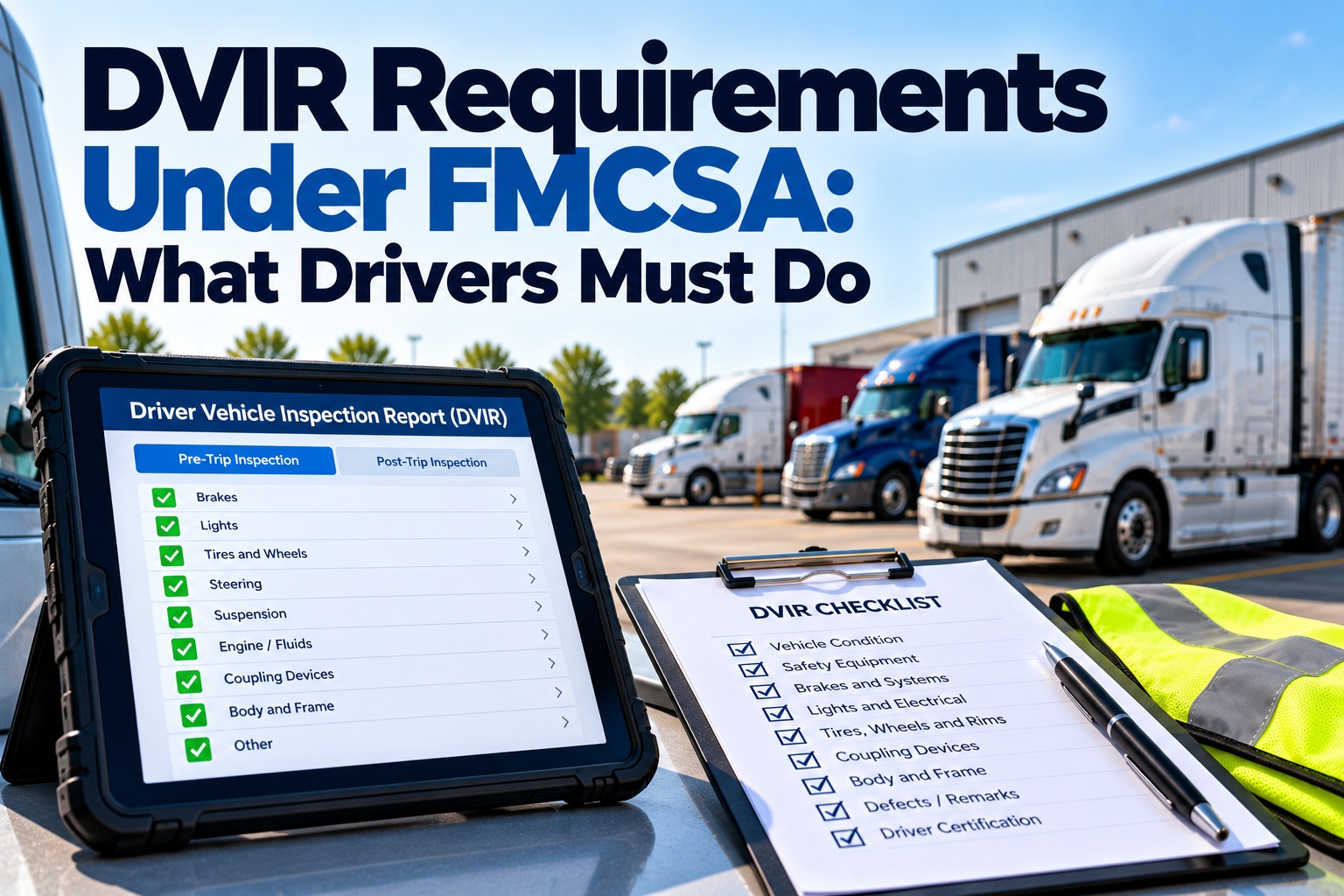
A digital DVIR that requires a photo for every defect, and a repair sign-off before the unit runs, removes most driver-observed violations before an inspector finds them.
What happens when a BASIC goes over its threshold
Crossing a threshold doesn’t mean a fine. It puts the carrier on FMCSA’s list for intervention, and the response gets more serious as problems persist. The usual first step is a warning letter that names the category and asks the carrier to fix it. If scores stay high, or several categories are over, FMCSA can open an investigation. That can be offsite, where the carrier uploads records, or onsite, where an investigator reviews files in person. A comprehensive investigation can end in a safety rating. Serious violations found along the way can lead to a notice of claim and fines, and, at worst, an Unsatisfactory rating that stops the carrier operating. A carrier with a high Vehicle Maintenance score should expect the investigator to ask for the inspection reports, repair certifications and maintenance files behind it.
Who looks at CSA data besides FMCSA
Insurers review a carrier’s roadside history at renewal, and a run of vehicle and hours-of-service violations shows up in the premium. Shippers and brokers check carrier records before tendering freight, and some won’t book carriers with alerts in certain categories. Drivers matter too. FMCSA’s Pre-Employment Screening Program lets a carrier, with the applicant’s consent, see five years of crash data and three years of roadside inspection data for a driver it’s thinking of hiring. Those inspections follow the driver from carrier to carrier, so hiring drivers with clean inspection histories, and coaching the ones whose inspections show repeat problems, feeds straight into the carrier’s own measures.
What’s changing in CSA: the approved methodology, not yet live
FMCSA has approved a set of changes to the Safety Measurement System. As of October 2026, its Prioritization Preview site says the agency is still updating the system and that carriers should keep using the current SMS until the new one is in effect. FMCSA has said it will announce the launch in the Federal Register with advance notice.
Carriers can see how their data would score under the new method through FMCSA’s Prioritization Preview, using their FMCSA login.
Disputing a wrong record through DataQs
DataQs is for records that are wrong, not for violations that were right. A brake violation that was real stays; a lamp violation recorded against a trailer you’d already returned to its owner may not.
How to bring a high Vehicle Maintenance score down
There’s no shortcut, but the measure moves in two predictable ways: fewer new violations, and more clean inspections. In practice, that means finding defects before the inspector does, and fixing the causes that keep repeating.