DOT Pre-Trip Inspection Checklist (Free PDF and Digital App)
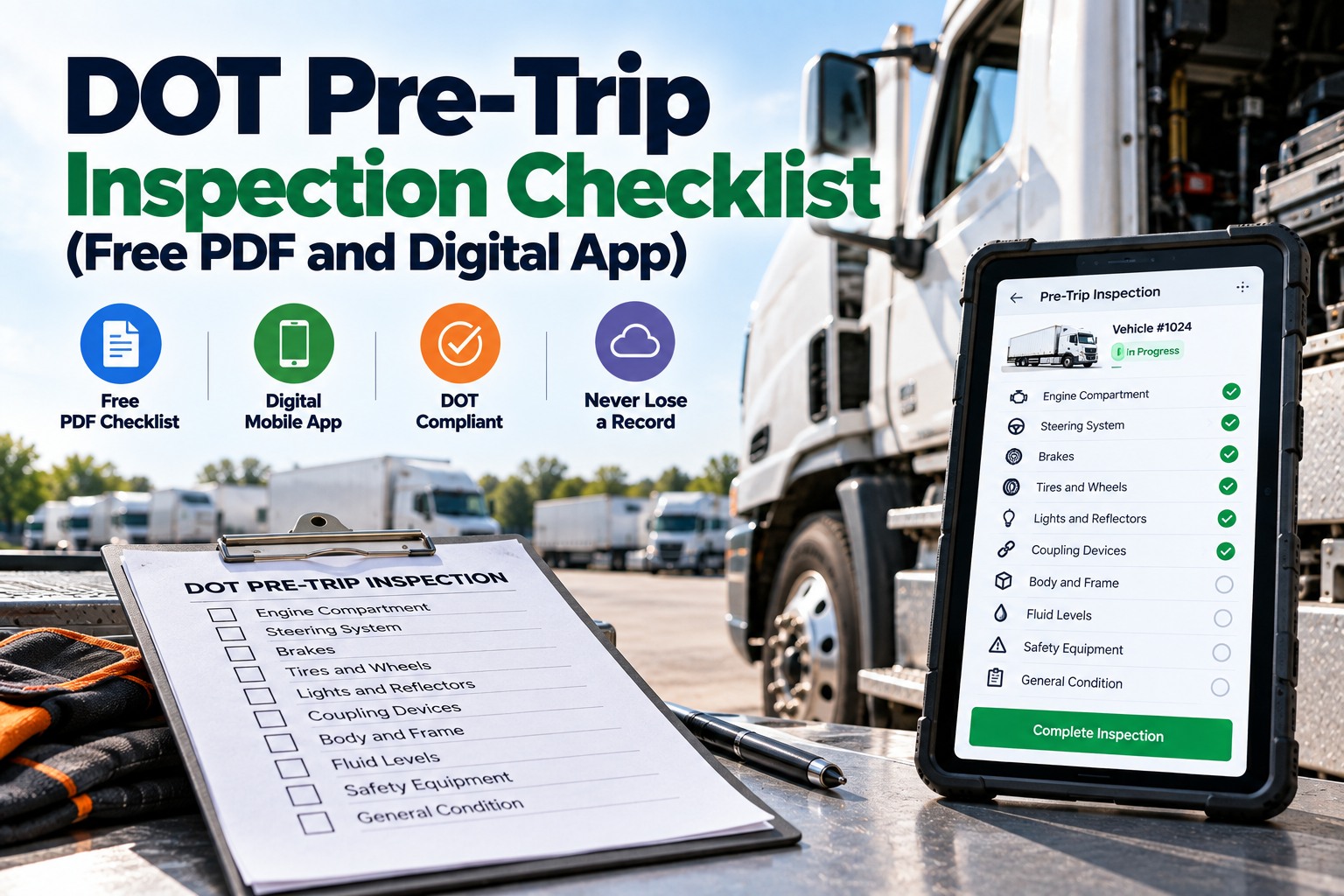
A DOT pre-trip inspection is the walk-around and systems check a driver completes before moving a commercial vehicle, to confirm it is in safe operating condition. Federal rules require drivers to be satisfied the vehicle is safe and to review the last driver vehicle inspection report before driving, and they list the parts that must be in good working order. This guide turns those requirements into a checklist you can read through at the truck: 57 checkpoints in nine groups, with the critical items flagged, a defect decision guide and the difference between pre-trip, post-trip and en-route checks. Schedule a call and we'll send you the PDF checklist, or read on to use it right here.
DOT PRE-TRIP INSPECTION · FOR DRIVERS & FLEET MANAGERS
Check Every Point Before the Wheels Turn
Every item a driver should check before the wheels turn, in the order a real walk-around goes. Use it on this page, or get the printable PDF and the digital version from us.
☐ OK ☒ Defect CRITICAL = can put the truck out of service
The Rules Behind the Checklist
You don't need to memorize the regulations, but it helps to know which one each part of the checklist comes from. Each group below is tagged with its source.
392.7
Before you drive
Make sure brakes, steering, lights, tires, horn, wipers, mirrors, coupling devices, wheels and rims, and emergency equipment are in good working order.
396.13
Review the last report
Be satisfied the vehicle is safe, read the previous DVIR and sign it when repairs were needed.
396.11
Report at day's end
Write up any defect that affects safe operation. The carrier keeps the report for three months and certifies repairs.
The DOT Pre-Trip Inspection Checklist
Work through the groups in order, tapping or ticking each box as you go. Items marked CRITICAL are the ones most likely to put a vehicle out of service or cause a roadside failure. Exact psi and free-play limits vary by state manual and carrier policy, so follow yours where it is stricter. Use your browser's print function to print this page as a checklist.
A
Paperwork and the Last DVIR
Before you touch the truck
49 CFR 396.13
B
Engine Compartment
Engine off, parking brake set
49 CFR 392.7
C
In-Cab Checks
Engine on
49 CFR 392.7
D
Air Brake Check
The test sequence your CDL examiner expects
49 CFR 392.7
Want this as a printable PDF your drivers can carry?
Schedule a call with us and we'll send you the full checklist, then show you how to run the same steps on a phone.
Schedule a call with us and we'll send the printable checklist, then set up the same inspection in FleetRabbit's mobile DVIR so every pre-trip is timestamped, photographed and tied to a work order when something fails. Free for up to three vehicles, then $5 per vehicle per month.
The checklist only works if the answer to "can I drive this?" is clear. Use this three-way guide, and follow your carrier's policy where it is stricter.
No defects found
Sign the checklist, drive, and complete the DVIR at the end of the day.
Minor defect, no effect on safe operation
Write it down, report it, and let maintenance schedule the repair. Check it again at your next pre-trip.
Defect that affects safe operation
Do not drive. Report it immediately. The carrier must repair it and certify the repair on the DVIR before the vehicle runs again.
Pre-Trip, Post-Trip and En-Route: What's the Difference?
Three checks, three moments. They overlap, but they are not interchangeable. Swipe the table horizontally on mobile.
← Swipe to see all columns →
Check
When
What it covers
Record
Pre-trip
Before driving
Safe operating condition, parts and accessories, last DVIR review
Last DVIR reviewed and signed if repairs were needed
En-route
During the trip
Cargo securement, within the first 50 miles and then every 3 hours or 150 miles
Per carrier policy
Post-trip
End of day
Any defect found or reported during the day
Written DVIR, kept three months
PDF Checklist vs Digital Checklist
A paper or PDF checklist is a good place to start and satisfies the rule when it is completed and kept. Digital changes what happens next. Swipe the table horizontally on mobile.
← Swipe to see all columns →
Capability
PDF or paper
Mobile DVIR
Completing it
Handwritten, one sheet per vehicle
Tap each checkpoint on a phone
Proof of the defect
A written note
Photo attached to the item
Reaching maintenance
When someone reads the form
Defect can become a work order
Timestamp and driver
Depends on the driver filling it in
Recorded automatically
Keeping records
Filing and storage
Stored and searchable
Frequently Asked Questions
Is a pre-trip inspection required by the DOT?
Yes. Under 49 CFR 396.13 a driver must be satisfied the vehicle is in safe operating condition before driving it, and 392.7 requires specific parts and accessories to be in good working order. The written DVIR itself is required at the end of each day under 396.11.
What must a DOT pre-trip inspection include?
At a minimum, service brakes including trailer connections, parking brake, steering, lighting and reflectors, tires, horn, wipers, mirrors, coupling devices, wheels and rims, and emergency equipment. The checklist above covers these and adds the engine compartment, in-cab and paperwork checks drivers usually include.
What is the difference between a pre-trip inspection and a DVIR?
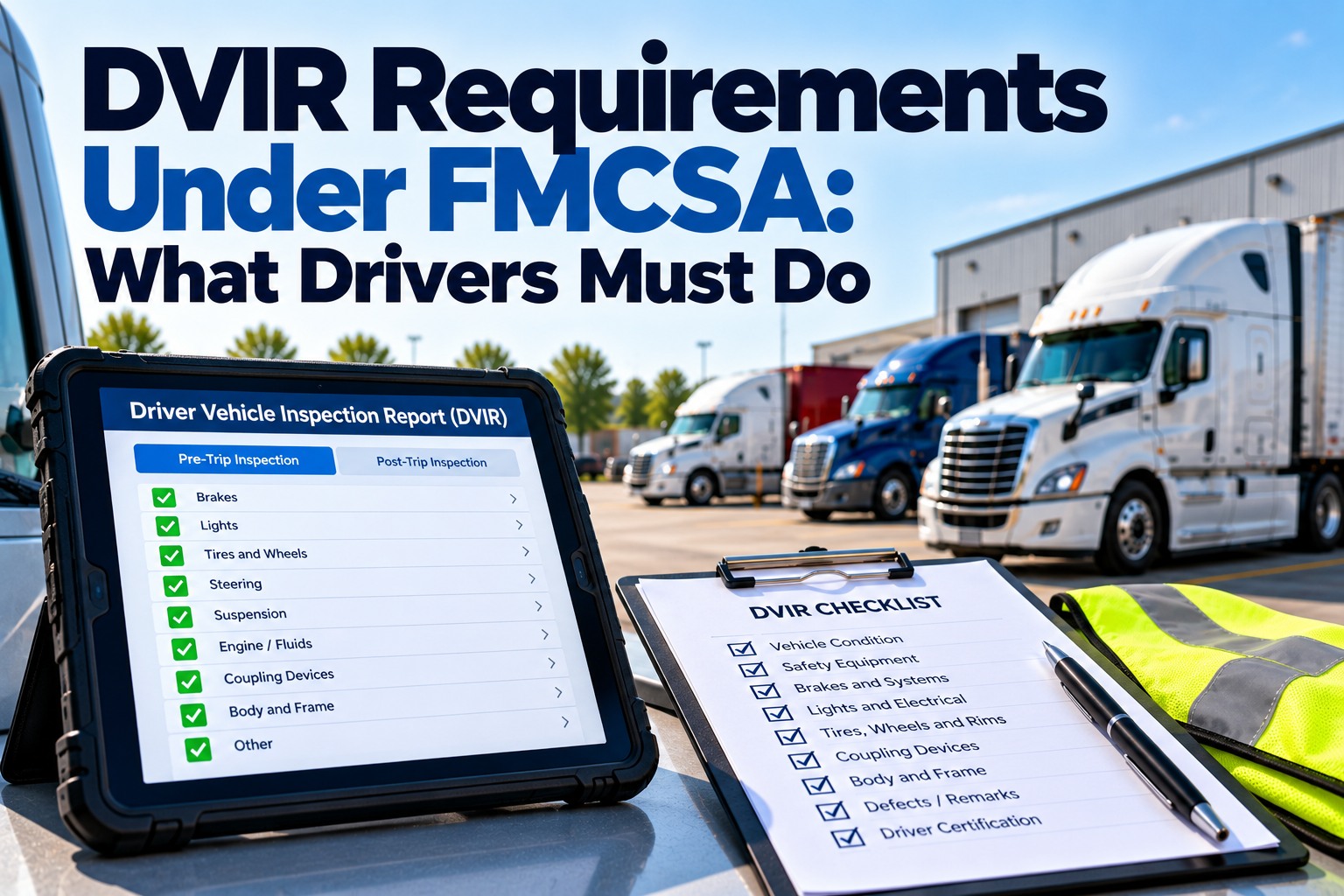
The pre-trip is the check a driver does before driving. The DVIR is the written report of defects found, completed at the end of the day and kept by the carrier. Our guide to DVIR requirements explained covers the report in detail.
How long does a pre-trip inspection take?
It depends on the vehicle and whether a trailer is attached. A thorough walk-around on a combination vehicle takes longer than on a straight truck, and the air brake check adds a few minutes. Rushing the critical items is the main way defects get missed, so build the time into the schedule.
How long must DVIRs be kept, and can they be electronic?
Carriers keep DVIRs for three months from the date they were prepared. Electronic records are accepted as long as the required information is captured and the records are retained and available. You can schedule a call to see how the mobile DVIR keeps these records.
Do owner-operators need to complete a DVIR?
The DVIR requirement in 396.11 does not apply to a motor carrier that operates only one commercial vehicle, but the driver's duty to make sure the vehicle is safe before driving still applies. Many owner-operators keep a record anyway, because it protects them after an incident.
What are the tire tread depth limits?
Under 49 CFR 393.75 the minimum tread depth is 4/32 inch on steer tires and 2/32 inch on other tires, measured in a major groove. Roadside inspectors apply stricter out-of-service limits, so replacing tires before they reach the minimum keeps you clear of both.
Can I get a free PDF of this checklist?
Yes. Schedule a call with us and we'll send you the printable checklist, and show you the digital version. The mobile DVIR is also free for up to three vehicles if you'd like to try it on a few trucks first.
Never Lose an Inspection Record Again
Use the checklist on paper today, then move it to your drivers' phones so every pre-trip, photo and defect is saved and tied to the truck. Schedule a call and we'll send the checklist and walk you through it.