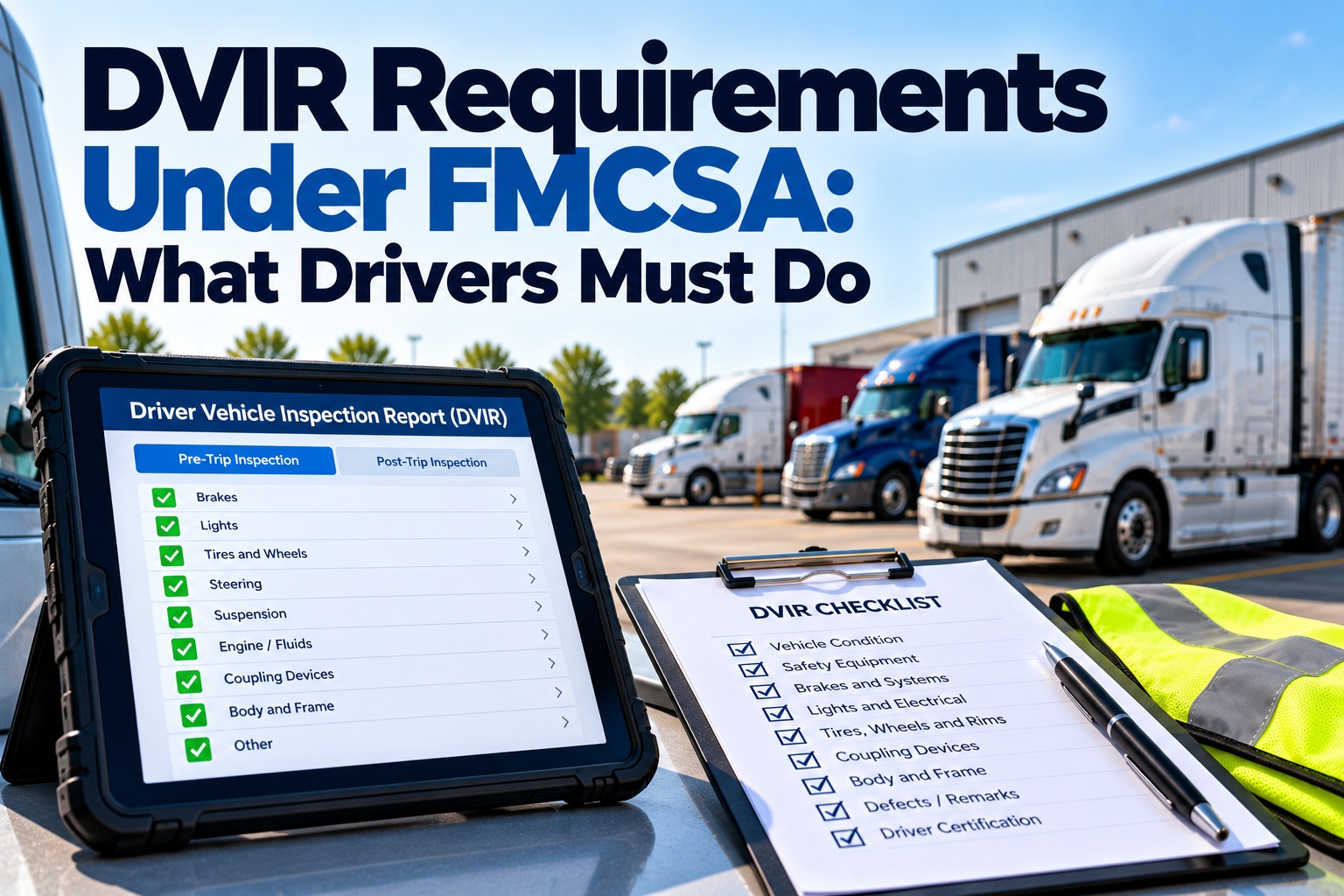
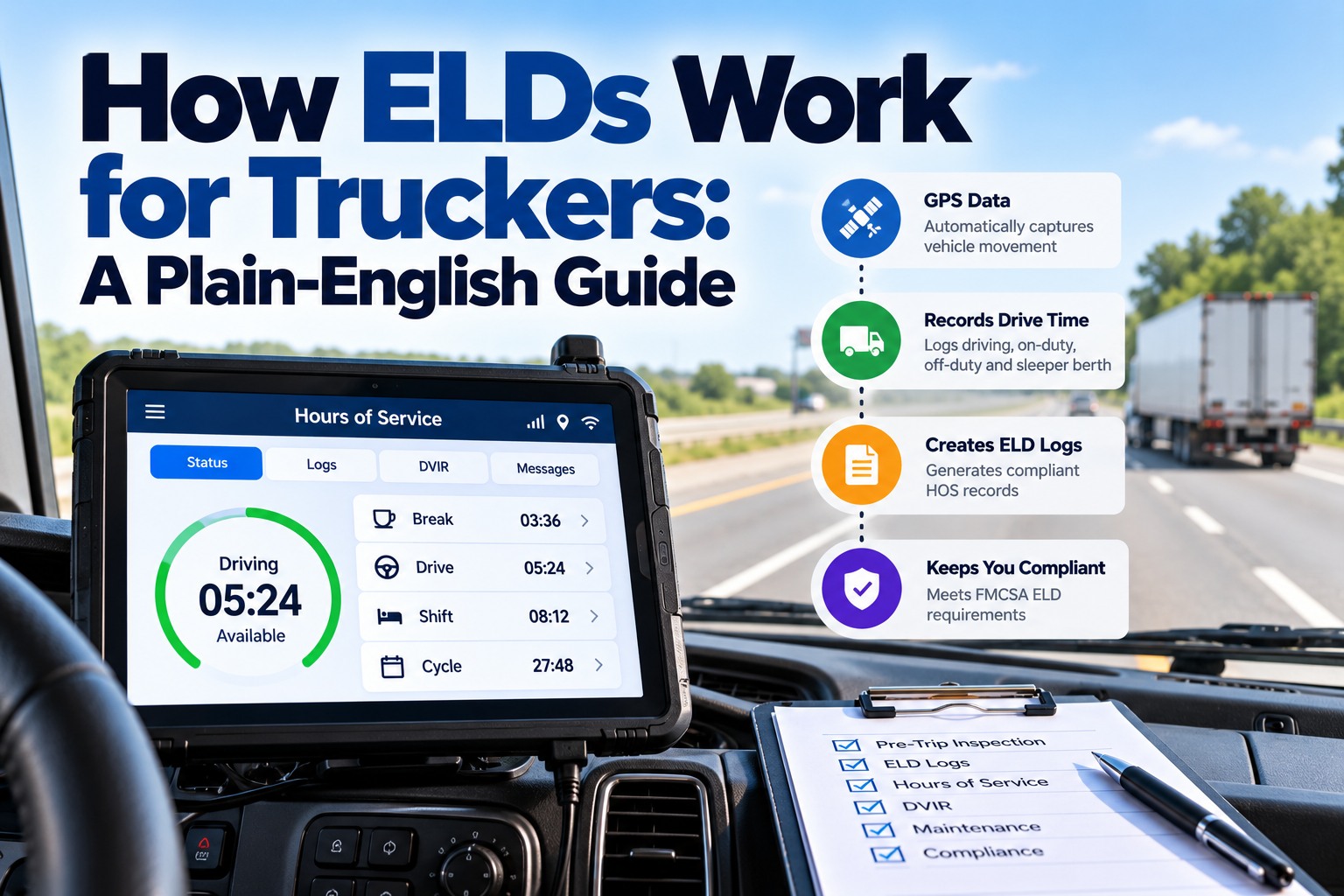
The driver vehicle inspection report is one of the shortest rules in the federal regulations and one of the most often broken. It asks drivers to report defects at the end of the day, carriers to fix and certify them before the truck runs again, and the next driver to check the paperwork before pulling out. Each step is simple. The violations come from the gaps between them: a defect reported but not certified, a trailer left off the report, a book thrown out too early. This guide sets out what 49 CFR 396.11 and 396.13 require, which parts each report covers on tractors, trailers and intermodal chassis, what an electronic DVIR needs, the common failures, and a checklist you can use as a template. To see FleetRabbit’s digital DVIR, book a short demo with our team.
FMCSA DVIR requirements · 49 CFR 396.11 and 396.13
Six steps between a defect found tonight and a truck cleared to run tomorrow
1
Inspect
Driver checks the unit at the end of the day’s work
2
Report
Written or electronic report, if any defect is found or reported
3
Sign
Driver signs the report
4
Repair
Carrier repairs safety defects before the unit runs
5
Certify
Carrier certifies each defect repaired or not needing repair
6
Review
Next driver reviews the report and signs if defects were listed
↺ The next driver’s review closes the loop, and their own report starts it again
What the regulations actually say, clause by clause
Here are the core requirements, paraphrased from the current text of Part 396.
49 CFR 396.11(a)(1)
The post-trip report
Every motor carrier must require its drivers to report, and every driver must prepare a report in writing at the completion of each day’s work on each vehicle operated.
49 CFR 396.11(a)(2)
No-defect reports
Drivers are not required to prepare a report if no defect or deficiency is discovered by or reported to the driver.
49 CFR 396.11(a)(3)
Repair and certify
Before the vehicle is operated again, the carrier must repair safety defects and certify on the report that each was repaired or that repair is unnecessary.
49 CFR 396.11(a)(4)
Retention
Keep the report, the repair certification and the driver’s review for three months from the date the report was prepared.
49 CFR 396.13
The pre-trip review
Before driving, a driver must be satisfied the vehicle is in safe operating condition, review the last report, and sign it if defects were noted and certified.
The rule applies to every motor carrier, with exceptions for private passenger carriers operating non-business vehicles, driveaway-towaway operations, and carriers operating only one commercial motor vehicle.
The parts every DVIR must cover, on the tractor, the trailer and the chassis
Section 396.11(a) lists the minimum parts and accessories for motor carrier equipment. Intermodal chassis tendered by an equipment provider have their own list under 396.11(b).
Tractor
Service brakes
Parking brake
Steering mechanism
Horn
Windshield wipers
Rear-vision mirrors
Coupling devices
Emergency equipment
Trailer
Service brakes and trailer brake connections
Lighting devices and reflectors
Tires
Wheels and rims
Coupling devices
Intermodal chassis
Brakes
Lamps and conspicuity marking
Wheels, rims, lugs and tires
Air lines, hoses and couplers
King pin upper coupling
Rails and support frames
Tie-down bolsters
Locking pins, clevises, clamps or hooks
Sliders or sliding frame lock
Fleets can, and usually should, inspect more than the minimum. Tread depth, air leaks, mud flaps and cargo securement aren’t on the federal list, but they appear in roadside inspections all the time.
Pre-trip review versus post-trip report: what each one requires
| Pre-trip (396.13) | Post-trip (396.11) |
|---|
| Required in writing? | No; the driver must be satisfied the vehicle is safe | Yes, if a defect is found or reported |
| Who signs | Driver signs the last report if defects were listed | Driver signs the new report |
| Rule | 49 CFR 396.13 | 49 CFR 396.11 |
| Carrier action | Ensure defects on the last report were certified | Repair, certify, keep for three months |
| Electronic allowed | Yes | Yes, confirmed by the 2026 eDVIR rule |
The pre-trip doesn’t need its own form under the federal rule, but it does need to happen. Many fleets record it anyway, because it’s the moment a driver can refuse a unit that isn’t safe.
See a defect go from the driver’s phone to a certified repair
A 20-minute demo of FleetRabbit’s digital DVIR: photo, signature, work order, mechanic sign-off.
What an electronic DVIR needs to do to meet the rule
FMCSA’s final rule on electronic DVIRs, published in February 2026, made it explicit that reports may be created and kept electronically under 49 CFR 390.32. The content requirements didn’t change. An app has to capture the same six things a paper book does.
Identifies the vehicle
Unit number for each tractor, trailer or chassis
Lists each defect
Clear enough for a mechanic to find it
Signed by the driver
Electronic signature tied to the driver
Certified by the carrier
Repair or no-repair-needed, before the unit runs
Reviewed by the next driver
Signed when defects were listed
Kept three months
Retrievable for an auditor or inspector
FleetRabbit’s DVIR and DOT inspection app covers pre-trip and post-trip inspections, defect photos, electronic driver signatures and mechanic sign-off on repairs, with records kept digitally.
Five DVIR failures auditors and inspectors find most
1
Defect reported, unit dispatched anyway
Operating a vehicle without correcting out-of-service defects on a DVIR is one of the 16 violations that fail a new entrant audit on their own.
2
No repair certification
The defect was fixed, but nobody recorded it on the report.
3
Next driver didn’t sign
The pre-trip review of a report with defects wasn’t acknowledged.
4
Trailer missing from the report
A separate report is needed for each vehicle the driver operated, including the trailer or chassis.
5
Records gone after 30 days
Paper books thrown out before the three-month retention period ended.
Drop-and-hook, slip seats and team drivers: who reports what
The rule is written around a driver and a vehicle, which gets complicated when trailers and drivers change through the day. A few cases come up constantly. In drop-and-hook operations, the driver who pulled a trailer during the day reports defects on it at the end of that day’s work, even if a different driver will hook it next. In a slip-seat operation, where several drivers share a tractor, each driver reports on the shift they drove, and the next driver reviews the last report before leaving the yard. Team drivers can submit one report signed by one driver, as long as both agree on the defects. And when a container chassis goes back to the equipment provider, the defect report goes to the provider, who must repair and certify it before tendering the chassis again. In each case, the question to ask is the same: who drove it last, and did the next person see what they found?
What happens at the roadside when the DVIR trail is broken
Roadside inspectors don’t usually ask to see last month’s reports, but they do find the defects those reports should have caught. A brake chamber leaking at the roadside, or a trailer lamp that has clearly been out for days, raises the question of whether the defect was reported and ignored. During an investigation or audit, the same defect turns up a second time, on a report with no repair certification. That pattern can show up in the Vehicle Maintenance category of a carrier’s safety scores, and, for a new carrier, operating a vehicle without fixing DVIR out-of-service defects fails the audit outright.
Three months of records, and why longer is better
The legal minimum is three months from the date of each report. In practice, many fleets keep DVIRs as long as the unit’s maintenance file, because a defect that keeps coming back on the same trailer only shows up when you can see more than three months at once.
Required: 3 months
Useful: the life of the unit
A DVIR requirements checklist you can use as a template
Driver
Inspect each unit at the end of the day
List every defect clearly, with the unit number
Sign the report
Before driving, review the last report and sign it if defects were listed
Mechanic
Repair safety defects before the unit runs
Certify each defect: repaired, or repair not needed
Record parts and work on the work order
Carrier
A report for each vehicle operated, including trailers and chassis
No unit dispatched with uncorrected safety defects
Keep reports and certifications for three months
Review repeat defects and add them to preventive maintenance
Where FleetRabbit fits DVIR compliance
Documented on fleetrabbit.com
Pre-trip, post-trip, annual and custom inspection types
Defect photos and electronic driver signatures
Mechanic sign-off on repairs, with records kept digitally
Hands-free DVIR prompts over Bluetooth, on the voice pages
Your responsibility
Not dispatching a unit with uncorrected safety defects
Training drivers to inspect, not just tap through
Reporting chassis defects to the equipment provider
FleetRabbit digital DVIR
Every report signed, every defect certified, every record findable
Driver
Inspects, photographs, signs
→
Shop
Gets the defect as a work order
→
Mechanic
Repairs and certifies
→
Next driver
Reviews and signs
The 20-minute demo covers DVIR templates for tractors, trailers and chassis, the repair loop, and the free plan for three vehicles.
Set Up Your DVIR Templates
DVIR requirements questions from drivers and fleet managers
What are the DVIR requirements under FMCSA?
Under 49 CFR 396.11, drivers must prepare a report at the end of each day’s work on each vehicle operated if a defect is found or reported. The driver signs it, the carrier repairs and certifies the defects before the vehicle runs again, and the records are kept for three months.
Do drivers need to file a DVIR if there are no defects?
No. Drivers aren’t required to prepare a report if no defect or deficiency is discovered by or reported to them. Many fleets still log every inspection for their own records.
Is a pre-trip DVIR required?
The pre-trip under 396.13 doesn’t require a written report. The driver must be satisfied the vehicle is safe, review the last report, and sign it if defects were noted.
Are electronic DVIRs allowed?
Yes. FMCSA’s final rule published in February 2026 added explicit language to 396.11 and 396.13 confirming that reports may be created and kept electronically. Paper is still allowed.
Does a trailer need its own DVIR?
Yes, if a defect is found on it. A separate report is required for each vehicle operated. Intermodal chassis reports go to the equipment provider under 396.11(b).
How long must DVIRs be kept?
Three months from the date the report was prepared, along with the repair certification and the driver’s review.
Is there a DVIR requirements checklist or template?
Yes. The driver, mechanic and carrier checklist on this page can be printed or built as a digital inspection template.
Close every defect loop before the next truck leaves the yard
Report, repair, certify and review, on every tractor, trailer and chassis.
October 21, 2026
By Sam Parker
All Articles