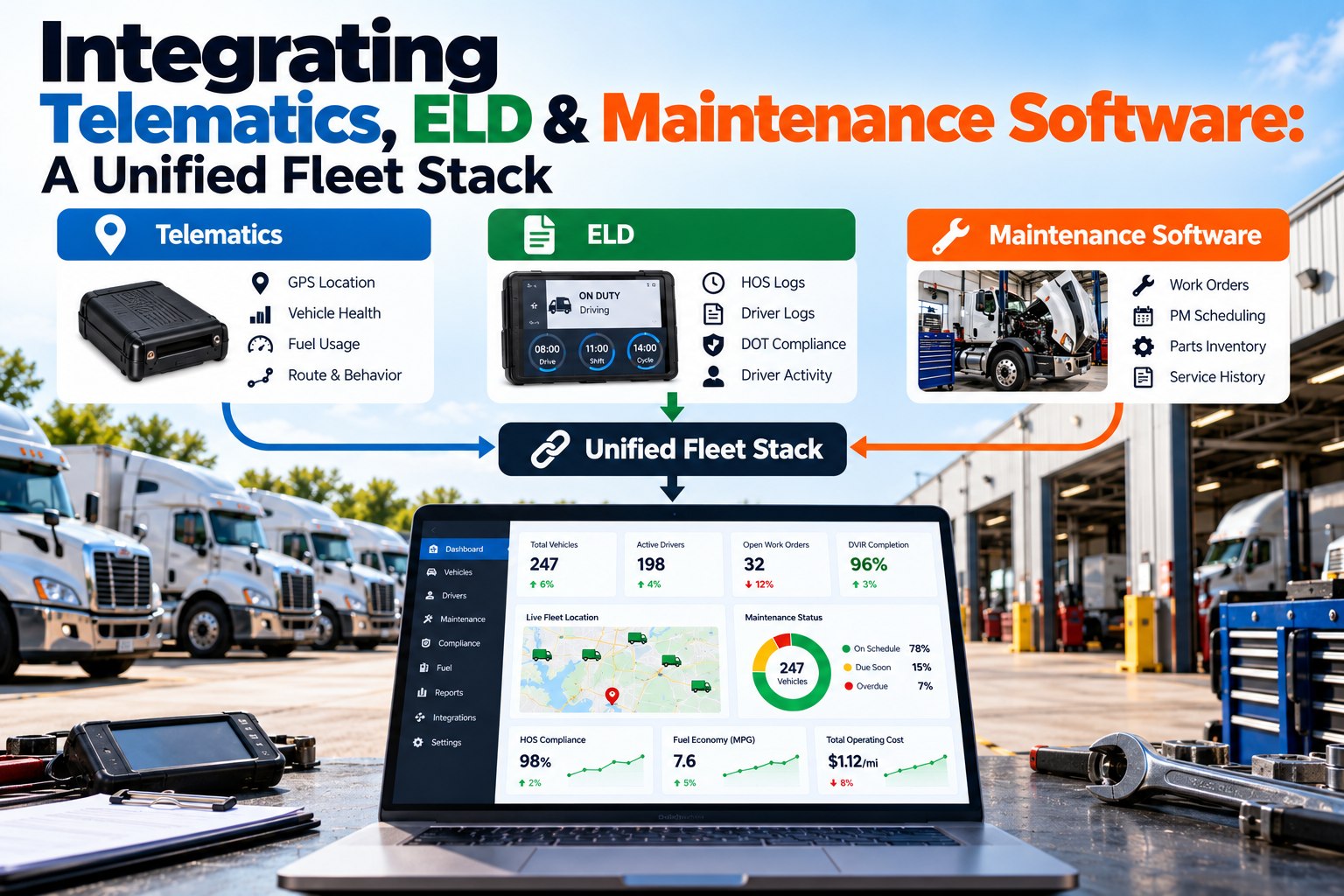
When a DOT auditor asks for 14 months of maintenance records for Unit 247, how long does it take you to find them? If the answer is "more than two minutes," your service history system is working against you.
Complete service history isn't just about compliance — it is about making smarter decisions. Which vehicles cost the most to maintain? What repairs recur across your fleet? When should you replace instead of repair? The answers live in your maintenance records, if you can access them.
How modern fleets track every oil change, repair, inspection, and part replacement in searchable digital records — and why it matters for compliance, cost control, and resale value.
What Fleet Service History Software Actually Does
At its core, service history software creates a permanent, searchable record of everything that happens to every vehicle in your fleet. Not just what was done — but when, by whom, at what cost, and what triggered the service.
Automatic Record Creation
Every completed work order, DVIR defect resolution, PM service, and outside repair automatically logs to the vehicle's permanent history — no manual entry needed.
Instant Search
Find any service event by vehicle, date range, service type, vendor, part number, or technician. Pull 14 months of records in seconds — not hours.
Audit-Ready Documentation
Timestamped records with technician signatures, photos, and parts used. Export complete DOT audit packages in minutes instead of days.
Cost Tracking Per Vehicle
See total cost of ownership for any asset: labor, parts, outside services, and downtime — all tied to the service history that explains why.
The Real Cost of Missing or Scattered Records
Most fleets don't fail DOT audits because they skip maintenance. They fail because they can't prove they did the maintenance. Paper files, scattered spreadsheets, and inconsistent logging create gaps that auditors — and your own operations team — can't navigate.
Audit Exposure
FMCSA requires maintenance records for every vehicle for 1 year active + 6 months after disposal. Missing records during an audit can result in violations, CSA points, and operational restrictions.
Repeated Repairs
Without searchable history, technicians can't see that Unit 312 had the same alternator replaced 8 months ago. Warranty claims get missed. Root causes stay hidden.
Resale Value Loss
Vehicles with documented service history sell for 10-15% more than identical vehicles without records. Buyers pay premiums for proof of proper care.
Decision Paralysis
Should you repair or replace Unit 189? Without cost history, you're guessing. With complete records, the data answers the question for you.
Ready to eliminate scattered records? Book a demo to see how FleetRabbit automatically builds service history from work orders, DVIRs, and telematics — no manual logging required.
What Should Be in a Vehicle Service Record?
A complete service record captures more than "oil change — $75." Every entry should document the full context so future decisions can be made with confidence.
How Digital Service History Changes Fleet Operations
- Records scattered across filing cabinets, folders, and email
- Search requires physical retrieval — hours per vehicle
- Version conflicts between spreadsheet copies
- No photos or signatures attached to records
- Audit prep takes 3-5 days of dedicated staff time
- All records in one searchable database
- Any vehicle's complete history in under 60 seconds
- Single source of truth — no version drift
- Photos, signatures, and timestamps on every entry
- Audit package exports in under 5 minutes
Service history starts with inspections. See how FleetRabbit Digital DVIR automatically logs every driver inspection and routes defects to maintenance — building your service record from day one.
DOT Compliance: What Records You Must Keep
FMCSA 49 CFR 396.3 requires motor carriers to maintain specific maintenance records. During an audit, inspectors will ask for these documents — and your ability to produce them quickly matters.
FMCSA minimums are just that — minimums. Best practice is to retain all service records for the life of the vehicle plus 2 years. Digital storage makes this easy and costs nothing extra.
Key Features to Look for in Service History Software
Completed work orders, DVIR resolutions, and telematics events should auto-populate service history — no manual logging.
Search by VIN, unit number, date range, service type, part number, vendor, or technician. If it's in the record, you should be able to find it.
Attach inspection photos, repair images, invoices, and warranty documents directly to service records.
One-click export of complete vehicle history for DOT audits, vehicle sales, or management reporting.
See total cost of ownership, cost per mile, and maintenance trends — all derived from service history data.
Odometer readings sync automatically so service records always have accurate mileage — no manual entry errors.
Track every dollar spent on maintenance. Learn how FleetRabbit Cost Tracking turns service history into actionable cost analytics.
Frequently Asked Questions
See Every Service Event for Every Vehicle — Instantly
FleetRabbit automatically builds complete service history from work orders, DVIRs, and telematics. Search any vehicle's records in seconds. Export audit packages in minutes. Free for up to 3 vehicles.