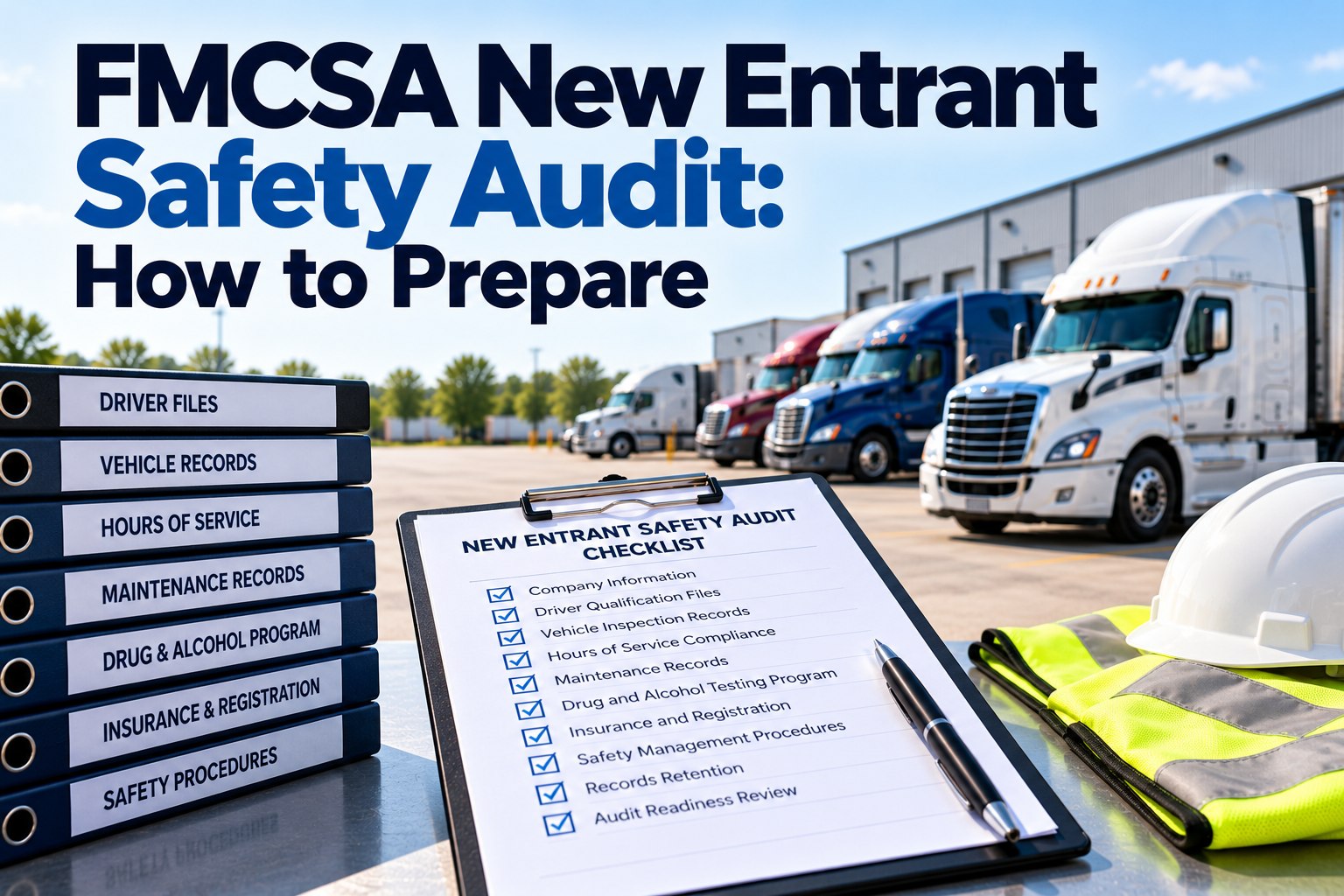
Every new interstate carrier starts on probation. The day a new USDOT number is issued, an 18-month new entrant period begins, and somewhere in the first 12 months FMCSA will audit the carrier’s safety systems. The audit doesn’t ask whether you’ve had problems. It asks whether you have the programs that prevent them, and whether the records prove it. This guide walks through the timeline, the six programs to set up before the first load, the 16 automatic-failure violations grouped by area, what an offsite audit looks like, the vehicle file for tractors, trailers and chassis, and a checklist you can use as a template. To see how FleetRabbit sets up the vehicle side for new carriers, book a short demo with our team.
FMCSA new entrant safety audit
Eighteen months on probation, and an audit somewhere in the first twelve
The notice can arrive at any time. The carriers that pass are the ones whose programs were running from the first load.
Month 0
USDOT number
Period starts; programs running before the first load
Month 6
Audit notice
Can arrive at any point in year one
Month 12
Audit deadline
Audit completed within the first 12 months
Month 18
Period ends
Carrier leaves the program if it passed
Six programs a new carrier needs running before the first load
The audit checks systems, not intentions. Each of these is a program with records behind it, and each maps to a part of the regulations.
Enrol in a testing program and random pool, register in the Clearinghouse, run pre-employment tests and queries.
Driver qualification
Part 391
A file for every driver: application, driving records, road test or license, medical status, annual review.
ELD or logs for every driver who needs them, with supporting documents kept for six months.
Vehicle inspection and maintenance
Part 396
A maintenance file per unit, daily DVIRs, repair certifications, and an annual inspection for every tractor, trailer and chassis.
Minimum liability coverage in force, with proof on file and filed with FMCSA where required.
Accident register
Part 390.15
A register of every DOT-recordable crash, kept for three years, even if it starts empty.
Most new carriers set up drug testing and insurance because they can’t get loads without them. The vehicle program is the one most often left to later, and it’s also where three of the sixteen automatic failures sit.
The 16 automatic-failure violations, grouped by where they come from
Any one of these fails the audit on its own. Grouped by area, they show where the risk sits for a small, new fleet.
No testing program, no random program, or using a driver who tested positive or refused
Driver qualification
5 of 16
Using a driver without a valid CDL, with a suspended license, disqualified, or physically unqualified
Operating without the required minimum liability coverage
Not requiring a driver to keep hours-of-service records
Operating an out-of-service vehicle before repair, or with no periodic inspection, and not fixing DVIR out-of-service defects
Driver qualification and drug and alcohol testing account for ten of the sixteen. For a one or two-truck operation, that usually means one owner-operator, so the C/TPA, the medical status and the license checks for that one driver carry the whole result.
Set up the vehicle file before the auditor asks for it
A 20-minute demo of DVIRs, repair sign-off and maintenance records for every tractor, trailer and chassis, free for up to three vehicles.
The vehicle file: what a new carrier needs for each tractor, trailer and chassis
Under Part 396, a carrier must keep maintenance records for every vehicle it controls for 30 consecutive days or more, and make sure each has a current annual inspection.
Tractor
Annual inspection report or decal, maintenance file, DVIRs with repair sign-off
Trailer
Its own annual inspection and maintenance file, even if it rarely moves
Chassis
Inspection records for any leased or pool chassis you control for 30 days or more
Every unit
Unit number, make, serial number and year on file; inspection and repair dates recorded
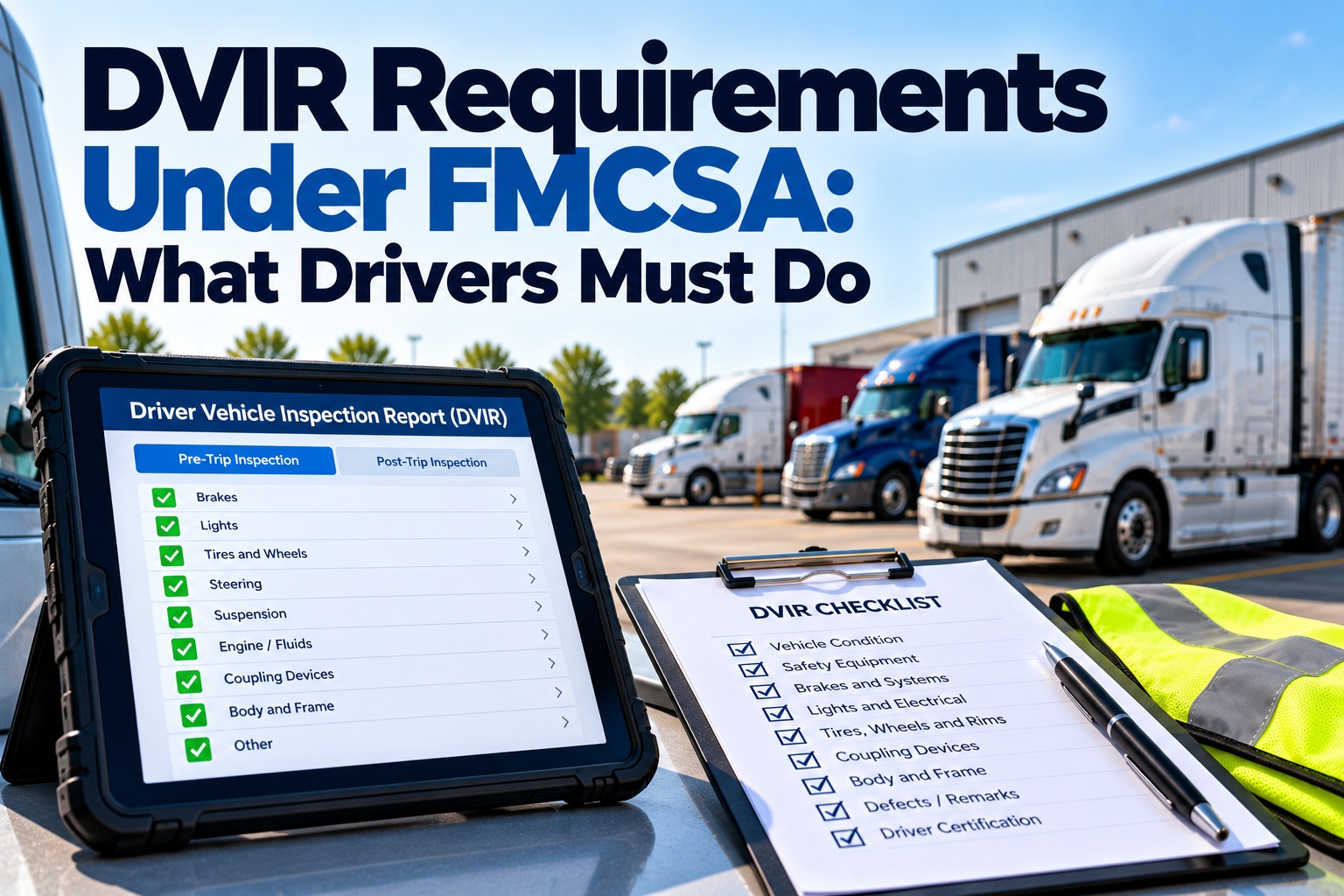
A digital DVIR gives the auditor dated, signed inspections with repair certifications. Preventive maintenance scheduling keeps annual inspections from lapsing, and each unit’s maintenance history becomes the maintenance file.
Documents commonly requested in a new entrant audit, and the period they cover
The request names specific drivers, units and dates. These are the records it most often asks for, and the time period each one needs to cover.
| Record | Period | What the auditor looks for |
|---|
| Driver qualification files | Each current driver | Application, driving records from each state, road test or accepted license, medical status, annual review |
| Drug and alcohol records | Since operations began | Program enrolment, random pool, pre-employment negative result, Clearinghouse queries |
| Hours-of-service records | A sample month | ELD records for each driver, with supporting documents such as fuel receipts and bills of lading |
| Driver vehicle inspection reports | Last three months | Signed reports, defects listed, repair certifications before the unit ran again |
| Annual inspections | Every unit | Report or decal dated within the last 12 months for each tractor, trailer and chassis |
| Maintenance files | Every unit | Identification, inspection schedule, and records of inspection, repair and maintenance |
| Insurance and accident register | Current | Proof of minimum coverage and a register of any recordable crashes |
Exact requests vary. Answer the one you receive, not this list, but if every row here is in order, most requests are quick to fill.
An offsite audit, step by step
Most new entrant audits now happen offsite. Instead of an auditor arriving, the carrier uploads records through its FMCSA account.
1
Log in
Your FMCSA account shows the outstanding document requests.
2
Match the list
Gather exactly what is asked for, for the drivers, units and dates named.
3
Name files clearly
One file per request, labelled the way the request is labelled.
4
Upload in time
Documents are generally due within 20 days of the request.
5
Wait for results
Results generally arrive within 45 days of the audit.
Send what’s asked for, organised the way it was asked. Extra documents slow the review, and missing ones count against you.
If the audit finds problems: the corrective action plan
A carrier that fails isn’t shut down on the spot. FMCSA sends the list of violations and instructions for a corrective action plan, with a deadline. A good plan names each violation, the cause, what has changed, who is responsible, and the records that prove the fix: a signed qualification file, an enrolment certificate from a testing program, an annual inspection report for the trailer that was missing one. If FMCSA accepts the plan, the carrier stays in the program. If it doesn’t, or no plan is submitted, the USDOT registration and any operating authority are revoked. The carrier can reapply after 30 days, but goes back into a new 18-month period and another audit.
The first year as a new carrier, month by month
Passing isn’t just about the week the notice arrives. Small habits in the first months decide what the file will look like.
Months 0–1
Set up
Testing program, Clearinghouse, insurance, driver files, ELDs and an annual inspection on every unit.
Months 2–6
Routine
Daily DVIRs, repairs signed off, logs checked weekly, receipts and trip records filed.
Months 6–12
Self-check
Run this checklist against your own files, fix the gaps, and keep copies ready to upload.
Months 12–18
Keep going
Annual driver reviews and annual inspections come due again. The new entrant period ends at 18 months.
A new entrant safety audit checklist you can use as a template
Before the first load
USDOT number and operating authority active
Insurance in force and filed
Drug and alcohol program and random pool
Clearinghouse registration
Qualification file for each driver
ELD set up for each driver
Annual inspection for every unit
Every day and week
Pre-trip and post-trip DVIRs
Defects repaired and certified before reuse
Hours-of-service records checked
Fuel receipts and trip records kept
When the notice arrives
Read the request and note the due date
Gather records for the named drivers and units
Upload within the deadline
Keep copies of everything sent
Where FleetRabbit fits a new carrier’s setup
Documented on fleetrabbit.com
Digital DVIRs with photos, signatures and mechanic sign-off
Preventive maintenance scheduling and work order history
HOS data from ELD providers for dispatch
Free for up to three vehicles
Outside FleetRabbit
Drug and alcohol testing program and C/TPA
Clearinghouse queries
Insurance filings and operating authority
FleetRabbit for new carriers
A vehicle file that builds itself from day one, ready for the auditor in month six or twelve
DVIR every day
Repairs signed off
Annual inspections on schedule
Unit-by-unit history
What the 20-minute demo covers
Setting up tractors, trailers and chassis
A DVIR from defect to sign-off
Pulling a unit’s records for an upload
Prep Your Audit Upload With Us
New entrant safety audit questions
What is the FMCSA new entrant safety audit?
A review of a new interstate carrier’s safety management systems, carried out within the first 12 months of the 18-month new entrant period that starts with a new USDOT number.
How long does the new entrant period last?
18 months. The audit must be done within the first 12. A carrier that passes, or whose corrective action plan is accepted, leaves the program at the end.
Is the new entrant audit done onsite?
It can be, at the principal place of business, but offsite audits through document uploads have become more common.
What fails a new entrant audit automatically?
Any one of 16 violations, grouped around drug and alcohol testing, driver qualification, insurance, hours-of-service records and vehicle inspection and repair.
What happens if I fail?
You receive the violations and must submit a corrective action plan. If it isn’t accepted, FMCSA revokes the registration, and you can’t reapply for 30 days.
Is there a new entrant safety audit checklist or PDF?
Yes. The three-part checklist on this page can be printed and used before the first load, every week, and when the notice arrives.
How does FleetRabbit help a new carrier?
FleetRabbit’s documented features cover the vehicle side: DVIRs with repair sign-off, preventive maintenance and work order history. It’s free for up to three vehicles, which suits most new carriers.
Pass the new entrant audit by starting the records on day one
Set up the vehicle file now, and let it fill as your trucks run.
October 21, 2026
By Alex Rowan
All Articles