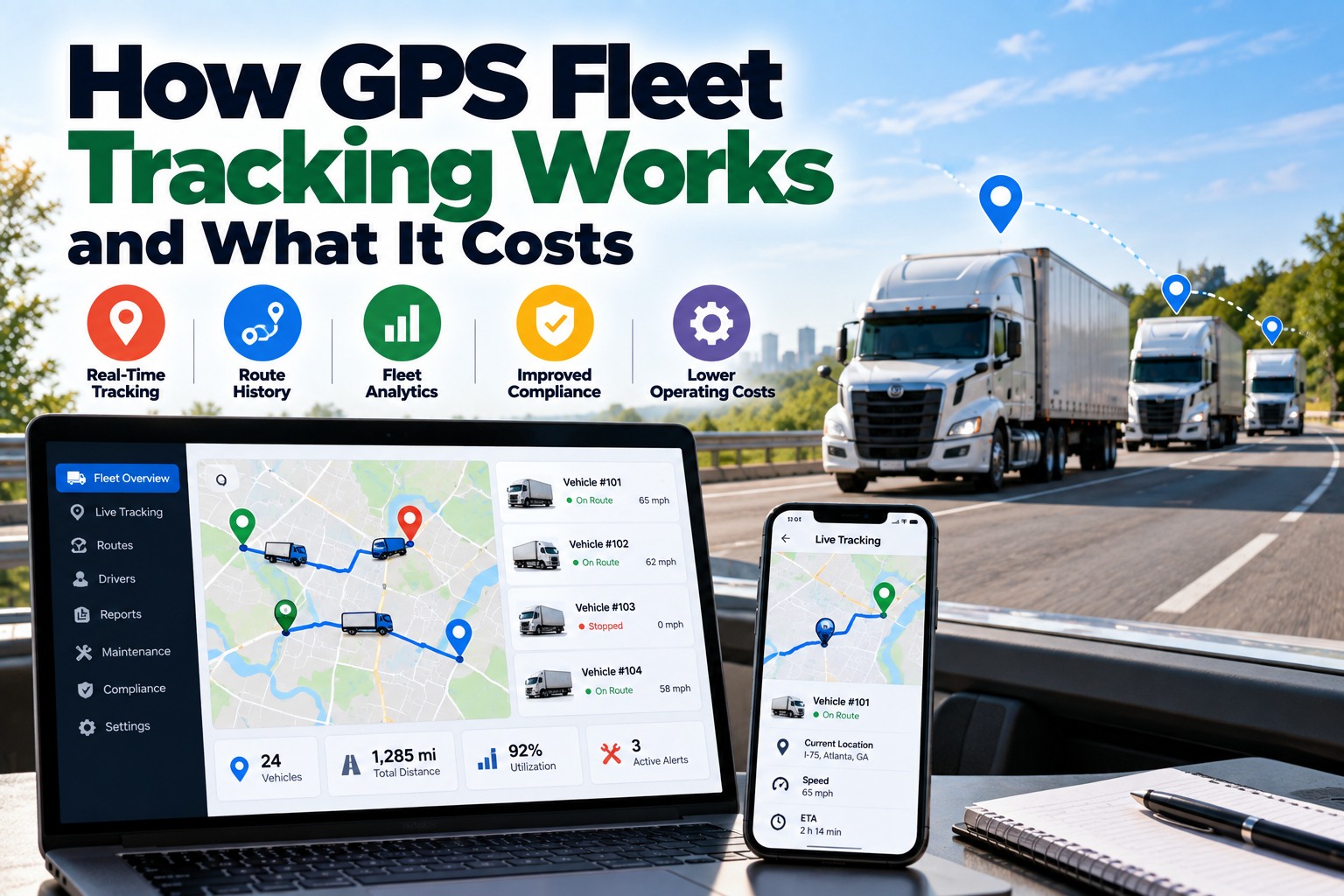
GPS fleet tracking works by putting a small device in each vehicle that calculates its position from satellite signals, adds data such as speed, ignition status and engine diagnostics, sends it over a cellular network to the cloud and shows it on a dashboard within seconds. Commercial systems typically cost $15 to $50 per vehicle per month plus hardware, with the price set by features, how often the device reports and contract length. This guide explains each step of the signal path, compares device types, builds a realistic 25-vehicle bill, shows how many gallons of fuel pay for it and covers the rules that apply to tracking drivers. See how FleetRabbit puts GPS, ELD, DVIR and PM data together.
GPS FLEET TRACKING · HOW IT WORKS, WHAT IT COSTS, WHAT THE RULES SAY
From Satellite Signal to Dashboard: What You're Really Paying For
The dot on the map is the cheap part. The real cost is in the hardware, the add-on modules, the contract and what you do with the data. Here is the whole path, priced.
TYPICAL PRICE RANGE
$15–$50
per vehicle per month, plus hardware
Entry$15–20
Mid-range$25–45
Premium$50+
The Signal Path: Four Hops, a Few Seconds
Every location update on your screen travelled the same route. Knowing it helps you ask vendors the right questions about reporting frequency and coverage.
1
Satellites
A network of 30-plus satellites broadcasts timing signals. A device needs at least four to calculate position, usually within 5 to 10 meters.
2
In-vehicle device
Works out location, speed and direction, and adds ignition status and engine diagnostics.
3
Cellular network
Sends the data over 4G or 5G to secure cloud servers. Satellite links cover remote areas.
4
Dashboard
Software turns raw points into maps, trip history, alerts and reports.
Signal-path and accuracy details from GPS Insight's explainer. How often a device sends a point, called the ping rate, varies by plan and is one of the things that changes price.
Three Device Types, Three Price Points
PLUG-IN OBD
~$40
Plugs into the diagnostic port
Install in a minute. Best for leased vehicles, short-term use and light-duty fleets. Easy to unplug, which matters if you rely on continuous data.
HARDWIRED
$100–$299+
Wired into the vehicle
Takes longer to install, harder to tamper with and more reliable for long-term fleets, heavy-duty trucks and utilities.
ASSET TRACKER
Varies
Mounted on trailers and equipment
For units with no engine or diagnostic port. Usually battery or solar powered and reports less often to save power.
What the Data Is Actually For
A tracking device collects location, speed, acceleration, braking, idle time, direction, ignition and engine diagnostics. Each data point maps to a decision. Swipe the table horizontally on mobile.
← Swipe to see all columns →
What GPS Tracking Costs
Published 2026 pricing from GPS Insight puts tracking at $15 to $50 per vehicle per month plus hardware. The tier you land in depends on what's included.
$15–$20
Entry
Basic location tracking and trip history.
$25–$45
Mid-range
Most common. Adds geofencing, alerts and reporting.
$50+
Premium
AI dash cams and advanced analytics.
On top of the monthly rate, add the extras that change the real bill:
Activation $0–$50 per device
ELD module $10–$25 a month
AI dash cam $30–$60 a month
Asset or temperature modules $5–$15 a month
Contracts of 12–36 months
Early termination fees
A 25-Vehicle Bill, Line by Line
Here is the arithmetic for a 25-vehicle fleet using mid-range plan pricing. The inputs are assumptions inside the published ranges: $35 a month for the plan, a $150 hardwired device and a $15 ELD module. Swap in your own quotes. Swipe the table horizontally on mobile.
← Swipe to see all columns →
BREAK-EVEN IN FUEL
$600 a vehicle ÷ $5.35 a gallon ≈ 112 gallons a year
At the August 2026 diesel price of $5.35 a gallon reported by
Fleet Maintenance, the ongoing cost is covered if tracking saves each vehicle about 112 gallons a year, roughly 9 gallons a month. In year one, with hardware, the figure is about 140 gallons. That is before counting any maintenance, dispatch or compliance benefit.
Connect Tracking to Maintenance, DVIR and Compliance
GPS data is most useful when it drives something. FleetRabbit connects to the ELD and GPS data you already run and joins it with DVIRs, preventive maintenance and compliance records, so mileage and engine hours trigger services and inspection defects reach the shop. Free for up to three vehicles, then $5 per vehicle per month.
ELD and GPS data
Digital DVIR
Mileage-based PM
Compliance records
Green Flags and Red Flags When You Compare Vendors
GREEN FLAGS
- A quote that lists plan, hardware, activation and every module
- Month-to-month or a short term with a clear exit
- Reporting frequency stated in writing
- Data you can export and integrate
- Hardware you can move between vehicles
RED FLAGS
- One headline price with the extras left out
- Contracts of three years or more with termination fees
- Slow reporting that makes live tracking not live
- Features locked behind higher tiers you actually need
- No answer on who owns the data
What the Rules Say
Three layers of rules apply, and they are easy to confuse.
FEDERAL · ELD
Logging is required, tracking isn't
The ELD mandate requires electronic records of duty status for most drivers, and an ELD records location in a limited way. It does not require continuous GPS tracking of your fleet.
STATE · NOTICE LAWS
Some states require notice
Per
OnTheClock's state guide: New York requires written notice at hiring and acknowledgment, New Jersey requires written notice, Delaware requires notice before electronic monitoring and Connecticut's law takes effect October 1, 2026. Maine exempts GPS on employer-owned vehicles from its notice rule.
YOUR COMPANY · POLICY
Write down what you track and why
Define the purpose, set boundaries for when and what is tracked, get written acknowledgment, limit who can see the data and review the policy regularly.
A tracking policy in five lines
- Why we track: safety, dispatch, maintenance and compliance.
- What we track: company vehicles, location and driving data, during work use.
- When we don't: personal time off duty, where the law or your policy says so.
- Who sees it: named roles only, and how long data is kept.
- How drivers acknowledge it: written notice, signed at hire.
Frequently Asked Questions
How does GPS fleet tracking work?
A device in the vehicle calculates its position from satellite signals, adds data such as speed and ignition status, sends it over a cellular network to the cloud and displays it on a dashboard within seconds.
How much does GPS fleet tracking cost?
Published 2026 ranges are about $15 to $50 per vehicle per month plus hardware, with most fleets in the $25 to $45 mid-range. ELD modules, AI dash cams and activation fees add to that.
Price your own fleet's stack with us to see where you'd land.
How accurate is GPS vehicle tracking?
Commercial systems typically achieve accuracy within about 5 to 10 meters under open sky. Tall buildings, tunnels and heavy tree cover reduce it, and a low reporting frequency can make a trip look less precise than it was.
What is the difference between GPS tracking and an ELD?
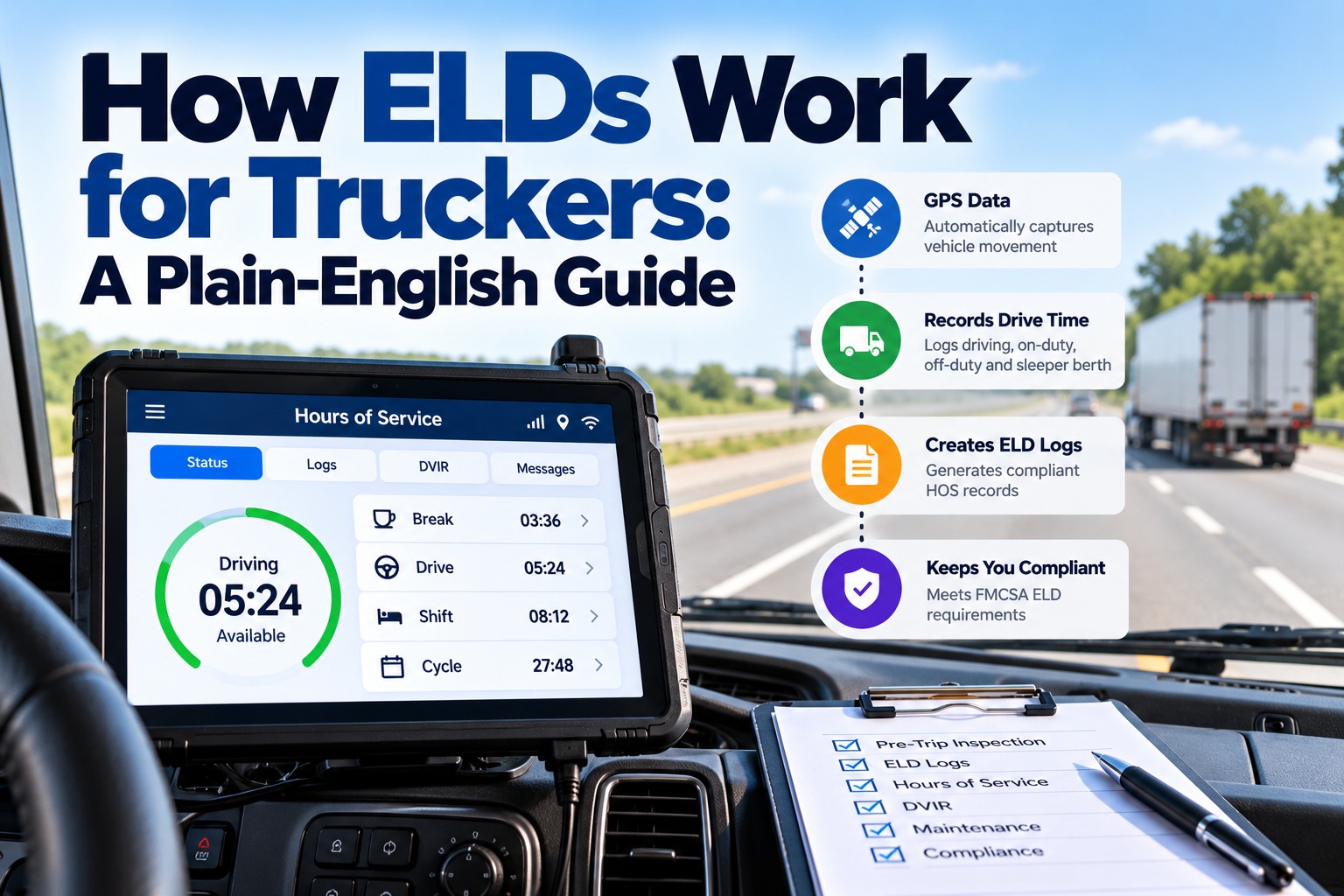
GPS tracking shows where vehicles are. An ELD is a certified device that records hours-of-service data for drivers, and it includes location records. Many platforms offer both, and our ELD exemptions guide covers who needs one.
Is it legal to track company vehicles?
Generally yes for company-owned vehicles, but some states require written notice or acknowledgment before electronic monitoring. Check the law in each state where you have drivers and have counsel review your policy.
Plug-in or hardwired: which should I choose?
Plug-in OBD devices suit leased or light-duty vehicles and quick rollouts. Hardwired units suit long-term and heavy-duty fleets because they are harder to unplug and more reliable.
How does GPS data help maintenance?
Mileage and engine hours from tracking can drive preventive maintenance intervals, and diagnostic codes can flag faults early. FleetRabbit connects that data to work orders so services are scheduled from real usage.
Can I try FleetRabbit with my existing GPS or ELD?
Make the Dot on the Map Do Something
Tracking pays for itself when location, mileage and engine data trigger services, inspections and compliance checks. Put them in one platform and see what your fleet is really costing you.
Free tier for up to 3 vehicles · No credit card required · Works with the ELD and GPS you already use
October 2, 2026
By Derek Goes
All Articles