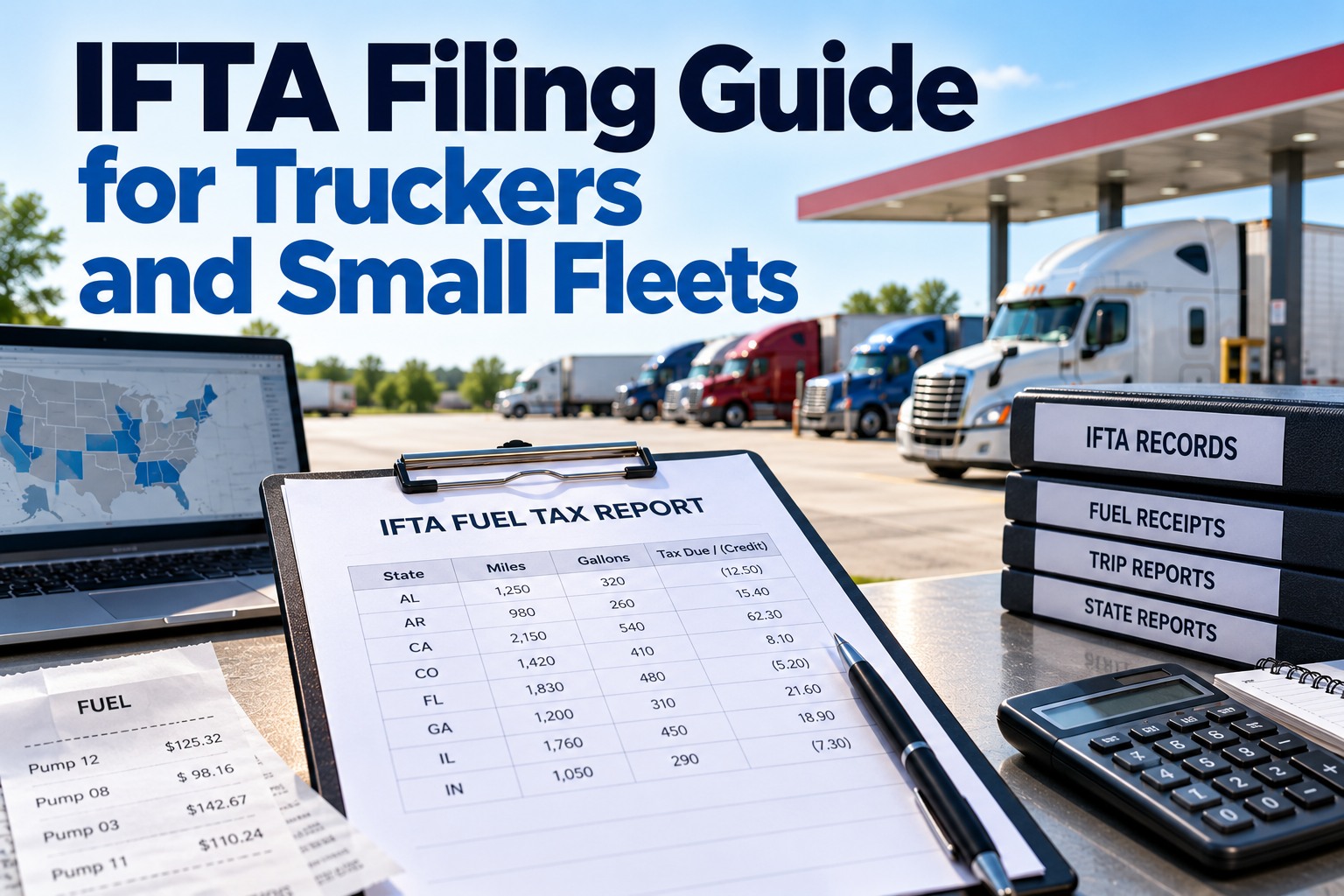
IFTA is one return for fuel tax across 48 U.S. states and 10 Canadian provinces. The idea is simple: you buy fuel in one state and burn it in another, so the tax is shared out by where the miles were driven. Filing it is mostly arithmetic. Getting it right depends on records: every mile, in every state, for every qualified truck, and every gallon with a receipt. This guide covers who must file, the quarterly deadlines, how the calculation works with a worked example, what records to keep for four years, the mistakes auditors look for, and a checklist you can use as a template. To see how FleetRabbit handles miles and fuel data, book a short demo with our team.
IFTA filing · truckers and small fleets
Four deadlines a year, one return, and a record for every mile and every gallon
Returns are due on the last day of the month after each quarter. A quarter with no travel still needs a return.
Q3
Jul – Sep
Due 31 October
Q4
Oct – Dec
Due 31 January
Which trucks need IFTA decals: the qualified motor vehicle test
IFTA applies to a qualified motor vehicle used, or designed to be used, to carry people or property, operated in at least two member jurisdictions. A vehicle qualifies if it meets any one of these.
Two axles
and a gross or registered weight over 26,000 lb (11,797 kg)
or
Three or more axles
at any weight
or
A combination
with a combined weight over 26,000 lb
The license is issued by your base jurisdiction, usually the state where the vehicles are registered and the records are kept. Each qualified power unit carries two decals, renewed every year. Trailers don’t get decals, but a trailer can push a lighter truck over the combination weight.
How the IFTA calculation works, in six steps
1
Add up the miles
Total miles in every jurisdiction, IFTA or not, taxable or not, for all qualified vehicles in the quarter.
2
Add up the fuel
Total gallons placed in those vehicles, with receipts, from every jurisdiction.
3
Work out fleet MPG
Total miles divided by total gallons. One average for the whole fleet, by fuel type.
4
Gallons used per state
Each jurisdiction’s miles divided by the fleet MPG.
5
Net against fuel bought
Gallons used minus tax-paid gallons bought there. Positive means tax owed, negative means a credit.
6
Apply that quarter’s rates
Multiply by each jurisdiction’s rate for the quarter, file through your base jurisdiction, and pay the net.
Every return uses the fleet average, not each truck’s own MPG. That’s why one truck with missing miles affects the whole return.
A worked quarter: four states, one fleet MPG, owed and credited gallons
This example shows the logic without tax rates, which change every quarter. It uses one fleet of tractor-trailers running between Texas and Missouri.
| State | Miles | Gallons used | Gallons bought | Net |
|---|
| TX | 12,000 | 2,000 | 2,600 | −600 gal · credit |
| OK | 6,000 | 1,000 | 400 | +600 gal · tax owed |
| KS | 7,500 | 1,250 | 1,500 | −250 gal · credit |
| MO | 4,500 | 750 | 500 | +250 gal · tax owed |
| Total | 30,000 | 5,000 | 5,000 | Fleet MPG 6.0 |
Representative example · sample figures. Gallons used = state miles ÷ fleet MPG. Multiply net gallons by each state’s rate for the quarter to get tax owed or credit.
Buying cheap fuel in Texas doesn’t avoid Oklahoma’s tax. The return shifts the tax to where the fuel was burned, so fuel strategy is about price, not tax.
The records IFTA expects, field by field
Under the IFTA Procedures Manual, records must be kept for four years from the return’s due date or filing date, whichever is later. Auditors look for two sets.
Distance records, per trip and per unit
Trip start and end dates
Origin and destination
Route of travel
Beginning and ending odometer or hubometer readings
Total trip miles
Miles in each jurisdiction
Vehicle unit number
Licensee name
Fuel receipts, per purchase
Date of purchase
Seller name and address
Gallons and fuel type
Price per gallon or total amount
Vehicle unit number
Purchaser name
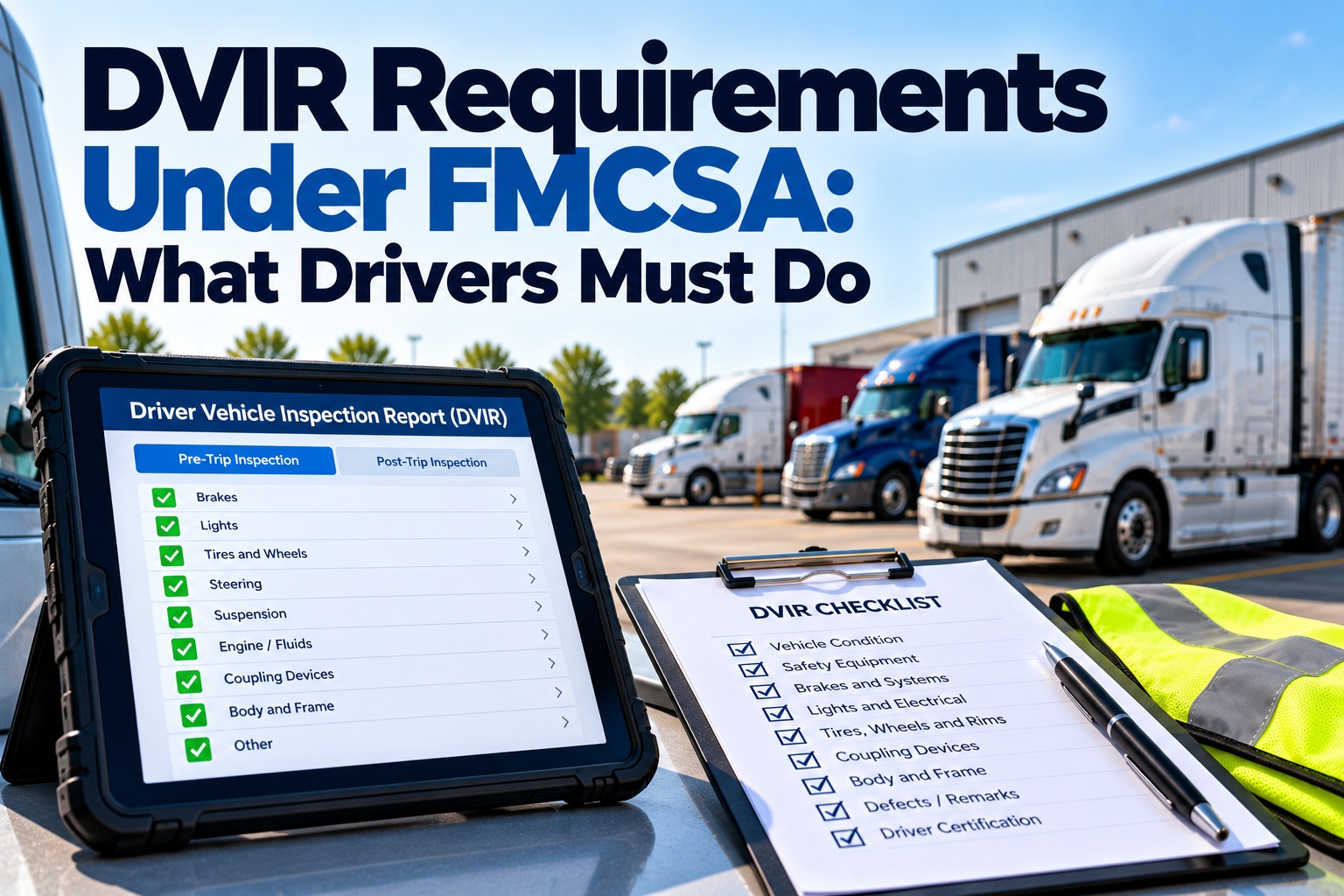
Odometer readings are where inspection and tax records meet. A driver who records the odometer on the daily pre-trip inspection creates a second, independent mileage trail for each tractor.
20-minute demo
See how miles by state and fuel purchases are captured for each tractor
IFTA and IRP: two programs that are easy to confuse
IFTA shares out fuel tax. The International Registration Plan, IRP, shares out registration fees, based on the miles a truck runs in each jurisdiction. Most interstate carriers need both, and both rely on the same distance records, but they are separate accounts with separate deadlines. IFTA is filed every quarter, and the license and decals are renewed each year. IRP is renewed once a year, with apportioned plates and a cab card that lists the jurisdictions the truck may run in. The thresholds are similar: a power unit with two axles and over 26,000 lb, three or more axles, or a combination over 26,000 lb. An auditor from either program can ask for the same trip records, so one clean mileage trail serves both.
Owner-operators leased to a carrier: whose IFTA account is it?
An owner-operator leased to a motor carrier may report under the carrier’s IFTA license or under their own. The lease agreement should say which. If the carrier reports, it needs the owner-operator’s trip records and fuel receipts every quarter, on time, with the unit number on each. If the owner-operator reports, they need their own license, decals and records, and the carrier should keep a copy of the license on file. Problems usually start when nobody is sure, a tractor runs a quarter with the wrong decals, and both sides assume the other filed. Write it down at the start of the lease, and review it when a truck changes hands.
Bulk fuel, reefers and other fuel that needs special handling
Not every gallon goes through a fuel card at a truck stop. Fuel pumped from a yard tank needs its own withdrawal records, showing the date, the unit number and the gallons for each fill, plus the invoices proving the tax was paid when the bulk fuel was delivered. Fuel for a refrigerated trailer’s unit isn’t propulsion fuel, so if it comes from a separate tank it shouldn’t be counted as truck fuel. And if a tractor runs on more than one fuel type, each type is calculated with its own MPG. Getting these right keeps the fleet MPG honest, which is the number every IFTA auditor checks first.
Late returns: the penalty, the interest, and the license
$50 or 10%
Penalty for a late return, whichever is greater, on the net tax due
Interest
Charged by IFTA on tax due to each jurisdiction, at 2% above the IRS underpayment rate, a month at a time
Revocation
Base jurisdictions can revoke the license for not filing, which takes the decals with it
Six mistakes that turn an IFTA audit into a bill
An IFTA audit compares your miles and gallons with the records behind them. When records are missing, auditors can estimate, and the estimate is rarely in the carrier’s favour.
×
Missing miles
GPS gaps, yard moves and personal conveyance left out of the total, which lowers the fleet MPG and the tax owed in the auditor’s eyes.
×
Receipts without a unit number
Fuel that can’t be tied to a qualified vehicle may be disallowed as a tax-paid credit.
×
Reefer fuel mixed in
Fuel for a refrigerated trailer unit isn’t propulsion fuel. Keep it separate if it comes from a separate tank.
×
An MPG that doesn’t make sense
A fleet average far above what heavy trucks achieve is a common audit trigger.
×
A missed zero return
A quarter with no travel still needs a return. Not filing can lead to the license being revoked.
×
Wrong vehicle list
A newly added tractor without decals, or a sold one still included.
Fuel and mileage data also tell you about the trucks. A tractor whose MPG drops without explanation may have dragging brakes, low tyres or an injector problem, which belongs in preventive maintenance and the unit’s repair history.
An IFTA filing checklist you can use as a template
Every trip
Odometer recorded at start and end
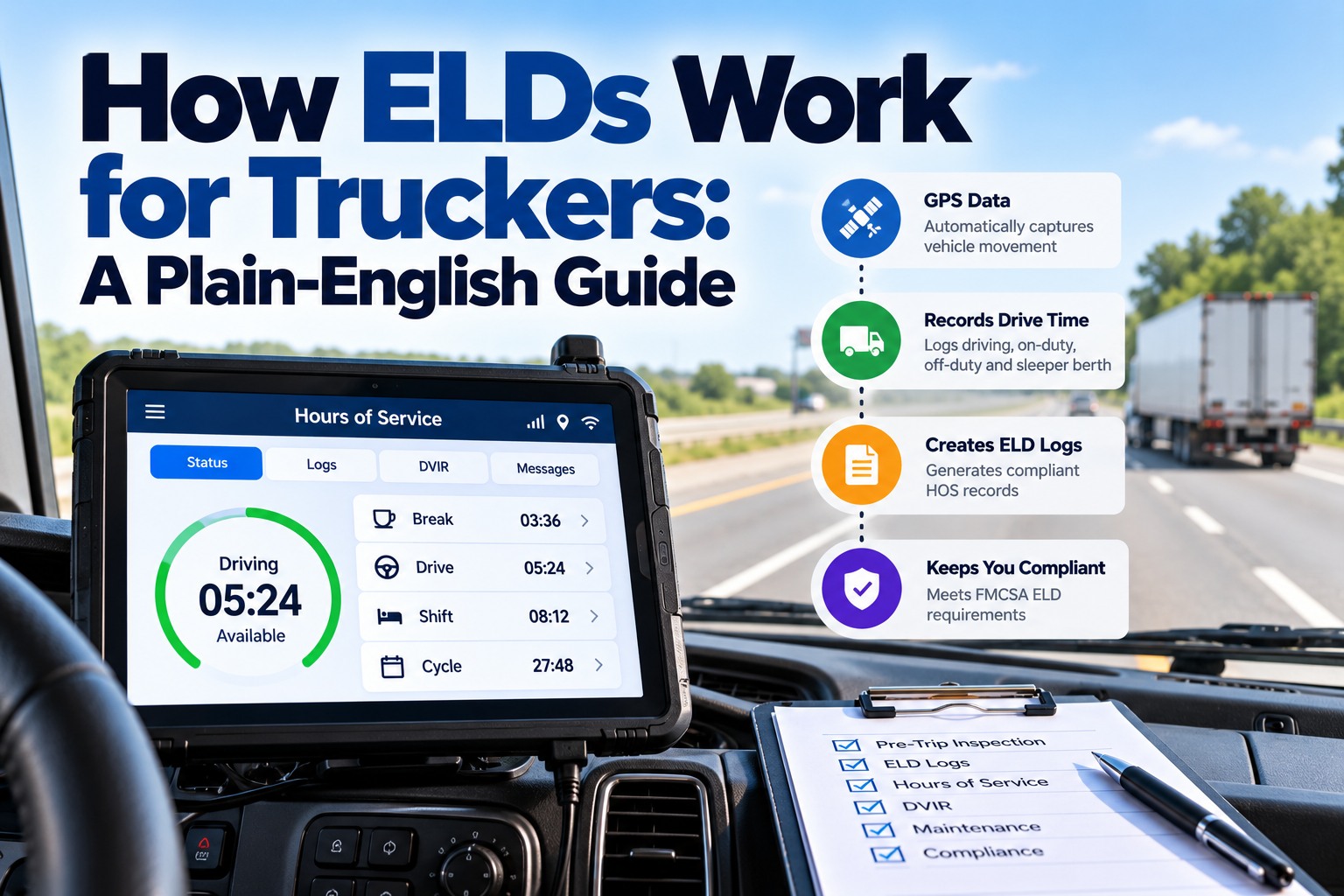
State-line crossings captured by GPS or ELD
Unit number on every fuel receipt
Receipts uploaded the same day
Every month
Miles per unit reconciled with odometer readings
Fuel card data matched to receipts
Gaps in GPS or ELD data explained
Reefer fuel separated from truck fuel
Every quarter
Total miles and gallons for all qualified vehicles
Fleet MPG checked for sense
Return filed and paid by the due date
Records saved for at least four years
Where FleetRabbit fits IFTA filing
Described on FleetRabbit’s IFTA page
GPS-based miles by jurisdiction as trucks cross state lines
Fuel card transactions with gallons, location and price
Reports generated from the quarter’s data
Documented product features
Fuel card integration with WEX, Comdata, EFS and others
Digital DVIRs, with odometer readings at each inspection
Preventive maintenance and work order history
Stays with you
Filing and paying the return with your base jurisdiction
Each quarter’s tax rates
Answering an IFTA audit
FleetRabbit for fuel and fleet records
Miles, fuel and maintenance for every tractor in one place, so the quarter adds up
Fuel card import
+
Miles by state
+
Odometer on each DVIR
=
A quarter you can explain
The 20-minute demo covers fuel card data, jurisdiction miles, how reports are produced, and the free plan for three vehicles.
Walk Through Your Quarter Live
IFTA filing questions from truckers and small fleets
Who needs to file IFTA?
A carrier based in an IFTA jurisdiction that operates a qualified motor vehicle in two or more member jurisdictions: two axles and over 26,000 lb, three or more axles, or a combination over 26,000 lb.
When are IFTA returns due?
Quarterly: 30 April, 31 July, 31 October and 31 January, for the quarter just ended. If the date falls on a weekend or holiday, the next business day.
Do I file IFTA if my trucks didn’t travel?
Yes. A return is required every quarter, even with no miles. Mark it as no operation.
What is the penalty for filing IFTA late?
The greater of $50 or 10% of the net tax due, plus interest on the tax due to each jurisdiction.
How long must IFTA records be kept?
Four years from the return’s due date or filing date, whichever is later, under the IFTA Procedures Manual.
Do trailers count for IFTA?
No. IFTA applies to the power unit. A trailer adds to the combination weight but doesn’t need its own decals; reefer unit fuel is not propulsion fuel.
Does FleetRabbit do IFTA reporting?
FleetRabbit’s IFTA page describes GPS-based jurisdiction miles, fuel card imports and reports generated from that data. Confirm with your own units and fuel cards in a demo.
Close every quarter with miles and fuel that match
Capture the data on every trip, check it every month, and file with confidence.
October 21, 2026
By Emily Parker
All Articles