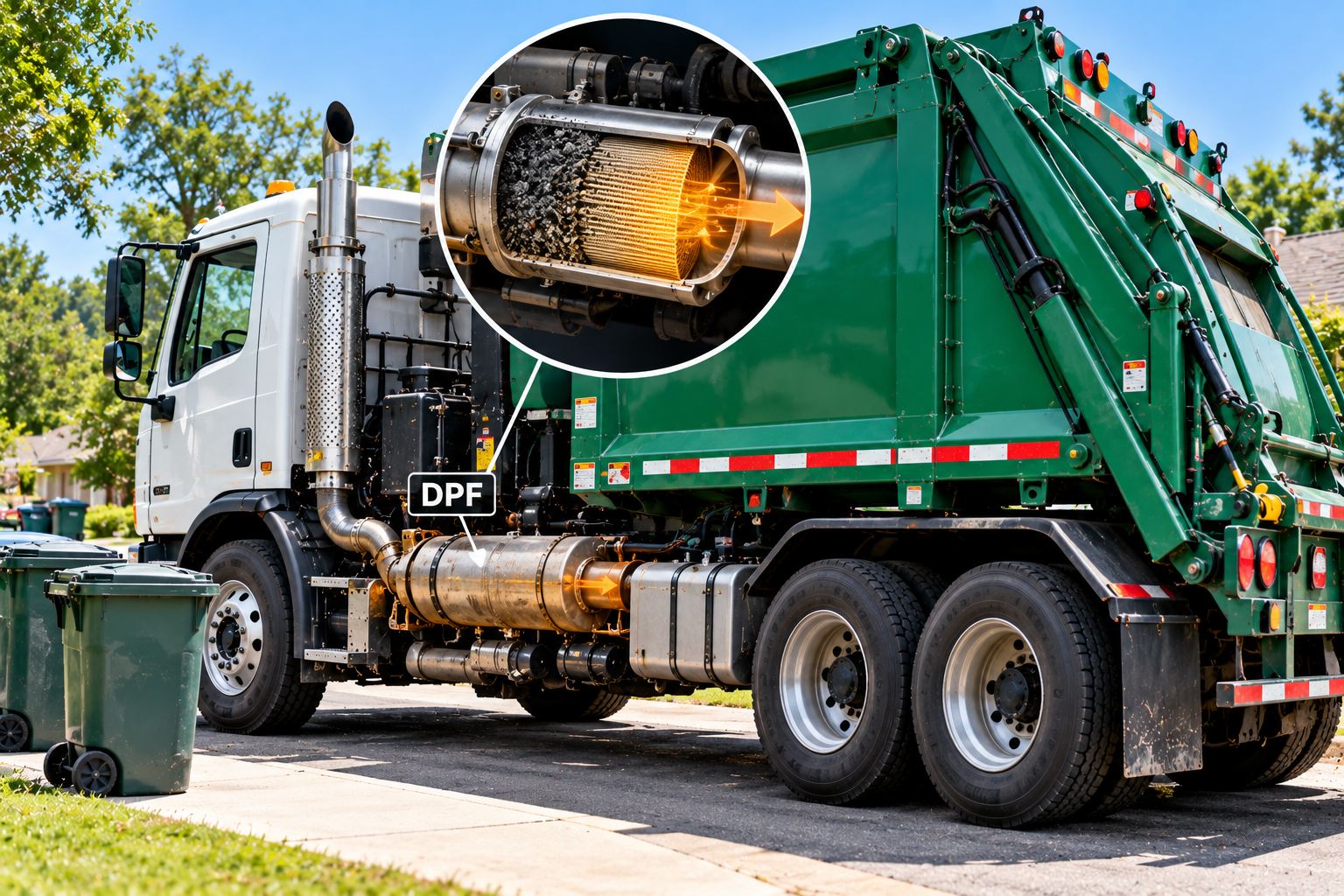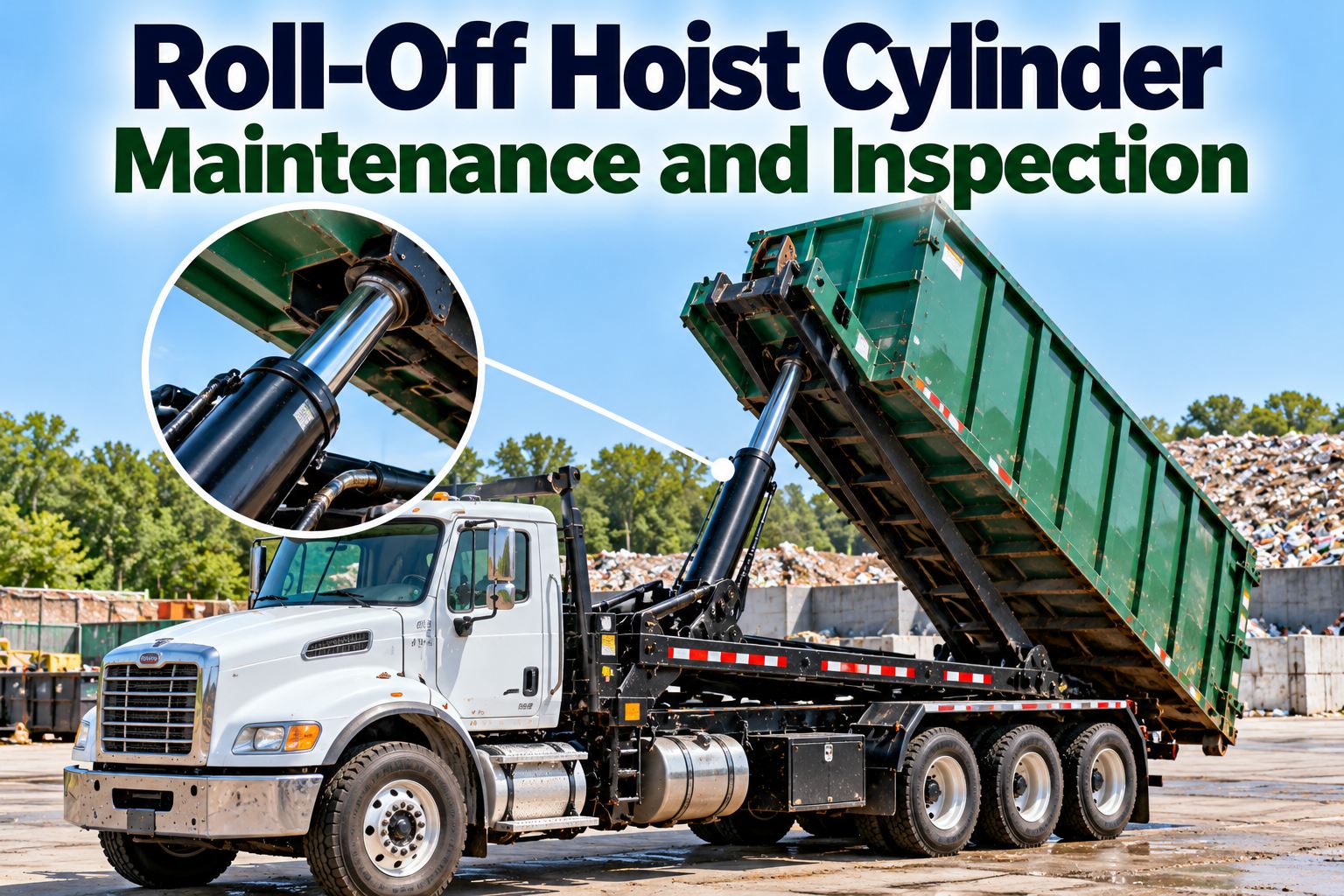
Landfill truck maintenance has a peculiar failure pattern: the two consumables the site destroys fastest are routinely mismanaged in exactly opposite directions. Tires get changed too late, run to destruction, and the casing is lost with them — even though a sound casing can be retreaded three to ten times. Air filters get changed too early, because on a landfill truck the element always looks filthy, which interrupts a filter that was still getting better and opens the housing to the dirtiest air on the property. Both errors cost real money every month, both feel like diligence to the people making them, and both are fixed the same way — by measuring something instead of judging by appearance. Book a site review to see what yours are costing.
Put every site truck on a severe-duty schedule and track tire and filter cost per unit. First three vehicles free.
Four Items the Site Attacks, and the Mistake Made on Each
Each of these fails differently at a landfill than it does on the road, and in every case the common response makes it worse rather than better.
Where Site Trucks Lose Money
Two are changed at the wrong time. Two are run on the wrong schedule entirely.
Run to destruction and the retread value goes with it
Served on appearance rather than measured restriction
Treated as cleaning rather than as maintenance
Site duty is severe duty, whatever the odometer says
Running site trucks on your highway PM schedule? Severe duty is defined by the work, not by the odometer, and a unit that enters a landfill qualifies the moment it does. Set up a separate schedule free for your site units.
What to Check, How Often, and Why It Differs on Site
The intervals that actually change when a truck works a landfill or transfer station rather than a road route. Swipe sideways on mobile.
The Two Measurements That Replace Guesswork
Almost everything above comes down to two numbers nobody currently reads. Both are cheap to capture and both end an argument that otherwise repeats monthly.
Service Filters by Restriction, Not by Looks
Published filtration guidance is explicit that time or odometer intervals lead to over-servicing. The correct trigger is measured restriction in inches of water against the maximum the engine manufacturer sets. Fit a gauge or indicator and the decision stops being a judgement call.
Understand That a Loaded Filter Filters Better
Trapped dirt partially clogs the media, and that buildup then catches smaller particles — barrier filtration. Efficiency climbs throughout the element’s life until restriction reaches the limit. Changing early on appearance gives you a less effective filter and an open housing.
Check Pressure and Temperature Daily
Recommended practice in waste work is once or twice a day. Slow urban speeds reduce the airflow that would otherwise cool a tire, and stop-start braking heats the rim enough to damage the bead.
Protect the Casing, Not Just the Tread
A casing that survives can be retreaded three to ten times. One that is run to destruction cannot be retreaded at all, which is why removal timing matters more than tread depth alone.
Build the Severe-Duty Schedule Once
Site trucks need their own intervals, their own tire records and their own cost view. Set it up once and every unit that enters the landfill inherits it.
Four Expensive Habits on Landfill Trucks
All four are common, all four feel like diligence, and all four cost more than doing nothing would.
Tires Scrapped Instead of Retreaded
A set can be consumed in three to six months in waste service. Run each one to failure and the casing goes with it, turning a retreadable asset into scrap every single time.
Filters Changed on Appearance
A landfill truck’s element always looks filthy, so crews change it constantly. Each change interrupts a filter that was still improving and opens the housing to the dirtiest air on site.
Leachate Left on the Chassis
Site run-off is corrosive and it sits on brake hardware, air lines and electrical connectors between shifts, where nobody looks until something fails.
Highway Intervals on Site Trucks
A truck running landfill and transfer work is in severe service regardless of the miles it shows. Brake and suspension intervals set from a highway schedule arrive far too late.
Tire Outcome: Run to Failure vs Removed on Condition
Tread life barely changes between the two columns. What changes is whether you buy a casing once or buy it again every few months.
What FleetRabbit Tracks on Landfill and Transfer Trucks
Every finding on this page is produced by somebody looking at a truck. The software’s job is to make sure the looking happens on a schedule and that what was seen survives the shift.
Severe-Duty PM Schedules
Separate intervals for units that work the site, so a landfill truck is not sharing a schedule with a highway tractor that happens to have similar mileage.
Tire Records by Wheel Position
Pressure, temperature, removals and casing outcomes tracked per position, so a recurring failure on one axle stops looking like bad luck.
Filter Restriction Logged at Each PM
The reading itself recorded over time, which turns element life into a trend you can plan around instead of a guess repeated monthly.
DVIR From the Cab
Drivers report cuts, heat, slow leaks and chafed hoses on the spot, attached to the vehicle rather than mentioned at shift end.
Failed Checks Become Work Orders
An inspection failure opens a job with an owner and a date, which is the only reliable way a shift finding survives to the shop.
Cost Per Vehicle, Site Trucks Separated
Tire and filter spend per unit, with site trucks visible as their own group — which is how the real cost of landfill work finally shows up.
Want to know which units the site is destroying fastest? Tire and filter cost per vehicle, with site trucks separated out, answers it in one view. See it on your own fleet in a twenty-minute walkthrough.
A Six-Point Shift Check for Site Trucks
In order, and short enough that it actually gets done. The first point is the one most fleets have never done at all.
Read the Restriction Gauge
Before anything else. If the element is below the limit, leave it alone — it is still improving and the housing stays sealed.
Walk the Tires Cold
Pressure and temperature on every position. Record both, because the trend matters more than any single reading.
Inspect Sidewalls and Shoulders
This is where site damage shows first. Cuts that are survivable today become casing losses next week.
Check Chafe Points on Hoses and Lines
Abrasion is constant on site. Hoses fail at the point they rub, not at the fitting, and the rub point is predictable.
Look Under the Chassis for Standing Run-off
Leachate and grit sitting on brake hardware and air lines is the start of a corrosion failure nobody will attribute to the site.
Record It Against the Vehicle
A shift check that leaves no record tells you nothing next quarter about which units the site is destroying fastest.
Note: Fit the restriction gauge before introducing this check, or point one becomes a judgement call again. The whole value of servicing by restriction is that it removes opinion from a decision crews otherwise make by looking at a dirty element.
Why the Same Truck Costs More Here Than on a Road Route
It is worth being able to explain this to whoever signs for the budget, because site trucks look like ordinary trucks on a fleet list and then consume more than their share.
The abrasive environment attacks consumables continuously rather than occasionally. Tire life measured in months rather than years is the clearest example, but the same logic applies to brake friction material, air filtration and anything exposed underneath. Add corrosive run-off that sits on hardware between shifts, uneven ground that loads suspension and body mounts far harder than pavement does, and a duty cycle of constant low-speed manoeuvring that generates heat without the airflow to remove it.
The driver is also the only person who sees the truck in the environment that is damaging it. A cut found at the tip face on a daily inspection is a repair; the same cut found in the yard a week later is usually a casing. That is why the shift check below matters more on site trucks than on road units, and why it needs somewhere to go other than a conversation at shift change.
None of that is a reason to avoid the work — it is a reason to schedule and cost the trucks differently. A maintenance record that separates site units from road units turns an unexplained overspend into a predictable line item, and a preventive maintenance schedule built for severe duty stops the arguments about why these trucks keep breaking.
Frequently Asked Questions
How long do tires last on landfill and waste trucks?
Fleets in waste service often wear out a set in three to six months. The work is abrasive, refuse conceals road hazards, and frequent stop-start braking heats the rim enough to damage the tire at the bead. Slow urban speeds also reduce the airflow that would normally cool a tire.
How often should we check tire pressure?
Recommended practice in waste work is once or twice a day, which is far more often than a highway fleet would consider. Temperature is worth recording alongside pressure, because heat is a primary damage mechanism in this duty rather than a secondary one.
Can landfill truck tires be retreaded?
Yes, and this is where the money is. A casing can be retreaded three to ten times before it can no longer be retreaded. What decides it is casing integrity, which means removing tires before they are destroyed rather than after.
When should the air filter be changed?
At the restriction limit the engine manufacturer sets, measured in inches of water. Not on a date, not on mileage, and above all not on how dirty it looks. Published filtration guidance is clear that time-based intervals cause over-servicing.
Is it bad to change an air filter early?
Yes, for two reasons. Filtration efficiency rises as the element loads, because trapped dirt helps catch smaller particles, so an early change gives you a less effective filter. And every removal from the housing carries a risk of admitting dirt straight into the intake.
Do landfill trucks need different tires from transfer trucks?
Generally yes. Landfill work calls for more off-road traction and puncture resistance than transfer-station routes, which run on harder surfaces. Specifying one tire for both sites usually under-serves the landfill units.
Should site trucks run severe-duty intervals?
Yes, regardless of the mileage they accumulate. Grit accelerates brake wear, uneven ground loads the suspension, and corrosive run-off attacks hardware between shifts. A highway interval applied to a site truck arrives late by definition.
Measure Two Things and Stop Guessing on the Rest
Restriction in inches of water, pressure and temperature once or twice a day, severe-duty intervals for every unit that enters the site, and tire and filter cost tracked per vehicle. First three vehicles free.