Lytx is the most deliberately specialist platform in this category, and reviewers describe the buying decision accordingly: whether the camera quality, coaching maturity and insurance value justify a specialist platform, and whether the fleet should pair Lytx with another management system rather than expect it to cover the whole stack alone. That is not a criticism of Lytx — it is the intended architecture. Twenty-seven years of video telematics, machine vision trained on a driving database running to hundreds of billions of miles, professional analyst review producing the strongest incident packages for insurers and litigation counsel. It is a safety and risk platform built to defend fleets, and the industries it serves most — concrete, construction, waste, distribution, trucking, field service, government — are precisely the ones running heavy in-house maintenance alongside it. Walk us through how your safety and maintenance data currently meet and we'll show you where the seam is.
Integration · Lytx DriveCam
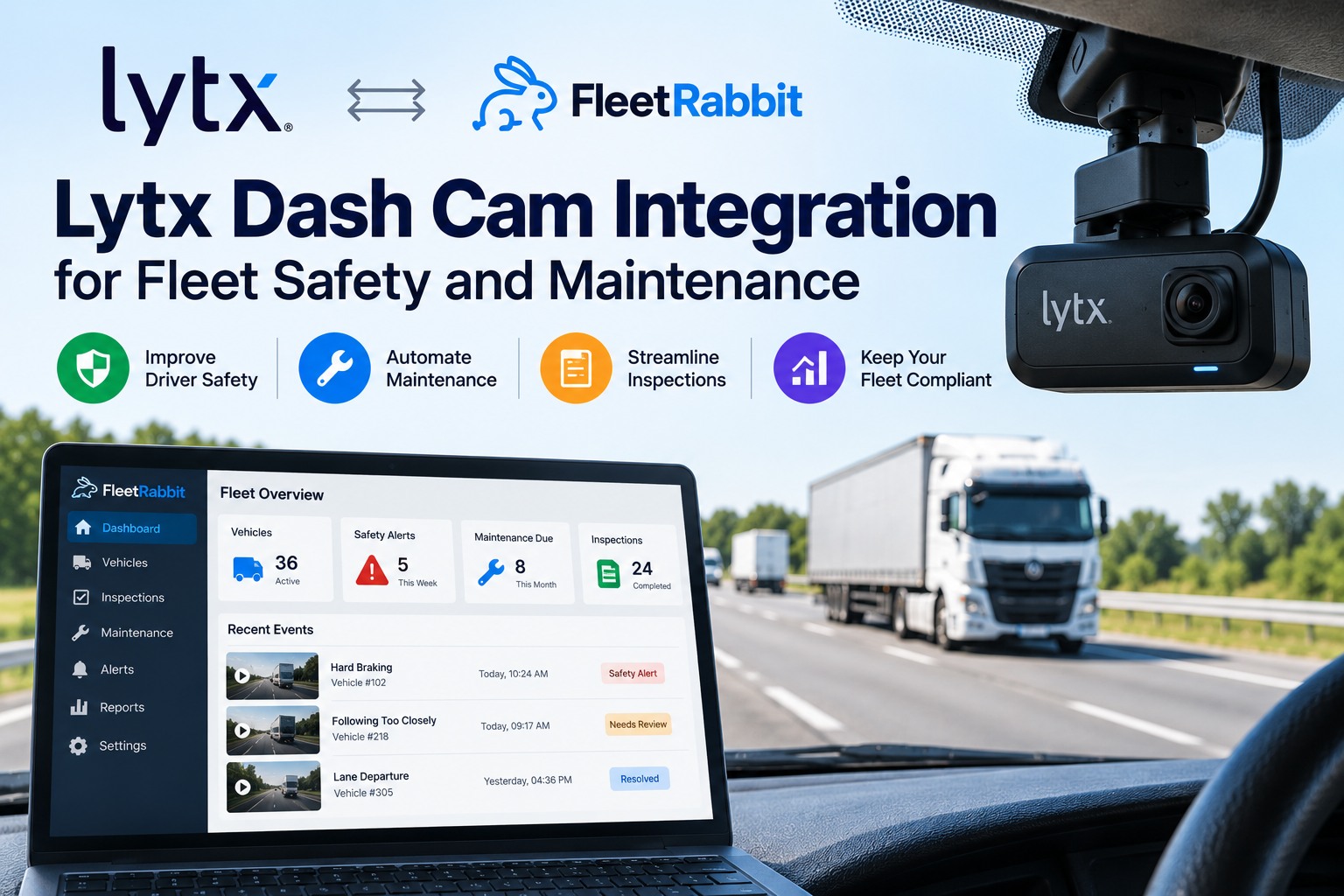
Lytx Dash Cam Integration for Safety and Maintenance
Lytx defends the incident. Maintenance records prove the vehicle was fit. Those two stories are stronger together than apart.
The Argument Nobody Makes About Video Evidence
Worth starting here, because it is the connection specific to Lytx and it changes how the two systems relate.
What the video proves
What the driver did
Lytx builds exceptionally strong incident packages — analyst-reviewed events, in-cab context, the footage insurers and litigation counsel want. On driver conduct, it is close to unanswerable.
What it cannot prove
That the vehicle was fit to be on the road
If opposing counsel argues the brakes were overdue, the tyres were worn or a reported defect went unrepaired, no amount of video answers it. That defence lives in the service record — the inspection, the work order, the parts fitted and the date it closed.
For a fleet buying Lytx specifically because of its defensibility, this is the gap worth closing. A collision defence has two halves, and most fleets have built one of them properly. The video shows a driver behaving correctly; the maintenance record shows they were given a vehicle that could stop. Miss the second and the first gets attacked from an angle it was never designed to cover.
Who This Page Is For
Lytx serves a fairly specific set of industries, and the overlap with maintenance-heavy operations is almost total.
Likely a fit
Concrete, construction and waste — mixed fleets with plant alongside trucks
Distribution and trucking running an in-house workshop
Field service and government fleets with scheduled maintenance obligations
Anyone whose safety programme is mature and whose maintenance sits in spreadsheets
Probably not
Owner-operators and very small fleets — Lytx itself is a poor fit at that scale
Fleets with maintenance fully outsourced and no internal scheduling
Operations already running a full maintenance platform they are happy with
Reviewers rate Lytx around 4.4 out of 5 for fleets and closer to 3.2 for owner-operators, citing contract rigidity and management overhead at the small end. If you are running it successfully, you are almost certainly in the fleet category — which means you have a workshop, a compliance obligation and a maintenance record that somebody is keeping somewhere.
What Lytx Covers, and What Sits Outside It
Precise rather than dismissive, because the boundary is deliberate on Lytx's part.
Swipe to see all columns
The lower three rows are not oversights. Lytx is described as priced and positioned as a safety programme rather than a camera subscription, and a safety programme reasonably stops where the workshop begins. The buying question reviewers pose is whether to pair it with another system — which is exactly what this page is about.
Half a
defence
Could you produce the service history for a vehicle in a claim, this afternoon?
Lytx will give you the footage within minutes for a flagged event. If the other side asks when those brakes were last inspected and who signed off the defect raised three weeks earlier, where does that come from and how long does it take? Bring one vehicle and we'll time it together.
Two Operational Realities Worth Planning Around
Both come up repeatedly in user accounts, and both are manageable once you know about them.
RetrievalNon-event video can take a day or more to pullFlagged events arrive quickly. Requesting footage that was never triggered is reported to take twenty-four hours or longer, which matters when a claim surfaces late and you need context around a moment nobody marked. Plan your incident process around that latency rather than assuming instant access.
Power drawBudget the low voltage cutoff kit from day oneParasitic battery drain is a documented characteristic, and practitioner advice is blunt: the cutoff kit is not optional in practice. Worth noting that a fleet discovering this through flat batteries will log those as maintenance events — which is a maintenance record telling you something about a camera installation.
That second point is a small illustration of the wider argument. A pattern of battery replacements concentrated on recently fitted vehicles is a maintenance signal about a safety deployment — and it is invisible to both systems individually. You see it only when the service record and the install record sit in the same place.
Know Your Renewal Window
The single most practically useful thing on this page, regardless of what you decide about integration.
Contracts run long
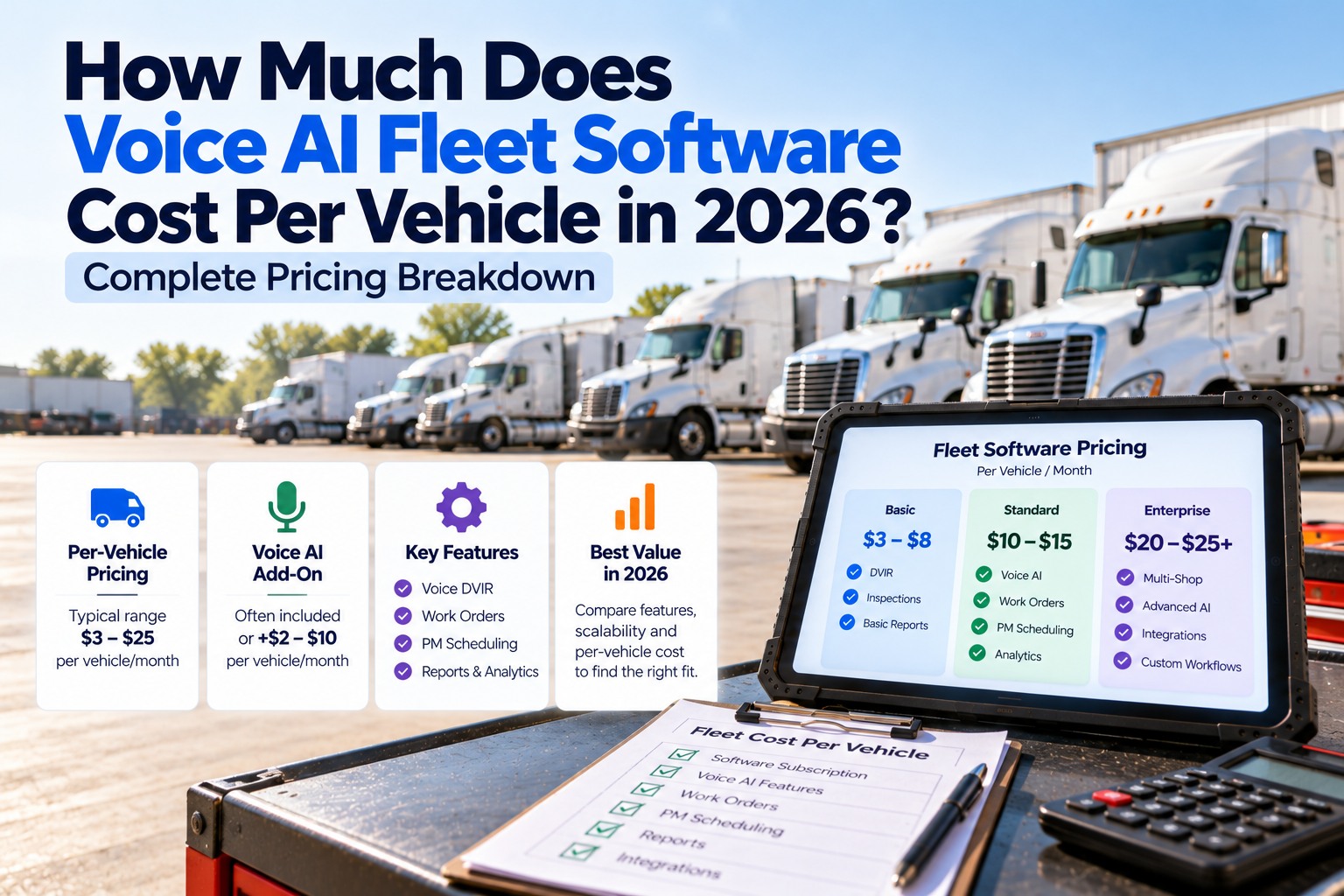
Lytx agreements are described as rigid three to five year terms, with full video telematics and safety platform pricing reported around $30 to $50 per vehicle per month and managed coaching quoted separately. A three-year total for a fifty-vehicle fleet is modelled in the range of $150,000 to $300,000.
The notification period is where fleets get caught
Practitioner advice is specific: calendar the renewal window immediately and set reminders at 120, 90 and 60 days out. Missing the notification period is expensive — and on a multi-year term, expensive means another full cycle.
Which is an argument for acting now
A fleet that has been running maintenance properly for a year arrives at renewal knowing exactly which Lytx modules it uses and which it pays for out of habit. That is a materially better position than renewing the bundle because nobody had time to work it out.
Nothing in this integration touches your Lytx agreement — no hardware changes, no camera reconfiguration, no conversation with your account team.
It runs alongside, which makes it reversible in a way that any platform decision is not. Tell us your renewal date and we'll work backwards with you so the maintenance record exists before that conversation rather than after it.
Inside Fleet Rabbit: The Maintenance Half
Six capabilities, sitting where Lytx deliberately does not.
01A service record built for disclosureInspections, defects, work orders, parts fitted and completion dates on one asset timeline, exportable. For a fleet buying Lytx for defensibility, this is the matching artefact — the document that answers whether the vehicle was fit, when the video has answered whether the driver was.
02Safety patterns checked against mechanical historyA braking pattern concentrated on one unit is either a driver habit or a brake problem. Lytx will tell you the events happened; whether those brakes were serviced four months ago or fourteen is a question only the maintenance record answers — and coaching a driver for a mechanical fault costs you credibility you need.
03DVIR defects that close, provablyEvery reported defect becomes an assigned job with an owner and a recorded outcome, so the loop from inspection to repair to verification is evidenced rather than assumed. This is what an auditor is examining, and it is what a spreadsheet cannot demonstrate.
04Multi-interval preventive schedulingTime, mileage and engine hours running simultaneously per asset class — trucks on distance, plant on hours, trailers on date. Essential for the concrete, construction and waste operations that make up much of the Lytx base.
05Parts, labour and cost per assetInventory, consumption and reorder alongside labour captured against the job, with parts, outsourced work and downtime attributed to a specific vehicle over its life.
06Assets with no camera in themMixers, excavators, trailers, generators and attachments managed on the same system as your camera-equipped vehicles — because a maintenance programme covers the whole yard, not just the units carrying a DriveCam.
The division is intentional and it respects what you already bought. Lytx keeps the cameras, the analyst review, the risk scoring and the coaching workflow your insurer responds to. Nothing here asks you to replace any of it or to change what a driver experiences in the cab.
Getting It Running
Four steps, none of which involves touching a camera.
1Start with the asset listYour vehicle register, including the plant and trailers Lytx does not cover. This is usually the point at which a fleet discovers how many assets have no scheduled maintenance at all.
2Set intervals per asset classDistance, hours and calendar rules for each type, so mixers and pickups are not governed by the same schedule. Takes an afternoon and does most of the work.
3Bring inspections onto the same recordDigital DVIR with defects routing straight to assignable jobs. This is the step that closes the evidentiary loop and it is the one worth doing first if you do nothing else.
4Connect telematics if you have itWhere you run a separate telematics platform alongside Lytx — which many Lytx fleets do — live odometer and fault codes feed the schedule automatically rather than by manual entry.
Build the other half of the record on three vehicles
Free, no card, no time limit, and nothing touching your Lytx deployment. Put three units on it, run inspections and a maintenance schedule for a fortnight, and see what a complete asset record looks like next to the video evidence you already have. If a claim arrives during that period, you will have both halves for those three vehicles — which is the clearest possible demonstration of the point.
Practical Notes for Lytx Fleets
Five things worth doing regardless of what sits alongside.
Diary the renewal at 120, 90 and 60 daysThe most valuable calendar entries in your account. Multi-year terms with notification periods punish inattention, and the cost of missing one is another full cycle.
Order the low voltage cutoff kit upfrontTreated as optional in the quote and mandatory in practice. Budgeting for it at purchase avoids both the flat batteries and the retrofit visit.
Know your non-event retrieval timeTest it before you need it. If unflagged footage takes a day or more to arrive, your incident response process should assume that rather than discover it during a claim.
Audit which modules you actually useBundles cover fuel, compliance, tracking, risk detection and safety. Before renewal, establish which your team opens weekly — that list is your negotiating position.
Pair rather than stretchReviewers frame the decision as whether to pair Lytx with another system rather than expect it to cover everything. Treating it as a specialist safety platform and resourcing the rest separately is the documented pattern, not a workaround.
Frequently Asked Questions
Do we need to replace Lytx?No, and you should not. Lytx keeps the cameras, machine vision, analyst-reviewed events, risk scoring and the coaching workflow that insurers respond to — a genuinely deep safety stack built over more than two decades. Fleet Rabbit handles what sits outside it: work orders, preventive scheduling, parts, inspections that close and cost per asset. Reviewers themselves frame the decision as whether to pair Lytx with another system rather than expect it to cover the whole stack.
Why does maintenance matter to a safety programme?Because a collision defence has two halves. Lytx evidences what the driver did, exceptionally well. It cannot evidence that the vehicle was fit — and if opposing counsel argues brakes were overdue or a reported defect went unrepaired, that answer lives in the service record. For a fleet buying Lytx specifically for defensibility, having only one half of the record is the gap most worth closing.
Can a safety event actually be a maintenance problem?Frequently. Brake fade, worn pads or tyre condition all extend stopping distance and produce the same deceleration signature as late braking, while the driver braked entirely normally. The diagnostic question is whether the pattern follows the driver or the vehicle, and answering it requires the service history alongside the event. Coaching a driver for a mechanical fault wastes the conversation and damages the programme's standing with the people it depends on.
What should we know about the contract?Terms are described as rigid three to five year agreements, with platform pricing reported around $30 to $50 per vehicle per month and managed coaching quoted separately — a three-year total for fifty vehicles modelled at roughly $150,000 to $300,000. The practical advice is to calendar the renewal window immediately with reminders at 120, 90 and 60 days, since missing the notification period commits you to another cycle. Nothing about adding maintenance alongside touches that agreement.
Is the battery drain issue real?It is documented, and practitioner advice is to budget the low voltage cutoff kit from day one rather than treating it as optional. Worth noting that a fleet without it will see battery replacements appearing in its maintenance record — a pattern concentrated on recently fitted vehicles that neither system spots alone, and that only becomes visible when installation dates and service records sit together.
Can we manage plant and trailers too?Yes, and for the industries Lytx serves this is usually the deciding factor. Concrete, construction and waste fleets run mixers, excavators, trailers and attachments that no camera covers and that still need scheduled maintenance on engine hours or calendar intervals. Those sit on the same system as your camera-equipped vehicles, so the service programme covers the yard rather than the subset carrying a DriveCam.
How do we try it without disrupting anything?Three vehicles, free, no card and no time limit, with nothing touching your Lytx deployment or your drivers' experience. Run inspections and a maintenance schedule for a fortnight and compare the asset record against what you have now. Set it up yourself in a few minutes, or have someone configure the intervals with you if your asset mix is complicated.
Two Records, One Defence
You bought Lytx because the evidence matters. Finish the job — a service history showing the vehicle was fit, inspections whose defects demonstrably closed, and scheduled maintenance covering the plant and trailers no camera watches. It sits alongside rather than replacing anything, it does not touch your agreement, and it means the next claim gets answered from both sides rather than one.
Lytx pricing, contract terms, hardware behaviour and platform scope are drawn from published third-party reviews and reported customer accounts, since Lytx does not publish public pricing. Nothing here is legal advice — verify current terms and capabilities with Lytx directly, and take advice on evidentiary matters from qualified counsel.