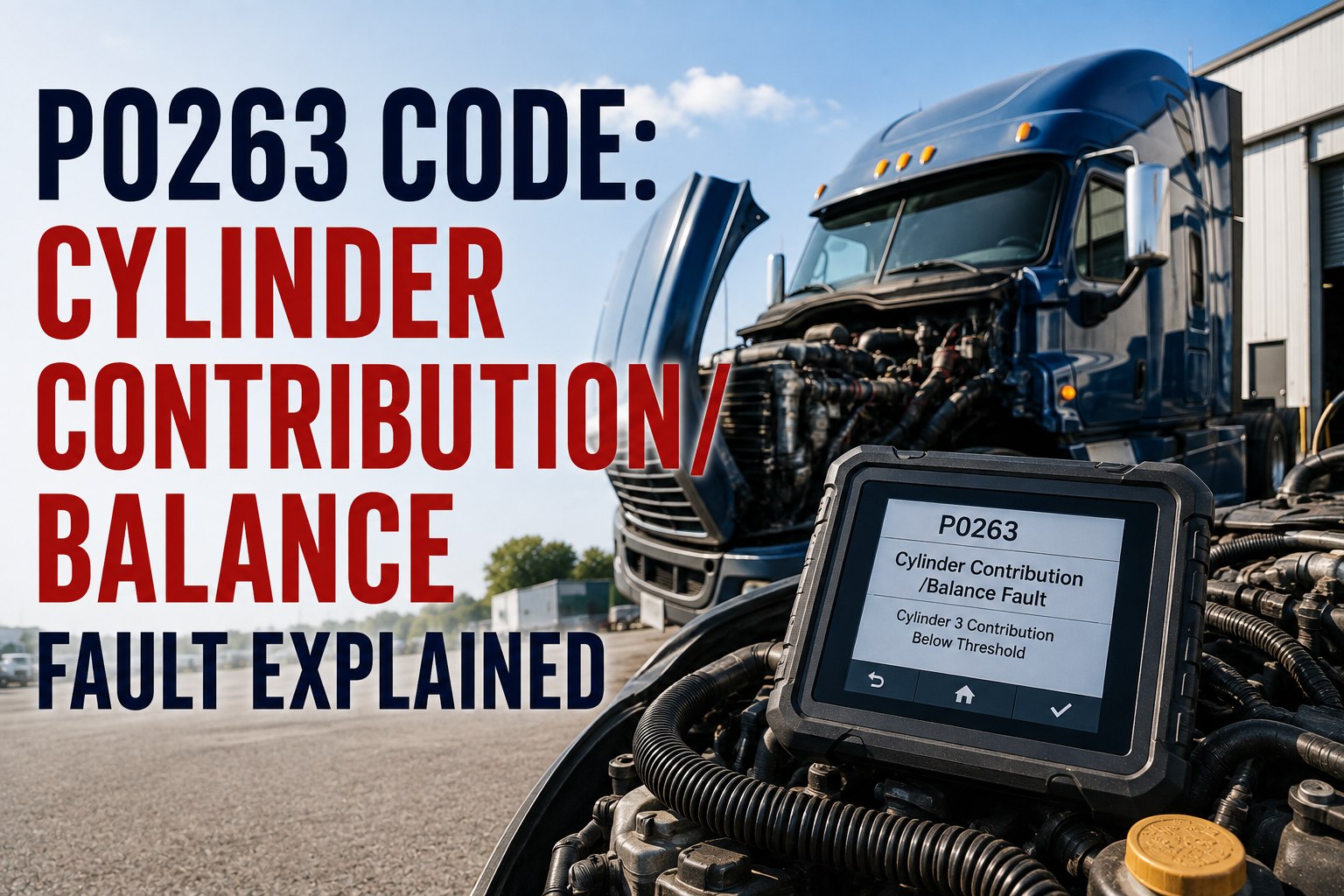
P0263 is not a misfire code, and treating it as one sends the diagnosis in the wrong direction. The module measures how much the crankshaft accelerates on each cylinder's power stroke, and it has concluded that cylinder one is not pushing as hard as its neighbours. That is a weaker signal than a dead cylinder and it arrives earlier — a cylinder can lose meaningful contribution through low compression without ever producing a misfire the driver would notice. On a diesel it narrows further, because there is no ignition system to blame. The cylinder is either not receiving the fuel it should, or it cannot hold the pressure to make use of it. Everything below is about separating those two, in that order, before anyone buys an injector. Start free with three vehicles and keep the test results with the unit.
P0263
Cylinder 1 Contribution / Balance Fault
1
2
3
4
5
6
One cylinder pushing less than the rest — measured, not inferred
How the Engine Weighs Each Cylinder
The detection method explains why this code catches things a misfire code would miss.
Every power stroke accelerates the crank
The crankshaft position sensor sees a small acceleration as each cylinder fires. The module reads those pulses and effectively weighs the contribution of each cylinder against the others.
A weak push is enough to fail
The code sets when the expected acceleration from that cylinder's power stroke does not arrive — meaning it is not contributing its share of engine power. It does not have to stop firing. It only has to fall behind.
Which is why it arrives early
Compression and sealing problems can produce poor cylinder balance without necessarily causing a misfire. A cylinder can be measurably down on contribution while the engine still runs acceptably, and this code is what tells you.
Keep that distinction in mind through the rest of the diagnosis. A misfire code says a cylinder stopped. A contribution code says a cylinder is weakening — and the second one is considerably more useful, because it arrives while the repair is still small.
On a Diesel, Two Answers Only
With no ignition system involved, the three-way split that applies to petrol engines collapses into two.
Fuel
The injector is not delivering what it should — clogged with deposits, worn, or electrically dead. On diesel trucks this code is described as almost always an early warning of a failing injector, and dirty injectors are named as the number one cause of cylinder balance faults generally.
Tell: the cylinder runs lean
Compression
The cylinder cannot hold pressure — burnt valve, worn rings, a head gasket leak, or a leaking injector seal letting compression escape. Anything affecting cylinder function reduces its power output whether or not it misfires.
Tell: black smoke
Those two tells are worth noting before any tooling comes out. A misfiring cylinder caused by an injector problem runs that cylinder lean; low compression tends to produce black smoke. Neither is conclusive on its own, but together with the driver's description they point the first test in the right direction.
The Ten Per Cent Rule
Compression and leakdown testing settle the question, and the thresholds are consistent enough to work from.
≤ 10%
Maximum acceptable variation in compression readings between cylinders
≤ 10%
Maximum acceptable leakdown on any single cylinder
≤ 10%
Maximum acceptable leakdown variation between cylinders — the one people forget
What that looks like in practice
A reported real-world example from a heavy-duty diesel: cylinder one measured around 400 psi with the remaining cylinders between 400 and 410. That is well inside the variance limit, and it cleared compression as a cause and pointed the owner at the injector — which is exactly what the test is for. Note that diesel figures sit far above petrol readings, so compare against your engine's specification rather than a general number.
Before You Buy an Injector
Four checks, each of which has resolved this code without a new part. The last two are platform-specific and both are quick.
01
Run a cylinder kill test properly
Use the scan tool's injector kill or cylinder drop function rather than unplugging connectors on a running engine. It isolates the weak cylinder cleanly, and it does not involve reaching into a hot engine bay to find out.
02
Test the injector electrically before cleaning it
Cleaning resolves deposits and does nothing for an electrically dead injector — which must be replaced. Listening to the injector will also reveal a slight but obvious difference between a healthy one and a failing one, though that is a prompt for testing rather than a verdict.
03
On Ford 6.0L, check the injector control module voltage
It must hold above 45 volts while cranking. A module failing to deliver adequate drive voltage produces contribution faults that look exactly like a bad injector — and replacing injectors will not fix a supply problem feeding all of them.
04
On GM 6.6L, inspect the injector connector pigtail
A documented weak point, and a connection fault there mimics an injector failure convincingly. Both of these checks cost minutes and sit ahead of a part that does not.
1
2
3
4
5
6
Which cylinder, on which unit, how many times?
A truck that has produced a contribution fault on the same cylinder twice is telling you something a single occurrence cannot. Fleet Rabbit records fault codes with the repair that followed and flags a recurrence of the same code after a completed job — so the second one arrives with the first one's compression figures attached.
Diesel Injectors Are Not Swappable Parts
Two consequences follow, and both catch people out — including the swap test that works perfectly well on a petrol engine.
Replacements need a learning procedure
Diesel injectors must be run through a learning routine after fitting, which enables the module and injector driver to learn that individual injector's characteristics. Skip it and the new part is not calibrated to the engine.
Improper replacement is a named cause
People have replaced injectors only to find the code remains — because the coding step was never performed. That is documented as a cause in its own right, which means a returning fault after an injector job is a coding question before it is a parts-quality question.
And swapping is not a clean test
The swap-and-see approach that isolates a fault on a petrol engine is unreliable here, precisely because injectors are individually coded. Moving one to another cylinder does not simply move the fault with it — it introduces a calibration mismatch on top of the problem you were trying to isolate.
Where the Deposits Come From
Dirty injectors are the leading cause of balance faults, and on a fleet the sources are within your control.
Fuel qualityDirty fuel is named first among the causes of injector fouling. On a bulk tank that exposure is shared across every truck drawing from it, which is why balance faults appearing on several units deserve a fuel investigation rather than six separate injector diagnoses.
Poor onboard filteringFiltration that is overdue or under-specified lets contaminants reach the injectors. Filter intervals are the cheapest preventive item on this page by a wide margin.
Carbon depositsAccumulating over time and restricting spray pattern. Intensive cleaning — including ultrasonic cleaning of removed injectors — can resolve these where the injector is otherwise electrically sound.
Fuel blend detergencySome biodiesel blends have been blamed on certain models, attributed to lower detergent qualities. Worth knowing if a subset of your fleet runs a different blend and shows a different rate of balance faults.
Note where that leaves the maintenance decision. Fuel filtration and fuel quality are preventive controls for this code, not just general good practice — and they sit on a schedule rather than in a fault queue, which makes them the only part of this problem you can address before it happens.
How Long Can It Run?
Not indefinitely, and the limit is set by the exhaust rather than the engine.
Short essential trips only
Published guidance suggests limiting driving to essential journeys and keeping them short — in the region of fifty miles — while a repair is arranged. The truck will run, roughly, with reduced power and a rough idle.
The aftertreatment is the deadline
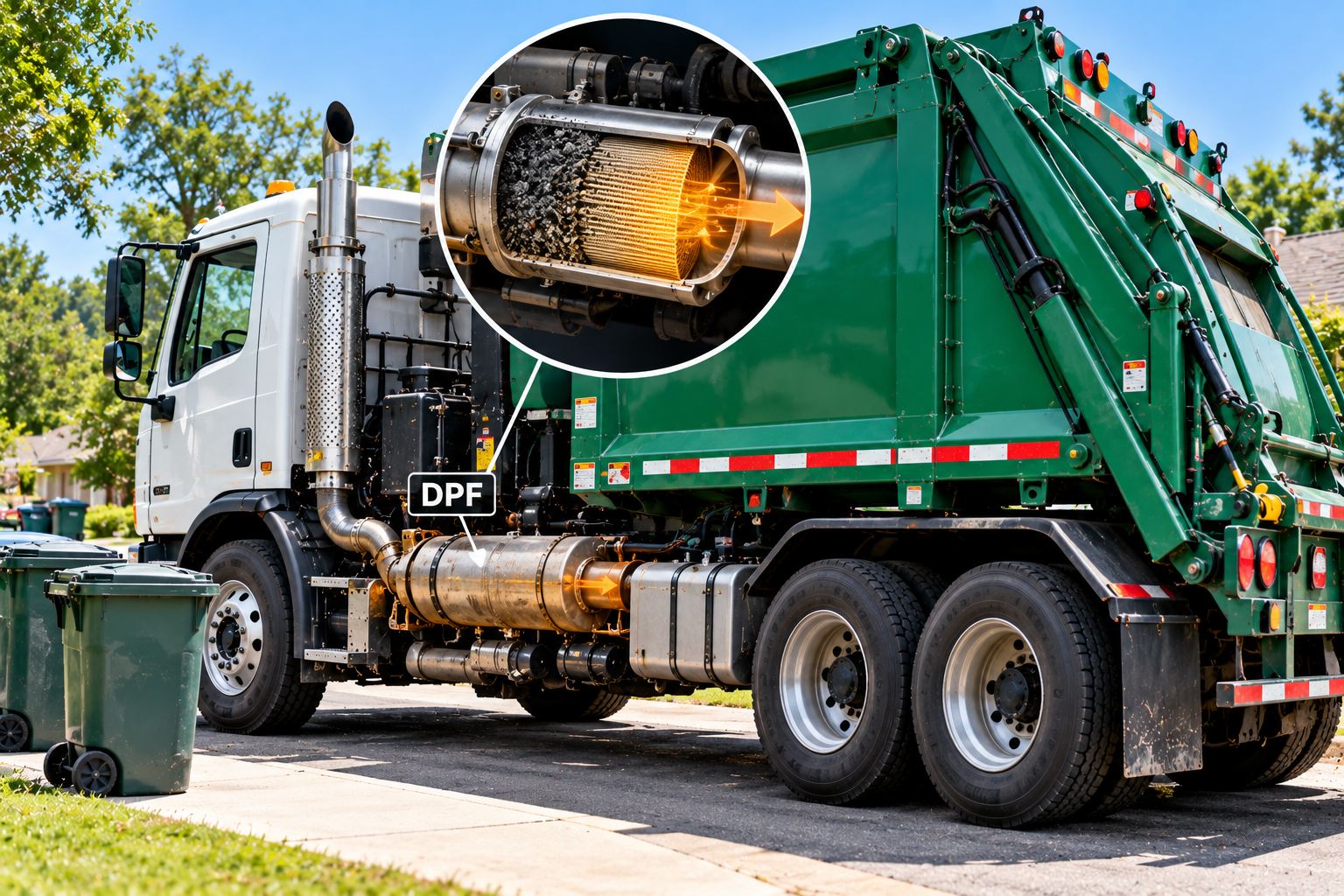
A cylinder not burning its fuel properly dumps raw fuel into the exhaust, and that destroys the catalytic converter or particulate filter within months — adding upwards of $1,500 to a repair that had nothing to do with either component.
The economics, stated plainly
Injector parts commonly run somewhere around $100 to $300, with overall repairs frequently landing between $200 and $800 including labour. If compression testing reveals internal damage such as a burnt valve, cylinder head work moves the figure to $1,500 to $3,000 or beyond. The compression test is what tells you which of those two conversations you are having — and it costs a fraction of being wrong about it.
Working Order
Six steps. The tests get more invasive as you go, and each one either finds the fault or narrows the next.
01Scan and read the whole listNote freeze frame and any companion codes. Associated injector-circuit or misfire codes on the same cylinder point at a common problem, and an electrically open or shorted injector will set its own code alongside this one.
02Check fuel supply before individual componentsLow pressure or low volume from a clogged filter or a tired pump affects the whole engine and can present as a single weak cylinder. Filter condition first, since it is the cheapest item on the list.
03Run the cylinder drop testThrough the scan tool, to confirm which cylinder is genuinely weak and by how much. This is the measurement the rest of the job hangs on.
04Do the platform pre-checksControl module voltage while cranking, or the injector connector pigtail, depending on the engine. Minutes each, and both sit ahead of an expensive part.
05Compression and leakdownAgainst the ten per cent rules. This is the step that separates a fuel problem from a mechanical one, and skipping it is how injectors get fitted to engines with burnt valves.
06Repair, code, and verifyClean or replace as the tests indicated, run the injector learning procedure where a diesel injector was fitted, then clear and confirm the code stays away under the conditions that set it.
The compression figures are the most valuable thing you will record on this job
Because the next time this unit produces a balance fault, knowing that cylinder one measured 400 psi eighteen months ago turns a fresh investigation into a comparison. Fleet Rabbit keeps test results, parts fitted and fuel records on one asset timeline, with telematics codes arriving as work orders that already carry that history. Free for three vehicles, no credit card.
Frequently Asked Questions
What does P0263 actually mean?
The module has detected that cylinder one is contributing less power than it should. It works by watching crankshaft acceleration on each power stroke — when the expected acceleration from that cylinder does not arrive, the cylinder is not carrying its share and the code sets. Other cylinders have their own codes in the same family, so the number identifies which one is weak.
Is this the same as a misfire?
No, and the difference matters. Compression and sealing problems can produce poor cylinder balance without necessarily causing a misfire — the cylinder is weakening rather than stopping. That makes this an earlier warning than a misfire code, and it means a truck can set it while still running acceptably to the driver. Treat it as a signal to investigate rather than a symptom to wait out.
On a diesel, what are the likely causes?
Fuel or compression, since there is no ignition system involved. On diesel trucks this code is described as almost always an early warning of a failing injector, with dirty injectors named as the leading cause of balance faults generally — from dirty fuel, poor filtering or carbon deposits. The alternative is a cylinder that cannot hold pressure: burnt valve, worn rings, head gasket, or a leaking injector seal letting compression escape.
How do we rule out compression?
Compression and leakdown testing, against a consistent set of thresholds: readings should not vary more than about ten per cent between cylinders, leakdown should not exceed ten per cent on any cylinder, and leakdown should not vary more than ten per cent between them. A reported diesel example had cylinder one at around 400 psi with the others between 400 and 410 — comfortably inside the limit, which cleared compression and pointed at the injector.
Can we swap injectors to test?
On a petrol engine that works well — move the coil or injector to the next cylinder and see whether the code follows. On a diesel it is unreliable, because injectors are individually coded to the engine. Replacements must be run through a learning procedure so the module and injector driver learn that specific injector's characteristics, and moving one without coding introduces a calibration mismatch on top of the fault you were investigating.
We replaced the injector and the code came back. Why?
The most likely explanation is that the learning procedure was not performed — improper replacement is documented as a cause of this code in its own right. Beyond that, check the platform items: on some Ford diesels the injector control module must hold above 45 volts while cranking, and on some GM engines the injector connector pigtail is a known weak point. Either of those produces a fault that a new injector cannot fix.
How long can we keep running it?
Limit it to essential trips and keep them short — guidance suggests around fifty miles. The engine will run with reduced power and a rough idle, but a cylinder not burning its fuel properly dumps raw fuel into the exhaust, and that destroys the catalytic converter or particulate filter within months, adding upwards of $1,500 to the bill. Injector work commonly runs $200 to $800 all in; head work following internal damage runs $1,500 to $3,000 or more.
Start free with three vehicles and record which it was.
Test the Push Before You Blame the Injector
Run the drop test, do the platform pre-checks that cost minutes, measure compression against the ten per cent rules — and if an injector does go in, code it, because an uncalibrated replacement is a documented cause of the same fault returning.
Thresholds and procedures vary by engine — follow the manufacturer's specification and coding requirements for your platform