Post-Trip Inspection Checklist Template for Drivers
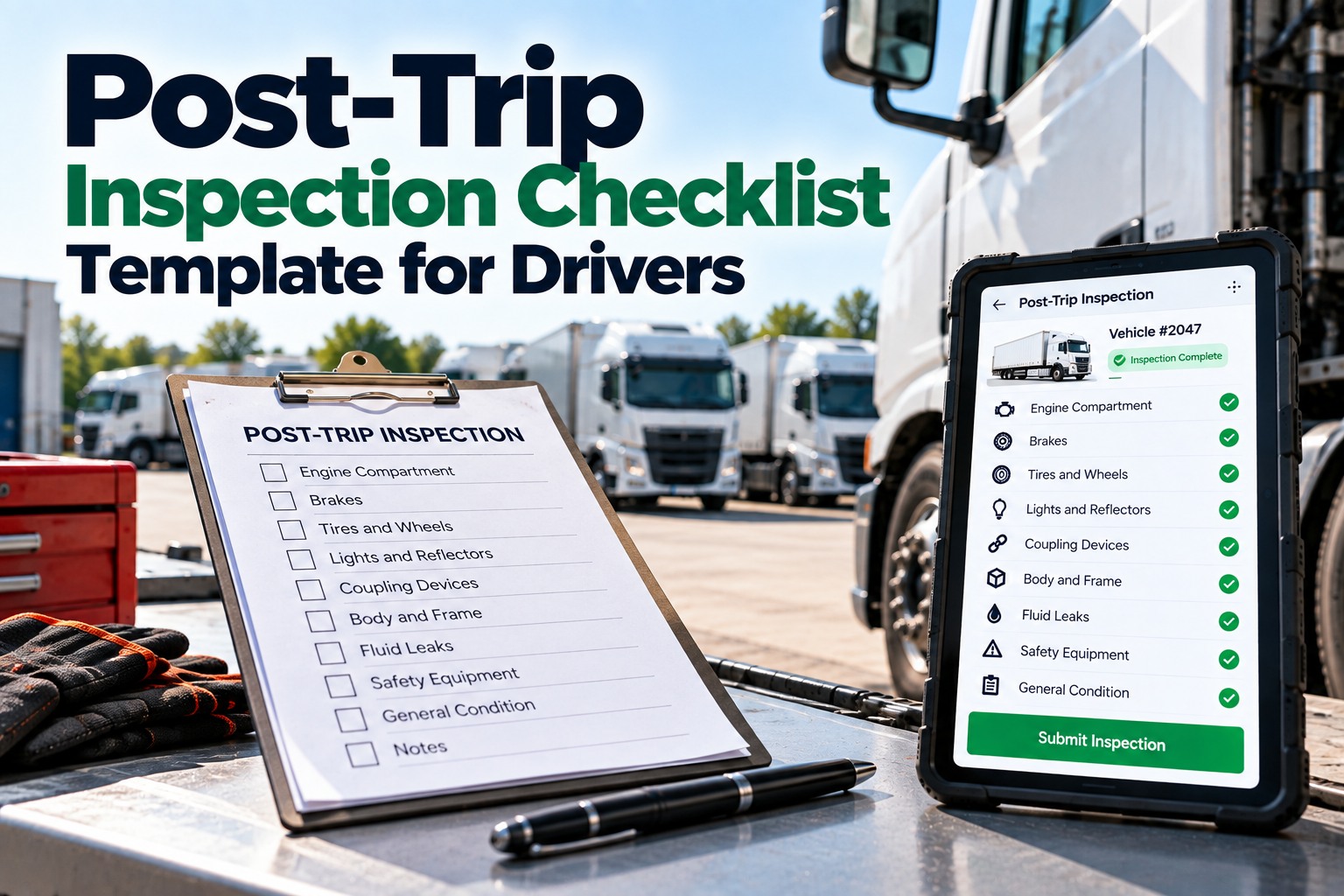
A post-trip inspection is the end-of-day check a driver completes after a trip to find anything that broke, wore or changed while the vehicle was working, and to report it so it is fixed before the next trip. Federal rules require drivers to write up any defect that affects safe operation in a driver vehicle inspection report, and the carrier has to repair and certify it before the vehicle goes back out. This template turns that into 27 checkpoints in five stages, shows how to write a defect so the shop can act on it, and walks through the handoff from driver to mechanic to next driver. Schedule a call and we'll send you the template, or use it right here.
POST-TRIP INSPECTION · END-OF-DAY TEMPLATE FOR DRIVERS
Close Out the Day: Find It, Write It Up, Hand It Over
The pre-trip asks "is it safe to go?" The post-trip asks "what changed today?" Five short stages to find it, write it up and hand the truck over clean.
Post-trip inspection is surrounded by half-truths. Here is what the regulations in 49 CFR 396.11 do and don't say.
THE RULE
A written report of defects, every day
Drivers prepare a written report at the end of each day's work for each vehicle driven, listing any defect or deficiency that would affect safe operation. The driver signs it.
THE NUANCE
No defects, no report, for freight drivers
An FMCSA final rule removed the requirement to submit a DVIR when no defect is found, for drivers of non-passenger vehicles. The inspection duty remains, and drivers of passenger-carrying vehicles still file a no-defect report.
THE FOLLOW-THROUGH
Repair, certify, keep for three months
Before the vehicle is driven again, the carrier must repair any safety-related defect and certify on the report that it was fixed or didn't need fixing. Reports are kept for three months.
Source for the freight-driver change: FMCSA's DVIR final rule. Many carriers still require a completed checklist every day, because a daily record shows the inspection was done and protects the driver after an incident.
The Post-Trip Inspection Checklist Template
Move down the timeline in order, ticking each box as you go. Items marked REPORT are the ones that should be written up and reported straight away if they're wrong. Use your browser's print function to print this page as a checklist.
1
Park and Shut Down
Before you leave the seat
2
Walk Around While It's Hot
Fresh leaks and heat show up now, not tomorrow
3
Coupling, Trailer and Cargo
If you're pulling one
Want this as a template your drivers can print or fill on a phone?
Schedule a call with us and we'll send the post-trip template, then show you the same five stages as a mobile DVIR.
The best post-trip clues come from the trip itself. If something felt off, this table points to where to look and what to write down. These are starting points for inspection, not diagnoses. Swipe the table horizontally on mobile.
← Swipe to see all columns →
What you noticed
Look at first
Write down
Pulling to one side
Tire pressure and condition, brake drag, steering linkage
Which direction, at what speed, when braking or not
Vibration or shake
Tires, wheels, lug nuts, driveline
Speed range, whether it changes with braking
Burning smell
Brakes and wheel ends, wiring, fluid on hot parts
Where it was strongest, when it started
Air pressure dropping
Air lines, gladhands, chambers, listen for hissing
Gauge reading and how fast it fell
Warning light
The system the light names, relevant fluids and connections
Which light, how long it stayed on
New noise
Suspension, wheel ends, exhaust, belts
Where it came from and what you were doing
How to Write a Defect the Shop Can Fix
A vague note costs the shop time or gets ignored. A good defect report names the unit, the location on the vehicle, the symptom and when it happened.
VagueBrakes bad
UsefulUnit 214, left rear trailer brake chamber hissing when the pedal is pressed. Noticed at fuel stop, around 3:40 pm.
VagueTire issue
UsefulUnit 214, outer drive tire, axle 2 right side, bulge on the sidewall about the size of a golf ball.
VagueLight out
UsefulUnit 214 trailer, right marker light second from the rear is not working, bulb and wiring not checked.
Turn Post-Trip Reports Into Fixed Trucks
Schedule a call and we'll send the post-trip template, then set up the same inspection in FleetRabbit's mobile DVIR so drivers can add a photo, the defect reaches the shop the moment it's submitted, and the repair is certified on the same record. Free for up to three vehicles, then $5 per vehicle per month.
A DVIR only works if the report travels the whole way. Every step has an owner, and the chain breaks wherever one is skipped.
1
Driver reports
Writes up the defect and signs the report
2
Carrier triages
Reads it and decides whether the vehicle can run
3
Mechanic repairs
Fixes it and certifies the repair on the report
4
Next driver signs
Reviews the report before driving and signs it
Where Paper Post-Trip Reports Break Down
Paper satisfies the rule when it is completed and kept, but the end of the day is when paper fails most often. Swipe the table horizontally on mobile.
← Swipe to see all columns →
What goes wrong with paper
What it causes
Digital fix
Form left in the cab or lost
No record to show an inspection happened
Saved the moment it's submitted
Illegible or vague notes
The shop guesses or ignores the defect
Guided fields plus a photo
Defect sits until someone reads it
The truck can go out again with it open
Reaches the shop immediately
No repair certification
Next driver can't tell it was fixed
Repair signed on the same record
Records scattered or missing
Hard to produce after an incident or audit
Searchable by unit, driver and date
Frequently Asked Questions
Is a post-trip inspection required by the DOT?
Drivers must prepare a written report of any defect affecting safe operation at the end of each day under 49 CFR 396.11. The regulation requires the report rather than a prescribed inspection form, but a systematic end-of-day check is how drivers find the defects the report must cover.
What should a post-trip inspection include?
The parts and accessories the DVIR covers: service and parking brakes, steering, lighting and reflectors, tires, horn, wipers, mirrors, coupling devices, wheels and rims, and emergency equipment. The template above adds shutdown notes, fresh leaks, cargo and paperwork.
Do I have to file a DVIR if I found no defects?
For drivers of freight vehicles, FMCSA removed the requirement to submit a report when no defect is found. Drivers of passenger-carrying vehicles still file one. Many carriers require a completed checklist anyway, so follow your company policy.
What is the difference between a pre-trip and a post-trip inspection?
A pre-trip confirms the vehicle is safe to drive and reviews the last report. A post-trip finds what changed during the day and records it. Our DOT pre-trip inspection checklist covers the first half.
How long do I keep post-trip inspection reports?
Carriers keep DVIRs for three months from the date the report was prepared. Electronic records are accepted as long as the required information is captured and the records are retained and available. You can schedule a call to see how the mobile DVIR stores them.
Who signs the report, and who certifies the repair?
The driver signs the report of defects. The carrier must repair safety-related defects and certify on the report that they were repaired or didn't need repair. The next driver reviews the report and signs it before driving.
Can I use a digital post-trip inspection app?
Yes, electronic DVIRs are accepted as long as they capture the required information. FleetRabbit's mobile DVIR is free for up to three vehicles, so you can run your post-trip inspections digitally on a few trucks before rolling it out.
Replace End-of-Day Paper With a Record That Gets Fixed
Use the template on paper today, then move it to your drivers' phones so every defect arrives with a photo, reaches the shop at once and closes with a certified repair.