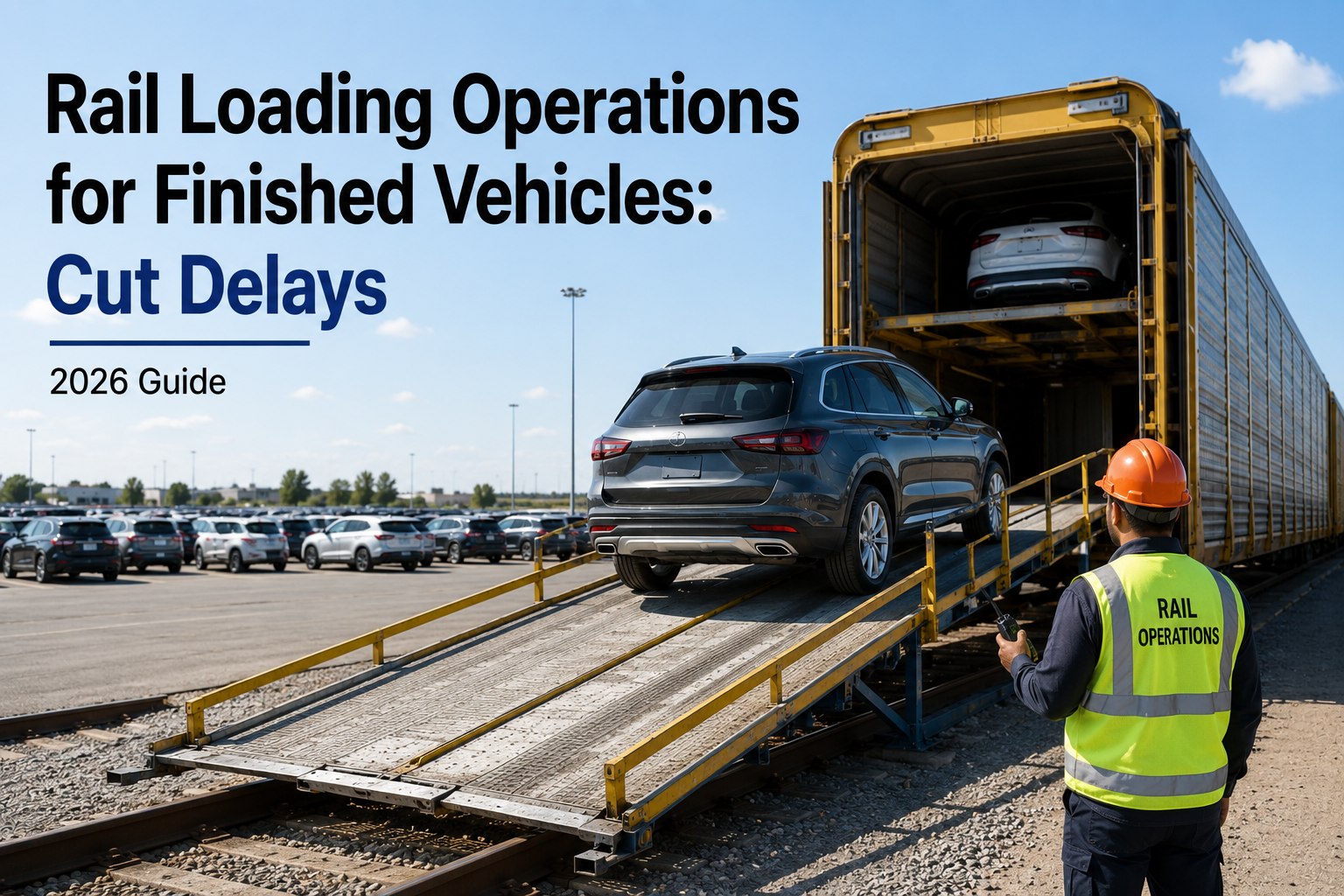
Rail loading is the step in finished vehicle logistics where the most damage is created and the least attention is usually paid. Part of that is the method: autoracks are loaded circus-style, with railcars coupled end to end, bridge plates laid between the decks of adjacent cars, and a ramp at one end — so a driver enters the first car and drives through the whole string to reach the last empty position. It is, in the words of one engineering description, essentially the same as filling cars into a long narrow tunnel. Poor interior visibility makes it harder, slower and riskier than it looks. And the transit that follows is harsher than most people assume: it has been suggested that for some automobile components, the maximum design load condition of their entire life occurs during the single journey on the railcar. Loading well is therefore not a productivity question. Book a 30-minute session and bring a month of railhead loading and damage records — we'll map them in Fleet Rabbit against the risk points below and show you where in the sequence your damage is actually originating.
2026 GUIDE · RAIL LOADING OPERATIONS
Rail Loading Operations for Finished Vehicles
The loading sequence explained, the damage risk points that matter, dwell at the railhead, and the compound coordination that decides whether a cut loads cleanly or stalls halfway.
Ramp
Car 1
╪
Car 2
╪
Car 3
Drivers enter here
Bridge plates between decks · vehicles drive through to the far end
Each level fills from the far end back. When a level is full the ramp is repositioned to the next deck and the process repeats — so a delay anywhere in the string stops everything behind it.
How the Sequence Works
Six stages. Understanding them matters because almost every dwell and damage problem at a railhead traces back to a specific one.
1
The cut is spotted and preparedRailcars positioned at the loading track, end doors opened, decks inspected. A car with a defective end door or deck can be repaired in place rather than bad-ordered out of the cut, which is worth checking before it becomes a hole in your load plan.
2
Bridge plates laid between carsConnecting same-level decks of adjacent railcars so vehicles can drive from one car to the next. Wide or narrow wheelbase vehicles may need offset bridge plates, which is a compatibility question to settle before loading starts rather than mid-string.
3
Ramp set to the first deck levelGround to deck, allowing vehicles to be driven up and in. Bi-level and tri-level autoracks each have their own sequence, and the ramp position dictates which level is live.
4
Vehicles driven through and parkedFrom the marshalling area, up the ramp, through the bridged cars to the last position loaded. Very slow speed throughout — this is the stage where the load order set at the compound either works or reveals itself as wrong.
5
Each unit securedWheel chocks engaged into the deck grating by their teeth or hooks, restraining the wheels longitudinally and laterally, with chains or straps where specified. Several approved chock designs are in service and they are not interchangeable in handling.
6
Level complete, ramp repositionedThe ramp moves to the next deck and the sequence repeats. Then end doors closed and secured, and the cut released to the railroad.
Why the tunnel analogy matters operationally
Because loading runs through the string rather than into individual cars, everything is sequential and nothing can be worked around. A vehicle that will not start, a missing key, a unit that turns out to be on hold, or a wheelbase that fouls a bridge plate does not delay one position — it stops the deck. Problems that would be trivial in a compound become blocking events on a loading track.
Where the Damage Comes From
Two categories, with quite different remedies. The first is created during loading and the second during transit, and confusing them sends improvement effort to the wrong place.
At the loading face
Door contact against interior walls in a confined deck — the reason bumper guards are fitted to autorack interiors
Poor visibility inside enclosed cars, making the job harder, slower and riskier
Contact with chocks, gratings and structure while manoeuvring into position
Bridge plate mismatches on wide or narrow wheelbase vehicles
All four are addressable with equipment and process rather than with better driving.
In transit
Longitudinal input loads transmitted through the draft gear from train line action and shunting
Vertical, rocking and transverse responses to track perturbations, transmitted through the car's suspension
Inadequate or incorrectly spaced securement allowing movement
Vehicles are high value, relatively low density and relatively fragile lading
Only the third of these is within the loading team's control — which is exactly why it deserves the attention.
The scale of the transit environment is worth stating: high accelerations imposed on lading during train operation have been a long-standing source of damage claims, and it has been suggested that the maximum design load condition of some automobile components occurs during the single journey on the railcar. Manufacturers have long wanted vehicles held by parking brake alone without chocks; the operating characteristics of autoracks are not generally considered gentle enough for that to be reliable. Securement is doing real work.
Deck 3
Deck 2
Deck 1
One blocked position stops a whole deck.
Bring a month of loading records and your hold list to a short call. We'll reconstruct the cuts in Fleet Rabbit and show how many of your loading delays were caused by a unit that should never have been released to the railhead — a hold, a missing key, a wheelbase mismatch. It is usually a small number of preventable causes producing a large share of the lost time.
Securement Done Properly
The one damage category the loading team fully owns — and the one that now carries specific reporting attention in the industry damage guideline.
← Swipe to see all columns →
Work from the published guidance rather than from habit. The industry body maintains established guidelines, loading diagrams and securement resources, and the standing advice is to consult the railroad before shipping to confirm the load is properly secured and meets requirements. Chock securement and spacing deficiency has also been given its own treatment in the current damage-handling guideline, which tells you where claim attention is now directed.
Dwell at the Railhead
Six drivers. Note how many of them originate at the compound rather than at the loading track — which is why railhead dwell is rarely fixable at the railhead.
1Units arriving that cannot loadOn hold, undrivable, missing keys or not actually released. Each one is a blocking event on a sequential loading face, not a single lost position.
2Load order not matching the planBecause a cut is unloaded in reverse at the far end, the sequence set at the compound has to hold. Reordering at the ramp is expensive and it happens constantly.
3Railcar availability and conditionCars spotted late, or a defective end door or deck discovered at load time rather than at pre-trip inspection.
4Ramp repositioning between levelsStructural to the method and therefore not eliminable — but it is plannable, and it should not be discovered as a surprise in the middle of a shift.
5Driver availability at the loading faceCircus loading needs a squad working continuously through the string. Staffing to the average rather than to the loading window produces predictable stalls.
6Condition capture at the boundaryNecessary, and slow if it is not built into the flow. Capture designed as a separate step after loading is capture that will be skipped under pressure.
Railhead dwell is a compound metric
Four of the six drivers above are decided before the vehicle reaches the loading track. Measuring dwell at the railhead and holding the railhead accountable for it therefore produces frustration rather than improvement — the useful version is to measure it there and attribute it upstream, so the compound sees the consequence of releasing a unit that could not load.
Coordination With the Compound
Five handoffs. Get these right and the loading track becomes a throughput problem rather than a firefighting one.
Release status verified before despatchNothing moves to the railhead that is not clear of quality and campaign holds. A held unit arriving at a loading face is the single most expensive avoidable event in the sequence.
Load sequence set at the compoundDestination order determined where the units are staged, not at the ramp. Reverse-unload logic means the first vehicle in is the last one out.
Drivability confirmedKeys present, battery adequate, unit starts. A vehicle that cannot be driven onto a deck is a vehicle that should not have left its slot.
Special handling flagged in advanceWheelbase, height and any units needing offset bridge plates or particular deck positions identified before the cut is planned.
Condition captured at the boundaryCompound to railroad is a custody transfer like any other. Capture on both sides or accept that damage found downstream will be unattributable.
One practical addition worth planning for: some autoracks now carry sensors monitoring conditions such as vibration inside the car during transit. Where that data is available it changes the damage conversation materially, because it distinguishes a loading fault from a transit event rather than leaving both sides arguing from the same photographs.
What to Measure
Six figures. The first two are the ones that expose whether your problem is at the railhead or upstream of it.
Units rejected at the loading faceArrived but could not load — holds, drivability, sequence errors. Attribute each to its upstream cause rather than counting them as railhead exceptions.
Loading time per deckIncluding ramp repositioning. The operational headline, and the number that reveals whether staffing matches the loading window.
Railhead dwell per unitArrival at the railhead to departure on the cut, with the blocked portion separated from the working portion.
Damage rate per loading eventRather than per unit shipped, so the relationship between handling and damage is visible.
Securement verification rateDecks receiving a second check before end doors close. Cheap, fast, and directly aimed at the one damage category you own.
Sequence adherenceLoads built in the planned destination order. Failures here surface as unloading problems at the far end, weeks later and in someone else's report.
Twenty minutes on your railhead dwell and your rejection list
On a demo we'll take a month of railhead records into Fleet Rabbit, separate blocked time from working time, attribute every rejected unit to its upstream cause, and show which compound handoff is producing the most lost loading time. You keep the attribution either way — and it is usually the fastest way to move a conversation that has been stuck between two teams.
Frequently Asked Questions
How are vehicles actually loaded onto autoracks?
Circus-style. Railcars are coupled end to end with their end doors open, bridge plates are laid between the same-level decks of adjacent cars, and a ramp runs from ground level to the deck being loaded. Drivers take vehicles from the marshalling area, up the ramp and through the bridged cars to the last position loaded, at very slow speed. When a level is full the ramp is repositioned to the next deck and the process repeats. One engineering description compares it to filling cars into a long narrow tunnel.
Where does rail damage actually originate?
Two distinct places. At the loading face: door contact in a confined deck — which is why bumper guards are fitted to autorack interiors — poor interior visibility, contact with chocks and structure, and bridge plate mismatches on unusual wheelbases. In transit: longitudinal loads transmitted through the draft gear from train line action and shunting, and vertical, rocking and transverse responses to track perturbations through the car's suspension. Only securement quality sits in both categories, which is what makes it worth the attention.
Why can't vehicles just be left in park?
Manufacturers have wanted exactly that for a long time — vehicles held by the parking brake alone, without chocks or chains. The obstacle is that the operating characteristics of autorack cars are not generally considered gentle enough for it to be reliable. High accelerations imposed on lading during train operation have been a persistent source of damage claims, and it has been suggested that for some automobile components the maximum design load condition of their entire life occurs during that single rail journey.
What should securement checks cover?
Chock teeth or hooks fully engaged into the deck grating rather than resting on it, ramp faces immediately against the tyre tread with both restraint directions covered, spacing between units to specification, the correct approved chock type for that deck configuration, chains or straps applied per the loading diagram, and a second verification across the deck before end doors close. Work from the published loading diagrams and securement guidance, and confirm requirements with the railroad before shipping.
Why is our railhead dwell so high?
Usually because of decisions made at the compound. Units arriving that cannot load — on hold, undrivable, no keys — block a sequential loading face rather than costing one position; load orders that do not match the plan force reordering at the ramp; and special handling requirements discovered at load time stall a deck. Measure dwell at the railhead but attribute it upstream, so the compound sees the consequence of releasing a unit that could not be loaded.
Does the compound need to set the load sequence?
Yes, and it is one of the highest-value handoffs in the chain. A cut is unloaded in reverse at the destination, so the first vehicle in is the last one out — meaning destination order has to be determined where the units are staged rather than improvised at the ramp. Reordering at the loading face is slow, and sequence errors do not surface until unloading at the far end, weeks later and in a report that belongs to someone else.
Where should we start?
By counting units rejected at the loading face and attributing each to its upstream cause. That single list usually explains most of your railhead dwell and costs nothing to produce. Fix the release verification and drivability checks at the compound before anything else, then add securement verification before end doors close — cheap, fast and aimed squarely at the damage category you control.
Book a working session with a month of railhead records and we'll build the attribution with you.
Load the Deck, Fix the Compound
A sequence understood stage by stage, damage separated into loading and transit causes, securement verified before the doors close, dwell measured at the railhead and attributed upstream, and load order settled where the vehicles are staged.
Confirm loading and securement requirements with the railroad and current published diagrams before shipping · Bring a month of railhead records to the call