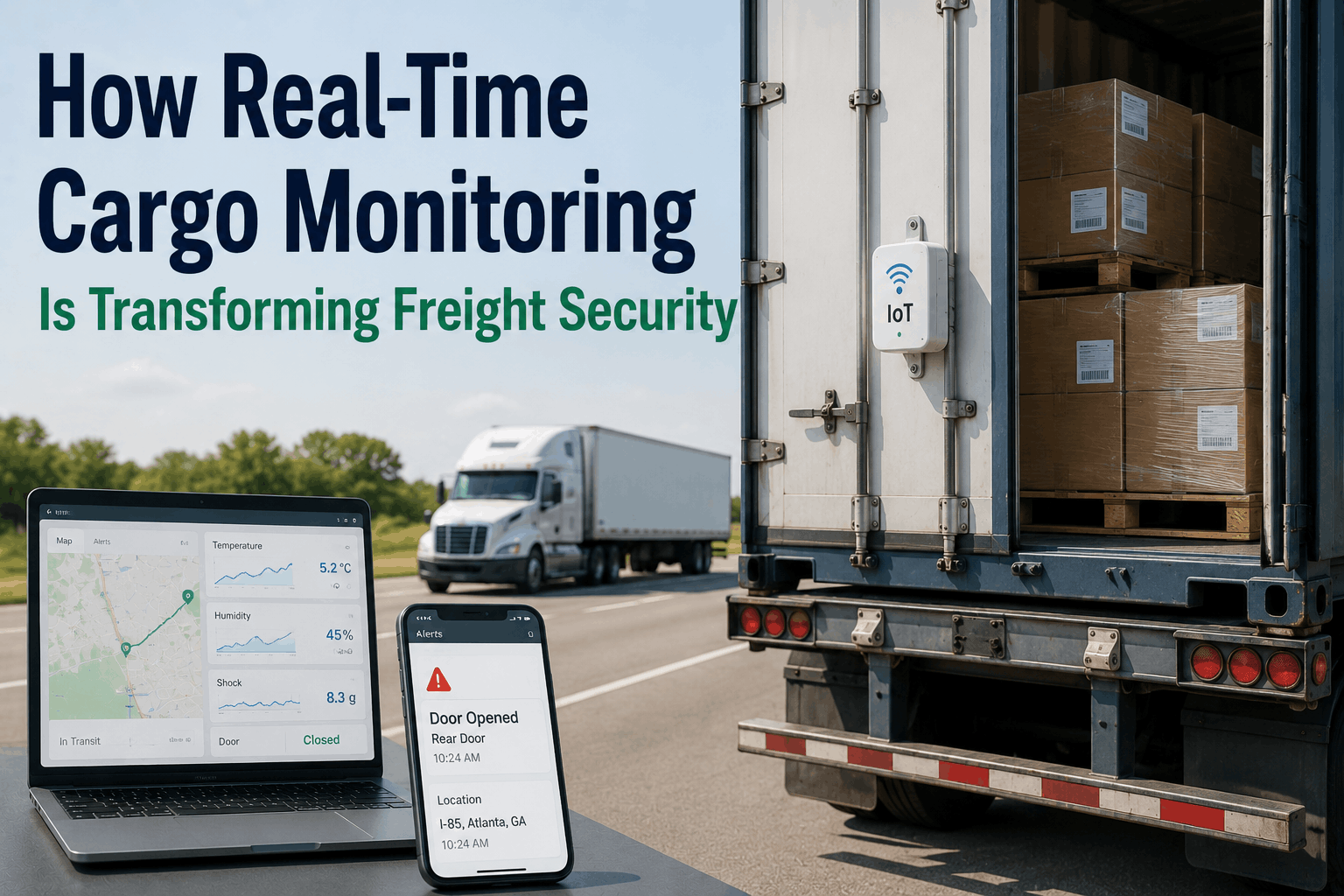
The numbers are staggering. Cargo theft incidents in the U.S. and Canada rose 18% year-over-year in 2025, with the average theft value increasing 36% to $273,990 [citation:6]. In the European Union, transport theft cases jumped 35.46% in 2023 alone, with financial losses reaching nearly $600 million [citation:1]. This isn't just about stolen goods — it's about disrupted supply chains, angry customers, and millions in lost revenue. Traditional security measures — locks, seals, and hope — are no longer enough. Real-time cargo monitoring, powered by IoT sensors, GPS tracking, and AI-driven analytics, is transforming freight security from reactive damage control to proactive theft prevention [citation:2][citation:4].
How Real-Time Cargo Monitoring Is Transforming Freight Security
The Evolution of Cargo Security: From Locks to AI
Traditional cargo security relied on physical barriers — locks, seals, and secure parking. But today's cargo thieves are running sophisticated operations that make these measures obsolete. Organized crime groups are using cyber hacking, identity fraud, and insider collusion to target high-value shipments [citation:2]. The rise of e-commerce has expanded the volume and value of goods transported, making cargo an increasingly appealing target [citation:1].
Real-time cargo monitoring represents a fundamental shift in approach. Instead of trying to prevent theft with physical barriers, monitoring systems assume theft will be attempted and instead focus on early detection and rapid response. When a shipment veers off route, a trailer door opens at an unauthorized location, or a temperature spike occurs, real-time alerts trigger immediate action — often before the theft is complete [citation:2].
This shift is reflected in market data. The container tracking market is projected to grow from $10.1 billion in 2024 to $14.6 billion by 2029, driven largely by rising cargo theft and the demand for supply chain transparency [citation:1]. The smart cargo container tracking market is expected to grow at 17.4% CAGR, reaching $15.8 billion by 2033 [citation:9]. To understand how real-time monitoring can protect your fleet's cargo, book a demo with FleetRabbit and explore our security monitoring solutions.
The Technology Stack: How Real-Time Monitoring Works
Modern cargo monitoring systems combine multiple technologies to provide comprehensive visibility and security. The three key layers are IoT sensors, connectivity, and AI analytics [citation:4].
GPS trackers, temperature sensors, door sensors, shock detectors, and humidity monitors provide real-time data on cargo location and condition [citation:3][citation:6].
Cellular, satellite IoT, and Bluetooth networks transmit data from sensors to cloud platforms, enabling continuous tracking even in remote areas [citation:4].
Machine learning models filter signal from noise, detect anomalies, predict disruptions, and trigger alerts for immediate action [citation:4].
Leading shipping lines are already deploying this technology at scale. Evergreen Line is equipping its entire dry container fleet with smart container technology, enabling real-time alerts for door openings, temperature deviations, shock detection, and comprehensive location reporting [citation:3][citation:7]. ORBCOMM has enabled more than one million smart containers to date, with deployments moving "beyond visibility to cargo protection and container security" [citation:3].
Beyond GPS tracking at the trailer level, new ambient IoT technology enables item-level visibility. Battery-free, paper-thin Bluetooth tags can be embedded into individual products or pallets, detecting location, movement, and temperature at the item level [citation:6]. This granular visibility helps companies catch mistakes before they become losses — alerting workers if a pallet is loaded onto the wrong truck or diverted to the wrong location before it leaves a facility [citation:6]. To see how item-level tracking can protect your high-value shipments, sign up with FleetRabbit and access our advanced tracking modules.
Real-Time Alerts: Catching Theft in Action
When cargo thieves strike, they're counting on one thing: your delayed reaction. While you're still trying to reach your driver on the phone, they've already offloaded your freight and disappeared. Real-time alerts flip this script completely [citation:2].
Consider the scenarios: Your shipment suddenly veers three miles off route — you know immediately. A trailer door opens at 3:00 AM in an unauthorized location — your phone lights up. A temperature spike occurs in your pharma load — the system is already escalating [citation:2]. With 41% of thefts occurring in transit, these alerts target cargo's most vulnerable moments [citation:2].
The financial impact of these alerts is substantial. The potential annual losses from cargo theft range between $15 billion and $35 billion globally [citation:2]. Real-time monitoring reduces these losses by enabling instant response, improving recovery rates, and providing detailed data for insurance claims and law enforcement. To implement real-time alerts for your fleet, book a demo with FleetRabbit and explore our alert management tools.
Beyond Theft: Protecting Cargo Integrity
Cargo monitoring isn't just about preventing theft — it's about protecting cargo integrity throughout the supply chain. Temperature-sensitive pharmaceuticals, perishable foods, and high-value electronics all require precise conditions during transit. A temperature excursion or shock event can destroy a shipment's value just as effectively as theft.
Smart container technology provides comprehensive monitoring of these conditions. Door opening alerts can indicate potential tampering or unauthorized access. Temperature deviations enable early intervention before spoilage occurs. Shock detection helps identify mishandling that could damage sensitive equipment [citation:3][citation:7]. The system also provides a detailed record of where and when freight moved through the supply chain, reducing disputes between shippers, logistics providers, and insurers [citation:6].
For fleet operators transporting high-value or sensitive cargo, this level of monitoring is becoming essential. To protect your cargo integrity and reduce claims, sign up with FleetRabbit and access our comprehensive cargo monitoring solutions.
Protect Your Cargo, Protect Your Business
FleetRabbit's real-time cargo monitoring platform helps you track shipments, detect theft, and protect cargo integrity — all from a single dashboard.
Industry Adoption: From Early Adopters to Standard Practice
The shift toward real-time cargo monitoring is accelerating across the industry. Major shipping lines, trucking fleets, and logistics providers are deploying smart container technology at scale [citation:3]. The UAE government has implemented regulations mandating the use of smart sensors in all shipping containers to enhance cargo visibility and security [citation:8].
Market data reflects this trend. The IoT logistics market is projected to reach $119.9 billion by 2030 [citation:5]. The adoption of IoT-based cargo tracking has grown by 200%, with 60% of companies now deploying IoT shipment tracking [citation:2]. Smart intermodal containers are "no longer experimental — they are becoming the new standard" [citation:7].
This shift is driven by three factors: rising cargo theft, increasing regulatory requirements, and the clear ROI of monitoring technology. Fleets that adopt real-time monitoring reduce losses, lower insurance premiums, and gain a competitive advantage through improved service reliability. To position your fleet for this industry shift, book a demo with FleetRabbit and explore our real-time monitoring solutions.
Frequently Asked Questions
Transform Your Freight Security with Real-Time Monitoring
FleetRabbit's cargo monitoring platform helps you track shipments, detect theft, and protect cargo integrity — all from a single dashboard. Sign up with FleetRabbit and start securing your cargo today.