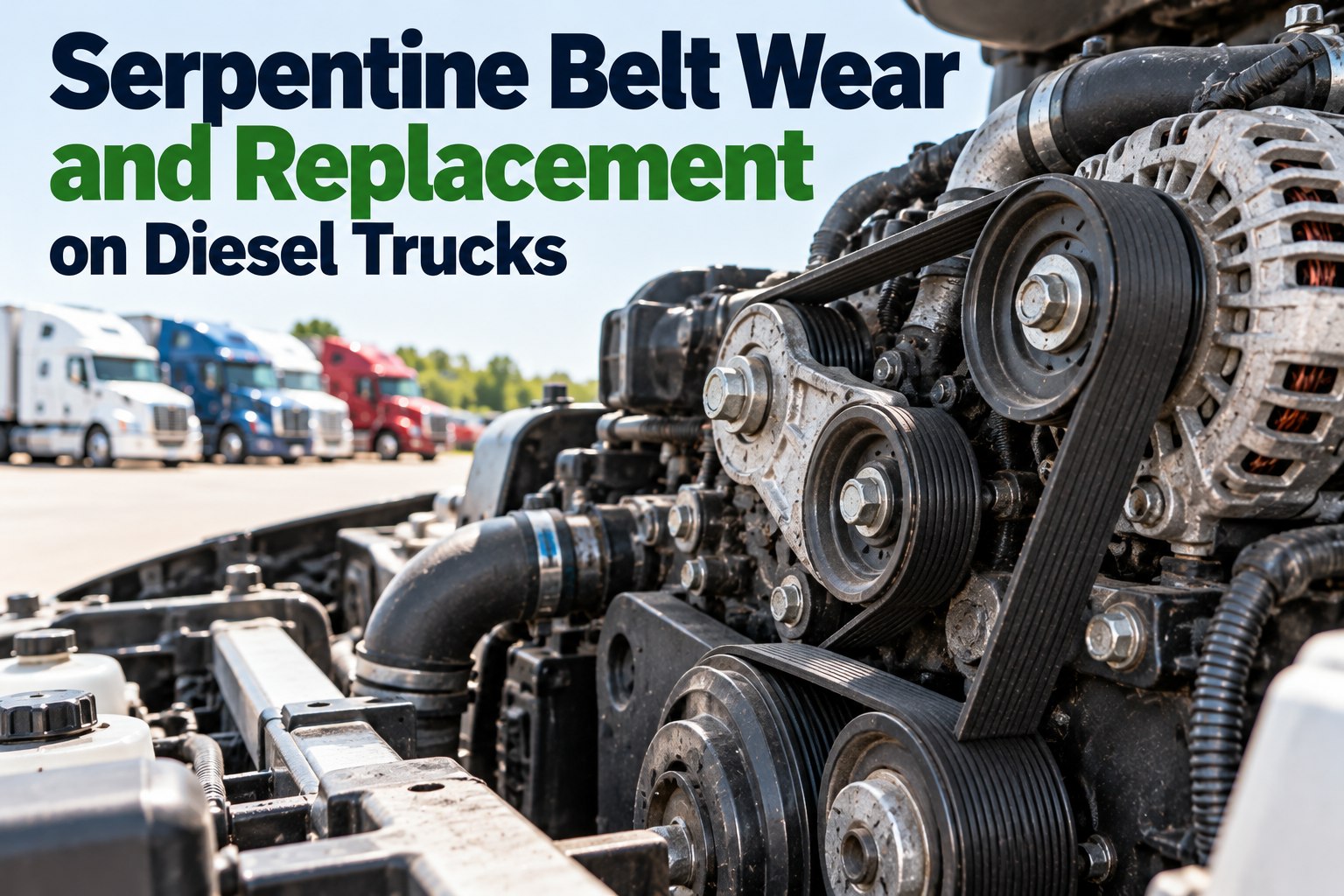
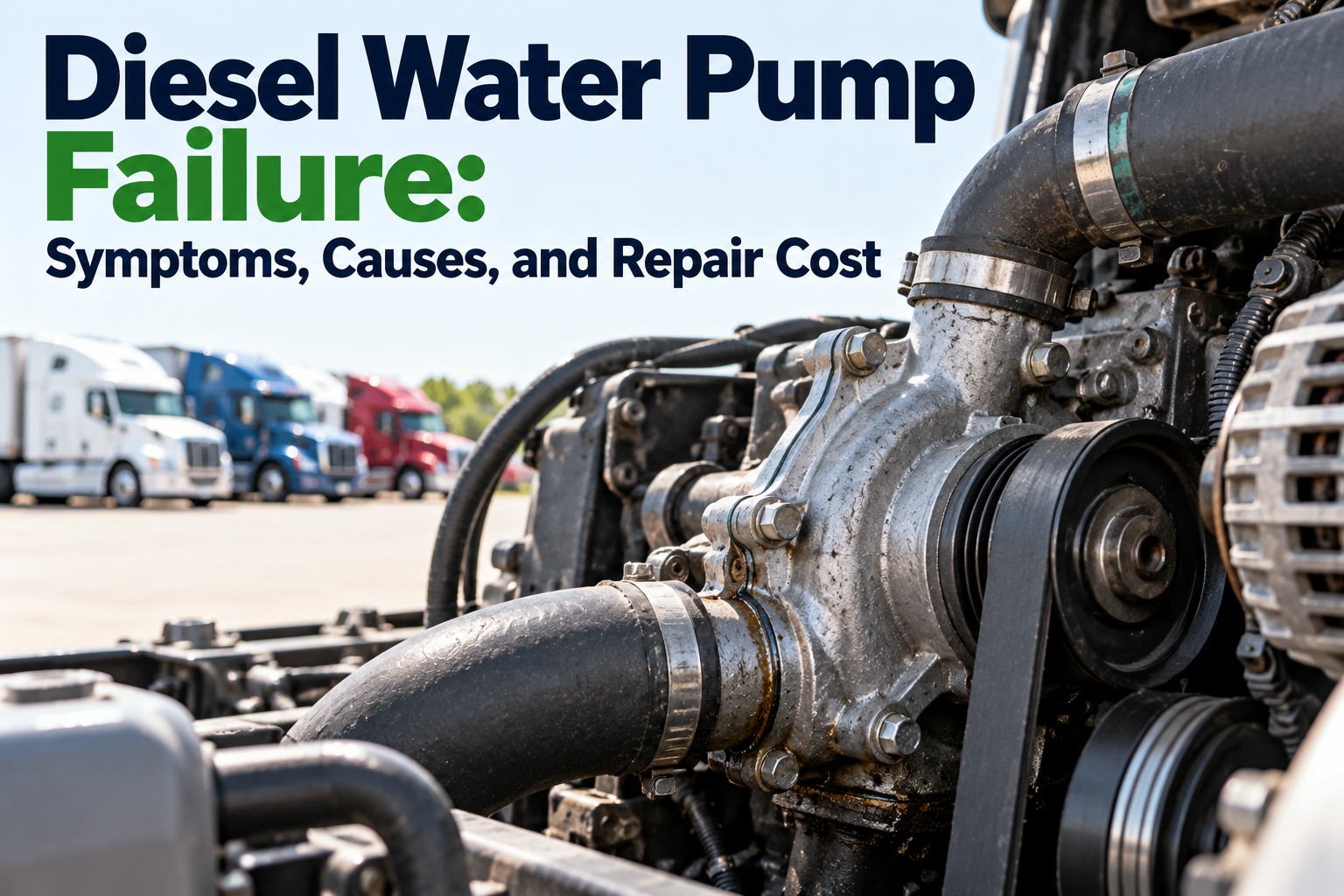
Serpentine belt wear means the single ribbed belt that drives the alternator, water pump and other accessories has glazed, cracked, frayed or lost its tension, so those accessories slip or stop. The first sign is a squeal at startup, and the last is a snapped belt that takes charging and cooling with it. This page covers what the belt drives, the symptoms, the causes, how to inspect it, when to replace it, the steps, the cost and a PM checklist. Schedule a call to put belt inspections on a PM schedule.
DIESEL ACCESSORY DRIVE · SHOPS AND FLEET MANAGERS
The Cheapest Part on the Engine Can Stop the Whole Truck
One belt carries the alternator, the water pump and more. Learn to read its wear, and replace it with the tensioner and pulleys before it picks the day.
WHEN THE BELT GOES, THESE GO WITH IT
AlternatorNo charging
Water pumpOverheating
A/C compressorNo cooling
Tensioner and idler wear the same way.
What a Diesel Serpentine Belt Drives and Why Tension Matters
One belt runs several accessories, so one failure shows up in several places
Alternator
Charges the batteries
A slipping belt shows first as charging trouble.
Water pump
Moves coolant
Poor drive here leads to overheating.
A/C compressor
Cools the cab
Reduced output can come from a worn belt.
Idler and tensioner
Hold the belt tight
They usually wear out at about the same rate as the belt.
The belt is part of a system, so judge it together with the tensioner and pulleys
The automatic tensioner should hold constant force on the belt. Because tensioners usually wear at about the same rate as the belt, replacing the belt alone often means returning for the tensioner. A common replacement interval quoted for road vehicles is 60,000 to 100,000 miles or per the manual, but there is no universal limit, because duty cycle and environment decide actual life.
Serpentine Belt Wear Symptoms: What You Hear, See and Feel
Three senses catch most belt trouble before the belt lets go
WHAT YOU HEAR
Listen
Squeal at startup or under load
Chirping or grinding from the pulleys
WHAT YOU SEE
Look
Glazed, shiny belt surface
Cracks, frayed edges or missing chunks
Fine black dust around the pulleys
WHAT THE TRUCK DOES
Feel
Vibration from a misaligned, slipping belt
Weak charging or hot running
Accessories that underperform
Belt dressing hides the squeal and does not fix the cause
Dressing is temporary. A squeal is a symptom of slipping, glazing, misalignment or contamination. Find the cause, and replace the belt if it is worn.
Serpentine Belt Replacement Causes: Why Belts Wear Out Early
Six causes, and repeated belt failures usually point to a system problem
Wrong tension
Too loose slips and heats the belt. Too tight overloads the alternator, water pump, idler and tensioner bearings.
Misalignment
Worn or misaligned pulleys fray the edges, and a seized idler can shred the belt.
Heat and glazing
A slipping belt heats the rubber, hardens it and slips more.
Oil and coolant
Leaks from front covers or water pumps harden the rubber and cut grip.
Dust, mud and vibration
Heavy-duty environments wear belts faster.
Pilling in the grooves
Rubber lost as the belt ages builds up and affects tension and alignment.
Squeal on the walkaround? Schedule the belt and tensioner check before it becomes a tow.
Set belt inspection reminders per truck, and log every squeal against the unit.
How to Inspect a Serpentine Belt on a Diesel Truck
A quick daily look and two deeper checks keep belts from surprising you
These intervals come from a heavy-equipment maintenance guide, so follow the OEM manual where it differs. A basic inspection takes about five minutes.
EVERY DAY
Pre-op
Listen for squeal at startup, watch the charging and temperature gauges, and look for fraying or missing material.
EVERY 250 HOURS
Full visual
Check the belt surface and edges, the pulley grooves and alignment, and any oil or coolant contamination.
EVERY 500 HOURS
Tension and bearings
Verify tension with the correct method, inspect idlers, tensioners and accessory bearings, and log what you find.
Newer EPDM belts crack less, so look for even rubber loss instead of cracks
Older neoprene belts were retired at roughly three cracks in three inches. Newer EPDM belts resist cracking and wear more like a tire, so check for even material loss. One guide says losing about 5 percent of the belt material can make the ribs bottom out on the pulleys.
Serpentine Belt Replacement Fix: When to Replace and How to Do It Right
Replace on the first column's signs, and keep an eye on the second
Replace the belt when you see
!Widespread cracking, or frayed edges and exposed cord
!Missing chunks or rib separation (immediately)
!Glazing along with squeal under normal load
!Oil or coolant contamination, after fixing the leak
!A tensioner or pulley failure that has damaged the belt surface
!A questionable belt before a high-value work period
Keep monitoring when
✓Light, even rubber loss on a newer EPDM belt
✓A belt with no glazing, no contamination and quiet operation
✓A belt that passes the 250-hour visual and the 500-hour tension check
Six steps cover a clean replacement, and torque order matters on the tensioner
1
Mark the routing
Note the belt direction and routing before you take it off.
2
Release the tension
Rotate the tensioner to release the belt.
3
Swap the tensioner and pulleys if worn
They tend to fail at about the same rate as the belt.
4
Torque in stages
Tighten the tensioner bolts in a star pattern to one-third, then two-thirds, then full torque.
5
Route the new belt
Fit it in the same direction and routing as the old one.
6
Load and check the gauge
Rotate the tensioner to load the belt and confirm the pointer sits between the marks.
Serpentine Belt Replacement Cost: A Cheap Part Against an Expensive Failure
The belt itself is cheap, and a failure on the road is not
One heavy-equipment guide puts belt replacement at about $40 to $180 on many machines and the downtime from a failed belt and lost production at $1,000 or more. Heavy-duty truck parts and shop labor will differ, and no truck-specific labor figure was available. Replacing the belt alongside another repair such as an alternator or water pump can reduce the extra labor charge.
BELT COST AGAINST FAILURE COST, US DOLLARS. HEAVY-EQUIPMENT GUIDE, NOT TRUCK-SPECIFIC
Belt replacement, many machines
$40 - $180
Failed belt and lost production
$1,000+
COMMON REPLACEMENT INTERVAL, MILES. ROAD-VEHICLE GUIDANCE, FOLLOW THE ENGINE MANUAL
Typical replacement interval
60,000 - 100,000 mi
Preventive swap if already in the shop
65,000 - 70,000 mi
Serpentine Belt Inspection Checklist for Fleets
Listen at the walkaround, inspect at the PM, and replace the set together
Walkaround and DVIR
Listen for squeal at startup on the walkaround
Look for fraying, glazing, cracks or missing material
Check the charging and temperature gauges
Look for oil or coolant on the belt
Report any belt noise on the DVIR
Record the belt and tensioner replacement dates
PM inspection
Check pulley grooves and alignment
Verify belt tension with the correct method
Check the idler, tensioner and accessory bearings
Look for leaks at the front cover and water pump
Replace belts in matched sets together
Log the findings and photograph any wear
Stop Serpentine Belt Breakdowns Before They Start: Schedule Belt Inspections and Log Every Replacement
FleetRabbit turns a driver's squeal report on the DVIR into a work order, then keeps the belt, tensioner and pulley replacements on that truck's record. PM reminders bring the next inspection up on time, and repeat belt failures show up as history instead of surprises.
Belt inspection reminders
DVIR squeal reports to work orders
Belt and tensioner history
Repair cost per unit
Frequently Asked Questions
Quick answers on serpentine belt symptoms, causes, replacement and cost
What are the symptoms of a worn serpentine belt?
Squealing at startup or under load, glazing, cracks, frayed edges, missing chunks, black dust around the pulleys, vibration and weak accessories.
What causes serpentine belts to wear out early?
Wrong tension, misaligned or worn pulleys, heat and glazing, oil or coolant contamination, dust and vibration, and a failing tensioner.
How often should a serpentine belt be replaced?
A common figure for road vehicles is every 60,000 to 100,000 miles or per the manual. There is no universal limit, because duty cycle and environment decide life.
How much does serpentine belt replacement cost?
One heavy-equipment guide gives about $40 to $180 for the belt on many machines. Labor varies, and a failure on the road can cost $1,000 or more in downtime.
Should I replace the tensioner with the belt?
Tensioners usually wear at about the same rate as belts, so check the tensioner and pulleys every time, and replace them if worn.
Can belt dressing fix a squealing belt?
No. It is a temporary measure, and the squeal means something is slipping, worn or contaminated.
What does FleetRabbit cost?
FleetRabbit is free for up to three vehicles and $5 per vehicle per month after that.
Track 3 trucks free.
Catch Serpentine Belt Wear Early: Put Every Inspection and Replacement on Record
A belt caught at a PM costs a belt. One that snaps on a route can cost charging, cooling and a tow. Put the inspection on the record and let the reminder do the remembering.
Free tier for up to 3 vehicles · No credit card required · Inspections and repairs stored per unit
October 10, 2026
By Emily Parker
All Articles