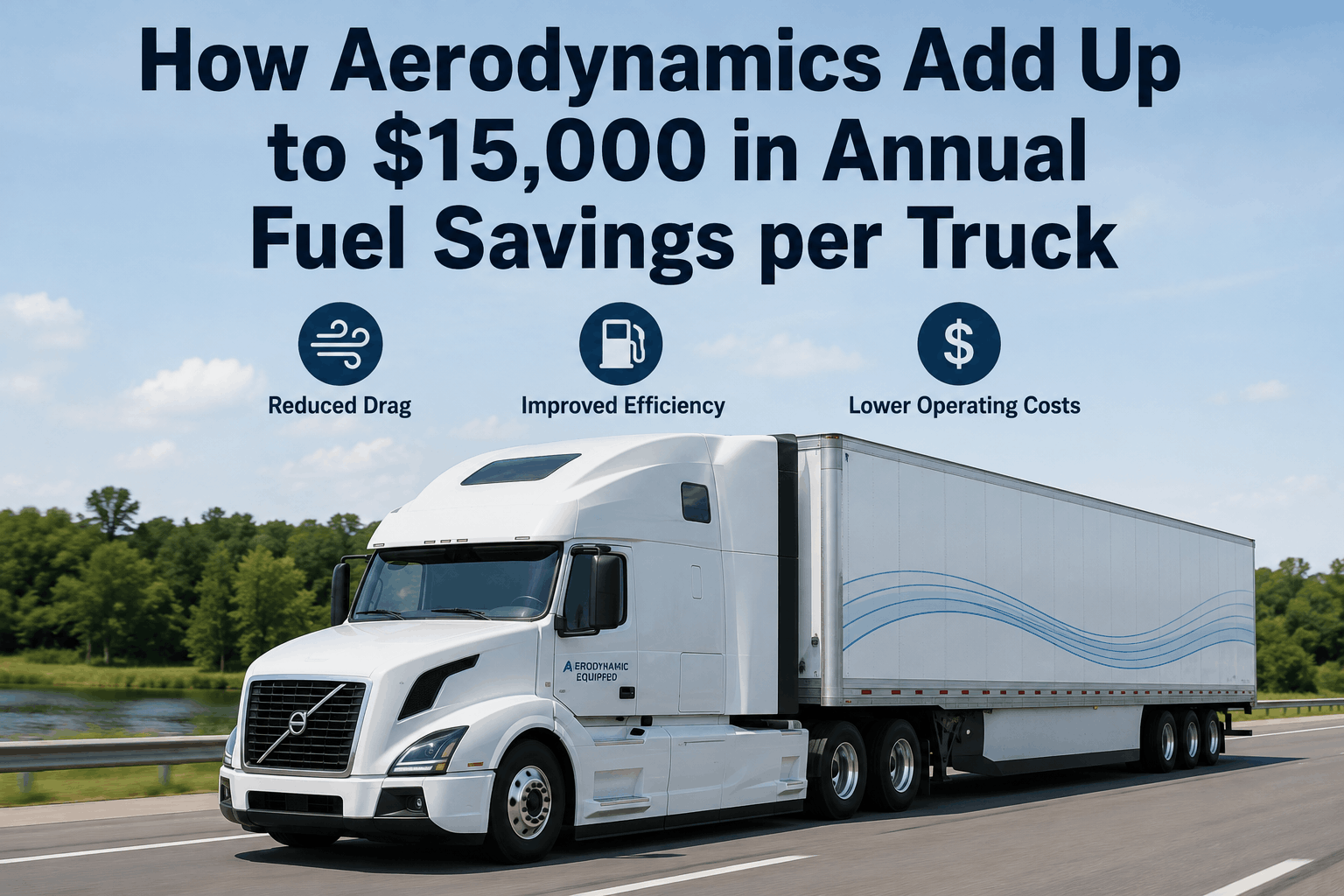
At 65 mph, over 50% of a heavy-duty truck's fuel consumption goes to overcoming aerodynamic drag. For a fleet running 120,000 miles per year, that translates into thousands of gallons wasted. But here is the opportunity: proven aerodynamic add-ons—trailer skirts, boat tails, cab fairings, and chassis fairings—can reduce drag by up to 25%, saving $15,000 or more per truck annually. With diesel prices fluctuating between $3.50-$4.50 per gallon, the payback period for aero devices is often under 12 months. This data-driven guide breaks down exactly how each component contributes to the bottom line. Sign up for FleetRabbit's fuel efficiency tracker or book a demo to calculate your fleet's potential savings.
The math behind $15,000 annual savings
Which aerodynamic devices deliver the best ROI?
Trailer side skirts are the undisputed champion: they smooth airflow between tractor and trailer wheels, reducing undercarriage turbulence. The North American Council for Freight Efficiency (NACFE) confirmed side skirts alone deliver 5-7% fuel economy improvement at highway speeds. Adding a boat tail (rear fairing) cuts the low-pressure wake behind the trailer, yielding another 4-6%. Cab roof fairings and chassis fairings complete the package. Fleet data shows that running a full aero spec reduces annual fuel spend by $11,000 - $15,000 per truck. Book a demo to see how FleetRabbit's aero ROI calculator benchmarks your current fleet.
Real-world case study: 150-truck fleet saves $2.1 million
A Midwest-based LTL carrier retrofitted 150 day cab tractors with trailer skirts, boat tails, and cab extenders. Within 18 months, their overall fleet fuel economy improved from 6.2 mpg to 7.1 mpg — a 14.5% gain. Annual fuel savings reached $14,300 per truck, totaling over $2.1 million. The entire aero retrofit cost $495,000, achieving payback in under three months. Moreover, the fleet reported reduced tire wear (approximately 12% longer tread life) and improved driver satisfaction due to reduced side-wind buffeting. This case underscores why NACFE ranks aero devices as the #1 fuel-saving technology for heavy trucks. Sign up for FleetRabbit to access detailed case studies and benchmarking data.
FleetRabbit's fuel module integrates real driving routes, speed profiles, and existing trailer equipment to project personalized savings. Join 500+ fleets optimizing aero ROI.
Speed sensitivity: why aero matters more at 65+ mph
Aerodynamic drag increases with the square of speed. At 55 mph, drag represents ~40% of fuel burn; at 75 mph, it jumps to nearly 65%. For fleets with highway-heavy operations (average speed 68 mph), aero devices become critical. Reducing drag coefficient by 0.10 (typical for full aero package) can improve fuel economy by 1.0 - 1.2 mpg at 70 mph. Conversely, running without skirts costs fleets an extra $0.12 per mile compared to optimized aero. FleetRabbit's telematics automatically segments fuel consumption by speed, highlighting aero waste. Book a demo to see how speed profiling uncovers hidden savings.
Gap management and tractor-trailer alignment
One overlooked factor: the gap between cab and trailer. An ideal gap of 36-48 inches optimizes airflow; larger gaps (over 60 inches) increase drag by 8-10%. Adjustable fifth wheels and gap fairings are low-cost solutions. Fleets using automated tractor-trailer matching systems maintain consistent gap, improving combined aero performance. Additionally, trailer undercarriage components like mud flaps and landing gear can be streamlined. Small investments yield meaningful returns. Sign up for FleetRabbit's equipment health module to monitor trailer specs and recommend gap optimizations.
| Aero Device | Avg Fuel Savings | Installed Cost | Payback (months) |
| Trailer Side Skirts | 5.5% | $1,200 - $1,800 | 4-6 months |
| Boat Tail (rear) | 5% | $800 - $1,200 | 3-5 months |
| Cab Roof Fairing | 3.5% | $600 - $1,000 | 5-7 months |
| Full Aero Package | 14-18% | $2,500 - $4,000 | 3-5 months |
Maintenance considerations and durability
Modern aerodynamic components are built for durability. Thermoplastic skirts resist impact and many come with 5-year warranties. Boat tails are designed to fold during docking, preventing damage. Fleet data shows average lifespan of 500,000 miles for quality aero devices, with occasional replacement of damaged panels costing under $200. Regular inspection during pre-trip prevents drag inefficiencies. FleetRabbit includes aero inspection checklists and alerts for damaged fairings. Book a demo to see how maintenance reminders improve aero longevity.
Environmental impact: carbon reduction per truck
Saving 2,677 gallons of diesel per truck annually eliminates approximately 26.8 metric tons of CO2 emissions (based on 10 kg CO2 per gallon). For a 100-truck fleet, that is 2,680 metric tons of CO2 reduction—equivalent to planting over 44,000 trees. Many shippers now request low-carbon carriers, making aero retrofits a competitive advantage. FleetRabbit's ESG dashboard tracks carbon credits and sustainability reporting, helping fleets monetize emission reductions. Sign up today to start tracking your environmental impact.
Stop burning fuel against drag. FleetRabbit provides real-time aero efficiency scores per truck, automated ROI tracking, and retrofit recommendations. Start saving $15,000 per truck now.