In the historic heart of Quito, Ecuador, electric cargo bikes now glide silently beneath the neoclassical facades of a UNESCO World Heritage site. In London, disused railway vaults beneath Waterloo Station have been transformed into a zero-emission delivery hub. From the congested streets of Delhi to the narrow lanes of La Rochelle, a quiet revolution is underway. Cities across the globe are reimagining how goods move through their urban cores, and electrification is at the center of this transformation. This is not a distant future—it is happening now, and the lessons learned are shaping the future of urban logistics.
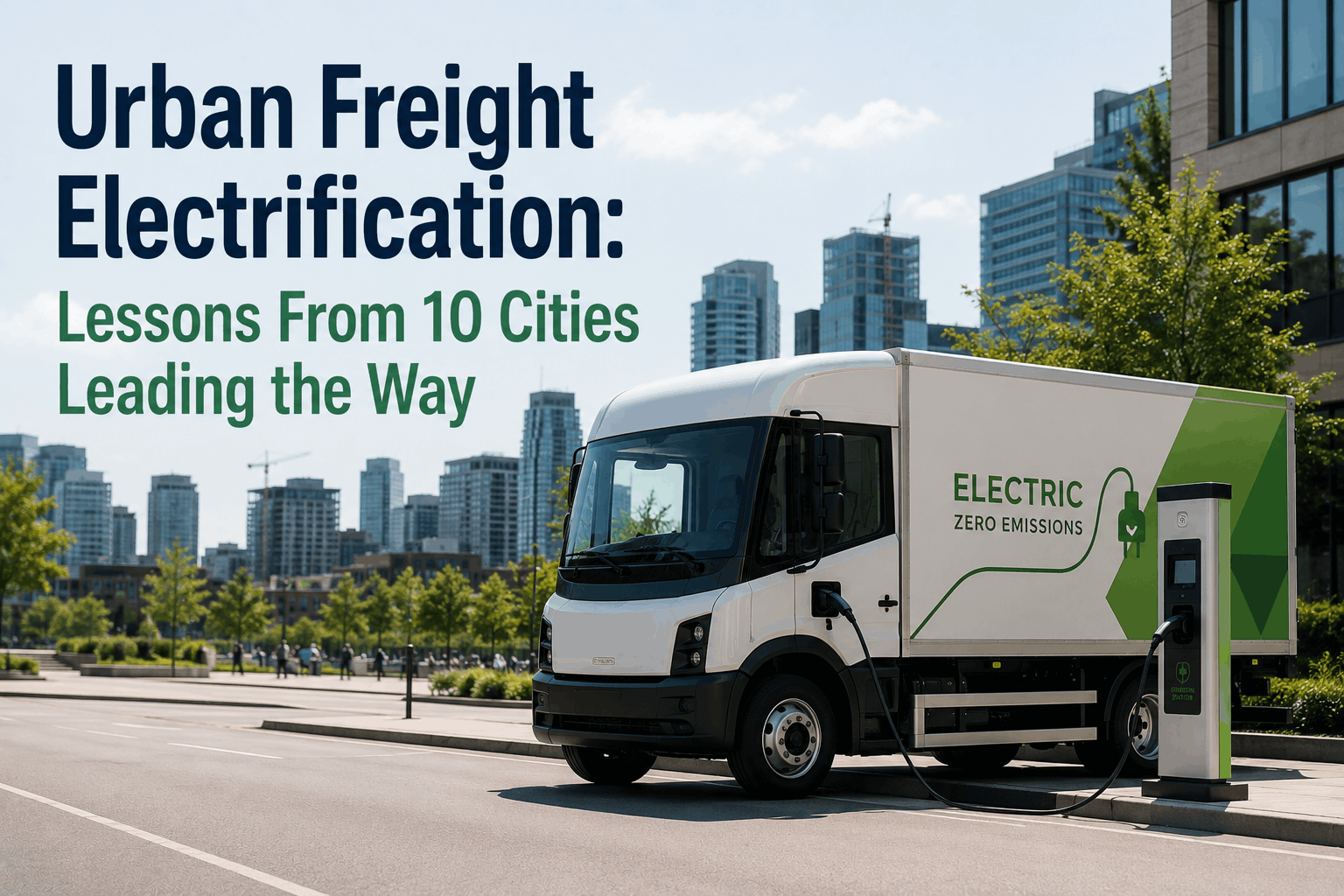
Urban Freight Electrification: Lessons From 10 Cities Leading the Way
Without operational changes, urban delivery traffic and CO₂ emissions are projected to increase by approximately 60% by 2030. Deliveries could account for 13% of overall city emissions. Electrification is not just an environmental choice—it's an operational imperative
Delhi: Policy as a Catalyst for Change
India's capital is emerging as a laboratory for urban freight electrification. Delhi's draft Electric Vehicle Policy 2026-2030 proposes that no new petrol or diesel vehicles be inducted into delivery and ride-aggregator fleets from January 2026. By 2027, only electric three-wheelers, including auto-rickshaws, will be permitted for new registrations.
These policy measures target high-usage vehicle segments—two-wheelers, three-wheelers, and light goods vehicles—that contribute disproportionately to vehicular emissions due to extensive daily operations. The policy also offers financial incentives of up to Rs 50,000 for electric three-wheelers, making the transition economically viable for fleet operators .
A study analyzing Delhi's freight electrification found a significant rise in electric three-wheeler registrations and trip frequencies, alongside a relative decline in traditional light commercial vehicle usage. Projections show electric three-wheeler sales rising from 12,500 units in 2025 to over 20,000 by 2030, while light goods vehicle sales decline to 11,000 over the same period. Key drivers include operational advantages, less restrictive entry timings for EVs, and supportive government policies.
To understand how policy changes like these could impact your fleet operations, book a demo with FleetRabbit and explore our regulatory compliance tracking tools.
Quito: Zero-Emission Zones in Action
In Quito, Ecuador, a UNEP-led pilot project under the SOLUTIONSplus program has transformed delivery operations in the historic city center. Electric cargo bikes and trikes now serve local restaurants and businesses, replacing petrol-powered motorcycles that once dominated these UNESCO World Heritage streets .
The results are compelling. Drivers have covered 25,000 kilometers and hauled 300 tonnes of goods while avoiding 6 tonnes of CO₂ emissions. Beyond the environmental benefits, couriers report better workdays, larger payload capacity, and higher hourly earnings. One restaurant logistics manager noted: "Zero tailpipe emissions, low noise levels, cost savings—the impacts add up." The pilot supports a government plan to turn historic Quito into a zero-emissions zone.
For fleets considering similar transitions, the economics are clear: swapping combustion bikes for electric counterparts can cut delivery costs by a quarter while emissions drop by 90%. This is the kind of ROI that makes electrification a business decision, not just an environmental one. To model the financial impact for your operation, sign up with FleetRabbit and access our fleet electrification ROI tools.
Covered by Quito's electric cargo bikes
Goods delivered emission-free
CO₂ emissions avoided
London: Repurposing Infrastructure
The Waterloo Freight Hub trial, launched in March 2025, is transforming disused infrastructure beneath London's Waterloo Station into a logistics base for zero-emission last-mile deliveries. The pilot, led by the Cross River Partnership, uses space once occupied by Eurostar services to receive parcels delivered by van, then transfers them to a fleet of ten electric cargo bikes for final delivery across central London .
This six-month pilot addresses multiple urban logistics challenges: repurposing underused infrastructure, reducing emissions and congestion, and streamlining last-mile delivery in densely populated cities. The project reflects operational research principles in practice: network design, capacity planning, resource allocation, and system efficiency. The goal is to determine whether existing transport infrastructure can serve as effective urban logistics nodes, easing pressure on roads and reducing delivery times.
The long-term vision is a multi-modal hub capable of handling middle-mile logistics by road, rail, and river. For fleet operators, the lesson is that infrastructure innovation doesn't always require new construction—existing assets can be repurposed to support electrification. To explore how your fleet could benefit from similar hub models, book a demo with FleetRabbit and discuss your urban logistics strategy with our specialists.
European Cities: Emission-Free Delivery Zones
DACHSER, a European logistics provider, is creating emission-free delivery zones in 25 cities across Europe. Recent additions include inner-city areas in Warsaw, Rotterdam, and Barcelona, where only zero-emission vehicles can deliver and collect goods. The concept uses a designated area in the city center—typically around shopping streets or narrow old town alleys—where non-refrigerated shipments are transported exclusively emission-free using e-trucks, e-vans, or cargo bikes .
The Rotterdam zone, for example, uses several electric vehicles to serve shops, showrooms, and office buildings in the city center. Two electric trucks—a Volvo Electric FL 4x2 and a Renault D Z.E—deliver from the DACHSER location in Waddinxveen to Rotterdam. Barcelona uses two electric vehicles and a cargo bike to serve the area around Paseo de Gracia .
This model demonstrates that emission-free delivery zones are scalable across different city sizes and geographies. The key success factors include collaboration with city administrations, clear operational zones, and the right mix of vehicle types for local conditions.
La Rochelle: Preserving Heritage, Modernizing Logistics
La Rochelle, France, a historic port city with narrow streets and protected architecture, is pioneering sustainable urban logistics. The city's strategy, "Delivering in city centres: making way for sustainable solutions," limits large delivery vehicles in the city center to cut noise, emissions, and road congestion while protecting its urban fabric .
Key measures include time-restricted delivery slots, retractable bollards controlling city center access, and support for bicycle-based delivery companies. The city has also published a public information guide, "Livrer en ville," to help delivery professionals navigate new rules. Transport accounts for 27% of La Rochelle's greenhouse gas emissions, with one-third from freight, making cleaner logistics a clear priority.
La Rochelle's approach demonstrates that even heritage-rich, historical urban centres can modernize freight delivery sustainably. The lesson for fleet operators is that collaboration with city planners and adaptation to local conditions are essential for successful urban electrification.
Global Momentum: The Deliver-E Initiative
Eight of the world's largest food and grocery delivery platforms—Delivery Hero, DoorDash, iFood, Mr. D, Swiggy, Uber, Wolt, and Zomato—have launched the Deliver-E initiative to electrify their delivery fleets. Together, they account for 6 billion two-wheeler trips annually across 96 countries. The initiative is coordinated by UNEP and aims to accelerate the transition to zero-emission two and three-wheelers, which are ready to scale .
Kochi and Panaji: India's Electric Freight Pilots
Kochi, India, is pioneering electric light commercial vehicles (LCVs) through a pilot project that substitutes fossil fuel-powered vehicles with electric ones. The project uses digitization for fleet control, battery usage tracking, and charge optimization. During the evaluation phase, the goal is to curtail diesel consumption and minimize CO₂ emissions by more than 20 tons .
Panaji is promoting cooperative last-mile delivery using electric vehicles. By testing freight pooling concepts with electric LCVs, some 10,000 deliveries are expected to switch to electric vehicles during more than 100 days of testing. The digital infrastructure and data analytics enable orchestration and improvement of the joint delivery process.
These pilots demonstrate that the technology is mature and the operational models are viable. The challenge now is scaling these solutions across India's diverse urban landscape, where the two-tier logistics model—using diesel for long-haul and electric for last-mile—is already proving effective .
Overcoming the Barriers
Despite the momentum, significant barriers remain. A comprehensive study analyzing the impediments to electric freight vehicle adoption in urban logistics identified 13 critical barriers, including inadequate government incentives, unstructured urban market layouts, high operational costs with prolonged payback periods, limited charging infrastructure, an immature resale market, and a lack of dedicated repair centers .
For fleet operators, these barriers translate into real operational challenges. However, the cities leading the way have demonstrated that strategic policy support, public-private partnerships, and targeted investments can overcome these obstacles. The lesson is clear: electrification is not just about vehicles—it's about building an ecosystem that supports them .
The Road Ahead
Urban freight electrification is no longer a question of if, but when. The cities profiled here—Delhi, Quito, London, Rotterdam, Barcelona, La Rochelle, Kochi, Panaji, and others—offer a roadmap for fleet operators navigating this transition. Key takeaways include:
Strong policy frameworks accelerate adoption. Clear regulations, incentives, and timelines create certainty for fleet investment. Infrastructure innovation doesn't require new construction. Existing assets—disused railway vaults, underutilized parking, urban waterfronts—can be repurposed as logistics hubs. The economics work. Lower operating costs, reduced maintenance, and extended vehicle life create a powerful business case for electrification. Collaboration is essential. Partnerships between fleet operators, city governments, technology providers, and policymakers are the foundation of successful urban freight electrification.
To position your fleet for this transition, sign up with FleetRabbit and access our urban logistics analytics platform. Track your fleet's emissions, model electrification scenarios, and make data-driven decisions that prepare your operation for the future of city logistics.
FleetRabbit helps you track fleet performance, model electrification scenarios, and navigate the transition to sustainable urban logistics.
Frequently Asked Questions
What is urban freight electrification?
Urban freight electrification is the transition of delivery and logistics vehicles in cities from internal combustion engines to electric powertrains. It includes electric vans, trucks, cargo bikes, and three-wheelers used for last-mile and middle-mile logistics.
Which cities are leading in urban freight electrification?
Leading cities include Delhi (policy-driven adoption), Quito (zero-emission zones), London (infrastructure repurposing), Rotterdam and Barcelona (emission-free delivery zones), La Rochelle (historic city adaptation), and Kochi and Panaji (Indian pilot projects).
What are the main barriers to urban freight electrification?
Key barriers include inadequate government incentives, high upfront costs with prolonged payback periods, limited charging infrastructure, an immature resale market for electric freight vehicles, and a lack of dedicated repair centers .
How much can fleets save by electrifying urban delivery?
Swapping combustion vehicles for electric alternatives can cut delivery costs by a quarter while emissions drop by up to 90%. Lower operating costs, reduced maintenance needs, and longer vehicle lifespans create a powerful economic case for electrification.
What role do cargo bikes play in urban freight electrification?
Cargo bikes are increasingly important for last-mile delivery in dense urban centers. They produce zero emissions, reduce congestion, and can navigate narrow streets where trucks cannot. Cities like Quito, London, and Rosario are using cargo bikes as a core part of their electrification strategies .
How can FleetRabbit help with urban freight electrification?
FleetRabbit provides analytics to track fleet performance, model electrification scenarios, monitor emissions reductions, and navigate the transition to sustainable urban logistics. Our platform helps fleet managers make data-driven decisions about vehicle replacement, charging infrastructure, and operational optimization.
FleetRabbit provides the tools and insights to plan, execute, and measure your fleet's transition to sustainable urban logistics.