The fleet management industry isn't evolving anymore — it is transforming at a pace that leaves reactive operators behind. According to Verizon Connect's 2026 Fleet Technology Trends Report, 66% of fleet professionals are now prioritizing efficiency and productivity as their top goal, while 53.3% of fleets are actively researching or piloting AI capabilities. The message is clear: the operational playbook that worked in 2024 won't survive 2026. Here are the 8 shifts every fleet operator needs to prepare for right now.
The 8 Shifts Reshaping Fleet Operations in 2026
AI Moves From Dashboards to Decisions
TechnologyIn 2026, AI isn't just summarizing what happened last week — it's recommending what to do next. The shift from "reporting" to "real-time decisioning" means fleets win by reducing time-to-action: the gap between a problem emerging and someone fixing it.
Predictive maintenance systems now surface risks 20–45 days before traditional diagnostics, reducing unplanned downtime by 30%. AI route optimization delivers 10–15% fuel savings. GenAI fleet assistants answer operator questions and automate administrative workflows.
65% of maintenance teams plan AI adoption by end of 2026. Learn how AI-powered predictive maintenance is transforming fleet operations.
Video Telematics Becomes the Safety Standard
SafetyDashcams and AI video are shifting from "nice-to-have" to "default," especially where insurance, litigation, and safety KPIs are under pressure. Nearly half of fleet professionals (46%) now use video telematics — a 10-percentage-point increase since 2023.
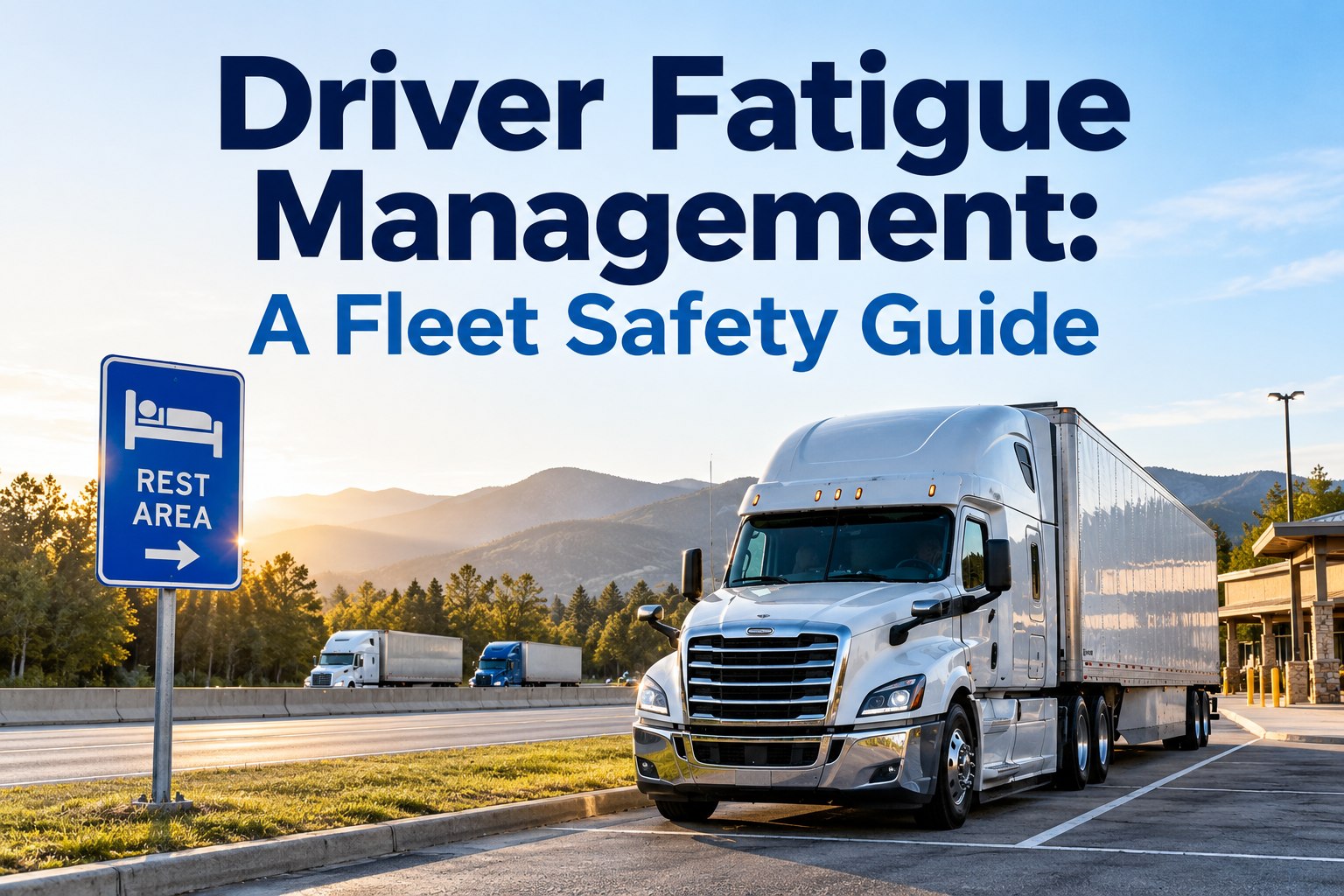
Machine learning algorithms detect driver fatigue with 95% accuracy. By combining video intelligence with GPS tracking, fleets gain deeper visibility into driver behavior, enabling proactive coaching and lower risk exposure.
Predictive Maintenance Becomes the Baseline
MaintenanceIf you're still operating primarily on reactive models, you're absorbing unnecessary downtime and repair costs. Condition-based triggers and telematics integration should now be standard. Predictive maintenance reduces unplanned downtime by 50% according to recent surveys.
2026 fleets are blending vehicle health signals with work orders, parts availability, and scheduling. Maintenance is increasingly optimized around service impact, not just mileage intervals.
See how preventive maintenance software integrates with predictive analytics.
Is Your Fleet Platform Ready for 2026?
FleetRabbit combines AI-powered maintenance, digital DVIR, compliance automation, and cost analytics. Free for up to 3 assets.
EV Adoption Forces Energy Management Rethink
SustainabilityElectric vehicles are entering commercial fleets at scale. Within the next four years, 87% of fleet owners expect to add electric vehicles to their fleets. But EVs don't eliminate maintenance — they redistribute it. Battery degradation, regenerative braking wear, and charging inefficiencies introduce new monitoring priorities.
Fleet platforms increasingly support EV-aware routing (range, temperature impact, charging availability). Charging management becomes core: scheduling charge windows, tracking charger utilization, and avoiding demand-charge spikes.
Cybersecurity Becomes an Operational Crisis
SecurityConnected fleet technologies expose operators to data breaches and ransomware attacks that didn't exist a decade ago. Upstream Security documented 494 automotive cyber incidents in 2025 — with ransomware attacks doubling year-over-year. 92% of these attacks were conducted remotely.
Fleets must now evaluate telematics providers not just on features but on security architecture and incident response capabilities. The cost of a breach extends beyond data loss to operational shutdown and reputational damage.
Platform Consolidation Replaces Point Solutions
OperationsSoftware now commands 49% of the fleet management market with cloud solutions holding 70% share. The competitive advantage doesn't come from owning each tool — it comes from integration. Disconnected systems create data silos. Siloed data slows decisions.
When telematics integrates with maintenance scheduling, inspections integrate with compliance tracking, and fuel data integrates with cost reporting, managers operate proactively rather than reactively.
See how work order management software fits into unified fleet platforms.
Compliance Complexity Demands Automation
ComplianceStricter federal and industry regulations on driver safety, vehicle inspections, emissions compliance, and data governance are driving adoption of intelligent fleet platforms. ELD mandates, FMCSA requirements, and state-specific regulations create compliance complexity that manual processes can't manage reliably.
RPA automates 70% of fleet invoicing and billing processes. The CSRD requires companies to record CO2 emissions and energy consumption — live telematics data solves this reporting burden.
Learn how proper FMCSA compliance integrates with automated fleet management systems.
Driver Retention Becomes Technology-Driven
PeopleThe US faces an 80,000+ truck driver shortage. The average truck driver is 46 years old, and the influx of trained replacements is insufficient. In 2026, the solution isn't just higher pay — it's better technology that respects drivers' time and improves their daily experience.
Drivers leave fleets where equipment breaks down and paperwork is endless. They stay where the truck is reliable, the app is easy, and management respects their time. AI coaching that trains instead of surveils, predictable route planning, and modern dispatch tools — these are retention tools.
See how easy mobile DVIR improves driver satisfaction and daily workflow.
Why These Trends Converge
These eight shifts aren't independent forces you can tackle one at a time. They're converging into a single operational reality that demands integrated solutions.
Requires integrated data platforms that feed ML models with vehicle health, usage patterns, and repair history — not siloed telematics data.
Introduces new reporting requirements (CSRD, emissions) that only work with real-time telematics integration built into your fleet platform.
Depends on platforms that simplify daily tasks while providing the reliability that comes from predictive maintenance and smart dispatching.
Fewer vendor relationships to manage means lower attack surface — but those relationships need deep security architecture evaluation.
The decisions fleet managers make this year will influence cost structures and operational risk for the next five to ten years. Book a demo to see how FleetRabbit addresses all 8 shifts in one platform.
What Smart Fleet Operators Are Doing Now
Auditing Current Tech Stack
Identifying siloed systems and integration gaps. Goal: single source of truth for all fleet data.
Piloting AI Capabilities
Starting with high-ROI applications like predictive maintenance before expanding to route optimization.
Evaluating EV Readiness
Assessing which routes and duty cycles can support electrification today vs. in 12–24 months.
Strengthening Cybersecurity
Auditing vendor security practices and creating incident response plans before a breach forces the issue.
Investing in Driver Experience
Deploying mobile-first tools that reduce paperwork and respect driver time — the fastest path to retention.
Prepare Your Fleet for 2026 and Beyond
FleetRabbit gives you AI-powered maintenance, digital DVIR, compliance automation, and cost analytics in one platform. Free for up to 3 assets. See why growing fleets are switching.