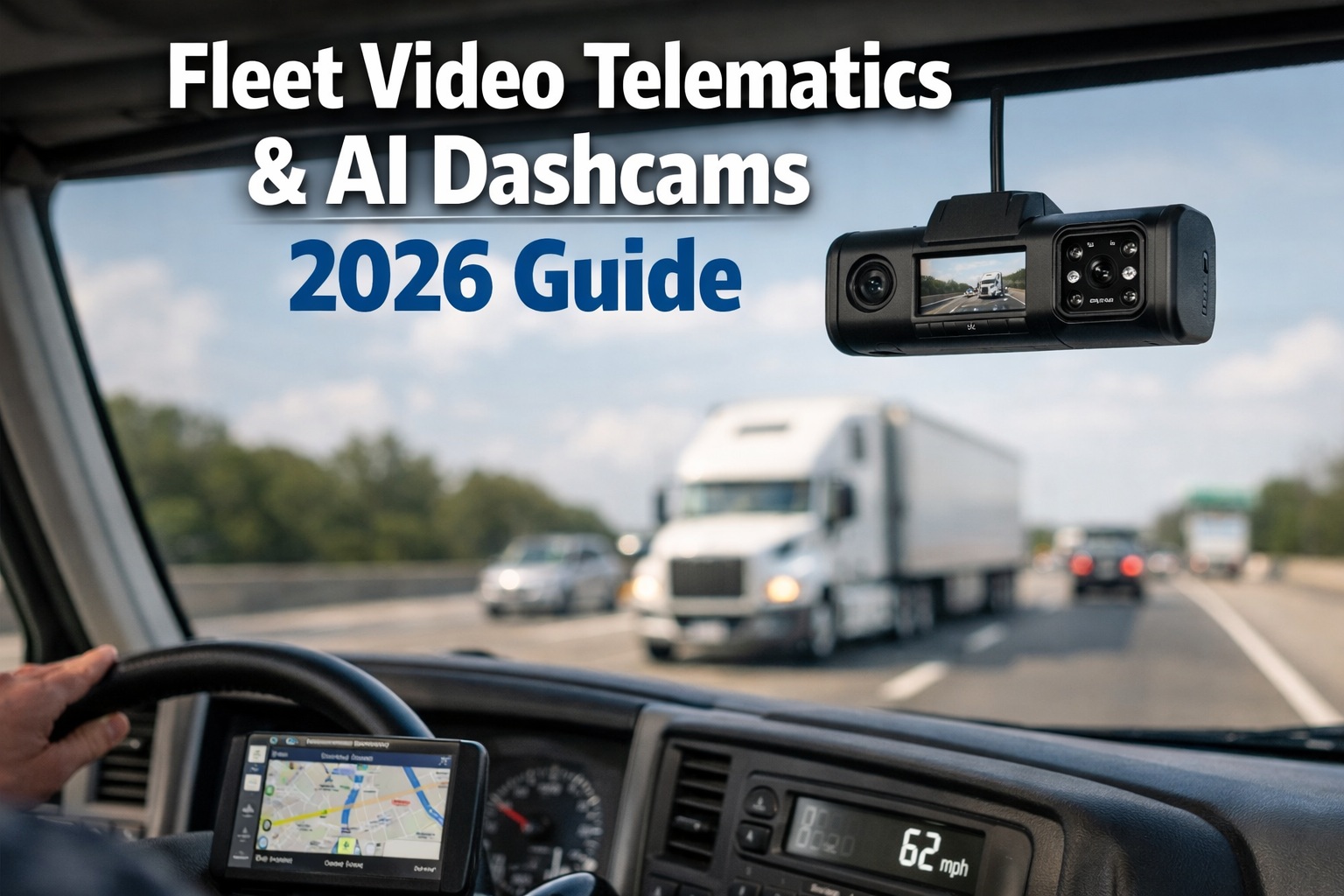
AI-powered dashcams have transformed from optional safety accessories to mission-critical fleet technology. In 2026, fleets using AI video telematics report up to 80% reduction in distracted driving incidents, 52% fewer accidents, and insurance premium savings that often exceed the entire system cost. The technology has matured rapidlytoday's AI dashcams don't just record video; they detect drowsiness in real-time, coach drivers through in-cab alerts, and provide irrefutable evidence that protects against fraudulent claims. This comprehensive guide explains how fleet video telematics works, what features matter most, and how to evaluate solutions for your operation. Start your AI dashcam evaluation today, or schedule a personalized video telematics demo.
Fleet Video Telematics & AI Dashcam Technology
Complete guide to AI-powered dashcams, real-time driver coaching, incident detection, and video analytics transforming fleet safety.
What is Fleet Video Telematics?
Fleet video telematics combines in-vehicle camera systems with AI-powered analytics and cloud connectivity to create comprehensive visibility into driver behavior, road conditions, and safety incidents. Unlike basic dashcams that simply record video, modern video telematics systems actively analyze footage in real-time, detect risky behaviors, and integrate seamlessly with fleet management platforms.
Camera Hardware
Dual-facing HD cameras capture both road conditions and driver behavior simultaneously with wide-angle lenses and night vision.
Edge AI Processing
On-device AI analyzes video in real-time, detecting distraction, drowsiness, phone use, and unsafe behaviors instantly.
Cloud Platform
Event clips, analytics, and reports sync to cloud dashboards for manager review, trend analysis, and compliance reporting.
Fleet Integration
Video data integrates with GPS, maintenance, and driver management systems for unified fleet intelligence.
The integration between video telematics and fleet management software creates a powerful safety ecosystem. When an AI system detects hard braking, it can correlate the event with GPS location, vehicle diagnostics, and driver history to provide context that transforms raw data into actionable insights. Explore how FleetRabbit integrates video telematics across USA fleets.
Key Features of AI Fleet Dashcams
Modern AI dashcams include a sophisticated feature set that goes far beyond simple video recording. Understanding these capabilities helps fleet operators evaluate solutions effectively.
Dual-Facing Cameras
Dual-facing systems capture both the road ahead and the driver cabin simultaneously. Road-facing cameras record traffic conditions, near-misses, and incidents for liability protection. Driver-facing cameras monitor attention, fatigue, and compliance with safety policies.
AI Driver Behavior Detection
Computer vision algorithms analyze driver behavior in real-time, detecting specific risky actions with high accuracy. Modern AI achieves 95%+ detection rates while minimizing false positives that frustrate drivers.
Real-Time Driver Coaching
In-cab audio or visual alerts notify drivers immediately when risky behavior is detected. This instant feedback is 4x more effective than post-trip reviews because drivers can correct behavior in the moment, before it leads to an incident.
Incident Detection & Recording
G-sensors and AI algorithms automatically detect and preserve footage of collisions, hard braking events, near-misses, and other safety incidents. Events are tagged, timestamped, and uploaded to the cloud for immediate review.
Cloud Video Storage & Management
Event-triggered recording means only relevant clips are uploaded, reducing storage costs and cellular data usage. Most platforms retain footage for 30-90 days, with options for extended retention of critical incidents.
Safety Analytics & Reporting
Dashboards aggregate video events into driver safety scores, trend analysis, and benchmarking reports. Managers can identify high-risk drivers, track improvement over time, and demonstrate safety program effectiveness to insurers.
Benefits for Fleets
Accident Reduction
Fleets with AI dashcams report 40-60% fewer accidents. Real-time coaching prevents incidents before they happen, while driver awareness of monitoring naturally improves behavior.
Driver Training & Development
Video clips provide concrete, objective coaching opportunities. Instead of vague feedback, managers can show drivers exactly what happened and how to improve.
Insurance Claims Protection
Video evidence exonerates drivers in not-at-fault accidents and defeats fraudulent claims. Fleets report defeating $200K-500K in fraudulent claims annually with video proof.
Insurance Premium Reduction
Insurers offer 10-30% premium discounts for fleets with AI dashcam programs. Combined with reduced claims, total insurance savings often exceed system costs.
See AI Dashcam ROI for Your Fleet
Calculate your potential savings from accident reduction, insurance discounts, and fraud prevention with FleetRabbit's video telematics integration.
Comparison of Fleet Dashcam Solutions
The fleet video telematics market includes solutions ranging from basic recording devices to comprehensive AI-powered platforms. This comparison highlights key differentiators to consider during evaluation.
| Feature | Basic Dashcam | Standard Video Telematics | AI-Powered Platform |
|---|---|---|---|
| Camera Type | Road-facing only | Dual-facing | Dual-facing + optional auxiliary |
| Video Quality | 720p | 1080p | 1080p+ with HDR |
| AI Detection | None | Basic (hard braking) | Advanced (distraction, drowsiness, phone) |
| Real-Time Coaching | No | Limited | Yes, in-cab alerts |
| Cloud Storage | SD card only | Event clips | Events + on-demand streaming |
| Fleet Integration | None | Basic GPS | Full telematics integration |
| Analytics Dashboard | No | Basic reports | Driver scores, trends, benchmarking |
| Typical Cost | $100-200 one-time | $25-35/mo/vehicle | $40-60/mo/vehicle |
| Best For | Personal vehicles | Basic fleet recording | Safety-focused commercial fleets |
Compare FleetRabbit video telematics pricing options →
How Video Telematics Integrates With Fleet Management Software
The true power of video telematics emerges when camera systems integrate with comprehensive fleet management platforms. This integration creates unified visibility across all fleet operations.
Event Detection
AI detects risky behavior or incident occurs
Context Enrichment
System adds GPS, speed, diagnostics data
Cloud Processing
Video uploaded, analyzed, categorized
Actionable Insights
Alerts, reports, coaching workflows triggered
Implementation Best Practices
Communicate With Drivers First
Present dashcams as driver protection tools, not surveillance. Emphasize fraud protection and exoneration benefits. Get driver input on implementation timing and address privacy concerns directly.
Start With High-Risk Vehicles
Pilot on vehicles with highest accident rates, newest drivers, or most valuable cargo. Early ROI demonstration builds organizational support for fleet-wide rollout.
Establish Clear Policies
Document when footage will be reviewed, how long it's retained, and what behaviors trigger coaching versus discipline. Consistency builds trust and legal protection.
Use Coaching, Not Punishment
Focus initial months on positive coaching and improvement. Punitive approaches create driver resistance and reduce program effectiveness. Reserve discipline for repeated, serious violations.
Celebrate Improvements
Recognize drivers who improve safety scores. Gamification and rewards programs increase engagement and accelerate behavior change across the fleet.
Review Analytics Weekly
Establish regular safety review cadence. Track trends, identify emerging risks, and ensure coaching happens consistently across the organization.
Future of AI Video Telematics (2026-2030)
Enhanced AI Accuracy
Detection algorithms achieve 99%+ accuracy with near-zero false positives. Predictive models identify at-risk drivers before incidents occur based on subtle behavior patterns.
ADAS Integration
Video telematics integrates directly with Advanced Driver Assistance Systems. Cameras feed data to collision avoidance and lane-keeping systems for enhanced active safety.
Autonomous Monitoring
Video systems become standard equipment on autonomous and semi-autonomous vehicles, monitoring both AI driving performance and human supervisor attention.
Frequently Asked Questions
How do AI dashcams detect driver distraction?
AI dashcams use computer vision algorithms trained on millions of images to recognize specific behaviors. Driver-facing cameras analyze eye position, head orientation, and hand movements to detect phone use, drowsiness, and inattention. Modern systems achieve 95%+ accuracy while processing video in real-time on the device itself, enabling instant in-cab alerts.
Do fleet dashcams record continuously or only during events?
Most systems record continuously to local storage but only upload event-triggered clips to the cloud. Events include hard braking, collisions, AI-detected behaviors, and manual driver triggers. This approach preserves footage for review while minimizing cellular data costs and storage requirements. Full footage is typically available for 24-72 hours if needed for incident investigation.
How do drivers respond to in-cab cameras?
Initial resistance is common but typically fades within 30-60 days. Keys to driver acceptance include transparent communication about how footage is used, emphasis on fraud protection benefits, and coaching-focused (not punitive) review processes. Fleets that involve drivers in implementation planning report 85%+ acceptance rates.
What internet connectivity do AI dashcams require?
AI dashcams include cellular connectivity (4G/LTE, increasingly 5G) for cloud uploads and real-time alerts. Most systems include 2-5GB monthly data plans per vehicle. Video processing happens on-device, so connectivity is only needed for event uploads and remote access—not continuous streaming.
How much can fleets save with AI dashcam systems?
ROI varies by fleet size and risk profile, but typical savings include 40-60% accident reduction ($15,000-50,000 per avoided accident), 10-30% insurance premium discounts, and $200,000-500,000 annually in defeated fraudulent claims for mid-size fleets. Most fleets achieve positive ROI within 6-12 months of implementation.
Conclusion: Transforming Fleet Safety With AI Video
AI-powered video telematics has evolved from emerging technology to essential fleet safety infrastructure. The combination of real-time driver coaching, incident documentation, and integrated analytics creates a comprehensive safety ecosystem that protects drivers, reduces costs, and improves operational performance.
For fleet operators evaluating video telematics solutions, the key considerations are AI detection accuracy, integration capabilities with existing fleet management systems, and implementation approach. The most successful deployments focus on driver coaching and protection rather than surveillance, building trust that maximizes program effectiveness.
As AI capabilities continue advancing, video telematics will become even more integral to fleet operations—eventually serving as the eyes and ears of autonomous vehicle monitoring. Fleets that implement comprehensive video safety programs now will be best positioned to leverage these future capabilities while reaping immediate benefits from accident reduction and fraud prevention.
Ready to Transform Fleet Safety?
See how FleetRabbit's integrated video telematics delivers 80% distraction reduction and 52% fewer accidents.