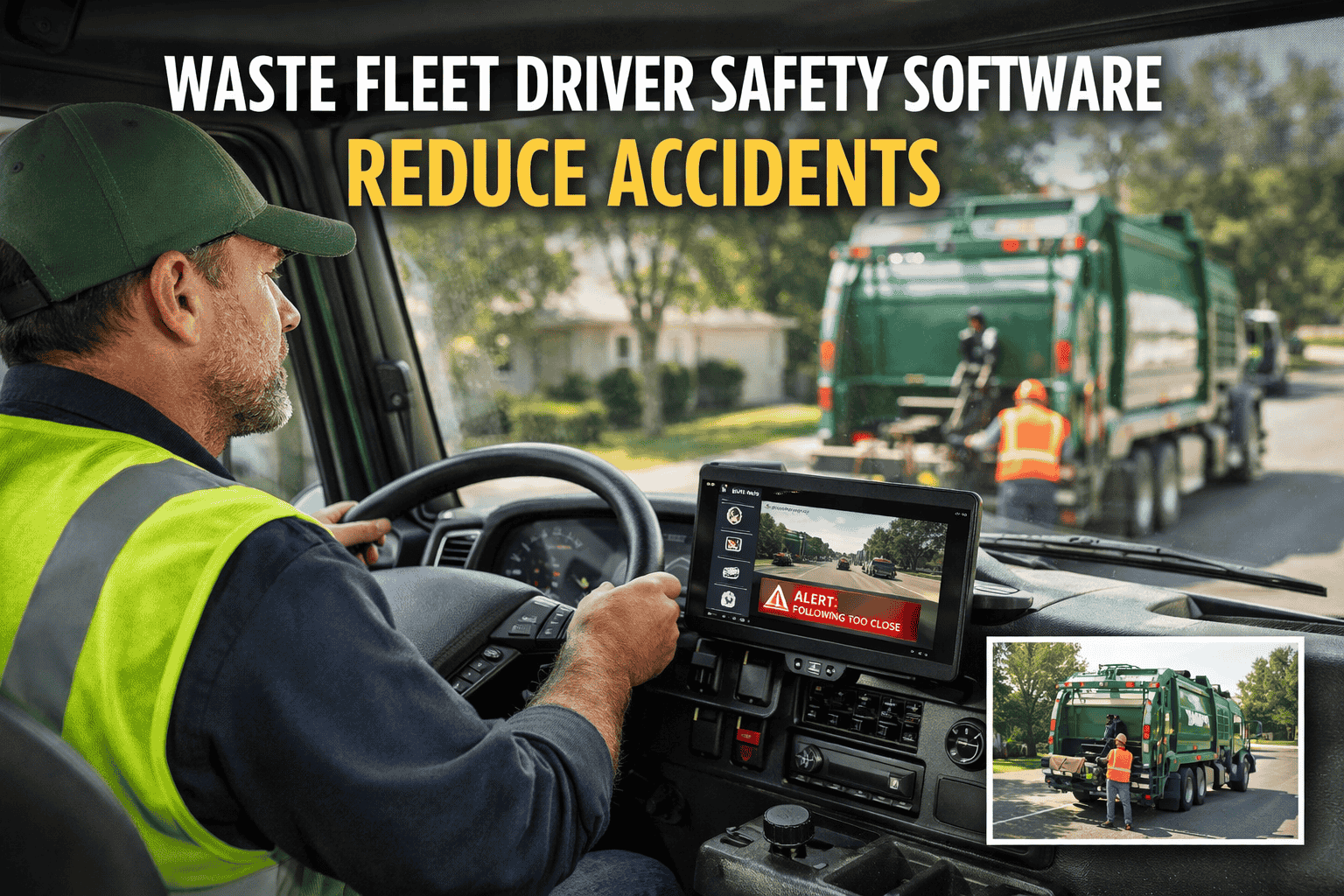
Waste collection ranks as the 4th deadliest job in America with 41.4 fatalities per 100,000 workers, that is three times more dangerous than being a police officer or firefighter. Every single day, your garbage truck drivers navigate blind spots the size of small cars, back into residential driveways where children play, and operate heavy hydraulic equipment in pre-dawn darkness. Without proper driver safety technology, you are essentially operating blind in one of the nation's most hazardous industries. This comprehensive guide reveals how waste fleet safety software transforms your operation from liability-prone to industry-leadingprotecting drivers, reducing costs, and building a culture of safety that attracts and retains top talent.
The Hidden Danger Zone: Understanding Waste Fleet Risk
Your drivers face a unique combination of hazards that no other commercial fleet encounters on a daily basis. Understanding these risks is the first step toward eliminating them.
Daily Danger Exposure for Waste Fleet Drivers
Each shift exposes your team to multiple high-risk scenarios
Pre-Dawn Departure
Routes begin in complete darkness. Driver fatigue peaks during early morning hours. NIOSH studies show accident rates increase 35% during low-light operations.
High RiskResidential Collection Begins
Trucks enter narrow streets where early joggers, dog walkers, and commuters share space. Constant stopping creates rear-end collision exposure from inattentive drivers behind.
High RiskSchool Zone Transit
Routes intersect with school bus stops and walking children. This window accounts for 23% of all pedestrian-involved waste truck incidents nationally.
Critical RiskCommercial Collection
Backing into loading docks, alleys, and parking lots. Studies show 65% of fatal waste vehicle accidents involve backing maneuvers where blind spots hide pedestrians.
Critical RiskMid-Route Fatigue
After 6+ hours of repetitive stopping and starting, driver alertness drops significantly. Investigations have documented waste drivers falling asleep at the wheel on dashcam footage.
Medium RiskRoute Completion and Return
Rushing to complete routes before shift end leads to speeding, aggressive driving, and skipped safety checks. Post-incident analysis reveals 40% of violations occur in final route hours.
Medium RiskYour drivers face these risks every single shift. Book a safety assessment demo to see exactly how FleetRabbit protects your team, or start your free trial with up to 3 vehicles at no cost.
The Real Cost of Waste Fleet Accidents
Beyond the human tragedy, waste fleet accidents devastate your business financially. Understanding the true cost helps justify investment in prevention technology.
Average Cost Per Major Incident
These numbers do not account for the immeasurable human cost—the driver who cannot work, the family affected by injury, or the community trust lost after a tragic accident. Comprehensive fleet tracking and safety monitoring can prevent the vast majority of these incidents.
Calculate Your Risk Exposure
Our safety experts analyze your current incident rates and show you exactly how much you could save with proper driver safety systems.
How Driver Safety Software Transforms Waste Operations
Modern waste fleet safety technology combines multiple protective layers—AI-powered cameras, real-time alerts, behavior coaching, and comprehensive analytics—to create a safety ecosystem that prevents accidents before they happen.
AI-Powered Visual Monitoring
Dual-facing dashcams equipped with artificial intelligence continuously analyze driver behavior and road conditions. The AI detects distraction, drowsiness, phone use, smoking, seatbelt violations, close following, and lane departure—all in real-time.
Instant In-Cab Alerts
When risky behavior is detected, drivers receive immediate audio alerts prompting them to correct course. This real-time feedback loop prevents near-misses from becoming collisions and builds safer driving habits over time.
360-Degree Exterior Coverage
Side-mounted and rear-facing cameras eliminate the massive blind spots inherent to garbage trucks. Backing alerts use radar and camera systems to detect pedestrians, vehicles, and obstacles that drivers cannot see from the cab.
Behavior Scoring and Coaching
Every driver receives a continuously updated safety score based on actual driving behavior. Managers use video clips and data trends to deliver targeted coaching that addresses specific skill gaps and reinforces positive habits.
These four layers work together to create comprehensive protection. See the full system in action during a personalized demo, or start your free trial today.
Essential Safety Features for Waste Fleets
Generic fleet safety tools are not designed for the unique challenges of garbage collection. Your operation needs features specifically built for waste industry hazards—backing safety, hydraulic monitoring, and DOT-compliant inspections for specialized equipment.
AI Dashcams with Waste-Specific Detection
Standard dashcams miss the unique risks of waste collection. Our AI is trained to recognize waste-specific scenarios like arm deployment, hopper engagement, and route-pattern driving that triggers false alerts on generic systems.
- Road-facing HD camera with night vision
- Driver-facing camera for distraction detection
- Automatic event flagging and cloud upload
- Privacy-compliant recording with driver consent
Advanced Backing Safety System
Backing accidents account for 65% of fatal waste vehicle incidents. Our system combines radar sensors, camera feeds, and audible warnings to create a protective zone around your vehicle during reverse operations.
- Rear radar with pedestrian detection
- Side-mounted cameras for blind spot elimination
- Graduated audio warnings by proximity
- In-cab display showing rear camera view
Driver Safety Scoring and Analytics
Transform subjective safety assessments into objective, data-driven insights. Every driver receives a continuously updated safety score that reflects their actual on-road behavior across multiple risk categories.
- Individual driver scorecards with trends
- Fleet-wide benchmarking and rankings
- Speeding, braking, acceleration metrics
- Incentive program integration ready
Vehicle Health Monitoring
A brake failure or steering problem can turn a routine collection into a tragedy. Real-time diagnostics catch mechanical issues before they cause accidents, protecting both drivers and equipment.
- Engine fault code monitoring and alerts
- Brake system performance tracking
- Hydraulic system pressure alerts
- Predictive maintenance scheduling
Digital DVIR for Waste Equipment
Standard DVIR apps do not include checkpoints for hydraulic arms, compactors, or hopper mechanisms. Our waste-specific digital DVIR ensures every safety-critical component gets inspected before every shift.
- Customized checklists for each truck type
- Photo documentation of defects
- Automatic work order generation
- DOT-compliant digital recordkeeping
Incident Detection and Response
When accidents do occur, every second counts. Automatic collision detection alerts your team immediately, GPS pinpoints the exact location, and video evidence preserves the facts before memories fade.
- G-sensor collision detection
- Instant alert to safety managers
- Automatic video clip preservation
- GPS location for emergency response
See All Features in One Demo
30 minutes to see exactly how these safety features work for garbage, recycling, and roll-off operations.
Proven Results: What Safety Software Actually Delivers
Claims are easy to make. Here are the documented results from waste fleets that implemented comprehensive driver safety systems:
Piedmont Disposal and Recycling
Southeast USAChallenge
Backing accidents were common in high-risk work zones. Previous dashcam systems failed frequently, making effective safety coaching nearly impossible.
Solution
Deployed AI-powered dashcams with real-time alerts and comprehensive driver coaching based on video evidence of actual incidents.
Prairie Disposal
Alberta, CanadaChallenge
Managing safety across a sprawling, remote service area with multiple disconnected systems that could not keep up with operational demands.
Solution
Unified platform combining AI dashcams, 360-degree exterior cameras, telematics, and compliance management in one integrated system.
FusionSite Services
National OperationsChallenge
Outdated telematics provider with limited visibility into driver behavior and no real-time feedback capability for their light-duty waste fleet.
Solution
AI dashcams with instant in-cab alerts for behaviors like cell phone use and close following, enabling drivers to self-correct before incidents occur.
Building a Safety Culture That Drivers Embrace
The biggest challenge with driver safety technology is not the technology itself—it is getting drivers to accept and embrace it. Here is how successful waste fleets overcome resistance and build genuine safety cultures:
Frame Dashcams as Driver Protection
Position cameras as tools that protect drivers from false claims, not surveillance systems. Show examples of drivers exonerated by video evidence when they were not at fault. When drivers understand that cameras can save their job and reputation, resistance evaporates.
Create Positive Incentive Programs
Tie safety scores to meaningful rewards—bonuses, preferred routes, recognition programs, or extra PTO. Fleets that use safety scores for punishment see resistance. Fleets that use scores for rewards see engagement. Make being safe visibly beneficial.
Coach with Compassion, Not Criticism
Video-based coaching should focus on skill building, not blame. Use phrases like "here is how to handle this better next time" rather than "you did this wrong." The goal is improvement, not punishment. Drivers who feel supported become safety advocates.
Celebrate Safety Wins Publicly
When a driver improves their safety score, announce it. When someone avoids an accident because of proper technique, share the story. When the fleet hits a milestone—30 days without incident—celebrate together. Safety becomes part of your identity.
Involve Drivers in the Process
Ask experienced drivers for input on which behaviors to prioritize. Let them help calibrate alert sensitivity so warnings are meaningful, not annoying. When drivers have ownership in the system, they become its champions rather than its critics.
OSHA Compliance and Regulatory Benefits
Driver safety software does more than prevent accidents—it creates the documentation trail that satisfies OSHA requirements and protects your company during audits and investigations.
General Duty Clause Documentation
OSHA requires employers to address known hazards even when no specific standard exists. Your safety software demonstrates proactive hazard mitigation—distracted driving, fatigue, backing risks—with documented training and monitoring.
Incident Investigation Evidence
When accidents occur, video evidence and telematics data provide objective facts for investigation. This protects your company from inflated claims and demonstrates that you maintain proper safety systems.
Training Record Verification
Digital records of coaching sessions, safety acknowledgments, and performance improvements create an audit trail showing ongoing safety training. This documentation is invaluable during OSHA inspections.
Equipment Inspection Records
Digital DVIR records prove that vehicles are inspected before every shift. When regulators ask about your maintenance and inspection program, you have complete, timestamped, photo-documented records.
Proper documentation protects your business. See how FleetRabbit creates compliant records during your demo, or start your free trial and build your safety documentation today.
Insurance Benefits and Premium Reduction
Insurance companies have taken notice of AI safety technology—and they are willing to pay fleets that use it. Here is how driver safety software impacts your insurance costs:
Insurance Premium Impact
Documented benefits for fleets using AI-powered safety systems
Most major insurers offer immediate discounts for fleets that install AI dashcams and monitoring systems.
Programs like Progressive SmartHaul offer enhanced discounts for approved telematics and dashcam solutions.
Video evidence exonerates drivers in disputed claims, dramatically reducing settlement costs and legal fees.
What You Will See in Your 30-Minute Demo
Every demo is customized for waste and recycling operations. Here is exactly what we cover—no generic sales pitch, just a focused look at how FleetRabbit works for your specific fleet:
Your Operation Assessment
We start by understanding your current fleet: how many trucks, what types (rear load, side load, front load, roll-off), your service area, current safety challenges, and what you have tried before. This ensures everything we show is relevant to your specific situation.
Live Safety Dashboard Walkthrough
See the real-time monitoring interface where safety managers track driver behavior, view safety scores, and identify coaching opportunities. We show actual incident detection, alert workflows, and the video review process.
Driver Mobile App Experience
Experience what drivers see: how they receive alerts, complete pre-trip inspections using our waste-specific DVIR checklists, view their safety scores, and understand what behaviors impact their ratings.
Dashcam and Video System
See how AI detects and flags risky behaviors, how video clips are automatically saved, and how managers use footage for coaching sessions. We demonstrate both road-facing and driver-facing camera capabilities.
Pricing, Q&A, and Next Steps
Transparent pricing discussion: free for up to 3 vehicles, then $3 per vehicle per month. No contracts, cancel anytime. We answer your questions and outline implementation timeline if you decide to move forward.
Protect Your Drivers Starting Today
Join waste fleets that have cut incidents by 90%+ with AI-powered safety monitoring. Your drivers face the 4th deadliest job in America—give them the technology to come home safe every single day.
Frequently Asked Questions
Initial resistance is common, but it typically fades quickly when drivers understand the benefits. Position cameras as protection—video evidence has exonerated countless drivers from false claims. Fleets that tie safety scores to positive incentives (bonuses, preferred routes) see much faster acceptance than those using cameras for punishment. Most drivers eventually prefer having evidence that proves they were not at fault.
Most fleets see measurable improvement within 30-60 days of deployment. Real-time alerts create immediate behavior change—when drivers know they will be alerted for risky behavior, they naturally drive more carefully. Piedmont Disposal improved their safety score from 76 to 99 within months. The key is consistent follow-up coaching based on actual incident data.
Yes. FleetRabbit works with rear loaders, side loaders, front loaders, roll-off trucks, and recycling vehicles. Our DVIR checklists are customized for each vehicle type, including specific checkpoints for hydraulic systems, compactors, lift mechanisms, and hopper components that generic systems miss entirely.
The system works offline. Video and telematics data are stored locally on the device and automatically sync when connectivity is restored. Drivers can complete DVIRs, receive alerts, and operate normally even in remote areas. Prairie Disposal operates across a sprawling rural service area in Alberta and uses FleetRabbit successfully throughout.
OSHA's General Duty Clause requires employers to address known workplace hazards. Safety software demonstrates proactive hazard mitigation through documented training, real-time monitoring, and coaching records. Digital DVIR records prove equipment is inspected before every shift. When investigators ask about your safety program, you have complete, timestamped documentation.
The system automatically detects collisions via G-sensor and immediately alerts your safety team. GPS provides exact location for emergency response. Video from seconds before and after the incident is automatically preserved in the cloud. This evidence is invaluable for insurance claims, legal defense, and understanding what happened to prevent future incidents.
Your drivers face the 4th deadliest occupation in America every single day. Give them—and yourself—the technology to prevent tragedies before they happen.