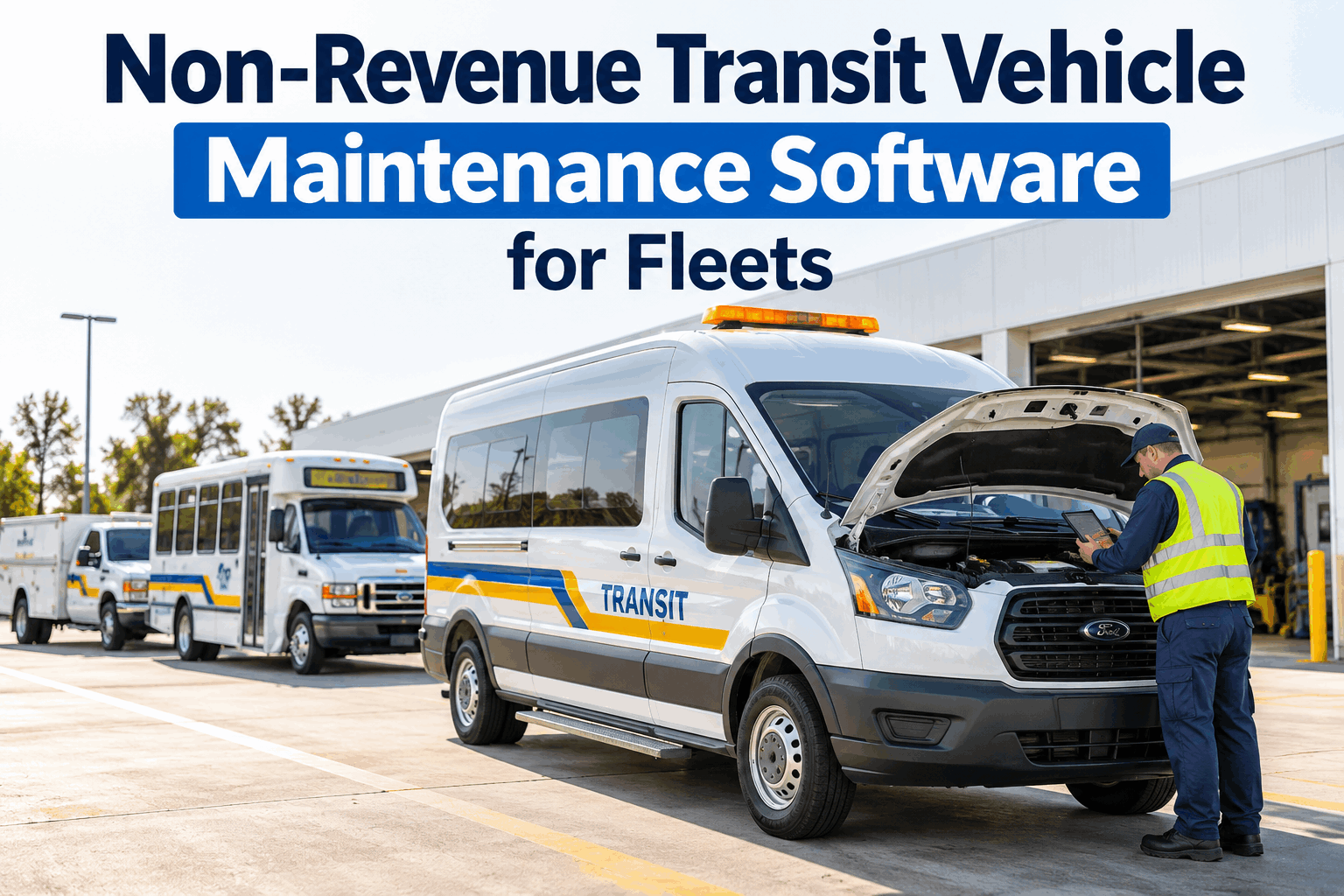
Public transportation authorities, regional commuter rail operations, and municipal transit agencies rely on dedicated non-revenue support vehicles to maintain fixed-route integrity, infrastructure safety, and continuous passenger service. In transit agency fleet administration, non-revenue vehicles (NRVs)—including supervisor response utility trucks, overhead catenary line maintenance rigs, track repair flatbeds, signal maintenance vans, transit police cruisers, and customer ADA shuttle relief vans—serve as the critical operational backbone that keeps buses and trains moving. However, because these auxiliary service trucks do not generate farebox revenue, their maintenance schedules and shift inspections are frequently neglected in favor of passenger-carrying rolling stock. When transit maintenance divisions rely on manual clipboards, paper pre-trip inspection slips, or ad-hoc whiteboards, non-revenue vehicles experience missed preventive maintenance intervals, undetected brake line deterioration, and critical liftgate interlock failures. An unexpected breakdown of a track-clearing wrecker or catenary repair truck immediately halts revenue rail corridors or delays urban bus headways, triggering severe Federal Transit Administration (FTA) State of Good Repair (SGR) non-compliance penalties and compromised National Transit Database (NTD) safety audits. Implementing specialized non-revenue transit vehicle maintenance software bridges this operational divide by pairing mobile pre-trip and pull-out inspections, structured PM-A/B/C service schedules, auxiliary equipment cycle tracking, and automated NTD asset reporting into a unified maintenance engine. To discover how automated auxiliary fleet intelligence protects your agency's support assets, book a technical demonstration with our transit asset management specialists or deploy your agency's support vehicle roster immediately through our free platform sign up.
Non-Revenue Transit Vehicle Maintenance Software for Fleets
The comprehensive operational and maintenance management blueprint for transit asset directors, non-revenue shop superintendents, and public transit safety leads. Streamline PM-A/B/C service intervals, enforce mobile pull-out readiness, inspect auxiliary winches and boom lifts, and pre-populate audit-ready NTD asset reports.
Keep Non-Revenue Transit Assets Mission-Ready and FTA-Compliant
Eliminate paper pre-trip clipboards, automate PM-A/B/C schedules across auxiliary support trucks, gate uninspected morning pull-outs, and organize audit-ready NTD compliance records starting from $3/vehicle/month with no hardware lock-in.
The Operational Imperative: Why Non-Revenue Vehicle Neglect Halts Transit Corridors
In public transit systems, revenue-generating buses and passenger trains receive the majority of capital funding and maintenance attention. Yet, the reliability of revenue service depends entirely on non-revenue support vehicles. If an overhead wire inspection truck breaks down due to an ignored hydraulic pump leak, an entire electrified light-rail line loses power during morning rush hour. If a supervisor field response SUV experiences brake failure en route to a bus collision, accident investigation and passenger transfer headways are severely compromised. Furthermore, the Federal Transit Administration mandates under Title 49 CFR Part 625 (Transit Asset Management) that public transit agencies monitor and document the State of Good Repair (SGR) of all capital assets, including non-revenue service vehicles. Transit agencies must report non-revenue fleet age, condition ratings, and Useful Life Benchmark (ULB) data annually on National Transit Database (NTD) Form A-15. When agencies manage auxiliary vehicles through disconnected spreadsheets or sporadic municipal garage drop-ins, vehicles fall into poor condition ratings, jeopardizing federal Section 5307 urbanized area formula grant apportionments. Dedicated non-revenue transit vehicle software integrates digital driver pull-out checks, PTO engine-hour tracking, and automated work orders into an auditable maintenance workflow. Transit directors and maintenance superintendents can review predictive auxiliary asset tracking by scheduling a tailored transit fleet management software demo or configure custom support vehicle profiles directly via our quick platform sign up.
Auxiliary PTO & Hydraulic Duty Cycle Tracking
Non-revenue vehicles spend hours idling while powering aerial booms, hydraulic winches, and high-output generators. FleetRabbit connects to CAN-bus telematics to track power take-off (PTO) hours, oil degradation curves, and hydraulic filter differential pressures independently of road odometer miles.
Automated PM-A/B/C Multi-Tier Scheduling
Schedules tailored service intervals: minor 3,000-mile safety and fluid walkarounds (PM-A), 6,000-mile brake lining, steering linkage, and driveline services (PM-B), and comprehensive annual electrical load and suspension overhauls (PM-C), preventing unexpected roadside failures.
Relief Shuttle ADA Lift & Interlock Checks
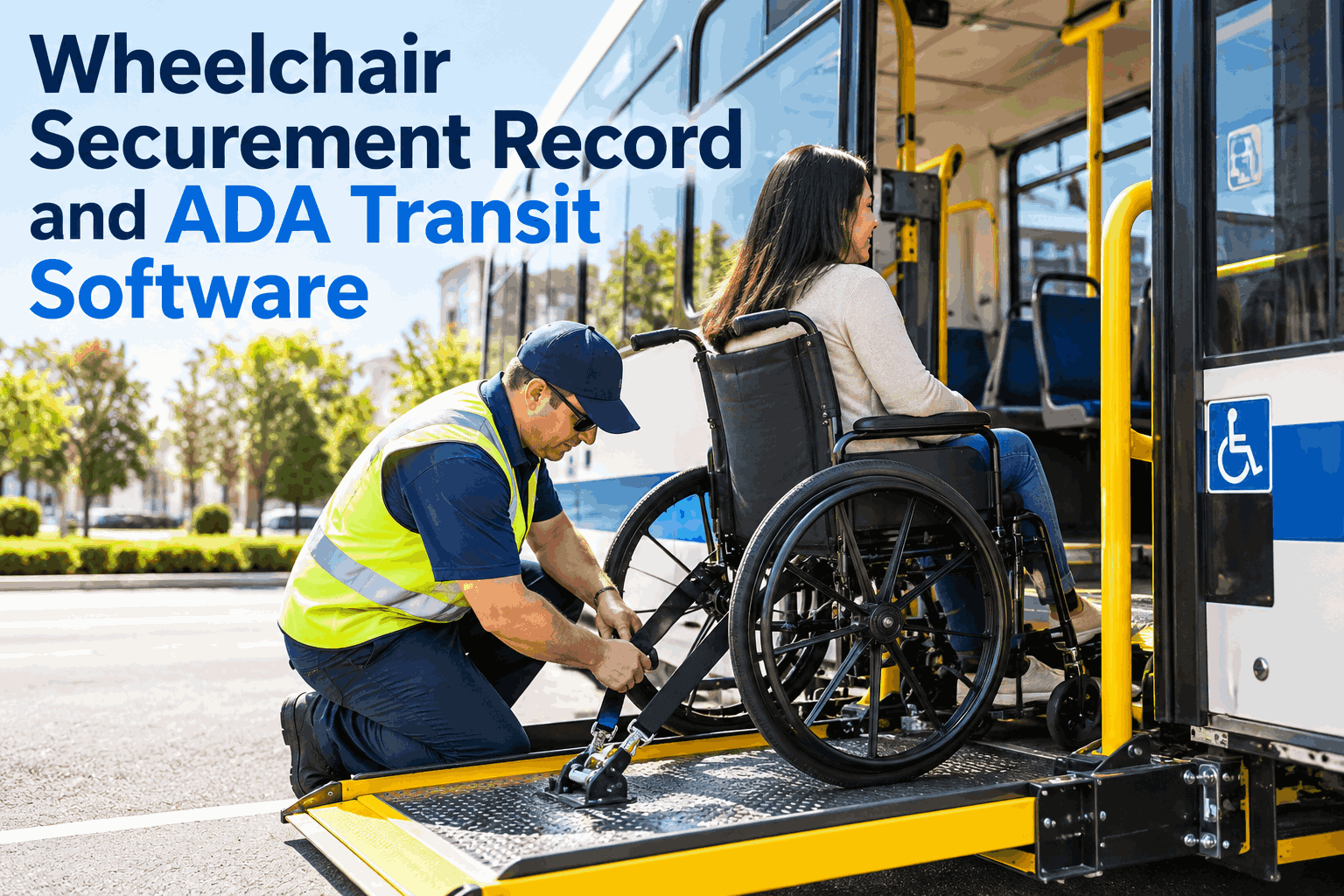
Auxiliary transit fleets frequently operate non-revenue passenger shuttles and supervisor relief vans equipped with wheelchair lifts. The system enforces ADA 49 CFR Part 38 pre-trip cycle verifications, testing outer roll stops, backup hand pumps, and interlock safety switches.
Automated NTD Form A-15 & TAM SGR Ledgers
Maintains an exportable cloud compliance vault of pre-trip inspection logs, mechanic work orders, parts receipts, and condition ratings. The platform pre-populates annual NTD asset forms, calculating remaining useful life and backlog metrics in seconds.
Direct Technical Matrix: Manual Paper Logs vs. FleetRabbit Non-Revenue Platform
Managing an auxiliary support vehicle fleet with paper clipboards, driver logbooks, and generic municipal shop databases leads to unmonitored mechanical wear, delayed emergency responses, and audit findings. Review how traditional paper-based methods compare directly against FleetRabbit's specialized non-revenue transit vehicle maintenance platform across core public transportation operational criteria. Transit authority executives and maintenance directors can evaluate custom PM workflows by scheduling an executive transit software evaluation demo or explore our pre-configured support vehicle inspection checklists via our self-service sign up.
| Non-Revenue Fleet Dimension | Paper Clipboards & Generic Spreadsheets | FleetRabbit Non-Revenue Transit Platform | Transit Agency & Taxpayer Advantage |
|---|---|---|---|
| Morning Pull-Out Readiness Gating | Subjective driver discretion; trucks roll with defects | Automated dispatch lock on failed critical pre-trip checks | Zero compromised auxiliary vehicles operate on transit corridors |
| Auxiliary PTO & Idle Hour Tracking | Ignored; service scheduled solely on odometer mileage | Automated J1939 CAN-bus PTO & engine-hour capture | Cuts premature hydraulic pump and diesel engine overhauls by 54% |
| Pre-Trip Inspection Verification | Pencil-whipping common; unverified signatures | Guided photo-enforced mobile eDVIR with timestamps | 100% indisputable operator accountability on every shift |
| National Transit Database (NTD) Reporting | Weeks of manual clerical work reconciling paper files | 1-click automated Form A-15 asset inventory exports | Guarantees compliance with FTA State of Good Repair (SGR) rules |
| Specialized Tool & Boom Certification | Paper certificates in shop binders; easily expired | Automated tracking of dielectric and OSHA lift tests | Protects utility technicians and ensures OSHA electrical compliance |
4-Stage Daily Support Vehicle Readiness and Maintenance Lifecycle
FleetRabbit standardizes non-revenue transit vehicle operations into an automated, four-stage workflow that connects morning pull-out inspections, real-time yard gating, certified mechanic work orders, and federal compliance archives. To explore how this automated cycle keeps your auxiliary support rigs in service, book an operational non-revenue fleet walkthrough demo with our team.
Driver Pull-Out eDVIR & Equipment Check
The operator completes a mobile inspection, verifying chassis fluids, tire pressures, emergency beacons, hydraulic boom locks, and recovery winches before clearing the facility gate.
Automated Defect Triage & Yard Gating
If any critical safety component fails (such as an unlatched boom pin or low hydraulic fluid), the platform flags the vehicle as Out of Service, alerts central dispatch, and opens a repair ticket in the shop.
Certified Technician Repair & Sign-Off
Certified shop technicians pull required parts from digital inventory, execute repairs according to OEM specifications, and sign off on roadworthiness using digital signatures on glass.
Return to Service & NTD Audit Synchronization
The completed repair clears the dispatch lock, updates the vehicle service history, logs lifetime operational expenses, and synchronizes condition ratings with the agency's annual NTD asset ledger.
Financial Capital Stewardship: Eliminating Auxiliary Transit Fleet Budget Waste
Operating a non-revenue transit fleet without specialized maintenance software creates compounding financial losses across roadside towing calls, secondary revenue delays, premature component degradation, and regulatory audit penalties. When an uninspected auxiliary wrecker breaks down on the way to clear a stalled commuter bus, thousands of commuters are stranded, schedule reliability drops, and the transit agency incurs substantial overtime labor. Furthermore, because non-revenue vehicles idle extensively while operating auxiliary machinery, conventional mileage-based oil changes lead to severe engine sludging, clogged diesel particulate filters (DPFs), and unexpected turbocharger failures. Identifying these common operational drains helps transit executives build an airtight business case for automated maintenance software before transit boards and regional transportation commissions. Calculate your agency's exact cost recovery by booking an operational transit fleet assessment demo or get started directly via our rapid platform sign up.
Top Causes of Transit Agency Budget Waste in Non-Revenue Fleets
Transit Compliance Platform Capabilities
Triggers preventive maintenance work orders based on actual PTO hours, engine run hours, and mileage rather than generic calendar intervals.
Requires operators to capture timestamped photographs of critical components, tow hitches, and hydraulic booms before clearing pull-out.
Runs on standard smartphones and mobile tablets, connecting directly to existing vehicle telematics modems and agency ERP accounting software.
ROI & Public Transit Stewardship Framework for Operations Leadership
When transit agency leadership evaluates maintenance management software, board members and finance directors must measure financial return across vehicle longevity, risk mitigation, regulatory compliance, and support asset availability. FleetRabbit delivers quantifiable financial return across all primary auxiliary transit operating categories. To review your customized non-revenue fleet savings forecast, schedule an executive briefing demo with our transit team or start configuring your support fleet profiles today with a free account.
Extended SGR Useful Life
Meter-based preventative maintenance and oil sampling extend auxiliary service vehicle life by up to 4.2 years, delaying expensive multi-ton chassis replacements.
Zero Revenue Delays
Ensuring wrecker trucks, signal repair vans, and catenary line rigs are always operational prevents track blockages and keeps urban buses on schedule.
FTA Formula Grant Defense
Audit-ready NTD Form A-15 asset inventories and condition ratings ensure compliance with FTA Part 625, protecting critical federal Section 5307 grant allocations.
Frequently Asked Questions: Non-Revenue Transit Vehicle Maintenance Software
What is a non-revenue transit vehicle (NRV) and why is its maintenance critical?
A non-revenue vehicle is any public transit support asset that does not directly carry fare-paying passengers. This includes supervisor utility vehicles, track maintenance trucks, overhead catenary line repair rigs, emergency bus recovery wreckers, signal repair vans, transit police cruisers, and relief vans. Maintaining these vehicles is critical because a mechanical failure on a support truck directly leads to blocked rail lines, delayed bus routes, and passenger stranding.
How does the software handle power take-off (PTO) and auxiliary engine hours?
Non-revenue maintenance vehicles spend long periods stationary while powering hydraulic lifts, cranes, winches, or air compressors. FleetRabbit connects directly to the vehicle's SAE J1939 CAN-bus ports to track total PTO hours and engine runtime independently of odometer miles, triggering hydraulic oil and filter services based on true mechanical wear rather than road travel.
How does digital maintenance tracking assist with National Transit Database (NTD) reporting?
Under Federal Transit Administration (FTA) Transit Asset Management (TAM) rules, transit agencies must report all non-revenue service vehicles annually on NTD Form A-15. Agencies must document vehicle age, condition ratings on a 1-to-5 scale, and performance against Useful Life Benchmarks (ULB). FleetRabbit maintains this data continuously, pre-populating audit-ready NTD reports with a single click.
What occurs when an auxiliary vehicle fails a morning pull-out inspection?
When an operator records a critical defect during a mobile pre-trip inspection (such as an inoperative hydraulic outrigger lock or a failed brake air build test), FleetRabbit immediately flags the vehicle as Out of Service. The software generates a prioritized repair work order for the garage and alerts dispatch to ensure the unit cannot be dispatched until a certified mechanic signs off on the repair.
Upgrade Your Transit Agency's Auxiliary Fleet Operations Today
Eliminate unexpected support vehicle breakdowns, protect corridor headways, automate PM-A/B/C scheduling, and ensure complete FTA SGR compliance. Deploy FleetRabbit today with zero proprietary hardware lock-in.
Share This Story, Choose Your Platform!
From our blog

Wheelchair Van Maintenance Software for ADA Transit Compliance

Hybrid Transit Bus Maintenance Software for Transit Agencies

Reefer Downtime Tracking & Temperature Excursion Software

Transport Refrigeration Unit Temperature Monitoring Software

Government Fuel Card Integration for Fleet Management

Unauthorized Vehicle Use Detection Software for Government Fleets

Snowplow Operator Safety Software for Municipal Fleets