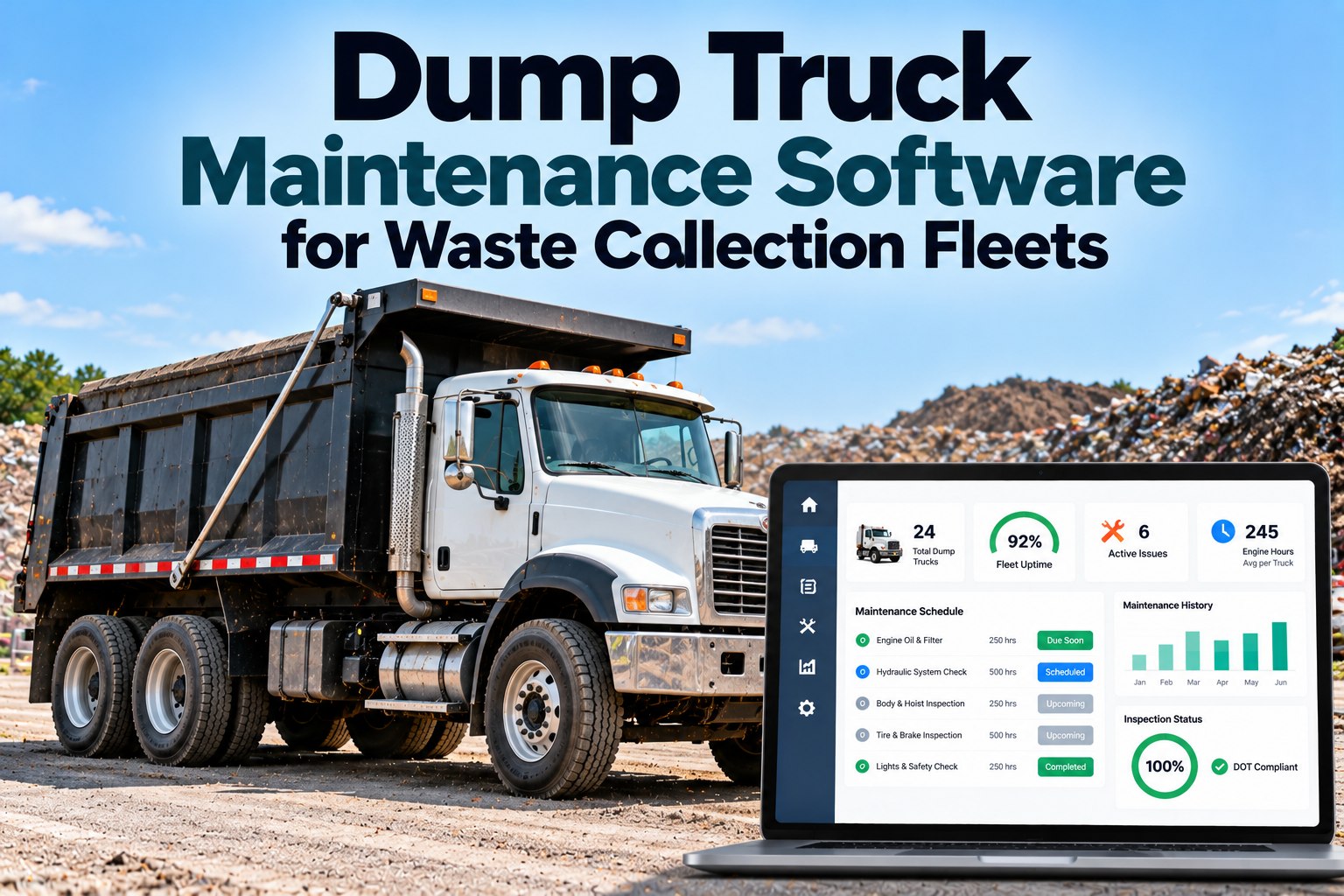
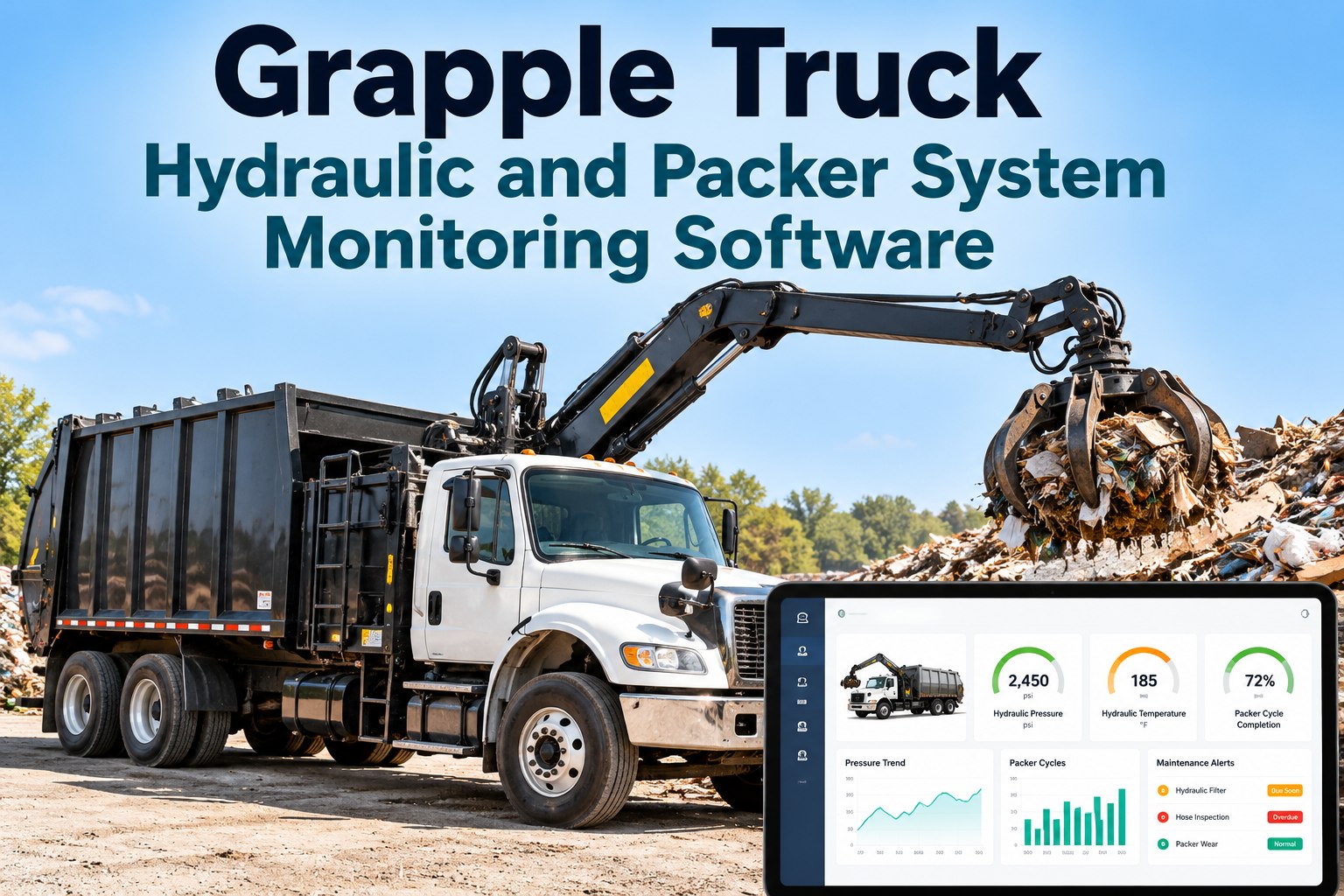
Dump truck maintenance software for a waste fleet has to cover three jobs at once. The same truck runs highway miles to the landfill, lifts a loaded body on a hydraulic hoist, and backs onto soft, uneven ground at the tipping face. Each job wears different parts and carries different risks. This guide gives you a maintenance list for each one, plus a way to keep every check photo-verified. You can also see it on your own trucks in a 20-minute demo.
Waste & recycling fleets · Dump trucks
One truck, three jobs: highway hauler, hydraulic lift and landfill machine. Most maintenance plans only cover the first.
For waste fleets running dump trucks on bulky-item and brush collection, transfer-station hauls and landfill work.
Highway
Brakes, tires, load
Tipping face
Level, hoist, tailgate
Shop
Body propped, then work
Highway Hauler, Hydraulic Lift, Landfill Machine: The Three Maintenance Lists Every Waste Dump Truck Needs
A waste dump truck rarely fails as one machine. The chassis wears like any heavy truck, the hoist wears like any hydraulic lift, and the landfill punishes tires, suspension and pins in ways highway trucks never see. Splitting the maintenance plan by job makes sure none of the three gets skipped.
Brake adjustment, hoses and drums
Steer and drive tires, wheel ends
Lights, reflectors and load cover
Engine, cooling and air system
Measured by: miles and engine hours
Hoist cylinder, seals and mounts
PTO, pump, valve and lines
Hinge pins and pivot bushings
Body prop, pull cable and controls
Measured by: engine or PTO hours
Rear tire pressures matched side to side
Suspension even under load
Tailgate latches and hinges
Box floor and sides clear of buildup
Measured by: dump cycles and days
If those three lists live in three different places — a paper DVIR, a shop whiteboard, someone's memory — the gaps show up at the worst possible moment. Putting them on one record per truck is the first step, and you can set that record up free for three trucks.
A Raised Dump Body Is the Most Dangerous Place in a Waste Fleet Shop
OSHA's 2006 safety bulletin on unintended movement of dump truck bodies counted 31 accidents over ten years in which an elevated bed was released or moved unexpectedly. Nearly all of them were fatal, and most happened during routine work: hydraulic and air line repairs, welding, electrical work and greasing. In a majority of those accidents, body props were not used or were used improperly.
How a raised body comes down without warning
Control operated by accident
Release cable pulled by mistake
Hydraulic failure
Air line reconnected too early
NIOSH case file · West Virginia, 2000
A head mechanic crawled under a raised dump bed to fix brake lights while a coworker went to get wooden blocks. The truck had no permanently attached body prop, and its pull-off cable had been replaced with plastic-coated clothesline that looked like a wire. Investigators found the bed most likely came down when he mistook the cable for wiring. NIOSH's first recommendation: strong, positive supports under the body before any inspection, adjustment or repair.
Federal construction rules (29 CFR 1926.601(b)(10)) require dump bodies to have a positive means of support, permanently attached and lockable. OSHA also notes that props rust and get damaged, so they need maintenance too. That makes the body prop and the pull cable items worth inspecting and photographing on every PM, not something you assume is fine. A walkthrough shows how a prop check becomes a required step before any under-body work order can close.
Dump Truck Tip-Overs at the Tipping Face Often Start With a Maintenance Item
Most tip-overs happen with the box raised on ground that isn't level, especially when material sticks near the top of the box. A Construction Safety Association of Ontario advisory, published through CPWR's eLCOSH library, lists the mechanical conditions that make it worse. Each one is a side-to-side check your shop can make before the truck reaches the landfill.
Left side
Check in pairs
Right side
Rear tire pressure
Equal, checked daily
Rear tire pressure
Suspension under load
Even, weak parts replaced
Suspension under load
Hinge pin and bushing
No play, greased
Hinge pin and bushing
Hoist cylinder
Correct size and pressure rating — never downsized
Hoist mounts
Maintenance factors from the Construction Safety Association of Ontario advisory "Dump Truck Tip Overs," hosted on eLCOSH (CPWR).
The same advisory adds two operating habits that belong on the driver's checklist: confirm the tailgate is unlocked before raising, and dump only on reasonably level ground. A rough patch welded near the top of the box can also trap sticky waste, so box condition belongs on the preventive maintenance schedule too.
Proof, not checkmarks
Get a photo of every prop, tire and tailgate check, time-stamped even when the landfill has no signal
Brake Violations Parked About One in Seven Inspected Heavy Trucks in 2025
A loaded dump truck hauling to a landfill brakes hard, often and heavy. During the Commercial Vehicle Safety Alliance's 2025 Brake Safety Week, inspectors checked 15,175 commercial vehicles and placed 2,296 out of service for brake violations, a 15.1% rate. Brakes out of adjustment — the 20% criterion — were the most common reason.
No brake out-of-service violations · 84.9%
CVSA Brake Safety Week, August 24–30, 2025, as reported by Fleet Maintenance.
The defense is a pre-trip that checks brake hoses, air loss and pushrod stroke, a DVIR record that sends defects to the shop the same morning, and brake service on a mileage and engine-hour schedule. If you want that pre-trip on drivers' phones with photos, book a short demo.
A Dump Truck Preventive Maintenance Rhythm by Shift, Week, Quarter and Year
Your body and hoist manufacturers set the exact intervals. The pattern below follows a published hoist preventive maintenance plan from Galbreath (Wastequip) in Waste Advantage Magazine and adds the dump-body checks covered above.
Every shift
Pre-trip with photos; hoist-up and backup alarms; hydraulic leaks and oil level; tailgate latches; tire pressures; lights
Weekly or ~40 hours
Grease every fitting, including hinge pins and hoist cylinder pivots; inspect cylinder rod and fittings
Monthly
Structure and welds on the body, sub-frame and hoist mounts; body prop and pull cable condition
Quarterly
Hydraulic oil checked for color, smell and feel; suction strainer cleaned
Every 6 months
Hydraulic oil filter and breather replaced
Yearly
Hydraulic oil replaced or filtered to spec; full body, hoist and chassis inspection
Weekly greasing tied to roughly 40 service hours is a good example of why engine-hour scheduling matters: a truck doing double shifts in leaf season reaches those hours far sooner than the calendar says.
How FleetRabbit Keeps Waste Dump Truck Maintenance Photo-Verified on Every Route, Even Offline
FleetRabbit puts all three maintenance lists on one record per truck, with photo proof attached to each check.
Unit 47 · tandem dump · pre-trip
Synced 6:41 a.m. · completed offline
Photo
Body prop stowed, latch secure
Pass
Photo
Rear tires, left and right
Pass
Photo
Hoist cylinder seal, weeping
Defect
Work order opened for the shop · parts checked against stock
DOT-ready inspections
Highway, hoist and landfill items in one
mobile inspection, photo required where you choose
Works offline
Checks completed at a landfill or rural haul sync when signal returns, with original time stamps
Engine-hour PM
Greasing, filters and oil due on engine hours, miles or days, whichever comes first
Audit-ready by default
Every defect, repair and photo on one history for DOT, OSHA or a council review
What the 20-minute demo covers
A dump truck pre-trip with photo-required items
A hoist defect turning into a work order
A body-prop step that has to be completed first
Greasing and filters scheduled on engine hours
Dump Truck Maintenance Software for Waste Fleets: Common Questions
How often should a dump truck hoist be greased?
Follow your hoist manufacturer. A common pattern is every fitting weekly or about every 40 service hours, whichever comes first, with more frequent greasing in heavy or wet use.
Is a body prop required on a dump truck?
Under 29 CFR 1926.601(b)(10), dump bodies on construction trucks need a permanently attached, lockable means of support, and bodies must be fully lowered or blocked during repairs. It is also basic shop safety on any dump truck.
What causes dump trucks to tip over when dumping?
Mostly a raised box on uneven ground, especially when material sticks near the top. Uneven tire pressures, weak suspension on one side, worn pins and worn or undersized hoist cylinders make it worse.
Why do waste fleets need photo-verified inspections?
A checkmark shows someone tapped a box; a time-stamped photo shows the prop, tire or seal itself. Photos also help the shop diagnose a defect before the truck arrives.
Can drivers complete inspections without signal?
Yes. FleetRabbit's mobile inspections work offline at landfills and on rural hauls and sync when the phone reconnects.
How do we get started?
Keep Every Waste Dump Truck Safe on the Highway, Under the Hoist and at the Tipping Face
Three maintenance lists, one record per truck, and a photo behind every check — including the ones done where there's no signal.
Free for up to 3 trucks · No credit card required
October 22, 2026
By Emily Parker
All Posts