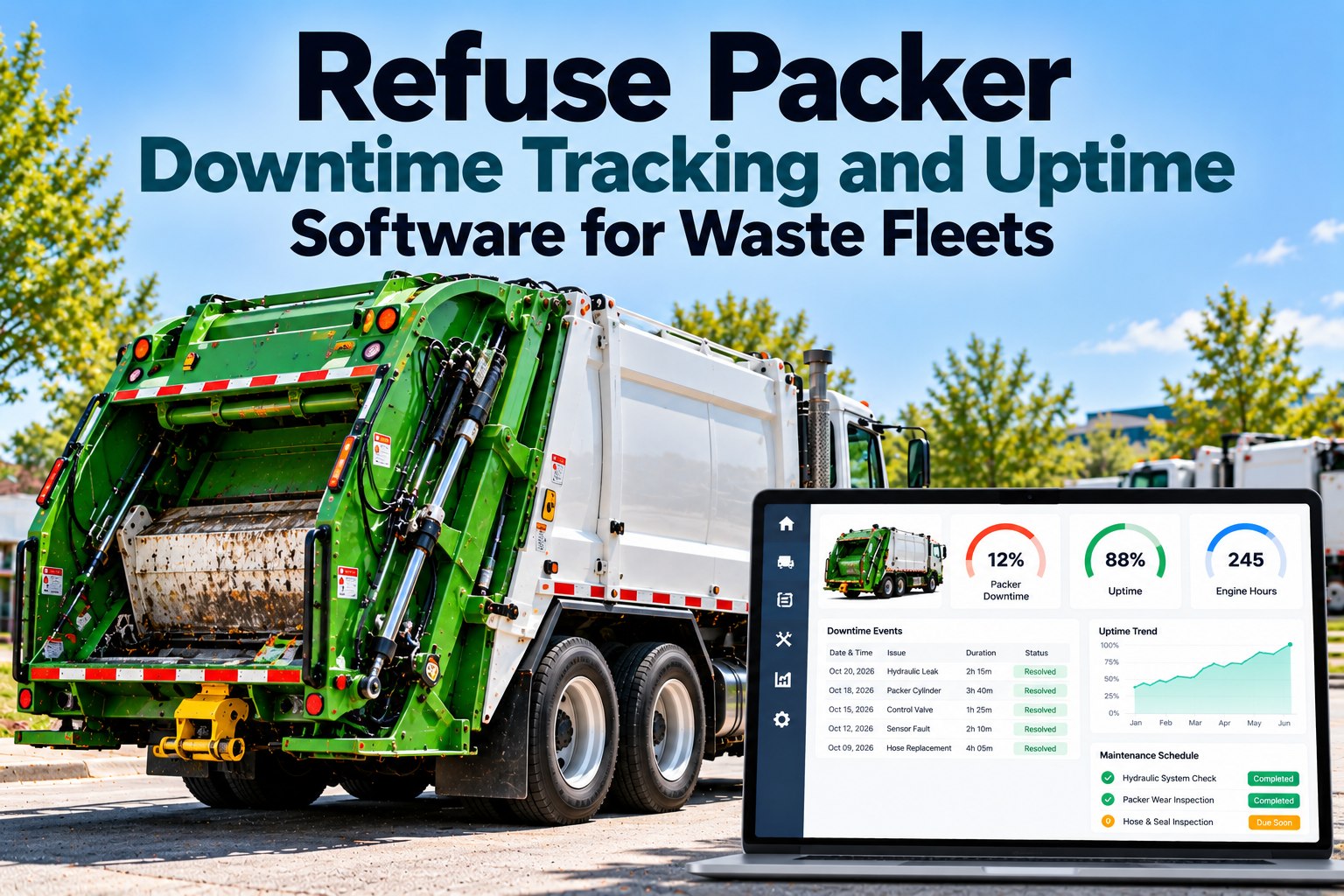
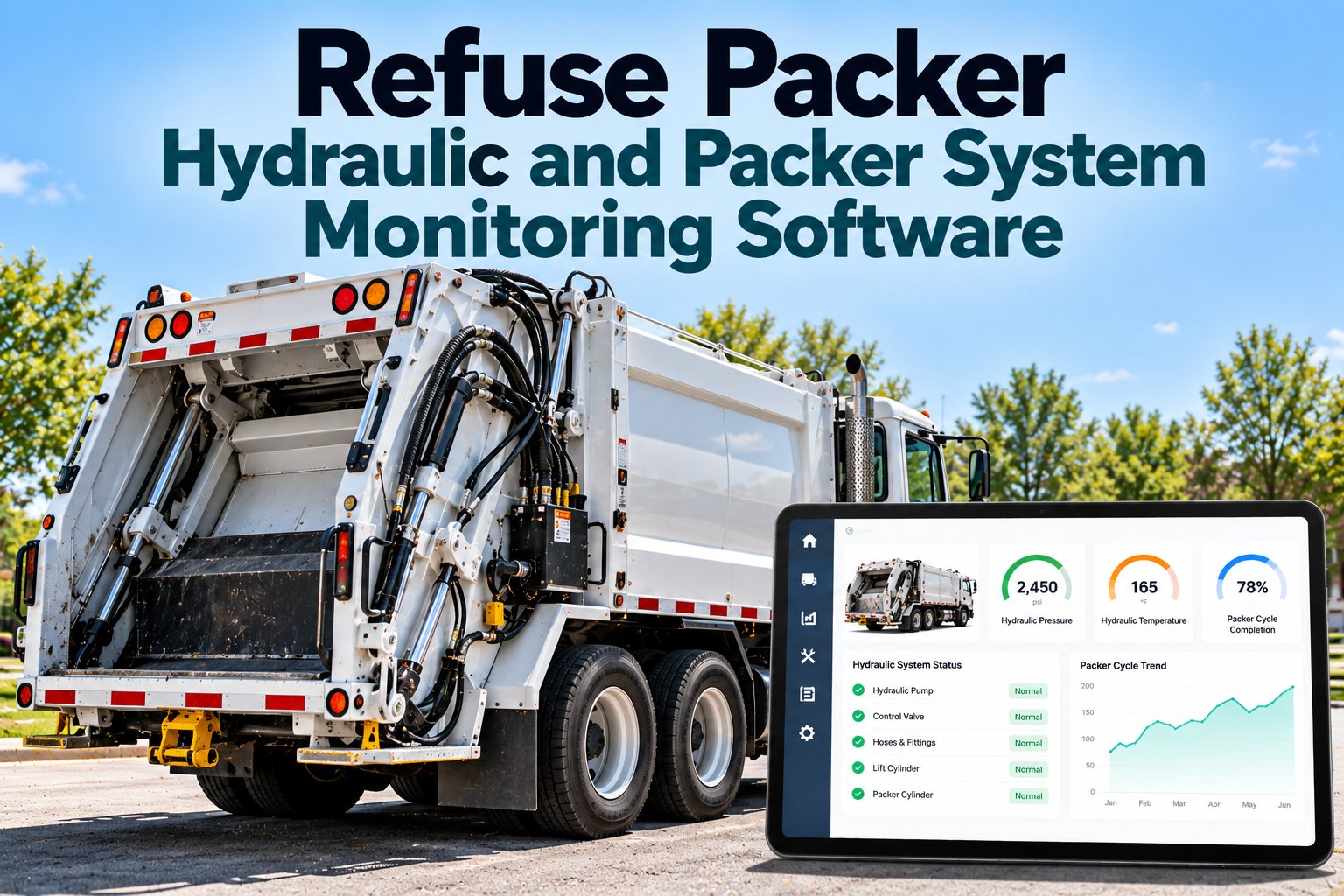
Refuse packer downtime tracking software exists for one reason: a packer truck in the shop never appears as a cost line, it appears as a street that didn't get picked up. Most waste fleets know roughly how many trucks are down today. Far fewer know why, for how long, or which part of the wait they could have shortened. This guide shows how to time-stamp every downtime event, which numbers to review each week, and how to see it running on your own fleet in a 20-minute demo.
Waste & recycling fleets · Packer uptime
Every day a packer sits in the yard, someone else's truck runs its route, a crew works overtime, or a street waits another day.
For fleet managers, shop leads and route supervisors who need more trucks ready at rollout, not just more trucks.
One downtime event, broken into the waits you can shorten
Illustrative split. In many shops the longest stretch is the wait, not the wrench time.
What Refuse Packer Downtime Looks Like When a City Auditor Finally Measures It
Most fleets never measure downtime closely enough to argue about it. Toronto's Auditor General did. Its April 2019 operational review of the city's fleet services, titled Lengthy Downtime Requires Immediate Attention, grouped garbage trucks and packers with the city's other heavy-duty units and published the numbers.
Audit file
City of Toronto fleet review, heavy-duty units including garbage packers
Time out of service
51 business days per heavy-duty unit in 2018, against a target of 31–48
Down on a given day
About 31% of heavy-duty units (207 of 672) in early 2019
Repeat repairs
24% of Class 8 repairs — garbage packers among them — came back within 60 days
Parts on hand
21% of parts requests filled at the point of purchase, against an 85% target
Planned work
Preventive maintenance at 20% of services, against a 60% target
Warranty
About $680,000 in parts failed under warranty; about $72,000 was claimed
City of Toronto Office of the Auditor General, Fleet Services Operational Review, Phase One (April 26, 2019).
None of those findings is about a broken truck. Each one is about a record: a wait no one timed, a repair no one linked to the last one, a warranty no one checked. That is the gap downtime tracking closes, and you can start closing it on three trucks free.
Why More Spare Garbage Trucks Won't Fix Refuse Packer Downtime on Their Own
The usual answer to downtime is more spares. Two US cities show the limits of that answer.
Dallas, Texas · January 2023
Owned 203 standard refuse trucks against a daily need of 148 — a 37% spare ratio, higher than peer agencies. Sanitation still often ran below its daily minimum, citing fleet maintenance delays and a parts and labor shortage. Weekly missed-garbage reports peaked at 1,864, up from roughly 300–410.
Riverside, California · September 2024
Eight trucks in an aging fleet broke down in late August, and a heat wave sidelined more. At times more trucks were idle than running, pickup delays stretched to two or three days, and the city invoked an emergency contract provision so a private hauler could cover routes while 10 new trucks were on order.
The repair backlog grew faster than the shop could clear it.
Dallas: City of Dallas sanitation collection memo, January 2023. Riverside: City of Riverside news release, September 17, 2024.
Spares buy time, and they cost capital, insurance and maintenance while they wait. Route optimization in waste collection also assumes the trucks will be available. Downtime only shrinks when you know which waits are long and why. A short walkthrough shows how those waits are logged.
Five Timestamps and One Reason Code: How to Record Every Refuse Packer Downtime Event
Downtime tracking doesn't need a complicated system. It needs the same five timestamps on every event and one honest reason code. Then you can see which part of the wait is yours to fix.
Swipe sideways to see every column
Timestamp
Starts the clock on
Usually owned by
What shortens it
Reported down
Waiting for a bay
Driver, supervisor
Defects reported on the pre-trip, not at 2 p.m.
In bay
Diagnosis
Shop lead
Photos and notes from the driver's report
Parts ordered
Waiting for parts
Parts, purchasing
Common packer parts stocked before they're needed
Work started
Repair
Technician
Repair history for the unit at hand
Back on route
Check-out ends the event
Shop lead, driver
A quick check-out so the truck doesn't come back
Reason codes that keep packer and chassis apart
Packer hydraulics
Packer body / blades
Tailgate / lock / seal
Engine / drivetrain
Brakes / tires
Electrical / lights
Accident damage
Scheduled PM (planned)
Splitting packer codes from chassis codes matters because the fixes differ: a body that keeps going down points to wear parts and lubrication, while a chassis points to the engine and brake schedule. Stocking the packer parts that keep showing up as "waiting for parts" is where parts and inventory tracking pays off fastest, and you can log your first downtime events free.
Know which truck is down, why, and since when — before the morning rollout meeting
Five timestamps per event. One reason code. Every truck on one board.
Six Refuse Packer Uptime Measures Worth Reviewing at Every Monday Fleet Meeting
Once events are time-stamped, the weekly review is simple arithmetic. These six measures map directly to the problems in Toronto's audit.
Rollout availability
Trucks ready at rollout ÷ trucks the routes need
The number route supervisors actually feel.
Days down per event
Total days out of service ÷ downtime events
Split by segment to find the longest wait.
Planned share of shop work
PM work orders ÷ all work orders
Toronto's target was 60%; it was running near 20%.
Repeat repairs
Same unit, same system, back within 30 or 60 days
A sign the first fix didn't hold.
Parts wait
Hours from parts ordered to parts on the bench
Shows which packer parts to stock.
Warranty recovered
Warranty claims filed ÷ failures still under warranty
Recovered money most fleets never ask for.
Raising the planned share means putting body and chassis service on a preventive maintenance schedule driven by engine hours, so more shop visits are booked instead of forced. If you want to see these measures built from real work orders, book a 20-minute walkthrough.
Catch Packer Downtime in the Yard at 5 a.m. With the Garbage Truck DVIR, Not on Route at Noon
The cheapest downtime event is the one that starts in the yard. The same defect costs very different amounts depending on where it is found.
Found on the pre-trip
Spare truck swapped in before rollout
Route leaves on time with its own crew
Shop gets the truck with photos and notes
One downtime event, clearly coded
Found on route
Truck stopped with a partial load aboard
Tow or road call, plus a second truck to finish
Crew overtime and late or missed pickups
Possible hydraulic spill on a public street
Federal rules already require a driver vehicle inspection report on commercial trucks. The difference is whether it covers the packer body too, and whether a defect on it opens a work order right away. A garbage truck DVIR that includes the body turns a pre-trip into the first timestamp of the downtime record.
How FleetRabbit Tracks Refuse Packer Downtime From First Defect to Back on Route
FleetRabbit puts every truck's status, every open downtime event and every repair on one record that drivers, the shop and managers share.
Fleet status board
Sample view
Ready
Unit 211 · rear loader
Unit 214 · rear loader
Unit 305 · side loader
Scheduled PM
Unit 218 · 500-hour service
Waiting for parts
Unit 209 · slide cylinder seal kit
Packer hydraulics · day 3
Down
Unit 302 · arm won't lift
Reported on pre-trip · 5:12 a.m.
Defect to work order
DOT-ready mobile inspections with photos, offline; a failed item opens a work order with the first timestamp
Downtime by segment
Bay, diagnosis, parts, repair and check-out time logged on each event, with reason codes
Engine-hour PM
Planned service due on engine hours or miles, so more shop time is scheduled
Audit-ready history
Every truck's events, repeat repairs and parts in one record for council, warranty or DOT
What the 20-minute demo covers
A pre-trip defect opening a downtime event
One event moving from bay to parts to repair
Reason codes separating packer from chassis
The Monday view: availability, repeats and parts waits
Refuse Packer Downtime Tracking: Questions Waste Fleet Managers Ask
What counts as refuse packer downtime?
Any time a truck that should be available for a route can't run it — from the moment a defect is reported to the moment the truck is checked out and back in service. Scheduled PM counts too, but code it as planned so you can tell it apart.
How is availability different from uptime?
Uptime is how much of the time a truck could run. Rollout availability compares the trucks ready each morning with the trucks your routes need. Route supervisors feel the second one first.
What spare ratio should a waste fleet keep?
It depends on fleet age, shop capacity and parts supply. Dallas ran a 37% spare ratio in 2023 and still fell short some days, so measure your downtime segments before buying more spares.
Should packer and chassis downtime be tracked separately?
Yes. They fail for different reasons and are fixed by different people and parts. Separate reason codes show whether the body or the truck is causing most lost days.
Does downtime tracking help with warranty claims?
It does. When each repair is tied to a unit, a part and a date, failures still under warranty are easy to spot. Toronto's audit found roughly $680,000 in warranty-period failures with only about $72,000 claimed.
How fast can we start?
Ready at rollout
Put Every Refuse Packer Downtime Event on the Clock and Win Back Route Days
Time-stamp every wait, code every cause, review six measures every week, and stop paying for spares to cover problems you can fix.
Free for up to 3 trucks · No credit card required
October 22, 2026
By Sam Parker
All Posts