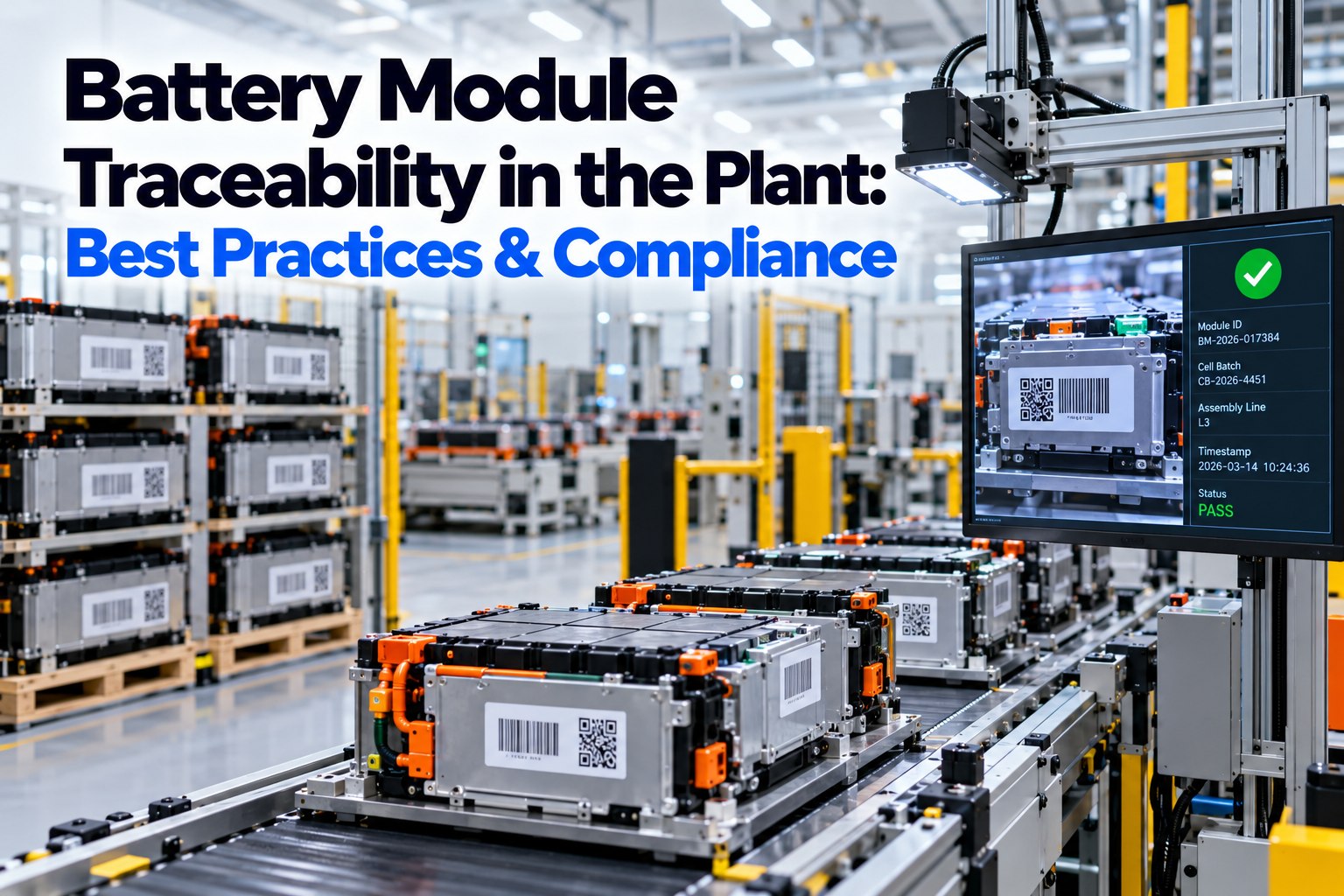
When a supplier reports a problem with a cell lot, the question that matters is how fast the plant can answer it: which modules contain those cells, which packs contain those modules, and where every one of them is now. If the links between cell, module and pack were recorded at the moment each was built, that answer takes minutes. If they have to be rebuilt from spreadsheets and shipping files, it can take days, and every day more product leaves the plant. This guide covers cell-to-module-to-pack linkage, the capture points that matter, how to design traceability queries for containment, and the transport and recall rules that set the deadlines. To see how batch holds and shipment records work in FleetRabbit, book a short walkthrough with our team.
Battery module traceability · plant and supply chain
One chain from supplier lot to the vehicle that carries the pack
Each link is written when it happens. Break one and containment turns into guesswork.
Supplier lot
Material and cell batch from the supplier
Cell
Serial number, cell type, test summary reference
Module
Module serial, cells inside it, line and time
Pack
Pack serial, modules inside it, BMS version
Vehicle or customer
VIN or customer order, shipment and trip
Containment needs the chain to work in both directions
Traceability is usually described as one record. In a containment event it has to answer two different questions, often within the same hour.
Backward trace
“This pack failed. Where did its parts come from?”
Pack → modules → cells → supplier lot
Used for root cause: which cell lot, line, station or shift is common to the failures.
Forward trace
“This lot is suspect. What did it go into, and where is it now?”
Supplier lot → cells → modules → packs → locations
Used for containment: every affected unit, whether it is in stock, in transit or delivered.
Most plants test the backward trace because it is what quality engineers use every day. The forward trace is used rarely, under pressure, and it is the one that fails when links are missing. Design and test for both.
Seven capture points, and which system owns each one
The links inside the product are made on the production line and belong in the manufacturing system. The links to physical places are made at the gate, the dock and the warehouse. A complete forward trace needs both, so agree which system records what before the first serial is printed.
| Capture point | Identity recorded | Context recorded | Usually owned by |
|---|
| Inbound receipt | Supplier lot and batch, quantity, condition | Trailer, seal, arrival time | Logistics |
| Put-away and stock | Batch and location | Zone, aisle, rack, level; hold status | Logistics |
| Cell to module | Cell serials into module serial | Line, station, time, operator | Manufacturing system |
| Module to pack | Module serials into pack serial | Line, station, time, test result | Manufacturing system |
| Rework or swap | Old and new serials | Reason, time, who approved | Manufacturing system |
| Outbound shipment | Pack or module serials on the load | Trailer, seal, trip, customer | Logistics |
| Delivery | Serials received | Proof of delivery, shortages, damage | Logistics |
The gaps tend to sit at the hand-offs. A module that is reworked on the line but never re-linked, a pallet moved between warehouses without a transfer record, or a pack loaded onto a different trailer from the one planned all leave a hole that only shows up during a containment search.
Five linkage rules that keep the chain complete
1
Serialise at the earliest point
Give every cell, module and pack a unique ID as soon as it exists, and never reuse one.
2
Record the link when it happens
Write the parent and child link at the station that makes it, not from a report later.
3
Record every change
Rework, swaps and repairs create new links; keep the old ones with a reason.
4
Keep the scrap
A scrapped module still belongs in the tree, or the population count will be wrong.
5
Link the logistics events
Receipt, location, holds, shipments and deliveries tie the tree to physical places.
The logistics half of the chain is where packs leave the building
Book a demo to see batch holds by location, transfers with seals at both ends, and outbound trips linked to proof of delivery.
A containment query, step by step
Here is what a forward trace has to produce when a supplier flags a cell lot. Each step takes its input from the one before, so a missing link at any step makes the answer incomplete.
1
Find the cells
All cell serials received under the suspect supplier lot, from the inbound receipt.
2
Find the modules
Every module containing any of those cells, including reworked modules.
3
Find the packs
Every pack containing any of those modules, including packs built with swapped modules.
4
Find where each one is now
Unused cells, modules and packs by status and location, and shipped packs by trip and customer.
On site, released
Put on hold now, so nothing more is built or shipped
On site, already on hold
Confirm the hold covers every affected serial
In transit
Identify the trailer and trip; contact the carrier and consignee
Delivered
Identify the customer and delivery record for notification
The answer is a list sorted by location and status, not a single number. The plant acts on the first two groups itself. The last two need the carrier, the customer and possibly the regulator, which is why their trip and delivery records matter as much as the build records.
Holds that follow the trace: from a list of serials to stock that can’t move
A containment list is only useful once it changes what people can do. The units on it need to stop moving: no picking, no building into the next stage, no loading onto a trailer. That needs a hold in the system that controls stock and dispatch, applied to every batch and location the trace returned, not a spreadsheet emailed to the warehouse. Put the hold on the widest scope the evidence supports, then narrow it as the investigation clears units. Releasing a hold too early costs far more than holding good stock for an extra day.
Every hold and release should carry a reason and the name of the person who approved it. When the investigation closes, the record should show which units were held, which were released and why, which were scrapped, and which shipped units were followed up with customers. That record is what a regulator, a customer or your own leadership will ask to see.
Common gaps that break a forward trace
Rework not re-linked
A cell replaced in a module without updating the genealogy.
Mixed lots on a pallet
Receiving records one lot for a pallet that contained two.
Unrecorded transfers
Stock moved between buildings on a shuttle with no transfer record.
Load changes at the dock
Packs loaded onto a different trailer from the one planned.
Query performance: design the trace for the day you need it fast
A containment query that works on a test database can take far longer on years of production data. Performance comes from design decisions made long before the incident.
Store links as links
Keep parent and child serials as direct records, not buried in free text or attached reports that have to be read.
Index by every ID you search on
Supplier lot, cell, module, pack, trip and customer order should all be lookup keys.
Keep one identifier per unit
Translating between different numbering schemes in each system is where queries slow down and break.
Drill it, and time it
Run a mock containment each quarter from a real lot and record how long the full forward trace takes.
The number to report is time to containment: from the moment a lot is flagged to the moment every affected unit on site is on hold and every unit outside the plant is identified. Track it from each drill. If it rises as production grows, the trace needs work before a real event tests it.
The rules that set the clock: transport, recall and the battery passport
Transport
Modules and packs are lithium batteries too
Under 49 CFR 173.185 each must be of a type that meets UN 38.3 testing, with a test summary available. Damaged or suspect units move only by highway, rail or vessel, packaged as damaged or defective.
Recall, U.S.
Five business days to report a defect
Under 49 CFR Part 573 a vehicle or equipment manufacturer must report a safety defect within five business days of determining it exists, then supply the affected population and how it was identified.
EU market
Battery passport from 18 February 2027
Regulation (EU) 2023/1542 requires a digital passport with a unique battery identifier for EV batteries and industrial batteries above 2 kWh, built from manufacturing and supply chain data.
All three rely on the same chain. The recall population comes from the forward trace, the passport comes from the build and supply data, and moving suspect units safely depends on knowing which units they are. This is general guidance, not legal advice; check the obligations that apply to your products and markets.
Where trucks and trailers enter the traceability record
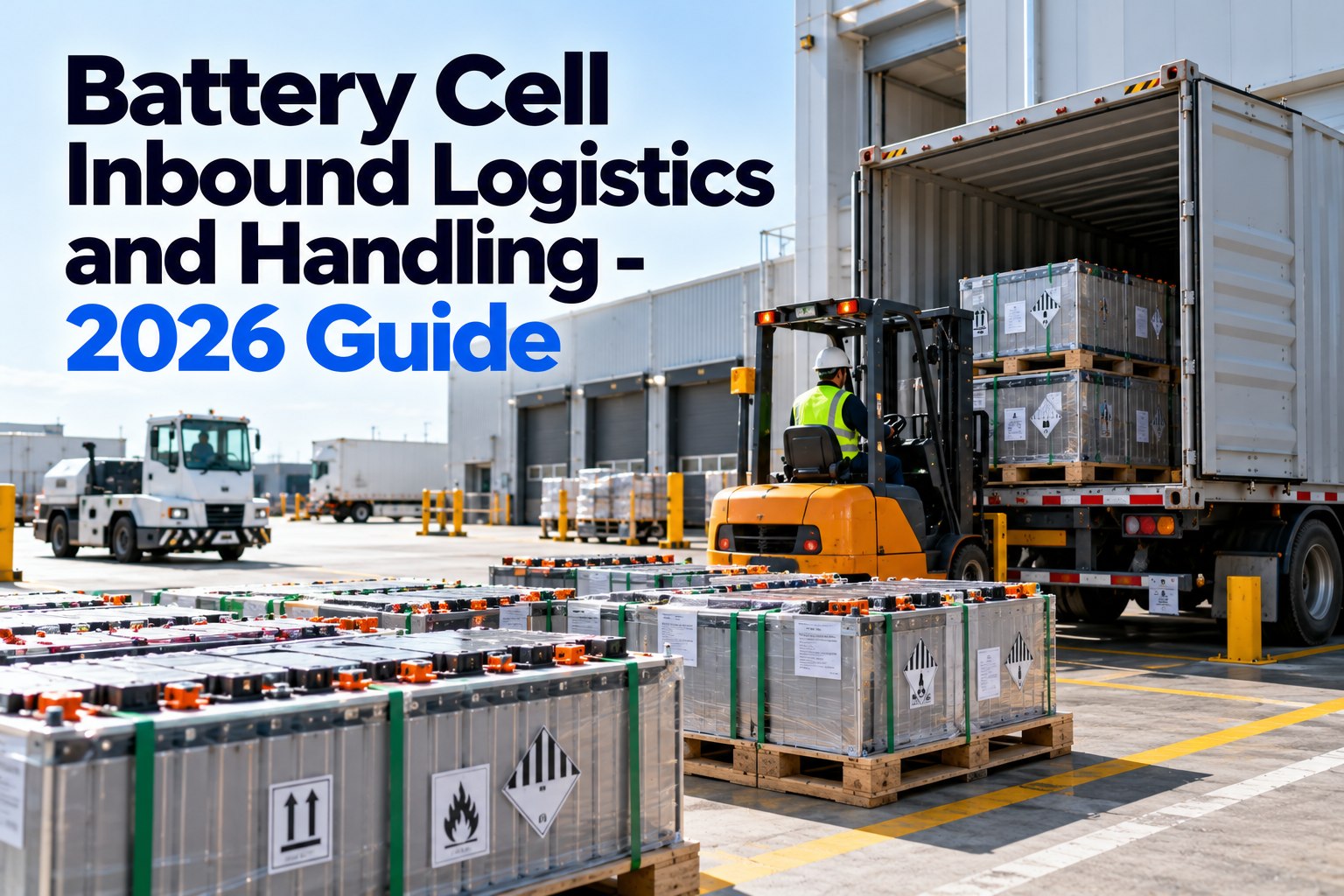
Packs and modules leave the plant on trucks, often to vehicle assembly sites, and cells arrive the same way. Each move should add a link: which trailer, which seal, which trip, and what was received at the other end. When a containment trace reaches shipped units, those links turn “delivered last month” into “on trailer 4417, sealed with 0098231, delivered to dock 6 at the assembly plant on Tuesday, two units short”. That level of detail decides whether a containment action reaches the right building in time.
The same applies to moves between your own sites. A stock transfer that records the seal, weight and photos at dispatch, and the count and condition at receipt, keeps the chain intact across buildings. If the seal or count doesn’t match, the difference is filed on its own, with evidence from both ends.
Run the containment drill across this boundary too. Pick a real outbound shipment from last quarter and ask the team to name the trailer, the seal, the delivery time and any shortage, using only the records. If that takes a phone call to the carrier, the logistics half of the chain has a gap.
Where FleetRabbit and Oneflow fit today, stated plainly
The logistics links the platform records
Inbound receipt by batch, with trailer, seal, photos and arrival time
Stock by batch and location, with quality hold and release
Transfers between sites with seals and counts at both ends
Outbound trips with proof of delivery, shortages and damage
ERP filing of these facts as stock movements and delivery documents
What belongs to other systems
Cell-to-module and module-to-pack genealogy on the line, in your manufacturing system
Generating the EU battery passport
Published query-time figures for containment searches
Running stock balances, which stay owned by the ERP
Agents acting alone; every drafted action waits for a person
FleetRabbit with Oneflow
The physical half of the chain: where every batch is, and how it got there
Stock & batches
Batch, location and hold status, from zone down to rack level.
Stock transfers
Seals, weights and photos at dispatch and receipt.
Trip sheets
Stops, proof of delivery and shortages for every outbound trip.
Ground Truth Layer
Every logistics fact and whether it reached the ERP.
What the 20-minute demo covers
Receiving a batch with trailer and seal
Holding a batch by location
A transfer with a seal mismatch
Trips and proof of delivery
Pricing for your sites
The trucks and trailers carrying packs are part of the record too. Their daily DVIR inspections and repairs in fleet maintenance records show the condition of the equipment that carried each load.
Battery module traceability questions
What is the difference between forward and backward traceability?
Backward traces a failed unit to its parts and suppliers. Forward traces a suspect lot to every unit it went into and where each is now.
Where should cell-to-module links be recorded?
At the station that builds the module, at the moment it is built, in the manufacturing system.
How fast must a defect be reported in the U.S.?
Within five business days of the manufacturer determining a safety defect exists, under 49 CFR Part 573.
What does the EU battery passport need?
A unique battery identifier and Annex XIII data, including manufacturer, chemistry, carbon footprint and material origin, from 18 February 2027.
How do you measure containment speed?
Time from a lot being flagged to every affected unit on site being held and every shipped unit identified. Measure it in quarterly drills.
What breaks a forward trace most often?
Rework that isn’t re-linked, mixed lots on one pallet, transfers with no record, and loads changed at the dock.
How wide should a containment hold be?
As wide as the evidence supports, then narrowed as units are cleared, with a reason and approver on every release.
Does FleetRabbit record module genealogy?
No. It records the logistics links, receipt, location, holds, transfers and deliveries, that complete the forward trace.
Know where every affected unit is before the deadline starts
Batches, holds, transfers and trips recorded at the moment they happen, so the forward trace reaches the last trailer.
October 15, 2026
By Alex Rowan
All Articles