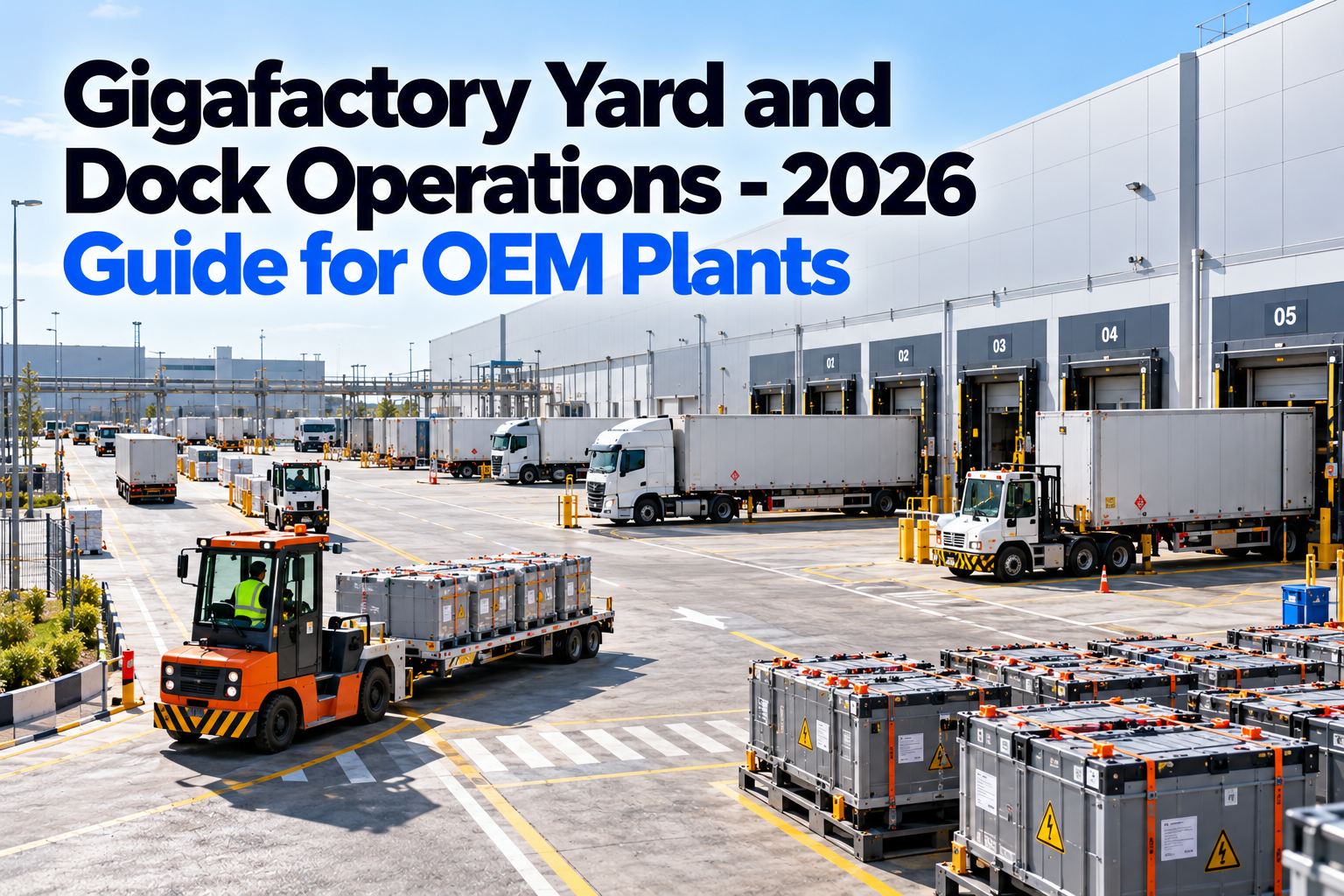
A gigafactory yard is a busy truck yard with three complications. It takes in materials that need to be kept apart, from battery cells to flammable electrolyte. Its volume changes month by month as production ramps. And every trailer, chassis and yard tractor movement feeds a plant that can’t afford to wait. This guide covers how to map inbound flow by load type, segregate hazardous goods in the yard, size dock capacity from measured door time, read the warning signs of ramp-phase congestion, and connect yard events to the ERP. It is general guidance, so check the regulations and your fire authority for your site. To see how gate, dock and ERP records work together in FleetRabbit, book a short walkthrough with our team.
Map inbound flow by load type before you map it by volume
Volume tells you how many trailers. Load type tells you where each one can go, how long it can wait and which door it needs. A gigafactory typically sees at least five inbound streams, and each one carries different rules from the gate onward.
Record the load type at the gate, not at the dock. When the gate knows a trailer is carrying cells or electrolyte, it can send it to the right zone straight away, and the yard count shows how many hazardous loads are on site at any moment.
Hazardous goods segregation: in the trailer, and again in the yard
Segregation works at two levels. On the vehicle, 49 CFR 177.848 sets which hazard classes may be loaded, transported or stored together during transportation, with a table covering Classes 1 to 8. Class 9 lithium batteries are not in that table, but the electrolyte and solvents that also come into a cell plant often are. In the yard, segregation becomes a site-plan and fire-code question. Battery storage outdoors, for example, has its own separation distances in the 2024 International Fire Code. A zoned yard plan makes both levels visible.
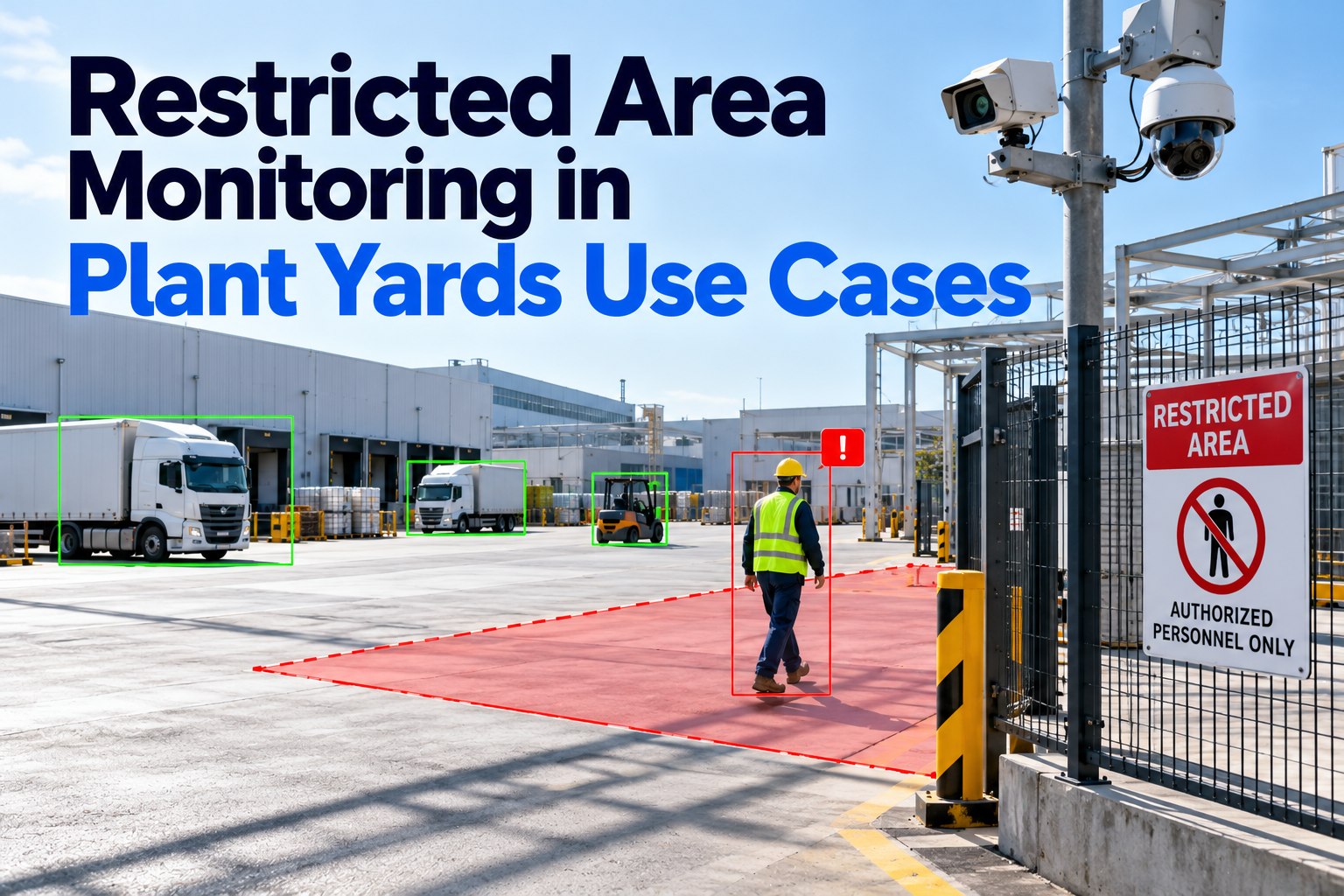
Keep the quarantine area as its own zone with a defined capacity, not a corner of the battery zone. A suspect load waiting for assessment shouldn’t sit beside full battery trailers, and the yard plan needs to show where emergency vehicles can reach each zone.
Size dock capacity from measured door time, not the planned slot
Most dock plans assume a standard slot per truck. Real door time varies by load type: a palletized parts trailer may turn quickly, while a battery trailer with a three-level inspection takes longer. Size doors from the measured time, by load type, at the peak hour.
Run the calculation separately for each load type and add the results, because the doors that handle battery trailers may not be interchangeable with general doors. Then check it against the dock schedule each week as volumes change. Utilisation above the target is the earliest sign that the next stage of the ramp needs more doors, more labour or a second shift on the dock.
Flatten the peak before you add doors
Dock capacity is sized for the peak hour, so the cheapest way to add capacity is often to make the peak smaller. Appointment windows by supplier and load type spread arrivals across the shift. Giving battery and electrolyte loads fixed early windows keeps them out of the busiest hours and out of the yard queue. Drop-trailer programmes with high-volume suppliers let the yard absorb arrivals and feed doors at a steady rate. And measuring early and late arrivals against each appointment shows which lanes are reliable enough for tight windows. Each of these needs the same data: the gate read with the real arrival time, compared with the booked slot. Without it, schedule adherence is a guess and the dock plan is built on the booking, not on what happens.
Outbound: dispatch from what is actually in the yard
Gigafactory yards run in both directions. Modules and packs leave on outbound trailers, empties and returnable racks go back to suppliers, and scrap leaves through its own route. Outbound plans fail in a familiar way: the plan says ten trailers will leave this morning, but two tractors are missing and one driver didn’t clock in. In Oneflow, the gate counts the trucks actually in the yard, the kiosk counts the drivers who actually turned up and verified, and the morning plan is the smaller of the two. A planner sees that constraint named on screen at the start of the shift, instead of discovering it at the dock door an hour later.
Ramp-phase congestion: the constraint moves as volume grows
During a production ramp, inbound volume can grow faster than the yard’s processes. The constraint doesn’t stay in one place. At low volume the gate keeps up and nothing waits. As lanes multiply, trailers begin to queue for yard slots. Then door time decides throughput, and finally people and schedules set the pace. The stages below are a general pattern, not a forecast for any one plant.
A simple rule from queueing theory, Little’s Law, explains why this happens. The average number of trailers in the yard equals the arrival rate multiplied by the average time each one spends there. If arrivals double and time in the yard stays the same, the yard holds twice as many trailers. If time in the yard also creeps up, the yard fills faster still. That is why gate-to-door time and door dwell are the measures to watch every day during a ramp.
Five yard measures for a ramping plant, and where each one comes from
| Measure | Source | What it tells you |
|---|---|---|
| Yard count by load type | Gate entry and exit reads | How many battery, electrolyte and general trailers are on site now |
| Gate-to-door time | Gate read to door occupied | Whether trailers are waiting for slots or doors |
| Door dwell | Door occupied and released pair | The input to dock capacity, by load type |
| Door utilisation | Dwell against available door hours | When the next ramp stage needs more doors or labour |
| Holds and quarantines | Receiving and quality holds | Whether a supplier, carrier or lane is causing damage |
Electric yard tractors: fleet assets with a charging schedule
Many new battery plants run electric yard tractors. They change the yard plan in two ways. Charging becomes part of the shift schedule, so tractors need to charge at breaks and shift changes without leaving the yard short of moves at peak. And the tractors themselves become assets to maintain like any other truck, with inspections, defects and service history. Put the charging area in the yard plan with clear access, track each tractor’s inspections and repairs on its own record, and schedule preventive maintenance outside the peak inbound hours.
Battery traceability starts at the gate
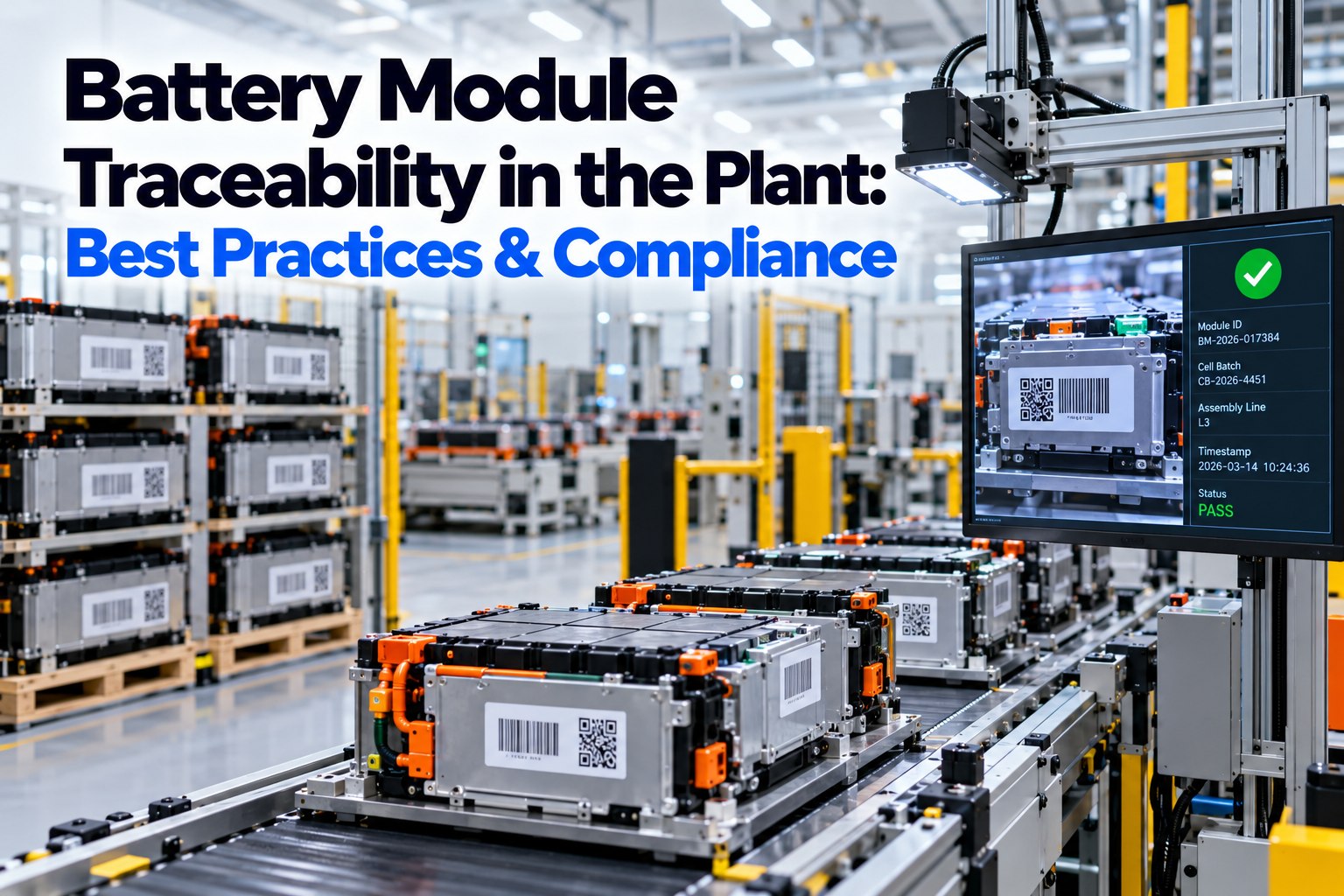
Traceability rules are tightening. Under the EU Batteries Regulation 2023/1542, supply chain due diligence obligations began on 18 August 2025, and a digital battery passport becomes mandatory from 18 February 2027 for electric vehicle batteries and rechargeable industrial batteries above 2 kWh. The passport is built from manufacturing and supply chain data, and the yard is part of that chain. Arrival time, trailer, seal number at both ends, receipt count, inspection result and any hold are all facts about a batch that someone may need to show later. Captured once at the gate and dock, they don’t need to be rebuilt.
Connecting yard events to the ERP without changing the ERP
The gigafactory’s plan, orders and stock balances live in SAP or Oracle. The yard’s facts arrive at the gate and dock. Oneflow sits between them: it records what was observed and files each fact as the document type it really is, without changing anything inside the ERP.
Integration teams usually ask three questions, and the ERP Hub answers each on screen. Show me the payload: the payload inspector shows the exact SAP or Oracle message for any event type before anything is sent. Show me what you sent: the delivery log keeps each message, the response and the number of tries. Show me what happens when it fails: failed deliveries retry on a widening schedule, facts with no document yet wait visibly as blocked, and uncertain readings are held until a person confirms them. Write-back is off by default, and the sandbox builds the identical message and stops before the network.
Where Oneflow fits today, stated plainly
Gate, yard, dock and ERP on one record for a plant that won’t stop ramping
The trailers and tractors moving through the yard need the same discipline as the loads. Daily digital DVIR checks catch defects before a trailer reaches a door, and repairs are tracked in fleet maintenance records on the same platform.