Just-in-sequence is the one logistics problem where arriving on time and arriving complete are not enough. The parts have to arrive in the order the vehicles will come down the line, because there is no line-side buffer to sort from — each module is pre-positioned for one specific truck. As the practitioners put it, in sequenced production a delivery in the wrong order is as bad as no delivery at all. That single constraint is what makes the integration hard: the sequence is broadcast hours ahead, the line changes after it is sent, and somebody has to reconcile a loaded rack against a line that has moved. On a line running sixty vehicles an hour, the cost of getting that wrong is measured per minute. See it on your own data.
In Sequenced Production, the Wrong Order Is the Same as Nothing
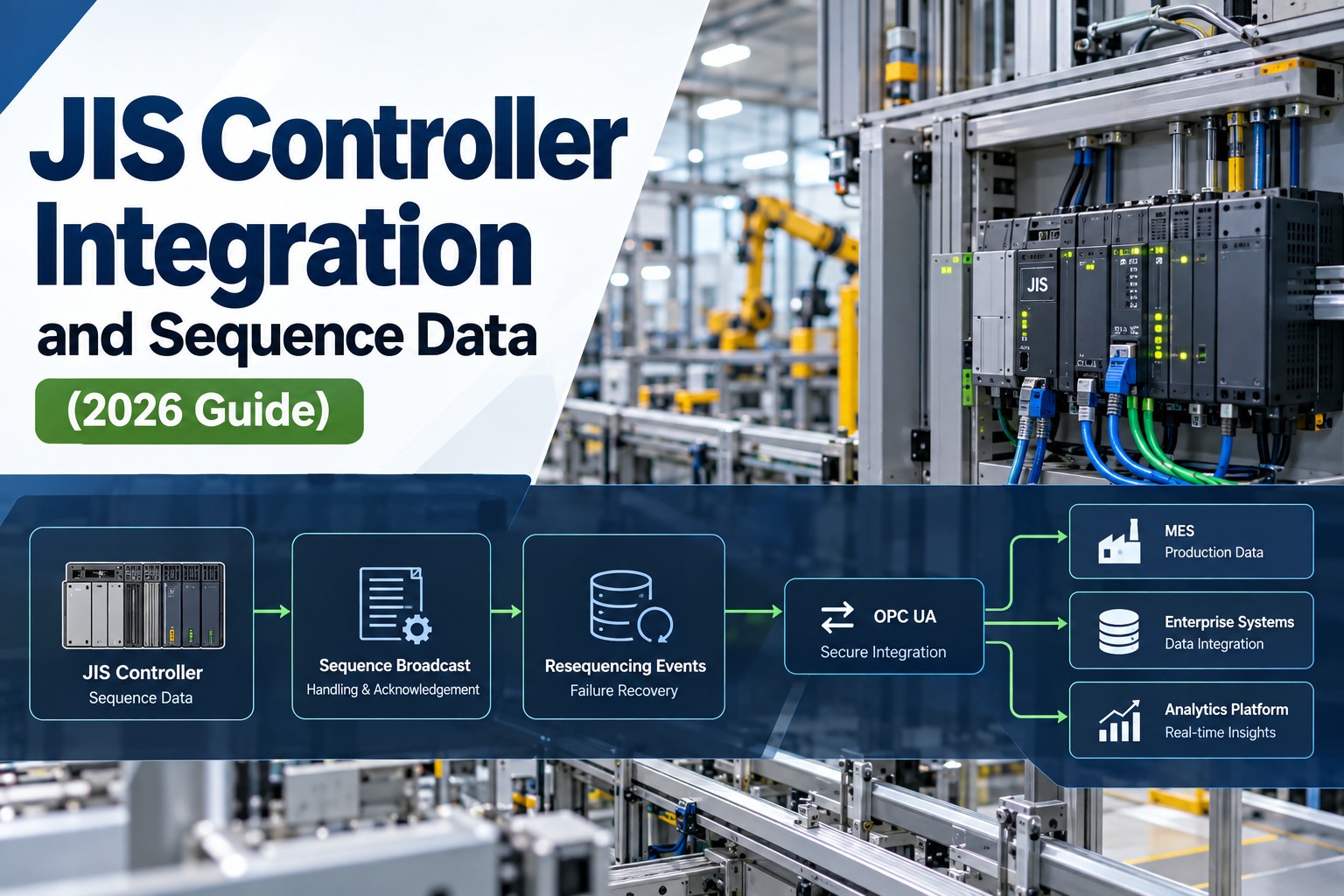
Sequence broadcast handling, what an acknowledgement does and does not prove, what a resequencing event does to every position behind it, and where recovery is still possible.
Three Documents, and Only One of Them Carries Order
The sequence does not arrive on its own. It arrives as the last layer on top of two others, and confusing them is the most common starting error.
Longer-range forecast, used for capacity and material planning. Nobody builds to it.
Firm, short-term shipping requirements that authorise actual delivery. Quantities and timing, but no order.
Adds the exact build sequence to the firm requirements already in the 862. This is the one that makes JIS possible.
The practical consequence is that a supplier can be entirely compliant with the 862 — right parts, right quantity, right window — and still stop the line, because compliance with a shipping schedule says nothing about order. Just-in-time allows a small buffer and parts picked from a bin. Just-in-sequence allows no buffer at all, because every part is already assigned to a vehicle.
What the 866 Actually Contains
Six segments, and the one that makes it a sequence rather than a schedule is REF. Swipe the table sideways on mobile.
| Segment | What it carries |
|---|---|
| ST | Transaction set header, opening the 866 and assigning control numbers |
| BSS | Beginning segment for production sequence, carrying the purpose code, reference number, dates and schedule type |
| LIN | Item identification, naming the specific part being sequenced |
| PRS | Part release status, carrying the production sequence detail and the release status |
| REF | Reference identification, pinning the line to a job number, VIN or serial reference |
| SE | Transaction set trailer, closing the 866 |
REF is what pins a line to a job number, VIN or serial reference — which is to say it binds a part to a specific vehicle rather than to a position in a counted list. That distinction matters enormously during recovery, because a part bound to a VIN can still find its vehicle after a resequence, while a part bound only to a position number cannot.
The Window Is Smaller Than It Sounds
An OEM typically freezes the sequence around six hours before installation. Here is what those six hours are spent on.
Sequenced suppliers typically sit within 30 to 100 km of the plant, which in practice means two to four hours of transport time. That comes out of the same six hours. A supplier close to the plant has four hours to turn a broadcast into a built, checked and loaded rack. One at the far end of the range has two. The frozen zone and the delivery window together run four to eight hours, and transport is the part of it nobody can compress on the day.
This is also why supplier reliability compounds rather than averages. A supplier running 70% OEE on a JIS line is carrying a 30% capacity loss, and across a four-hour window that is roughly 1.2 hours of effective production time simply missing. There is no overtime available inside a window that short.
Do you record the order that actually arrived?
Most plants hold the broadcast and the goods receipt. Far fewer hold the observed arrival order with evidence behind it, which is the only record that helps when a rack and a line disagree. In thirty minutes we will set that up against your own dock.
What a Resequencing Event Does
A vehicle comes off the line for a paint defect or a missing part. The sequence does not develop a hole; it closes up.
The pulled unit leaves a gap and every unit behind it moves one position forward, with a new unit drawn in at the end. A rack loaded to the broadcast is now correct for the positions ahead of the gap and wrong for everything after it. This is the failure that catches teams out, because it looks like one error and is in fact a shift applied to the whole remainder of the load.
Which is why the three failure modes in sequenced production are not of equal size. A wrong part installed is a quality defect with recall exposure. A sequence gap shifts every subsequent unit. And an undetected mismatch is the one that reaches a customer. Only the first is obvious at the station.
What an Acknowledgement Proves
Less than most integration designs assume, and the gap is where recovery time goes.
An acknowledged broadcast proves that a message was delivered and parsed. It does not prove that the supplier has the parts, that the line is running, that the rack can be built inside the remaining window, or that the sequence is still valid by the time anybody reads it. Those are four separate facts and none of them travels with a functional acknowledgement.
The useful design separates them. Receipt is a transport-layer fact and should be automatic. Feasibility is a production fact and belongs to the supplier's own system. Validity is a timing fact that decays continuously after the broadcast is sent. Treating a single acknowledgement as though it carries all three is what produces the conversation that begins with everyone agreeing the message was sent.
The alarm that matters is specific rather than general — something closer to a statement that sequence position twelve is at risk with an estimated delay of eighteen minutes, raised against a unit, than a status flag on a message. Real-time unit-level tracking is the prerequisite for being able to say that at all, which is why a sequenced line treats a real-time production system as a condition of doing business rather than an efficiency project.
Where Recovery Is Still Possible
Five things that determine whether a sequence exception is an inconvenience or a line stop.
The rack arrives before the part is needed. That interval is the only cheap place to discover that the loaded order no longer matches the line, and it only works if somebody is recording the order that actually arrived.
If a read is ambiguous about which rack or which position arrived, a held record with the reason attached is recoverable. A guessed sequence position is not, because everything downstream now trusts it.
The 866 is what was planned. What came off the truck is what happened. Collapsing them into one field destroys the only evidence you have when the two disagree.
Some modules can be reordered on site, some cannot. Knowing which is a design decision taken long before the event, and it determines whether a resequencing broadcast is recoverable or a line stop.
An acknowledged 866 proves a message arrived and parsed. It does not prove the supplier can meet it, and the gap between those two is where most recovery time is lost.
The economics behind all five are brutal and worth stating plainly. A line running sixty vehicles an hour loses on the order of five to fifteen thousand euros for every minute it is stopped. Against that, almost any amount of effort spent detecting a divergence at the dock rather than at the station is cheap — and the dock is where the time is, because the rack arrives before the part is wanted.
Why This Is an Observation Problem
The integration literature treats JIS as a messaging problem. In practice the hard part is evidential.
The broadcast is a plan. It is authoritative about intent and it was correct when it was sent. The rack on the dock is a fact, and it was loaded against a plan that may since have changed. When those two disagree, the question is never what the message said — everyone can read the message. The question is what actually arrived, in what order, and when, and that is a record most plants simply do not keep.
Recording it is what turns a dispute into a reconciliation. It is also what makes any future automation safe, because a system that proposes a correction has to be able to show the evidence it proposed it from. The same discipline carries past the plant: a measurement belongs to a specific unit at a specific time with evidence behind it, whether that unit is a module on a rack or a finished truck on a maintenance record years later.
How FleetRabbit Handles This
Four things, all of them about keeping the observed sequence as evidence rather than as an assumption.
The broadcast says what should arrive. Oneflow records what did, in what order, with evidence attached, so the two can be compared instead of one being assumed.
A scan the system is not confident about appears as held with the reason, and cannot be selected. In a sequenced process a wrong position is worse than a known gap.
Dwell is measured from the change itself, so re-saving a record cannot restate when a rack actually arrived.
Sequence exceptions are exactly the case where an automatic write is least welcome. The record carries who approved the correction and when.
Questions Integration Teams Ask
What is the difference between an 862 and an 866?
The 862 carries firm short-term shipping requirements that authorise delivery. The 866 adds the exact build sequence on top of those requirements. A supplier can satisfy the 862 completely and still stop the line, because quantity and timing say nothing about order. Review Your 866 Handling.
How far ahead is the sequence frozen?
Typically around six hours before installation, with the frozen zone and delivery window together running four to eight hours. Since sequenced suppliers usually sit two to four hours away by road, the build window left is often only two to four hours. Map Your Sequence Window.
What happens when a vehicle is pulled from the line?
The sequence closes up rather than leaving a hole, so every unit behind the pulled one moves forward a position and a new unit is drawn in at the end. A rack loaded to the original broadcast is correct ahead of the gap and wrong after it. Set Up Resequence Handling.
Does an acknowledgement mean the supplier can meet the sequence?
No. It proves the message was delivered and parsed. Feasibility and continued validity are separate facts that do not travel with a functional acknowledgement, and treating them as one is where recovery time is usually lost. Separate the three facts.
Why bind parts to a VIN rather than a position number?
Because a part bound to a vehicle can still find that vehicle after a resequence, while a part bound only to a position cannot. The REF segment exists to pin a line to a job number, VIN or serial reference for exactly this reason. Check your binding.
Where is the cheapest place to catch a sequence error?
At the dock, because the rack arrives before the part is needed and that interval is the only slack in the process. Catching it at the station means catching it at the moment the line would otherwise stop. Record the Observed Order.
What does a line stop actually cost?
On a line producing around sixty vehicles an hour, roughly five to fifteen thousand euros per minute. That figure is what justifies effort spent on detection and evidence that would look disproportionate anywhere else. Weigh it against detection.
Can we automate the correction?
Eventually, and carefully. The sensible order is to record the observed sequence first, let a system propose corrections against that evidence, and keep a person approving them — because a sequenced line is the last place anybody wants a silent automatic write. Connect a Test Broadcast.
Keep the Broadcast and the Rack as Two Separate Facts
Oneflow records what arrived at the dock and in what order, with evidence behind it, holds an uncertain read rather than guessing a position, and files nothing until a person approves it — so when the plan and the rack disagree you have something to reconcile rather than two opinions.