Forget everything you know about telematics - the 2026 framework isn't just collecting data, it's thinking, predicting, and making decisions that save fleets millions while your team focuses on what humans do best
340%
More Data Processing Power
94%
Prediction Accuracy Rate
$8,400
Savings Per Truck Annually
Real-Time
Edge AI Decision Making
If you installed telematics five years ago and haven't looked back, you're in for a shock. The telematics framework hitting the market in 2026 isn't an upgrade—it's a completely different animal. We're talking about systems that don't just tell you what happened, but predict what's about to happen, explain why, and often fix the problem before you even know it exists. The old model was simple: sensors collect data, transmit to cloud, generate reports, humans analyze. The new model? Sensors collect data, AI processes it instantly on the vehicle, makes real-time decisions, learns from every mile across the entire fleet, and continuously improves. The difference in outcomes is staggering—and fleets that don't make the transition will find themselves competing with one hand tied behind their back. See how your current telematics measures up with our free AI-readiness assessment in just 15 minutes, or schedule a consultation with our telematics architects to plan your upgrade path.
Is Your Telematics Ready for the AI Era?
Discover where your current system stands and what capabilities you're missing compared to the 2026 AI-driven framework.
The Architecture Shift: From Cloud-Centric to Edge-Intelligent
The most fundamental change in the 2026 telematics framework isn't a new feature—it's a complete architectural redesign. For the past decade, telematics followed a simple pattern: collect data on the vehicle, send everything to the cloud, process it there, send insights back. That model is breaking down, and here's why.
Traditional vs. AI-Driven Telematics Architecture
| Architecture Element | Traditional (2015-2024) | AI-Driven (2026+) | Why It Matters |
|---|---|---|---|
| Data Processing Location | Cloud only | Edge + Cloud hybrid | Real-time decisions possible |
| Decision Latency | Minutes to hours | Milliseconds | Prevents incidents vs. reports them |
| Data Transmission | Send everything | Send insights, store raw locally | 90% lower data costs |
| Learning Model | Static rules | Continuous ML improvement | Gets smarter every mile |
| Integration Approach | Point-to-point APIs | Unified data fabric | Seamless ecosystem |
| Offline Capability | Data buffering only | Full AI functionality | Works in dead zones |
Why Edge AI Changes Everything
Here's a concrete example. Traditional telematics detects a hard braking event, transmits it to the cloud, processes it, and sends an alert to a safety manager—maybe 30 seconds to 5 minutes later. By then, the moment has passed. The 2026 framework? The edge AI detects the pre-cursor to hard braking (driver distraction, following too close, approaching hazard) and provides real-time audio coaching to prevent the event entirely. Same sensors, radically different outcomes.
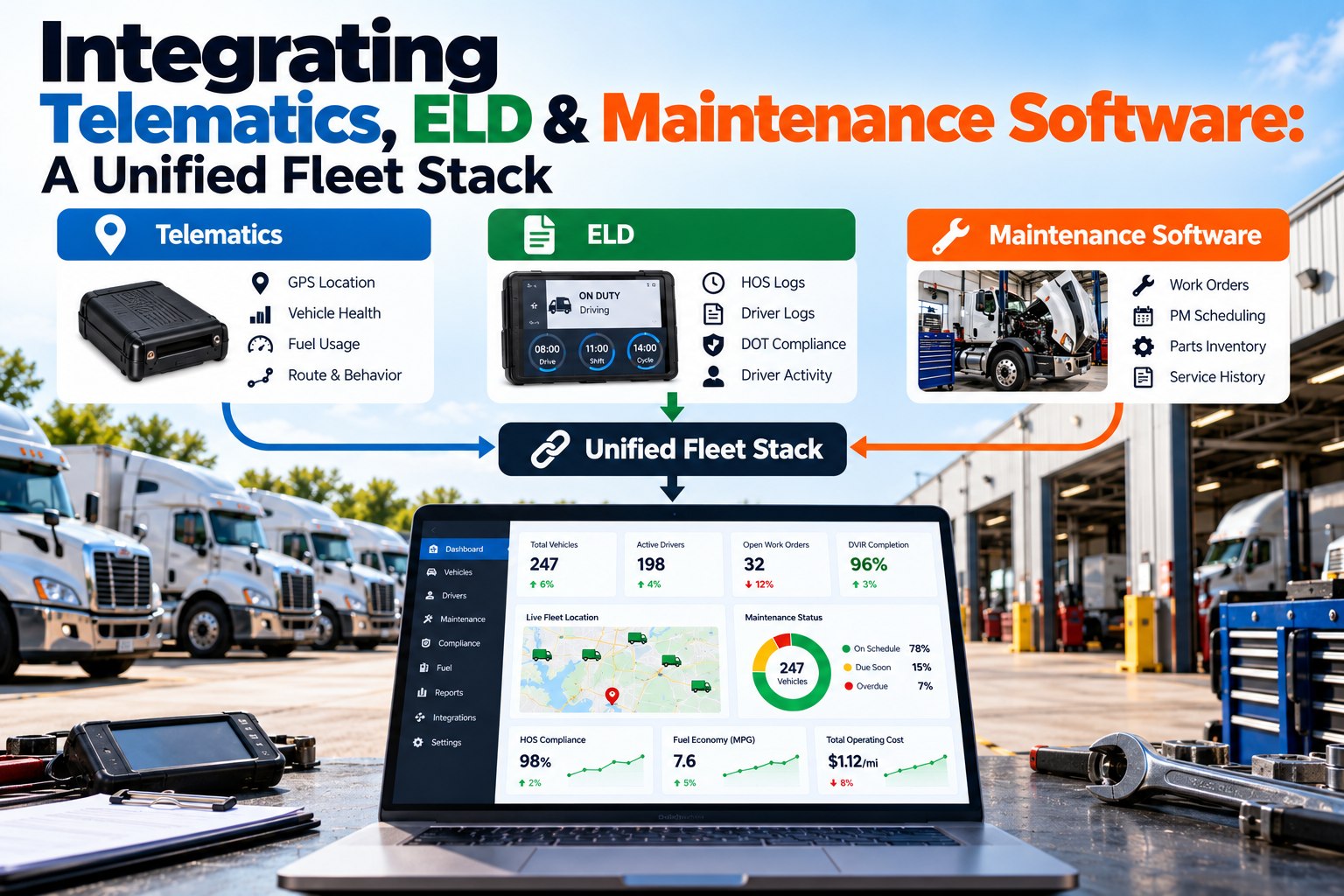
The New Telematics Stack
Edge Layer (On-Vehicle)
Hardware: AI-capable processors (NPUs)
Function: Real-time processing, instant decisions
Capability: Runs ML models locally
Latency: Under 100 milliseconds
Connectivity Layer
Technology: 5G, LTE-M, satellite backup
Function: Smart data transmission
Capability: Prioritizes critical data
Efficiency: 90% bandwidth reduction
Cloud Layer
Purpose: Fleet-wide learning, analytics
Function: Model training, pattern detection
Capability: Cross-fleet insights
Scale: Billions of data points
The Five Pillars of AI-Driven Telematics
The 2026 framework isn't just one technology—it's five interconnected AI capabilities working together. Understanding each pillar helps you evaluate vendors and plan your implementation.
Pillar 1: Predictive Diagnostics
- What it does: Analyzes thousands of data points to predict component failures weeks before they occur
- How it works: ML models trained on millions of failure patterns identify subtle warning signs humans can't detect
- Real example: Predicts turbocharger failure 23 days in advance based on boost pressure patterns, exhaust temps, and vibration signatures
- Business impact: 67% reduction in roadside breakdowns, 40% lower emergency repair costs
Pillar 2: Behavioral Intelligence
- What it does: Understands driver behavior at a deep level—not just events, but patterns, causes, and effective interventions
- How it works: Computer vision, sensor fusion, and behavioral modeling create comprehensive driver profiles
- Real example: Identifies that Driver Smith's hard braking events spike between 2-4 PM, correlates with route congestion, suggests schedule adjustment
- Business impact: 34% improvement in driver scores, 28% reduction in accidents
Pillar 3: Dynamic Optimization
- What it does: Continuously optimizes routes, speeds, and stops based on real-time conditions and historical patterns
- How it works: Combines live traffic, weather, customer windows, vehicle condition, and driver status for constant recalculation
- Real example: Reroutes truck around accident 8 minutes before GPS apps detect it, based on traffic pattern anomaly detection
- Business impact: 15-22% fuel savings, 18% improvement in on-time delivery
Pillar 4: Autonomous Insights
- What it does: Surfaces actionable insights without requiring human queries—the system tells you what you need to know
- How it works: Anomaly detection, trend analysis, and natural language generation create human-readable recommendations
- Real example: "Fuel costs on Route 47 have increased 12% over 6 weeks. Analysis suggests tire pressure inconsistency on trucks 23, 45, 67. Recommended action: pressure check and driver coaching."
- Business impact: 75% reduction in analysis time, issues caught 3x faster
Pillar 5: Ecosystem Integration
- What it does: Connects telematics data with every other system—TMS, maintenance, HR, finance, customer service
- How it works: Unified data fabric with pre-built connectors and AI-powered data mapping
- Real example: Maintenance prediction automatically creates work order in shop system, orders parts, schedules appointment, and notifies driver—zero human intervention
- Business impact: 60% reduction in manual data entry, true end-to-end automation
See the Five Pillars in Action
Get a personalized demo showing how each AI capability would work with your specific fleet operations and existing systems.
Predictive Diagnostics: The Game-Changer
Of all the AI capabilities in the 2026 framework, predictive diagnostics may deliver the fastest and most measurable ROI. Let's go deep on how it actually works and what results fleets are seeing.
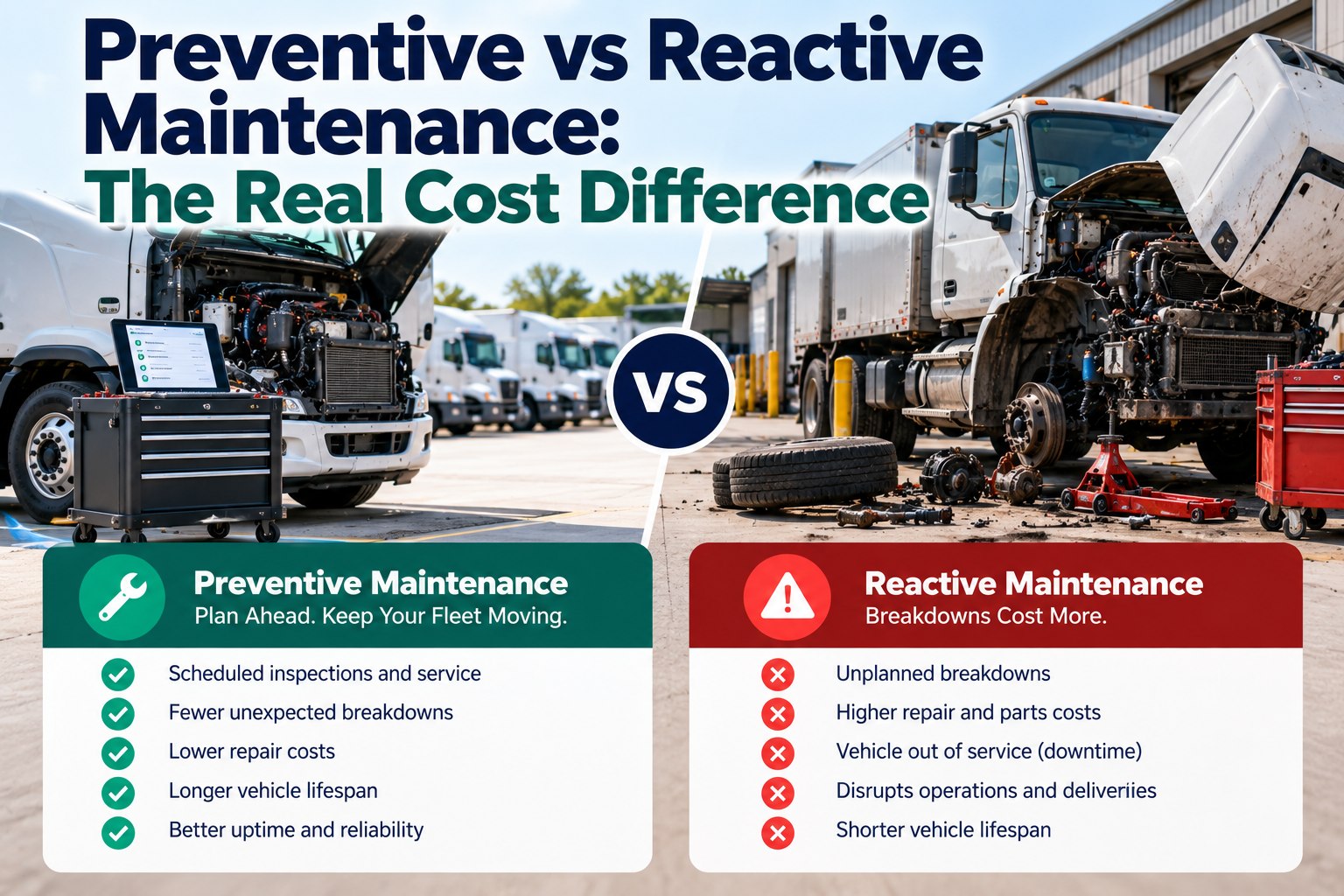
The Cost of Reactive Maintenance
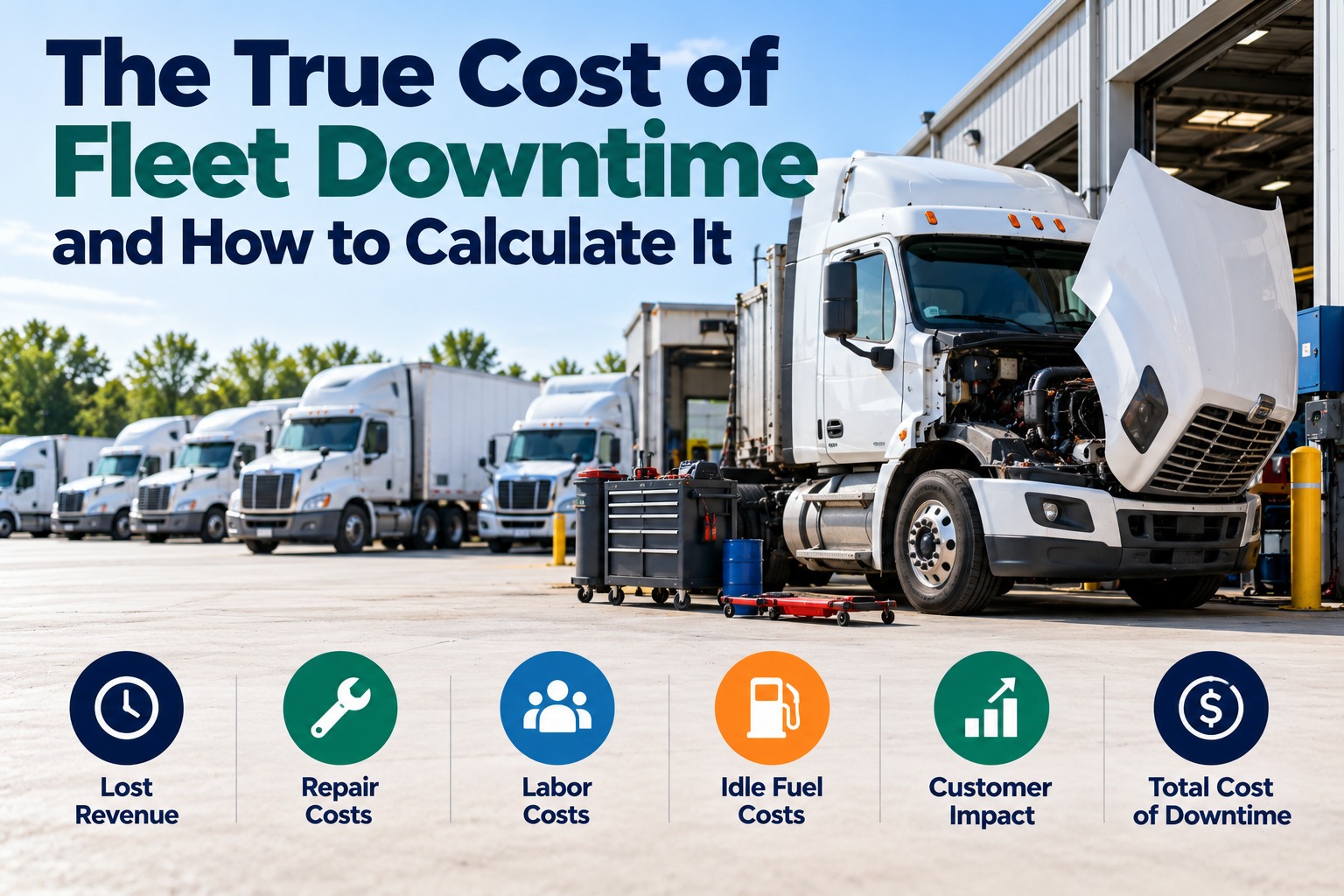
The average roadside breakdown costs $750 in direct repair expenses—but that's just the beginning. Add towing ($350), cargo delays ($1,200), driver downtime ($400), and customer impact (often incalculable). A single preventable breakdown can easily cost $3,000 or more. Fleets with 100+ trucks typically experience 40-60 such events annually. That's $120,000-180,000 in preventable losses.
How Predictive Diagnostics Works
| Component | Data Sources Analyzed | Prediction Accuracy | Advance Warning | False Positive Rate |
|---|---|---|---|---|
| Engine | Temps, pressures, RPM patterns, oil analysis | 94% | 2-6 weeks | 8% |
| Transmission | Shift patterns, temps, fluid condition | 91% | 2-4 weeks | 11% |
| Brakes | Pad wear, temps, pressure, usage patterns | 96% | 3-8 weeks | 5% |
| Tires | Pressure, temp, wear patterns, vibration | 93% | 1-4 weeks | 9% |
| Electrical | Voltage patterns, current draw, battery health | 89% | 1-3 weeks | 14% |
| Aftertreatment | DPF loading, DEF quality, sensor trends | 92% | 2-5 weeks | 10% |
Real-World Example: Catching a Catastrophic Failure
A regional carrier using the new AI telematics framework received an alert: "Truck 127 showing early indicators of water pump bearing failure. Estimated remaining life: 8-12 days. Recommended action: Schedule replacement within 5 days." The traditional telematics would have shown nothing—all gauges were normal. The AI detected a 0.3-degree increase in coolant temperature variance and a subtle change in the accessory drive vibration signature. The repair cost $340 scheduled. An on-road failure would have caused engine damage exceeding $15,000.
Predictive Maintenance ROI Calculator
Annual Savings Projection (100-truck fleet)
| Savings Category | Without AI | With AI Telematics | Annual Savings |
|---|---|---|---|
| Roadside Breakdowns (50/year) | $150,000 | $45,000 | $105,000 |
| Emergency Repairs Premium | $85,000 | $25,000 | $60,000 |
| Towing Costs | $35,000 | $10,000 | $25,000 |
| Driver Downtime | $40,000 | $12,000 | $28,000 |
| Cargo Delays/Penalties | $60,000 | $15,000 | $45,000 |
| Parts Optimization | Baseline | 15% reduction | $42,000 |
| Total Annual Impact | $370,000 | $107,000 | $305,000 |
Behavioral Intelligence: Beyond Event Recording
Traditional telematics tells you that a driver had 3 hard braking events yesterday. AI-driven behavioral intelligence tells you why, predicts when it will happen again, and coaches the driver to prevent it—in real time.
The Shift from Events to Understanding
Think about the difference between a fitness tracker that counts steps and one that understands your health. The step counter gives you data. The intelligent tracker says, "Your sleep quality has declined 15% this week, which correlates with your increased heart rate during afternoon walks. Consider earlier bedtime or stress reduction." That's the leap we're seeing in driver behavior telematics.
How AI Behavioral Analysis Works
Multi-Source Data Fusion
Inputs: Cameras, accelerometers, GPS, vehicle CAN bus, external data
Processing: AI correlates all sources in real-time
Output: Complete behavioral context
Example: Hard brake + camera shows phone + GPS shows school zone = distracted driving in high-risk area
Pattern Recognition
Inputs: Weeks/months of driving history
Processing: ML identifies recurring patterns
Output: Predictive risk profiles
Example: Driver consistently speeds on Route 12 between 3-5 PM, never on morning runs
Real-Time Intervention
Inputs: Live driver state monitoring
Processing: Edge AI detects pre-incident indicators
Output: Immediate coaching or alerts
Example: Fatigue detection triggers alert 12 minutes before drowsiness becomes dangerous
Behavioral Intelligence Capabilities
| Capability | What It Detects | Intervention Method | Accuracy | Safety Impact |
|---|---|---|---|---|
| Distraction Detection | Phone use, eating, reaching | Real-time audio alert | 97% | 52% reduction in distracted events |
| Fatigue Monitoring | Eye closure, head position, micro-sleeps | Escalating alerts | 94% | 71% reduction in fatigue incidents |
| Aggressive Driving | Hard accel/brake, sharp turns, speeding | In-cab coaching | 96% | 38% improvement in driving scores |
| Following Distance | Tailgating, unsafe gaps | Visual/audio warning | 92% | 45% reduction in rear-end risk |
| Lane Departure | Unintentional lane changes | Immediate haptic/audio | 98% | 63% reduction in lane events |
| Smoking/Vaping | In-cab smoking detection | Event logging, manager alert | 89% | Policy compliance |
Transform Your Driver Safety Program
See how AI behavioral intelligence can reduce incidents by 40% or more while improving driver satisfaction through coaching instead of punishment.
The Data Architecture Revolution
Behind the flashy AI capabilities is a fundamental shift in how telematics data is structured, stored, and shared. This architecture change is what makes the 2026 framework possible—and what makes older systems obsolete.
The Unified Data Fabric Concept
- What it is: A single, consistent data layer that connects all fleet systems and external sources
- Why it matters: AI needs connected data—siloed systems limit what's possible
- How it works: Standard data models, real-time synchronization, semantic understanding
- Business impact: Insights that were impossible with disconnected systems become automatic
Traditional vs. AI-Ready Data Architecture
| Aspect | Traditional Architecture | AI-Ready Architecture | Impact on AI Capability |
|---|---|---|---|
| Data Storage | Separate databases per system | Unified data lake with real-time sync | Enables cross-system learning |
| Data Format | Vendor-specific, inconsistent | Standardized schemas (AEMP, SAE) | AI models work across fleets |
| Historical Depth | 90 days typical | 5+ years, full fidelity | Better pattern recognition |
| Real-Time Access | Batch processing | Streaming analytics | Enables instant decisions |
| External Data | Manual integration | Pre-built connectors | Weather, traffic, market data |
| Data Ownership | Often locked in vendor | Customer owns, portable | Flexibility to change/add vendors |
Key Data Sources in the 2026 Framework
Vehicle Data
Sources: J1939 bus, sensors, cameras
Volume: 25GB per truck per day
Types: Diagnostic, operational, environmental
Frequency: Up to 100Hz for critical data
Driver Data
Sources: Cameras, ELD, mobile apps
Types: Behavior, HOS, performance
Privacy: Configurable by role
Use: Coaching, safety, scheduling
External Data
Sources: Weather, traffic, fuel prices
Types: Real-time and historical
Integration: Automatic, continuous
Use: Optimization, prediction
The Data Quality Challenge
AI is only as good as the data it learns from. Fleets transitioning to the 2026 framework often discover their historical data has quality issues—gaps, inconsistencies, sensor calibration problems. The good news: modern AI systems can identify and often correct data quality issues. The key is starting the cleanup process now, so your AI has quality training data from day one.
Implementation: What the Transition Actually Looks Like
Moving to the AI-driven telematics framework isn't a forklift replacement—it's a strategic transition that can happen in phases. Here's what successful implementations look like in practice.
4-6 Mo
Typical Full Implementation
$850
Per-Truck Hardware Cost
8 Weeks
To First AI Insights
94%
Driver Adoption Rate
Phase-by-Phase Implementation Roadmap
Phase 1: Assessment and Planning (Weeks 1-4)
- Current state audit: Evaluate existing telematics hardware, software, and integrations
- Data quality assessment: Analyze historical data for AI readiness
- Requirements gathering: Identify priority use cases and pain points
- Vendor evaluation: Compare platforms against specific needs
- ROI modeling: Build business case with realistic projections
Phase 2: Foundation Setup (Weeks 5-8)
- Cloud infrastructure: Establish AI platform and data lake
- Integration development: Connect existing systems (TMS, maintenance, etc.)
- Hardware procurement: Order edge AI devices for pilot vehicles
- Team training: Prepare IT, operations, and safety staff
- Change management: Communicate plans to drivers and stakeholders
Phase 3: Pilot Deployment (Weeks 9-14)
- Hardware installation: Deploy on 10-20% of fleet
- AI model calibration: Train models on your specific fleet data
- Workflow development: Build processes around AI insights
- Metrics tracking: Establish baseline measurements
- Feedback collection: Gather input from drivers and managers
Phase 4: Full Rollout (Weeks 15-24)
- Fleet-wide deployment: Install hardware across all vehicles
- Advanced features: Enable predictive maintenance, behavioral AI
- Automation setup: Configure autonomous workflows
- Optimization tuning: Refine AI models based on results
- Continuous improvement: Establish ongoing enhancement process
Investment and ROI by Fleet Size
| Fleet Size | Hardware Investment | Implementation Cost | Annual Platform Cost | Expected Annual Savings | Payback Period |
|---|---|---|---|---|---|
| 25-50 trucks | $21,000-42,500 | $15,000-25,000 | $15,000-30,000 | $75,000-150,000 | 6-10 months |
| 50-100 trucks | $42,500-85,000 | $25,000-45,000 | $30,000-60,000 | $175,000-350,000 | 5-8 months |
| 100-250 trucks | $85,000-212,500 | $45,000-80,000 | $60,000-150,000 | $400,000-900,000 | 4-7 months |
| 250-500 trucks | $212,500-425,000 | $80,000-150,000 | $150,000-300,000 | $1,000,000-2,000,000 | 4-6 months |
| 500+ trucks | $425,000+ | $150,000+ | $300,000+ | $2,200,000+ | 3-5 months |
Build Your Custom Implementation Plan
Get a detailed roadmap tailored to your fleet size, current systems, and priority use cases—including timeline, budget, and expected ROI.
Vendor Landscape: Who's Building the 2026 Framework
The AI telematics market is consolidating around a few architectural approaches. Understanding the vendor landscape helps you make informed decisions about your technology partners.
Platform Categories
Full-Stack AI Platforms
Approach: End-to-end solution with proprietary AI
Examples: Samsara, Motive, Platform Science
Best for: Fleets wanting integrated simplicity
Trade-off: May not be best-in-class in every area
Specialized AI Layers
Approach: AI that works with existing telematics
Examples: Uptake, Pitstop, Geotab + partners
Best for: Fleets with significant telematics investment
Trade-off: Integration complexity
OEM-Integrated Solutions
Approach: Factory-installed AI telematics
Examples: Volvo, Daimler, Paccar offerings
Best for: Fleets buying new, single-brand
Trade-off: Limited to specific makes
Vendor Evaluation Criteria
| Criteria | What to Look For | Red Flags | Key Questions |
|---|---|---|---|
| AI Maturity | Production ML models, documented accuracy | "AI" that's really rules engines | What's your model accuracy for X prediction? |
| Edge Capability | On-vehicle processing, offline functionality | Cloud-only architecture | What happens when connectivity drops? |
| Data Portability | Customer owns data, easy export | Data locked in proprietary formats | Can I export all my data if I leave? |
| Integration Depth | Open APIs, pre-built connectors | Closed system, limited APIs | What systems do you integrate with today? |
| Fleet Learning | Models improve from your data | Static, one-size-fits-all AI | How does the AI learn from my specific fleet? |
| Support Model | Dedicated success team, training | Generic support only | What does implementation support look like? |
Real Fleets, Real Results
The 2026 framework isn't theoretical—early adopters have been running these systems and measuring results. Here's what they're finding.
Case Study: Regional Refrigerated Carrier
ColdChain Express - 180 Trucks
- Challenge: High maintenance costs, temperature excursions, fuel inefficiency
- Solution: Full AI telematics deployment with predictive diagnostics and route optimization
- Investment: $285,000 total (hardware + implementation + first year platform)
- Results after 12 months:
- Maintenance costs reduced 38% ($420,000 savings)
- Fuel efficiency improved 14% ($310,000 savings)
- Temperature excursions eliminated (zero claims)
- Roadside breakdowns down 72%
- Total first-year ROI: 256%
Case Study: Long-Haul Truckload
TransAmerica Freight - 450 Trucks
- Challenge: Safety incidents, driver turnover, CSA score pressure
- Solution: AI behavioral intelligence with real-time coaching
- Investment: $680,000 total first year
- Results after 18 months:
- Preventable accidents reduced 47%
- Driver turnover improved from 78% to 54%
- CSA score improved 28 percentile points
- Insurance premium reduced 18%
- Total savings: $1.4M annually
Case Study: Last-Mile Delivery
MetroDeliver - 320 Vehicles
- Challenge: Route inefficiency, missed delivery windows, high fuel costs
- Solution: AI dynamic optimization with real-time rerouting
- Investment: $410,000 total first year
- Results after 12 months:
- Stops per route increased 22%
- On-time delivery improved from 86% to 97%
- Fuel consumption reduced 19%
- Customer NPS increased 34 points
- Total savings: $890,000 annually
Preparing Your Organization for AI Telematics
Technology is only half the equation. Successfully deploying the 2026 framework requires organizational preparation that many fleets overlook.
Role Evolution with AI Telematics
- Fleet Managers: From report reviewers to insight interpreters—focus shifts to exception handling and strategic decisions
- Dispatchers: From manual planners to optimization supervisors—AI handles routine, humans handle exceptions
- Maintenance Managers: From reactive firefighters to predictive strategists—scheduling weeks ahead, not hours
- Safety Directors: From incident investigators to coaching program managers—proactive, not reactive
- Drivers: From recipients of criticism to partners in improvement—real-time coaching feels like help, not surveillance
Change Management Essentials
Leadership Alignment
Key action: Get executive sponsorship
Why it matters: AI requires cultural change
Common mistake: Treating it as IT project only
Success factor: C-level champion
Driver Communication
Key action: Explain benefits for drivers
Why it matters: Adoption determines success
Common mistake: Surprising drivers with cameras
Success factor: Emphasize coaching, not surveillance
Skills Development
Key action: Train staff on AI interpretation
Why it matters: AI outputs require human judgment
Common mistake: No training budget
Success factor: Ongoing learning program
The Trust Factor
The biggest barrier to AI telematics success isn't technology—it's trust. Drivers who don't trust the system find ways around it. Managers who don't trust the predictions ignore them. Building trust requires transparency about how AI works, consistent accuracy, and a culture that uses insights for improvement rather than punishment.
What Comes After 2026: The Technology Roadmap
The 2026 framework is just the beginning. Understanding where telematics is headed helps you make investments that won't become obsolete.
2027-2028: Autonomous Integration
- Telematics becomes the nervous system for autonomous trucks
- Human drivers and autonomous systems share the same data layer
- AI manages mixed fleets of human and autonomous vehicles
- Predictive systems coordinate handoffs between automation levels
2029-2030: Ecosystem Intelligence
- Telematics integrates with smart infrastructure (roads, ports, warehouses)
- Cross-fleet data sharing improves predictions for everyone
- AI coordinates between carriers for network-level optimization
- Blockchain-verified data enables new business models
Future-Proofing Your Investment
| Investment Decision | Choose This | Avoid This | Why |
|---|---|---|---|
| Hardware | Upgradeable, modular devices | Fixed-function black boxes | AI capabilities evolving rapidly |
| Data Format | Open standards (AEMP, SAE) | Proprietary formats | Enables vendor flexibility |
| Platform | Cloud-native, API-first | On-premise, closed systems | Scalability and integration |
| Contracts | Data portability guaranteed | Data locked to vendor | Protects your investment |
| AI Model | Continuous learning, fleet-specific | Static, one-size-fits-all | Improves with your data |
Conclusion: The Telematics Transformation Is Here
The 2026 AI-driven telematics framework represents the biggest leap in fleet technology since telematics first emerged. We're moving from systems that simply report what happened to systems that predict what will happen, intervene in real-time, and continuously optimize every aspect of fleet operations.
Key Takeaways for Fleet Leaders
- The shift from cloud-centric to edge-intelligent architecture enables real-time AI decisions that prevent problems rather than report them
- Predictive diagnostics alone can deliver ROI of 200%+ by eliminating breakdowns and emergency repairs
- Behavioral AI transforms safety from punishment-based to coaching-based, improving driver acceptance and outcomes
- Data architecture matters—unified data fabric enables AI capabilities that siloed systems can't achieve
- Implementation takes 4-6 months for most fleets, with first AI insights in 8 weeks
- The gap between AI-powered fleets and traditional telematics users is widening—2026 is the tipping point
The fleets that embrace the 2026 framework now will build competitive advantages that late movers will struggle to overcome. The data you collect today trains the AI that optimizes tomorrow. The organizational changes you make now prepare your team for AI-augmented operations. The vendor relationships you establish position you for continued innovation.
The question isn't whether AI-driven telematics will transform fleet operations—it's whether you'll be leading that transformation or scrambling to catch up. Begin your journey with our free AI telematics readiness assessment or schedule a consultation with our telematics architects to plan your path forward.
Ready to Upgrade to AI-Driven Telematics?
Discover how the 2026 framework can transform your fleet operations with predictive intelligence, real-time optimization, and autonomous insights.