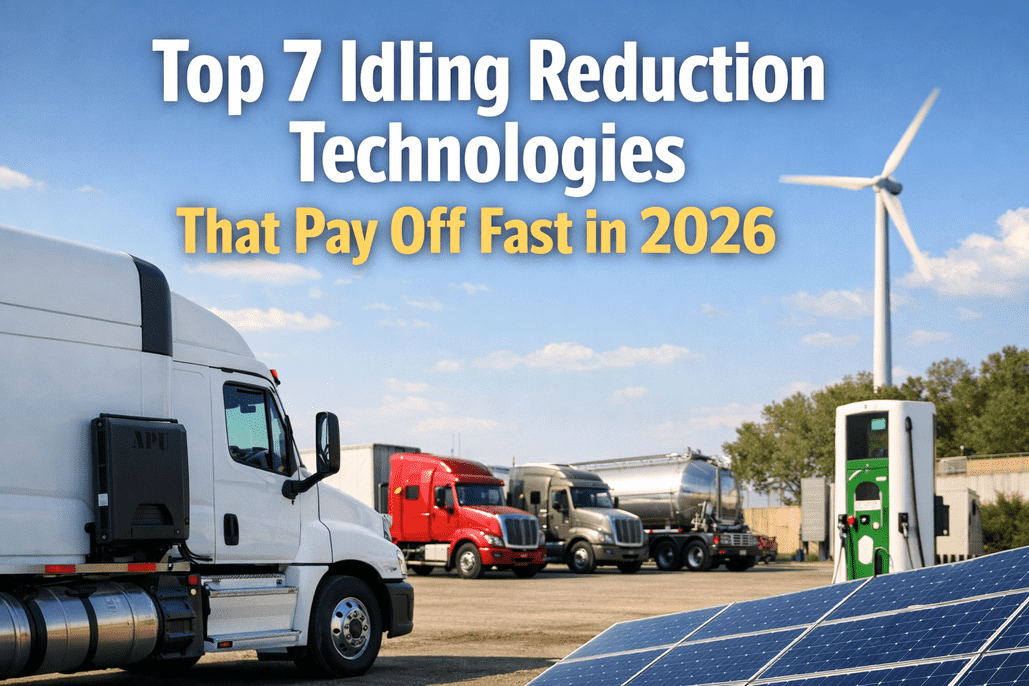
Every hour your trucks idle burns 0.8 gallons of fuel while adding 175 miles of engine wear—all without moving an inch. At $4 per gallon diesel, a single long-haul truck wastes $4,000 to $6,000 annually just idling overnight. With 31 states now enforcing anti-idling laws and fines reaching $1,000 per violation, the business case for idling reduction has never been stronger. Here are seven technologies delivering the fastest payback in 2026. Start tracking your fleet's idle time with FleetRabbit.
The True Cost of Truck Idling
Idling isn't just fuel waste—it's a triple hit to your bottom line through fuel consumption, accelerated maintenance, and regulatory fines. Understanding the full cost makes the ROI on idling reduction technologies crystal clear. Learn how FleetRabbit tracks fuel costs.
Fuel Costs
Maintenance Costs
Regulatory Fines
50-Truck Fleet Idling 2 Hours/Day
Technology #1: Diesel APUs
Diesel Auxiliary Power Units
The Industry WorkhorseDiesel APUs provide reliable climate control and power for sleeper cabs using a small diesel engine that burns 75% less fuel than idling the main engine. They're the most proven technology for long-haul operations requiring extended heating and cooling.
Key Benefits
- Runs indefinitely—no runtime limitations
- Provides heating, cooling, and 120V AC power
- Engine preheating capability for cold climates
- SmartWay-verified options for 50-state compliance
- Charges truck batteries while operating
Considerations
- Requires regular maintenance (oil changes, filters)
- Weight penalty may affect payload capacity
- Some noise and vibration during operation
- Higher upfront cost than electric alternatives
Technology #2: Electric/Battery APUs
Electric Battery APUs
Zero Emissions, Zero FuelElectric APUs use lithium-ion or AGM batteries to power HVAC systems and cabin electronics without burning any fuel. Modern lithium-ion systems deliver 12-17 hours of continuous air conditioning—enough for a full DOT rest period.
Key Benefits
- Zero emissions—full compliance everywhere
- Silent operation for better driver rest
- Minimal maintenance (no oil, filters, belts)
- Lighter weight than diesel APUs
- 5-year battery warranties on lithium-ion systems
Considerations
- Limited runtime in extreme temperatures
- Requires sufficient driving time to recharge
- Performance degrades in extreme heat (hot climates)
- May need shore power for extended stays
Technology #3: Automatic Engine Start-Stop
Automatic Engine Shutoff Systems
Software-Based, Low CostAutomatic engine start-stop systems shut down the main engine after preset idle time limits, then restart when temperatures exceed thresholds. This is the most widely adopted technology—83% of fleets use some form of electronic engine controls for idle management.
Key Benefits
- Often included in new trucks at no extra cost
- Programmable temperature and time thresholds
- No additional hardware or weight
- Works with existing telematics systems
- Driver override capability for safety
Considerations
- Still burns fuel when engine cycles on
- Drivers may disable if not properly trained
- Not suitable for extreme temperature regions alone
- Increases engine start cycles
System Types
Track Idle Time Across Your Entire Fleet
FleetRabbit's maintenance and telematics integration helps you identify high-idle vehicles, coach drivers, and document compliance with anti-idling regulations.
Technology #4: Battery HVAC Systems
Battery-Powered HVAC
Dedicated Climate ControlBattery HVAC systems provide dedicated heating or cooling using the truck's electrical system or supplemental batteries. These lighter-weight alternatives work well for moderate climates and shorter rest periods, often paired with other technologies.
Key Benefits
- Lower cost than full APU systems
- CARB-approved and 50-state compliant
- Lighter weight—minimal payload impact
- Can be paired with fuel-fired heaters
- Rebates available through some programs
Considerations
- Typically cooling OR heating—not both
- Limited runtime in extreme conditions
- May drain truck batteries if not managed properly
- Best paired with other idle reduction technologies
Technology #5: Truck Stop Electrification (Shore Power)
Truck Stop Electrification
Plug-In PowerShore power allows trucks to plug into electrical pedestals at truck stops, providing HVAC, battery charging, and hotel loads without idling or running an APU. At roughly $1/hour vs. $4/hour for idling, the savings are immediate—if you can find a powered space.
Key Benefits
- Lowest per-hour operating cost
- Zero emissions at the truck
- Reduces wear on APU equipment
- Often includes TV, internet, phone services
- Window adapter costs only $10
Considerations
- Limited availability—only ~100 locations nationwide
- Requires shore-power-compatible equipment
- Spaces may not be available when needed
- Best as supplement to onboard systems
Technology #6: Solar Supplemental Charging
Solar Panel Systems
Free Energy from the SunSolar panels mounted on truck cabs and trailers charge batteries throughout the day, extending electric APU runtime and reducing alternator load. While not a standalone solution, solar supplements other technologies to maximize idle-free hours.
Key Benefits
- Zero operating cost once installed
- Extends electric APU runtime by 2-4 hours
- Maintains battery charge during parking
- Reduces alternator load and fuel consumption
- Works well with electric APUs and battery HVAC
Considerations
- Cannot power HVAC directly (supplemental only)
- Effectiveness varies by geography and season
- Adds roof-mounted equipment to maintain
- Longer payback than other technologies
Technology #7: Telematics-Based Idle Management
Telematics Idle Monitoring
Data-Driven Behavior ChangeFleet telematics platforms track idle time in real-time, enabling driver coaching, automated alerts, and performance scorecards. Early adopters report 10-15% idle reductions through monitoring and behavior change alone—before any hardware investments. Get started with FleetRabbit's telematics integration.
Key Benefits
- Identifies highest-idle drivers and vehicles
- Automated alerts for excessive idling
- Driver scorecards for gamification programs
- Documents compliance for regulatory purposes
- No additional hardware if telematics already installed
Implementation Approach
A fleet of 400 vehicles operating 24/7 reduced overall engine time by 30% using telematics-based idle management—saving $19,430 daily (at $5.30/gallon diesel) and achieving full ROI in 13 months.
ROI Comparison: All 7 Technologies
Compare all seven idling reduction technologies side-by-side to determine the best fit for your fleet's operations and budget. Schedule a demo to see how FleetRabbit can help you implement these solutions.
| Technology | Upfront Cost | Annual Savings | Payback Period | Best For |
|---|---|---|---|---|
| 1 Diesel APU | $8,500-$13,000 | $5,000-$7,000 | 12-24 months | Long-haul, all climates |
| 2 Electric APU | $6,000-$10,000 | $4,000-$6,000 | 18-24 months | Moderate climates, zero-emission zones |
| 3 Auto Engine Stop | $0-$500 | $1,500-$3,000 | 0-6 months | All fleets (baseline technology) |
| 4 Battery HVAC | $2,000-$5,000 | $2,000-$4,000 | 12-18 months | Moderate temps, day cabs |
| 5 Shore Power | $500-$2,000 | $1,000-$2,000 | Immediate | Regular routes with TSE stops |
| 6 Solar Panels | $500-$2,000 | $500-$1,500 | 18-36 months | Supplement to electric systems |
| 7 Telematics | $180-$600/year | $500-$2,000 | 3-6 months | All fleets (monitoring foundation) |
Anti-Idling Regulations by State
Understanding local regulations helps prioritize which vehicles need idle reduction technology first. Fines and enforcement vary dramatically—from $100 warnings to $1,000/day penalties in strict states. Learn how FleetRabbit helps with compliance tracking.
Arizona, Colorado, Florida, North Carolina, North Dakota, Oregon, South Carolina, Vermont, Virginia, Connecticut, Massachusetts, Maryland, Pennsylvania, Rhode Island
Georgia (15 min), Nevada (15 min), West Virginia (15 min), South Carolina (10 min), Hawaii (varies), Illinois (varies), Texas (varies)
Common Exemptions
Most states allow extended idling for: temperatures below freezing or above specified thresholds, operating PTO equipment, safety/emergency situations, traffic conditions, and trucks equipped with compliant APUs. Always verify local exemptions—they vary significantly.
Stay Compliant with Anti-Idling Regulations
FleetRabbit helps you track idle time by location, document APU installations, and generate compliance reports for regulatory audits.
Building Your Idle Reduction Strategy
The most effective approach combines multiple technologies based on your specific operations. Here's how to build a comprehensive idle reduction program:
Baseline Your Current Idle Time
Use telematics to measure current idle percentages by vehicle, driver, and route. Identify your worst offenders and calculate the true cost. Most fleets find 15-35% idle time before implementing controls.
Enable Automatic Engine Controls
Activate or install automatic engine shutoff systems—the lowest-cost, fastest-ROI technology. Set appropriate thresholds for your climate and driver needs. This alone can cut idle time 20-50%.
Add APUs to Sleeper Trucks
Prioritize long-haul trucks that idle 1,000+ hours annually. Choose diesel APUs for extreme climates and extended runtimes; electric APUs for moderate climates and zero-emission requirements.
Train Drivers and Implement Incentives
Technology alone won't eliminate idling—drivers must buy in. Use scorecards, gamification, and bonuses for low-idle performers. Explain the "why" behind idle reduction policies.
Monitor, Adjust, and Optimize
Track results weekly. Identify vehicles or drivers regressing. Adjust thresholds based on seasonal conditions. Document compliance for regulatory purposes.
Frequently Asked Questions
Which idle reduction technology has the fastest payback?
Automatic engine shutoff systems and telematics monitoring offer the fastest ROI—often 3-6 months—because they require minimal upfront investment. However, they don't provide driver comfort alternatives. For technologies that do, diesel APUs typically pay back in 12-24 months for trucks idling 1,000+ hours annually.
Are APUs worth it for regional/short-haul trucks?
APU payback depends on annual idle hours. If a truck idles less than 1,000 hours per year, the ROI extends beyond 3 years—making APUs harder to justify. For regional operations, consider battery HVAC systems or automatic engine controls instead, which have lower upfront costs.
Do APUs qualify for the federal weight exemption?
Yes. Federal law allows trucks with qualified idle reduction technology a 550-pound weight exemption (some states allow more). This offset helps compensate for the 400-550 pounds that diesel APUs add. Documentation of the APU installation may be required at weigh stations.
Can I use an electric APU in extreme heat or cold?
Electric APU performance varies with conditions. In extreme heat (Arizona summer), runtime may drop to 6-8 hours instead of the rated 12-17 hours. In extreme cold, electric APUs provide limited heating capability. For extreme climates, diesel APUs or diesel-electric hybrids offer more reliable year-round performance.
How do I get drivers to stop overriding idle controls?
Driver buy-in is critical. Explain the cost savings, show how it benefits the company (and potentially their compensation through fuel bonuses), and ensure they have adequate comfort alternatives like APUs before enforcing strict policies. Use telematics to track override patterns and coach specific drivers. Gamification with rewards for low-idle percentages works better than punishment.
What's the best combination of technologies?
For most long-haul fleets, the optimal combination is: telematics monitoring (baseline), automatic engine shutoff (quick wins), diesel or electric APU (driver comfort), and driver incentive programs (sustained results). This layered approach typically achieves 70%+ idle reduction with 18-24 month payback on the full investment.
Key Takeaways
Cut Idle Time and Fuel Costs Today
FleetRabbit's maintenance management platform helps you track idle time, schedule APU maintenance, document compliance, and coach drivers—all in one place.