Fleet accidents are rising again in 2025 , and so are the costs. The average injury accident now costs $148,279, while fatal crashes exceed $672,000. Yet here's the reality: 87% of truck crashes stem from driver behavior and vehicle condition — issues a proper safety checklist catches before they become disasters. This free fleet safety checklist template gives you the exact inspection framework that reduces at-fault accidents by 34-52% within 24 months. Book a demo to see how FleetRabbit digitizes your entire safety program, or start your free trial to download our complete checklist library.
Fleet Safety Checklist Template
The Complete Inspection Framework for DOT Compliance & Accident Prevention
Why Fleet Safety Checklists Are Non-Negotiable in 2026
The numbers tell a stark story. According to FMCSA data, large trucks were involved in over 168,000 crashes in 2024, resulting in nearly 4,900 fatalities. The agency found more than 50,000 violations in early 2025 alone — with average penalties now exceeding $7,000 per violation. Some penalties reach $125,000. A systematic safety checklist isn't just good practice — it's your protection against financial devastation and regulatory action. Learn more about DVIR requirements that your checklist must address.
The compliance landscape is also evolving rapidly. The CSA Safety Measurement System is undergoing its most significant overhaul since 2010, with full enforcement of the updated system beginning in February 2026. FMCSA is shifting to more data-driven safety ratings, using inspection, violation, and crash data for continuous oversight. Fleet managers who do not proactively address compliance gaps will be increasingly exposed — both to regulatory action and civil liability. According to industry surveys, only 5% of fleets achieve near-perfect maintenance compliance, while many hover below 75%, exposing them to higher accident risks and costly downtime.
Understanding FMCSA DVIR Requirements
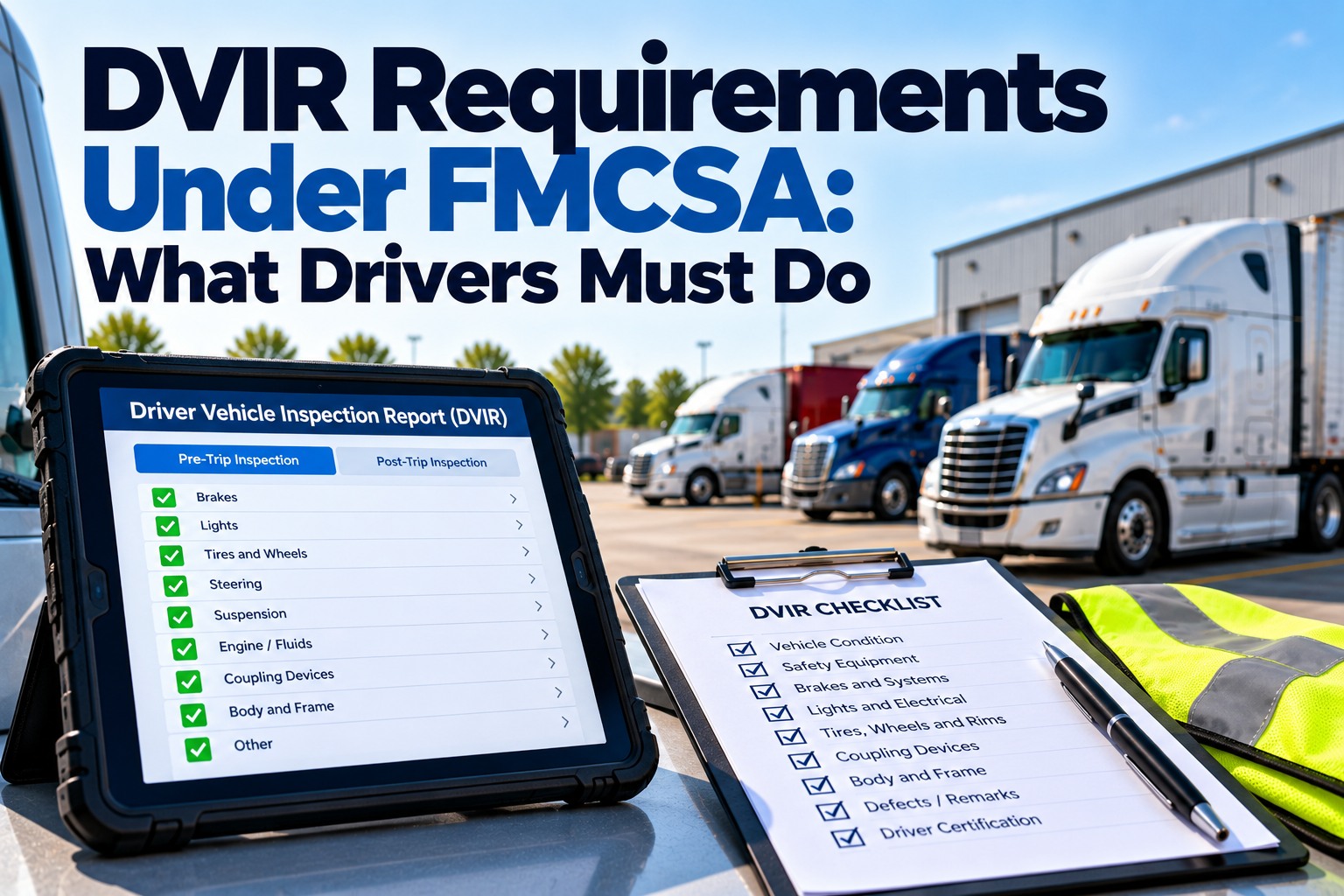
The Driver Vehicle Inspection Report (DVIR) is mandated by Federal Motor Carrier Safety Administration regulations under 49 CFR 396.11 and 396.13. These regulations establish specific requirements for both pre-trip and post-trip inspections that every commercial fleet must follow. Understanding these requirements is the foundation of any effective fleet safety checklist program.
Per FMCSA regulations, drivers of passenger-carrying and non-passenger commercial motor vehicles must inspect their vehicles and prepare a written report at the completion of each day's work on each vehicle operated. The report must cover specific parts and accessories, and must list any defect or deficiency discovered by or reported to the driver which would affect the safety of operation or result in mechanical breakdown. Motor carriers must repair any defect or deficiency before the vehicle is dispatched again, and certify on the original driver vehicle inspection report that repairs were made. See how automated work orders streamline the defect-to-repair workflow.
FMCSA Mandatory Inspection Items (49 CFR 396.11)
Complete Fleet Safety Checklist: 8 Critical Inspection Areas
The FMCSA mandates specific inspection items under CFR 396.11, but smart fleet managers go beyond minimums. This checklist covers every area required for DOT compliance plus additional items that prevent the most common accident causes. Use this as your daily driver vehicle inspection report (DVIR) foundation. For digital inspection forms that auto-generate work orders from failed items, schedule a FleetRabbit demo.
Brakes & Brake System
Steering Mechanism
Tires & Wheels
Lights & Reflectors
Coupling Devices
Visibility & Mirrors
Emergency Equipment
Documentation
Want Digital Checklists That Auto-Generate Work Orders?
FleetRabbit transforms paper inspections into instant maintenance actions. Failed items automatically create work orders, assign technicians, and track repairs to completion.
Daily vs Weekly vs Monthly: Fleet Inspection Schedule
Not every inspection needs to happen daily. A tiered approach ensures thorough coverage without wasting time on redundant checks. This schedule aligns with FMCSA requirements while incorporating preventive maintenance best practices that extend vehicle life and maximize uptime.
Top 10 Safety Violations That Cost Fleets the Most
Understanding the most common and costly violations helps you focus your inspection efforts where they matter most. These violations account for the majority of out-of-service orders and fines. A comprehensive safety checklist catches these issues before inspectors do. Fleet telematics integration provides additional monitoring for behavior-related violations.
Hours of Service Violations
ELD malfunctions, falsified logs, exceeding driving limits. Average fine: $16,000+
Brake System Defects
Worn pads, air leaks, adjustment issues. Results in 65% of out-of-service orders.
Lighting/Reflector Issues
Burned bulbs, cracked lenses, missing reflectors. Quick fix, but frequent citations.
Tire Violations
Insufficient tread, flat tires, mismatched sizes. Safety-critical, immediate OOS.
Cargo Securement
Loose loads, insufficient tie-downs, improper blocking. High accident risk.
Driver Qualification
Expired CDL, missing medical certificate, no drug test records.
Vehicle Maintenance Records
Missing inspection reports, incomplete repair documentation.
Hazmat Violations
Improper placarding, missing shipping papers, untrained drivers.
Windshield/Window Defects
Cracks in driver view area, tinted windows, broken wipers.
Emergency Equipment
Missing triangles, discharged extinguisher, no spare fuses.
Driver Safety Checklist: Beyond the Vehicle
Vehicle condition causes only part of fleet accidents. Driver readiness, behavior monitoring, and proper training prevent the remaining incidents. A complete fleet safety program addresses both machine and operator. According to research, driver behavior alone accounts for a significant portion of crash causation — monitoring and coaching programs document that 34% reductions in at-fault accidents are achievable within 6 months of deployment. FleetRabbit's AI-powered safety monitoring tracks driver behavior patterns that predict accidents before they happen.
Driver Qualification File
- Valid CDL with proper endorsements
- Medical certificate current (DOT physical)
- Clean MVR (3-year check required)
- Drug & alcohol clearinghouse verified
- Road test certification on file
- Employment application retained
Training Documentation
- Entry-level driver training (ELDT) completed
- Annual safety refresher documented
- Hazmat certification if applicable
- Remedial training after incidents
- Defensive driving certification
- Equipment-specific training records
Behavior Monitoring
- Hard braking events tracked & coached
- Speeding frequency logged
- Hours of service compliance verified
- Distraction indicators monitored
- Harsh acceleration patterns reviewed
- Following distance alerts addressed
Daily Readiness Check
- Fit for duty self-assessment
- No fatigue indicators present
- Route & load briefing completed
- Emergency procedures knowledge confirmed
- Weather & road condition awareness
- Communication device functional
Pre-Trip vs Post-Trip Inspection: What's Required?
FMCSA regulations distinguish between pre-trip and post-trip inspections, each with specific purposes and requirements. Understanding these differences ensures your fleet maintains full compliance while catching defects at the right time.
Pre-Trip Inspection
Required by CFR 396.13
- Must be completed before driving
- Driver must be satisfied vehicle is safe
- Review previous day's DVIR
- Verify any reported defects were repaired
- Sign acknowledgment of repair completion
- Check all FMCSA-mandated items
- Takes 7-15 minutes when done properly
Post-Trip Inspection
Required by CFR 396.11
- Must be completed at end of each day
- Written report required if defects found
- No written report needed if no defects (but recommended)
- Report must identify vehicle
- List all defects affecting safety
- Driver must sign the report
- Carrier must retain for 90 days
Compliance Impact: Before vs After Safety Checklists
Systematic safety checklists deliver measurable results. Fleets that implement comprehensive inspection programs see dramatic improvements across every safety metric within 12-24 months. The data below represents aggregated performance from fleets using structured safety programs compared to industry averages.
| Safety Metric | Without Checklist | With Checklist | Improvement |
|---|---|---|---|
| DOT Violations/Year | 3.2 per vehicle | 0.1 per vehicle | 97% reduction |
| Out-of-Service Rate | 8-12% | 0-2% | 90%+ reduction |
| At-Fault Accidents | Industry average | 34-52% below average | Significant drop |
| Roadside Inspection Pass | 75-80% | 95-100% | 25% improvement |
| Insurance Premium | $13,500/vehicle | $9,200/vehicle | 32% savings |
| CSA Score | High risk | Favorable rating | Better contracts |
| Load Damage Claims | $8,500 annually | $200 annually | 98% reduction |
| Customer Retention | 75% | 98% | 23% improvement |
Fleet Safety Audit Checklist: Annual Review
Beyond daily inspections, comprehensive safety programs require periodic audits to ensure policies are being followed and documentation is complete. Use this annual audit checklist to prepare for DOT audits and identify program gaps before regulators do.
Driver Files Audit
- All driver qualification files complete
- Medical certificates current for all drivers
- MVRs pulled annually for each driver
- Clearinghouse queries documented
- Training records up to date
- Road test certifications on file
Vehicle Files Audit
- Annual inspections current for all vehicles
- 90-day DVIR retention verified
- Maintenance records complete
- Registration/insurance documents current
- Recall compliance documented
- ELD certificates up to date
Safety Program Audit
- Written safety policies accessible
- Accident register maintained
- Drug/alcohol testing program compliant
- Hours of service records accurate
- Emergency response plan documented
- Insurance requirements met
Training Program Audit
- ELDT compliance verified
- Annual refresher training documented
- Hazmat training current if applicable
- Remedial training records complete
- Safety meeting attendance tracked
- Defensive driving certifications valid
Need Help Preparing for a DOT Audit?
FleetRabbit maintains all documentation digitally with automatic compliance tracking. Generate audit-ready reports in seconds, not hours.
How to Implement Your Fleet Safety Program
Downloading a checklist template is step one. True safety transformation requires systematic implementation, driver buy-in, and technology that enforces compliance. Here's the proven 4-step approach that successful fleets follow, based on industry best practices and regulatory guidance.
Establish Written Policies
Document inspection requirements, defect reporting procedures, and accountability measures. Define which defects are safety-critical vs. monitor-only. Make policies accessible to every driver. Include consequences for non-compliance and recognition for exemplary safety records. Review and update policies annually.
Train Every Driver Thoroughly
Don't assume drivers know proper inspection techniques. Conduct hands-on training with your specific vehicles. Cover all FMCSA-mandated inspection items plus company-specific requirements. Test competency and document completion. Repeat training annually and after any incidents. Use video training for consistency across locations.
Digitize Inspections Completely
Paper forms create gaps between defect discovery and repair — sometimes days or weeks. Digital inspection apps surface failed items instantly, generate automatic work orders, and create audit-ready documentation. Mobile apps also enforce complete inspections by requiring all fields before submission. AI-powered systems can even predict failures before they occur.
Monitor & Coach Continuously
Track inspection completion rates, defect trends, and driver performance. Use telematics data to identify risky behaviors like hard braking, speeding, and distraction. Provide coaching before incidents occur, not after. Recognize drivers with excellent safety records. Review safety metrics weekly with management and monthly with the entire team.
Paper vs Digital Checklists: The ROI Comparison
Many fleets still rely on paper inspection forms, but the hidden costs of paper-based systems far exceed the investment in digital solutions. Here's how the two approaches compare across key operational metrics.
Paper Checklists
- Forms lost or damaged (15-20%)
- Illegible handwriting issues
- Days-long delay to maintenance
- Manual data entry required
- Storage space for 90+ day retention
- No real-time visibility
- Difficult audit preparation
- 60-70% completion compliance
Digital Checklists
- 100% capture rate, cloud stored
- Photo documentation of defects
- Instant work order generation
- Automatic data organization
- Unlimited cloud retention
- Real-time fleet-wide visibility
- One-click audit reports
- 95%+ completion compliance
Frequently Asked Questions
For non-passenger CMVs, FMCSA only requires a DVIR when defects are found. However, best practice is to complete a DVIR daily regardless — it documents due diligence and creates a maintenance history that proves compliance. Passenger-carrying vehicles always require daily DVIRs whether defects exist or not. Most fleet insurance policies and comprehensive safety programs mandate daily completion for all vehicle types to ensure consistency and liability protection.
FMCSA requires motor carriers to retain the original DVIR, certification of repairs, and driver's review certification for 90 days from the date of the initial report. However, for liability protection in litigation, many fleets retain records for 3+ years — the typical statute of limitations for personal injury claims. FleetRabbit stores inspection records indefinitely in the cloud, ensuring you always have documentation available when needed.
Critical out-of-service conditions that must be repaired before the vehicle can operate include: brakes inoperative on 20% or more of brake positions, steering system defects, fuel system leaks, exhaust leaks under the driver or sleeper compartment, frame cracks or damage, flat tires on steering axle, and any defect likely to cause loss of control or rollover. These items should be priority focus areas during every inspection.
Yes, absolutely. FMCSA accepts electronic DVIRs as long as they capture all required information and can be presented during inspections. Electronic systems are actually preferred by many inspectors because they create timestamped records, prevent incomplete submissions through required fields, and automatically route defects to maintenance. The key requirements are that records must be accessible during inspections and retained for the required 90-day period. Try FleetRabbit's electronic DVIR system free.
Three strategies consistently work: First, make it easy with mobile apps and pre-configured checklists that guide drivers through each step — complexity breeds non-compliance. Second, track completion rates and address non-compliance immediately with coaching and accountability measures. Third, show drivers the "why" — accident costs, job security implications, personal liability risks, and insurance impacts. Fleets using digital inspections with these approaches see 95%+ compliance rates compared to 60-70% with paper forms.
A DVIR (Driver Vehicle Inspection Report) is a specific, federally-mandated document required by FMCSA regulations for commercial motor vehicles. It must cover the 11 specific items listed in CFR 396.11. A fleet safety checklist is a broader document that typically includes the DVIR requirements plus additional company-specific items, driver qualification checks, behavior monitoring metrics, and other safety elements. Think of the DVIR as the regulatory minimum, while a comprehensive safety checklist goes beyond compliance to maximize protection.
Despite the name, "annual" inspections must be completed at least once every 12 months — not once per calendar year. The inspection must cover all items in 49 CFR 396 Appendix A: Minimum Periodic Inspection Standards. The inspection sticker, report, or decal must be kept on the vehicle at all times. Motor carriers must retain the periodic inspection report for 14 months. Many fleets schedule inspections 30-60 days before expiration to allow time for any required repairs.
Download Your Free Fleet Safety Checklist Template
Get the complete inspection framework used by top-performing fleets. Includes daily DVIR, weekly inspection, monthly audit, and driver qualification checklists — plus implementation guide and training materials.