Fleet operations are becoming smarter, faster, and more data-driven in 2026—thanks to telematics systems powered by IoT and real-time analytics. The days of managing vehicles through phone calls, paper logs, and educated guesses are ending. Today's leading logistics companies track every vehicle, monitor every engine parameter, and optimize every route using data that flows continuously from their assets to cloud-based platforms.
The results speak for themselves: fleets using modern telematics systems report efficiency improvements of 30-40%, fuel savings of 15-25%, and maintenance cost reductions of 25-30%. This isn't incremental improvement—it's operational transformation driven by technology that was enterprise-only a decade ago but is now accessible to fleets of any size.
This comprehensive guide explains exactly how fleet telematics systems work, the technologies that power them, and how to implement them effectively to transform your fleet operations in 2026 and beyond.
Want Real-Time Visibility Into Your Fleet?
See how telematics works in action—explore it in a quick demo tailored to your fleet size and operations.
What is a Fleet Telematics System?
A fleet telematics system is an integrated technology platform that collects, transmits and analyzes data from vehicles in real time. The term "telematics" combines telecommunications and informatics—reflecting how these systems merge communication networks with data processing to provide actionable intelligence about fleet operations.
At its core, telematics answers the fundamental questions fleet managers need answered: Where are my vehicles? How are they performing? What do my drivers need? What's about to break? Modern systems answer these questions continuously, automatically, and with increasing predictive accuracy.
Core Components of a Telematics System
Hardware Devices
GPS receivers, IoT sensors, and telematics control units installed in vehicles
Communication Networks
Cellular, satellite, and Wi-Fi connectivity transmitting data to central systems
Cloud Platform
Servers processing data, running analytics, and storing historical information
Software Interface
Dashboards, mobile apps, and reporting tools for viewing and acting on data
Unlike standalone GPS trackers that only show location, comprehensive telematics platforms integrate location data with engine diagnostics, driver behavior monitoring, fuel consumption tracking, maintenance scheduling, and predictive analytics—creating a complete operational intelligence system.
How Fleet Telematics Works: Step-by-Step
Understanding how telematics systems function helps you evaluate solutions and maximize their value. The process flows through four interconnected stages that happen continuously and automatically.
Data Collection
IoT sensors throughout the vehicle capture hundreds of data points every second. GPS receivers track location. OBD-II ports read engine diagnostics. Accelerometers detect driving behavior. Fuel sensors monitor consumption. Temperature sensors check cargo conditions. This raw data forms the foundation of fleet intelligence.
Data Transmission
Telematics control units (TCUs) aggregate sensor data and transmit it to cloud servers via cellular networks—typically 4G/LTE with 5G becoming standard in 2026. Update frequencies range from every few seconds for real-time tracking to hourly for less time-sensitive data, balancing visibility needs with data costs.
Data Processing
Cloud platforms receive raw data streams and apply algorithms that transform numbers into insights. Machine learning models identify patterns in engine behavior that predict failures. Analytics engines calculate fuel efficiency trends. Geofencing systems detect route deviations. This processing happens in milliseconds, enabling real-time alerts.
Insights and Actions
Processed data appears on dashboards, triggers automated alerts, and feeds into other business systems. Fleet managers see vehicle locations on live maps. Maintenance teams receive predictive alerts. Dispatchers get route optimization suggestions. The system transforms raw data into decisions and actions that improve operations.
This entire cycle—from sensor reading to actionable insight—happens continuously across your entire fleet, creating a living picture of your operations that updates in real time. Explore how telematics platforms integrate with existing fleet systems.
Key Technologies Behind Fleet Telematics
Modern telematics systems combine multiple technologies, each contributing specific capabilities to the overall solution. Understanding these technologies helps you evaluate what features matter most for your operations.
IoT Sensors
Internet of Things sensors monitor everything from engine temperature and oil pressure to tire pressure and cargo door status. Modern vehicles may have 50+ sensors generating continuous data streams. These sensors form the nervous system of telematics, detecting conditions that humans couldn't monitor manually.
- Engine diagnostics (temperature, pressure, RPM)
- Fuel consumption and tank levels
- Tire pressure monitoring systems (TPMS)
- Cargo and refrigeration monitoring
GPS Tracking
Global Positioning System receivers provide location data accurate to within 2-3 meters. Beyond simple "dot on a map" tracking, GPS enables geofencing, route compliance monitoring, and historical playback. Combined with cellular timestamps, GPS creates a complete movement record for every vehicle.
- Real-time location updates (10-30 seconds)
- Historical breadcrumb trails
- Geofence entry/exit alerts
- Route deviation detection
Telematics Control Units (TCU)
TCUs are the hardware brains connecting vehicles to cloud platforms. These ruggedized devices aggregate data from multiple sensors, process it locally for time-sensitive alerts, and transmit to servers via cellular networks. Modern TCUs support over-the-air updates and can run edge computing algorithms locally.
- Multi-sensor data aggregation
- Edge computing for local processing
- Cellular/satellite communication
- Firmware updates over-the-air
Cloud Analytics
Cloud platforms process massive data volumes using machine learning and AI algorithms. They identify patterns across your fleet that reveal optimization opportunities, predict maintenance needs before failures occur, and generate insights that would be impossible to discover manually.
- Machine learning pattern recognition
- Predictive maintenance algorithms
- Benchmarking across fleet
- Trend analysis and forecasting
Mobile Dashboards
Mobile apps put fleet visibility in managers' pockets. Real-time maps, push notifications for alerts, and approval workflows enable management from anywhere. Drivers use companion apps for navigation, electronic logging (ELD), and communication with dispatch.
- Real-time fleet maps
- Push notifications for alerts
- Driver mobile applications
- Remote management capabilities
Curious How These Technologies Come Together in Real Operations?
Take a closer look with a live walkthrough that shows how IoT, GPS, and analytics work in practice.
Schedule Live WalkthroughBenefits of Fleet Telematics: The ROI Case
Telematics delivers measurable returns across multiple operational dimensions. Understanding these benefits helps build the business case for investment and set realistic expectations for results.
Operational Efficiency Gains
Telematics transforms efficiency through multiple mechanisms working together. Route optimization reduces miles driven. Real-time dispatching assigns the closest vehicle to each job. Automated reporting eliminates manual data entry. The compound effect of these improvements typically delivers 30-40% efficiency gains.
- Smart dispatching based on real-time location
- Route optimization reducing dead miles
- Automated compliance and reporting
- Faster response to customer inquiries
Fuel Cost Reduction
Fuel typically represents 30-40% of fleet operating costs, making it the largest controllable expense. Telematics reduces fuel consumption through idle time monitoring, speed management, route optimization, and driver behavior coaching—typically achieving 15-25% savings. Learn how AI optimizes fleet fuel consumption.
- Idle time reduction and alerts
- Speed limit enforcement
- Aggressive driving detection
- Fuel theft prevention
Enhanced Driver Safety
Telematics improves safety through visibility and accountability. When drivers know their behavior is monitored, they naturally drive more carefully. Coaching based on specific events creates targeted improvement. Fleet-wide, telematics-equipped vehicles show 25-35% fewer accidents than unmonitored vehicles.
- Harsh braking and acceleration alerts
- Speeding notifications and reporting
- Driver scorecards and coaching
- Fatigue and distraction monitoring
Predictive Maintenance
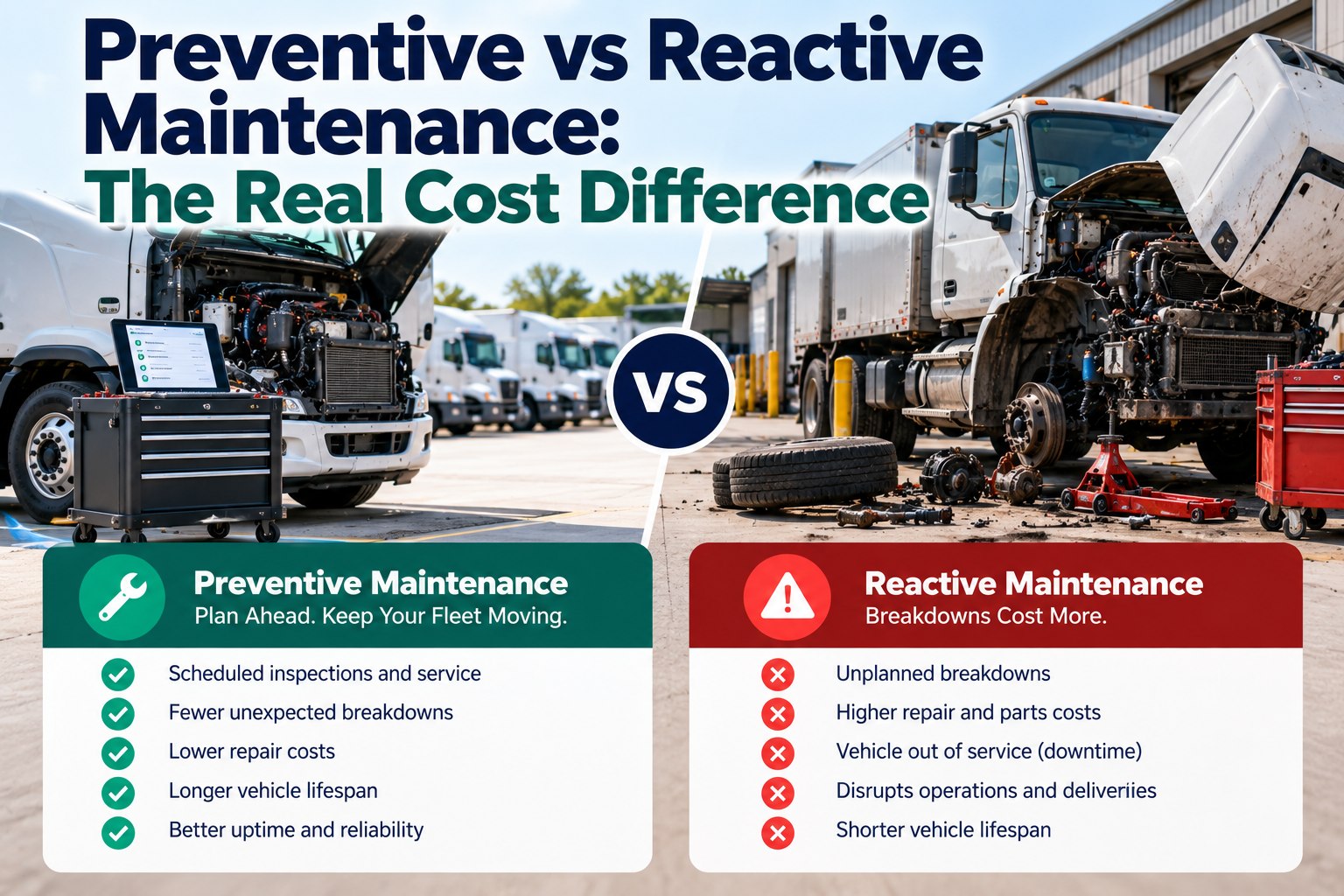
Telematics enables the shift from reactive to predictive maintenance. Engine diagnostics reveal developing problems before they cause breakdowns. Usage-based scheduling ensures maintenance happens when needed—not too early (wasting money) or too late (causing failures). Explore AI-powered predictive maintenance.
- Engine fault code monitoring
- Usage-based service scheduling
- Component wear prediction
- Automated work order generation
Real-World Use Cases Across Industries
Telematics delivers value across every fleet type, though specific applications vary by industry. Here's how different sectors leverage the technology:
Logistics and Trucking Companies
Long-haul trucking operations use telematics for ELD compliance, Hours of Service tracking, fuel optimization across thousands of miles, and customer visibility with accurate ETAs. Real-time tracking enables proactive communication about delays and dynamic rerouting around traffic or weather.
Waste Management Fleets
Waste collection operations leverage telematics for route optimization across hundreds of daily stops, container monitoring with fill-level sensors, and proof-of-service documentation. GPS breadcrumb trails verify every pickup location was serviced, reducing customer complaints and billing disputes.
Last-Mile Delivery Operations
Delivery fleets use telematics for dynamic routing that adapts to traffic conditions, customer ETA notifications, and proof of delivery with GPS timestamps. Integration with dispatch systems enables real-time workload balancing across drivers as conditions change throughout the day.
Field Service Companies
Service fleets dispatching technicians use telematics to assign the nearest available technician to emergency calls, track job completion with geofence-triggered timers, and optimize daily routes across multiple customer appointments. Real-time visibility improves customer communication about arrival times.
FleetRabbit Telematics Capabilities
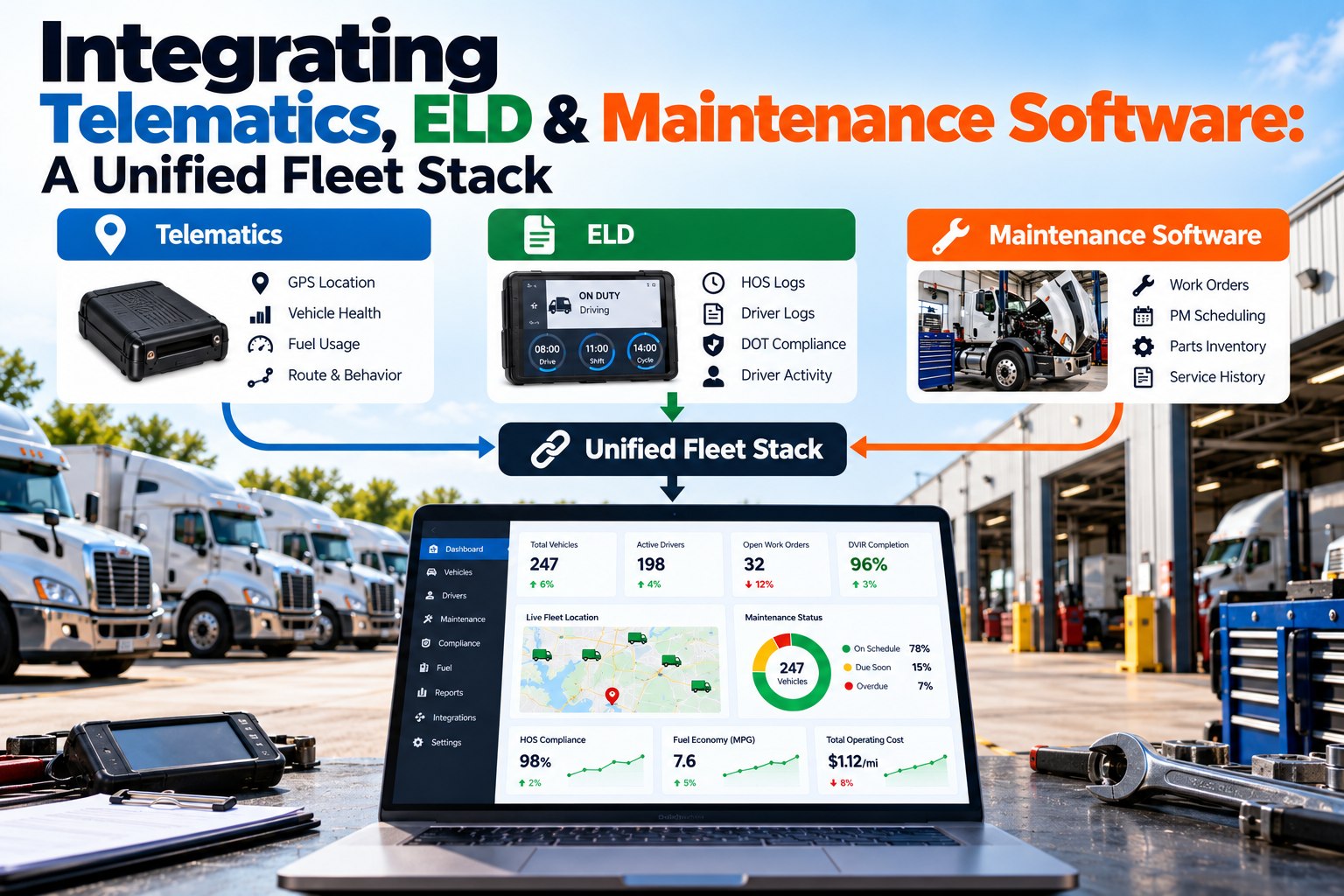
FleetRabbit integrates telematics capabilities with maintenance management, inspection workflows, and fleet analytics in a unified platform. Rather than juggling multiple disconnected systems, you get comprehensive fleet intelligence through a single interface.
Real-Time Tracking
15-second location updates with live maps showing your entire fleet. Geofencing alerts for job sites, customer locations, and unauthorized areas. Historical playback for investigating incidents or disputes.
Predictive Alerts
AI-powered monitoring detects developing problems before they cause breakdowns. Engine fault code alerts with severity ratings. Automated maintenance scheduling based on actual usage and condition data.
Data Analytics
Comprehensive dashboards showing fleet performance, driver behavior scores, fuel efficiency trends, and maintenance KPIs. Custom reports exportable for stakeholder presentations. Benchmarking across your fleet to identify top and bottom performers.
Integrated Inspections
Digital DVIR checklists that drivers complete on mobile devices. Photo capture for documenting defects. Automatic routing to maintenance teams. Compliance documentation stored and accessible for audits.
Want to Unlock Real-Time Insights for Your Fleet?
Get a personalized FleetRabbit walkthrough tailored to your fleet size and operational challenges.
Get Personalized WalkthroughTelematics vs Traditional Fleet Management
Understanding the contrast between traditional and telematics-enabled fleet management clarifies the transformation these systems enable:
| Factor | Traditional Management | Telematics-Enabled |
|---|---|---|
| Vehicle Visibility | Phone calls to drivers; last known location hours old | Real-time GPS updates every 10-30 seconds |
| Data Collection | Manual logs, paper forms, end-of-day reports | Automated sensor data streaming continuously |
| Maintenance Approach | Calendar-based schedules; reactive repairs | Usage-based scheduling; predictive alerts |
| Fuel Management | Credit card receipts; monthly reconciliation | Real-time consumption; idle alerts; theft detection |
| Driver Behavior | Unknown until accidents or complaints occur | Continuous monitoring with coaching opportunities |
| Route Optimization | Static routes; driver discretion | Dynamic routing based on traffic and conditions |
| Compliance | Paper logs; manual audits; risk of errors | Automated ELD; digital records; audit-ready |
| Decision Making | Based on experience and intuition | Data-driven with actionable analytics |
The operational gap between these approaches grows wider every year. Fleets without telematics increasingly compete at a disadvantage against data-enabled competitors who optimize continuously.
Implementation Strategy: Getting Started Right
Successful telematics implementation requires planning beyond just installing hardware. Here's a proven approach to deployment:
Device Installation
Hardware installation typically takes 30-60 minutes per vehicle for basic OBD-II plug-in devices, or 2-4 hours for hardwired installations with additional sensors. Plan installation during natural downtime—overnight or weekends—to avoid operational disruption. Start with a pilot group of 5-10 vehicles to validate configuration before fleet-wide rollout.
Software Configuration
Configure the platform to match your operational needs before going live. Set up geofences around key locations. Define alert thresholds for speeding, idling, and driver behavior. Create user accounts with appropriate permissions. Import vehicle and driver data. Configure integration with existing systems like dispatch or maintenance software.
Team Training
Train different user groups on their specific workflows. Dispatchers need real-time map and alert training. Maintenance teams need diagnostic and scheduling features. Managers need reporting and analytics. Drivers need mobile app and any behavior expectations. Effective training takes 2-4 hours per role and dramatically impacts adoption success.
Optimization and Scaling
After 30-60 days, review initial results and optimize configuration. Adjust alert thresholds that trigger too many or too few notifications. Add reports that stakeholders find useful. Expand to remaining vehicles. Most fleets achieve full ROI within 60-90 days of complete deployment. Calculate your fleet's telematics ROI potential.
Future Trends: Telematics in 2026 and Beyond
Fleet telematics continues evolving rapidly. Here's what's shaping the technology's future:
AI Integration
Artificial intelligence is transforming telematics from reactive monitoring to proactive optimization. Machine learning algorithms predict failures weeks in advance, optimize routes in real-time based on dozens of variables, and identify driver coaching opportunities automatically. By 2027, AI will be standard rather than premium in telematics platforms.
Advanced Predictive Analytics
Predictive capabilities are extending beyond maintenance to encompass entire operations. Systems will predict customer demand patterns, anticipate traffic disruptions before they occur, and recommend staffing levels based on forecasted workloads. The shift from historical reporting to forward-looking intelligence is accelerating.
Autonomous Fleet Integration
As autonomous vehicles enter commercial fleets, telematics platforms will evolve to manage mixed fleets of human-driven and autonomous vehicles. Remote monitoring capabilities will become mission-critical for overseeing driverless operations. The telematics infrastructure being deployed today will serve as the foundation for autonomous fleet management.
Conclusion: The Telematics Imperative
Fleet telematics has evolved from competitive advantage to operational necessity. The efficiency gains, cost savings, and visibility these systems provide are too significant to ignore—and competitors who have already adopted telematics are pulling ahead.
The technology is proven, the ROI is documented, and the implementation path is well-established. Fleets of every size, from 5 vehicles to 5,000, are achieving measurable improvements through telematics adoption. The question isn't whether to implement telematics—it's how quickly you can start capturing these benefits.
Start with your biggest operational pain points. Whether that's fuel costs, maintenance surprises, or customer visibility, telematics delivers immediate value while building the foundation for continuous optimization as your data grows.
Data-Driven Fleets Outperform the Rest
Start building a smarter, more efficient operation today. See how FleetRabbit's telematics capabilities can transform your fleet with a personalized demo.