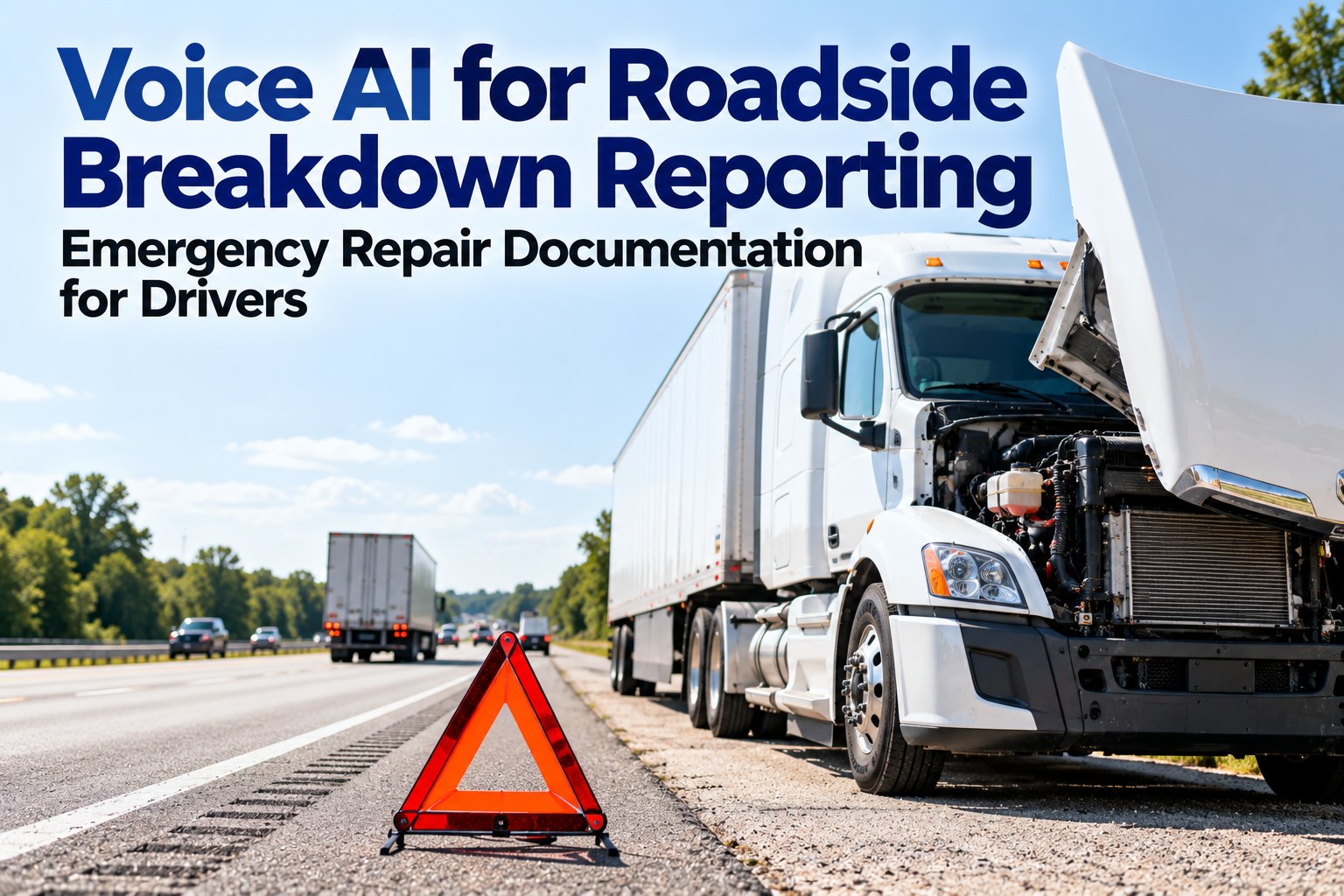
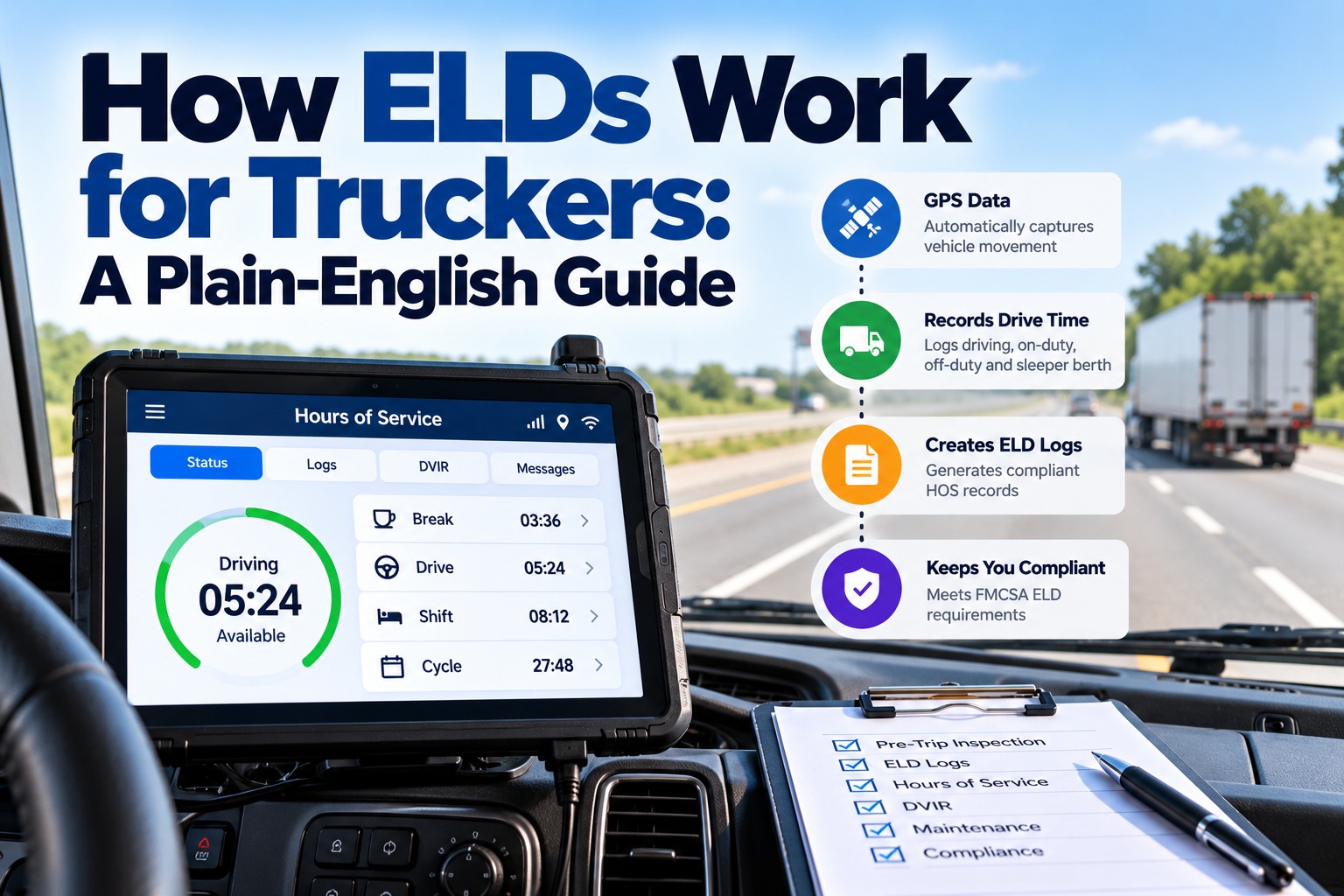
Voice AI for roadside breakdown reporting lets a driver describe a breakdown out loud while waiting for a tow or a mobile mechanic, and turns the description into a structured incident record that dispatch and the shop can act on. It matters because shops are short-staffed and every minute of unclear information adds to downtime. The driver is the only person who sees the failure happen, so the report should capture what they saw before the details fade. Hear a breakdown get reported by voice, or see how mobile mechanics document the repair.
VOICE BREAKDOWN REPORTING · DRIVERS AND DISPATCH
Your Driver Is the First Technician on Scene. Capture What They See.
Between the breakdown and the tow truck there is a window where the driver knows more than anyone. A spoken report during that wait gives dispatch and the shop what they need before the repair even starts.
DRIVER, WAITING FOR HELP
"Tractor 52 lost power on the grade. Coolant smell, check engine light on. I'm on the shoulder, hazards on."
INCIDENT CREATED
UnitTractor 52
SymptomsPower loss, coolant smell
StatusSafe on shoulder
Time loggedAt breakdown
The First Thirty Minutes, in Order
Safety comes before paperwork. The widely used order is get safe, get seen, get help, then document. Voice fits in the last two stages, when the driver is out of traffic and has both hands free.
A BREAKDOWN'S FIRST 30 MINUTES
Get safeOff the lane, hazards on, triangles out.
LookLeaks, smoke, air hiss, codes, if safe.
Get helpCall dispatch or roadside with a complete description.
DocumentPhotos, times, ticket number, load status.
Triangles: on a divided highway, warning devices go 10, 100 and 200 feet behind the trailer, with more distance on curves and hills. Never stand between the truck and traffic, and call 911 for fire, major spills or heavy smoke.
Five Facts Dispatch Needs in the First Call
A good report answers the same five questions every time. Spoken in order, it takes under a minute, and the dispatcher never has to ask the driver to repeat themselves.
1
Where
"I-80 eastbound, mile marker 212, right shoulder."
2
Which truck
"Tractor 52, trailer 3318."
3
What happened
"Lost power on the grade, check engine light, smell of coolant."
4
The load
"Dry van, 38,000 pounds, due in Omaha by six."
5
How safe
"On the shoulder, hazards on, triangles out, no injuries."
Give your drivers a script that gets the right truck sent
Run through a real breakdown from last month and see how the report would have reached dispatch.
Tow or Mobile Repair: The Decision the Report Feeds
A complete report lets dispatch choose between a tow and a mobile mechanic with confidence. One common rule of thumb: default to towing if recovery will take over an hour or if the repair cannot be confirmed within 30 minutes on the roadside.
Is the load high-risk? Hazmat, temperature-controlled or high-value
YES
Tow
Move the load first, diagnose at the shop.
NO
Check the symptoms
Battery, tire, hose or air line suggests a field fix. Engine or transmission failure usually does not.
Can a mobile mechanic confirm and finish the repair within about an hour?
YES
Send a mobile mechanic
Avoids the tow bill and keeps the truck moving.
NO OR UNSURE
Tow to the shop
Do not wait on an uncertain roadside fix.
What a Wrong Call Costs
Geotab puts heavy-duty towing and recovery at $2,500 to $5,000 or more per event, against about $450 to $760 in direct repair cost for a typical breakdown, and about $90.89 an hour in driver idle time. Better information sent to dispatch early raises the odds of the cheaper outcome.
COST PER BREAKDOWN EVENT (ROUGH RANGES, $0 TO $5,000)
Heavy-duty tow and recovery
$2,500–5,000+
Direct repair cost
$450–760
$0$1,250$2,500$3,750$5,000
Say It and Snap It
Voice carries the story and photos carry the proof. Together they give the shop a record of how the truck looked and what the driver observed.
SAY IT
- Exact time the problem started
- What the truck was doing: grade, speed, load
- Sounds, smells and warning lights
- Fault codes shown on the dash
- Service ETA and ticket number
SNAP IT
- Scene overview with the truck's position
- Dash gauges and any codes
- Visible damage or leaks
- Tractor and trailer identification
- Seals and locks intact
Why Complete Reports Matter More Now
ATRI's 2025 technician research found about two-thirds of shops understaffed, put at 65.5% in one summary of its findings, and 44% of truck technicians considering other jobs. With fewer people to triage each call, a vague breakdown report costs more than it used to.
65.5%
of diesel shops understaffed in 2025
44%
of truck technicians considering other jobs
19.3%
average technician vacancy rate
Live in Days, Not Quarters
Day 1
Connect your vehicles and drivers
Day 2
Share the five-fact script with a pilot group
Day 3
Review the first reports with dispatch
Turn the Wait for a Tow Into a Complete Record
FleetRabbit's voice AI converts spoken observations into structured records that sync to the rest of your fleet system, so a breakdown becomes a work order with the driver's account already attached.
See the voice AI guide for fleet teams.
Hands-free reports
Symptoms and codes
Straight to work orders
Timestamped record
Frequently Asked Questions
What is voice AI for roadside breakdown reporting?
It lets a driver describe a breakdown by voice and creates a structured incident record with location, unit, symptoms, load status and safety status. Dispatch and the shop see it immediately.
Is it safe to use while stopped on a shoulder?
Safety comes first. Get the truck off the lane, turn on hazards and place warning devices before anything else. Voice is for after that, and it keeps hands free instead of putting a driver at risk typing near traffic.
What should a driver report?
Location, unit and trailer, what happened and any warning lights or codes, load type and deadline, and the safety status of the scene. Photos of the scene and damage add proof.
Does it help decide between a tow and mobile repair?
Yes. Specific symptoms help dispatch judge whether a field fix is realistic. A battery, tire or hose problem is often fixable on site, while engine or transmission failure usually is not.
What if the driver has no signal?
Ask your vendor how offline capture works, and test in rural areas. FleetRabbit's guide describes offline operation with later sync. See
the voice AI guide.
Can the report become a work order?
Yes. Create the record when the breakdown happens, not after recovery, so the repair history shows the original complaint and timing.
Does voice work in highway noise?
Wind and passing traffic are loud. Test on real shoulders with a phone microphone or headset and review the first reports for misheard locations and numbers.
Make the Wait for Help Count
A driver who reports clearly gets the right help sooner and leaves the shop with the full story. Give them the words and the tool.
Free tier for up to 3 vehicles · No credit card required · Reports sync to work orders
October 3, 2026
By Alex Rowan
All Articles