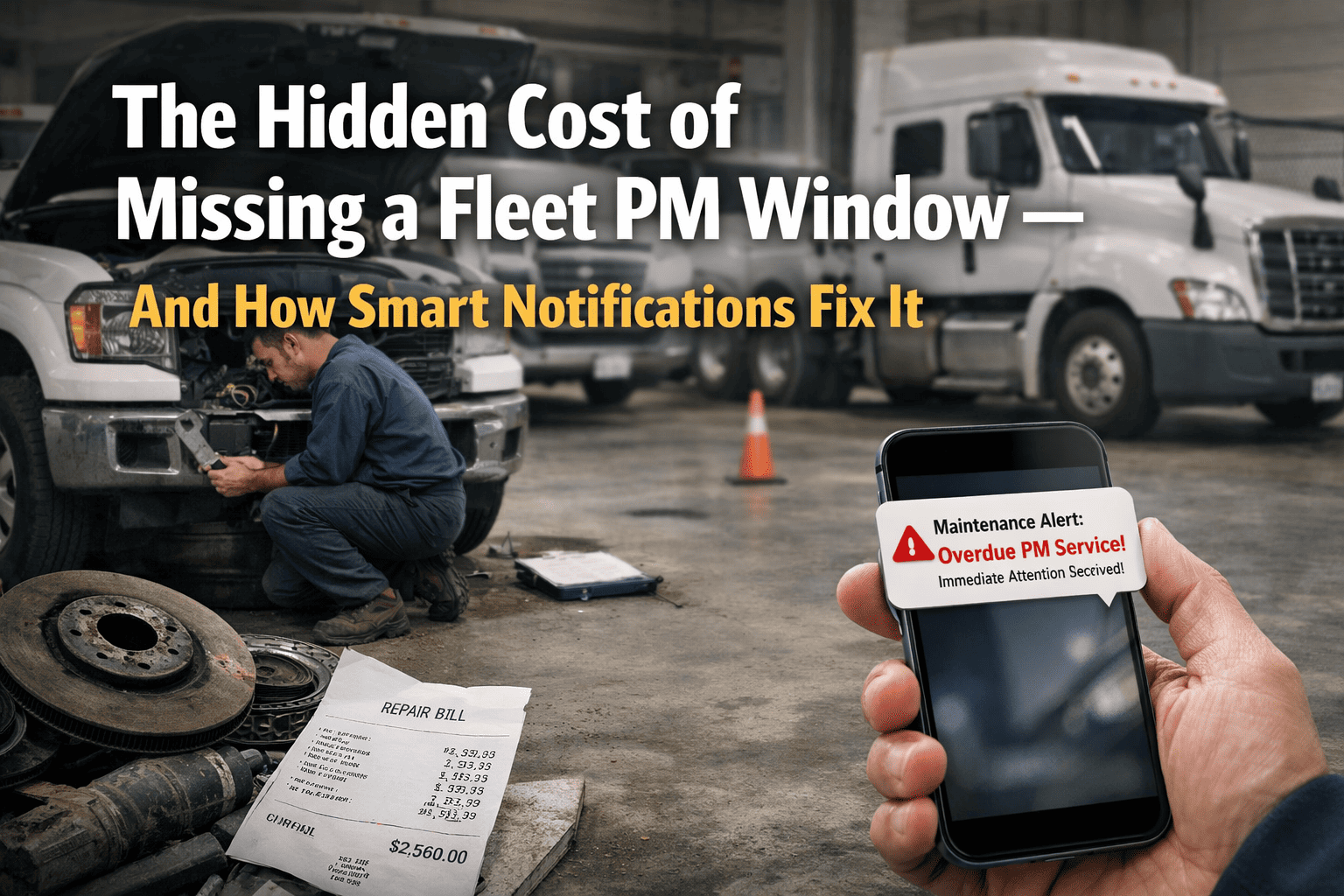
Unit 27 missed its oil change window by 800 miles. Nobody noticed until the engine seized on I-95 at 2 AM with a full load. What should have been a $420 preventive service became a $14,500 engine rebuild, plus $1,200 towing, plus $2,400 in lost delivery revenue, plus one very angry customer who never called back. This scenario plays out across thousands of fleets every week,not because fleet managers don't care about maintenance, but because manual tracking fails at scale. Research shows that skipping even one preventive maintenance cycle increases breakdown probability by 15-25%, and unplanned repairs cost 3-9x more than the same work performed on schedule. Smart notifications change this equation by making missed PM windows virtually impossible. Book a demo to see how automated alerts eliminate missed services.
Every Missed Service Has a Price Tag
Manual tracking misses PM windows. Missed windows cause breakdowns. Breakdowns cost 3-9x more than scheduled service. Smart notifications break this cycle.
The Math Nobody Wants to Do
A single missed PM window triggers a cascade of costs that most fleet managers never fully calculate. The repair bill is just the visible tip—downtime, emergency parts, driver overtime, and lost customers compound underneath. Here's what one missed oil change actually costs when the engine fails:
Compare that to the preventive oil change that would have cost $420 and taken 45 minutes during a scheduled shop visit. The math is brutal: one missed PM window generated a 44x cost multiplier. And this happens across fleets every single day because spreadsheets don't send reminders and nobody remembers to check the maintenance log. Schedule a demo to see how smart alerts prevent this scenario.
Why Manual Tracking Always Fails
Even the most organized fleet managers struggle with manual PM tracking. The problem isn't effort—it's that manual systems require constant attention, and human attention is a finite resource that gets pulled in a hundred directions every day.
Spreadsheets Don't Send Alerts
A spreadsheet can store a due date. It can't tap you on the shoulder when that date passes. By the time someone opens the file to check, the window is already missed.
Mileage Updates Lag Behind
If odometer readings only get logged weekly (or worse, monthly), a vehicle can blow past its PM threshold before anyone notices. Automated mileage sync solves this instantly.
No Escalation Path
Manual systems have no concept of urgency. A PM due in 500 miles looks the same as one due in 50. Without escalating alerts, critical services slip through.
Knowledge Lives in One Head
When the person who "knows the schedule" is out sick, on vacation, or quits? The entire PM program falls apart until someone else figures out the system.
Stop Trusting Spreadsheets With Your Fleet
Smart notifications track every PM interval automatically and alert the right people at the right time. No more missed windows. No more surprise breakdowns.
How Smart Notifications Actually Work
Modern fleet maintenance software doesn't just store schedules—it actively monitors every vehicle against its PM intervals and sends alerts before services become overdue. Here's the notification cascade that ensures nothing slips through:
The Numbers: Manual vs. Smart Notifications
Industry data shows the impact of automated PM alerts is dramatic and immediate. Fleets that implement smart notifications see measurable improvements within 60-90 days:
5 PM Windows You Can't Afford to Miss
Not all preventive maintenance is equal. Some services, when missed, create catastrophic cascades. These five PM windows demand automated tracking because the consequences of missing them are severe:
Oil & Filter Changes
Engine lubrication degrades with use. Missed oil changes cause accelerated wear, sludge buildup, and eventual engine seizure.
Brake Inspections
Worn brakes don't just fail—they damage rotors, calipers, and create safety hazards. Regular inspection catches wear before catastrophic failure.
Transmission Service
Fluid degradation causes shifting problems and internal wear. Transmission rebuilds are among the most expensive fleet repairs.
Cooling System Service
Coolant breaks down and loses protection. Overheating damages heads, gaskets, and can crack engine blocks beyond repair.
Tire Rotations & Inspections
Uneven wear shortens tire life and creates blowout risk. Regular tire tracking prevents roadside emergencies and extends tire life 20-30%.
Never Miss a Critical PM Window Again
FleetRabbit tracks every service interval and sends escalating alerts before anything becomes overdue. Start with 3 vehicles free, then $3/vehicle/month. Setup takes 15 minutes.
Setting Up Smart Notifications: What Actually Matters
Not all notification systems are created equal. The difference between a system that prevents missed PMs and one that becomes noise you ignore comes down to configuration. Start your free trial and implement these best practices:
Set Lead Time on Alerts
Configure alerts 500-1,000 miles before service is due. This gives time to schedule without rushing or emergency shop visits.
Assign Clear Ownership
Every alert should notify specific people. Fleet manager gets the first alert, supervisor gets escalation if no action is taken.
Use Multiple Trigger Types
Combine mileage, engine hours, and calendar time. Use whichever comes first. A vehicle that sits still still needs annual inspections.
Sync Odometer Automatically
Manual mileage entry creates gaps. Integrate with telematics or GPS for real-time odometer updates that trigger alerts accurately.
Connect Alerts to Work Orders
When an alert triggers, the next step should be a work order—not an email that requires manual follow-up. Automation end-to-end.
Frequently Asked Questions
Industry data shows unplanned repairs cost 3-9x more than preventive maintenance. A $420 oil change becomes an $8,000-18,000 engine rebuild when missed. Add downtime costs of $448-760 per vehicle per day, and one missed PM can cost $15,000+ when everything compounds.
FleetRabbit supports mileage-based, time-based, and engine hour-based alerts—or any combination. Oil change every 15,000 miles, brake inspection every 25,000 miles, annual DOT inspection regardless of mileage. Alerts escalate automatically as services approach and pass due dates.
Unlike spreadsheets that require someone to check, automated notifications push alerts via email, SMS, and app notifications. If the fleet manager doesn't respond, the system escalates to supervisors. Multiple touchpoints mean services don't slip through.
Most fleets see measurable improvement within 60-90 days. One prevented engine failure—which would have cost $15,000+—pays for years of PM software at $3/vehicle/month. Fleets typically reduce total maintenance costs 25-35% after implementation.
Yes. Assign different alerts to different people based on vehicle, location, or service type. Drivers get pre-trip reminders, technicians get work order assignments, managers get overdue escalations. Everyone sees what they need to act on.
The Cost of One Missed PM Pays for Years of Automation
Smart notifications track every service interval and alert the right people before anything becomes overdue. Reduce breakdown probability by 76%, cut maintenance costs 25-35%, and never discover a missed PM from a roadside tow truck again.