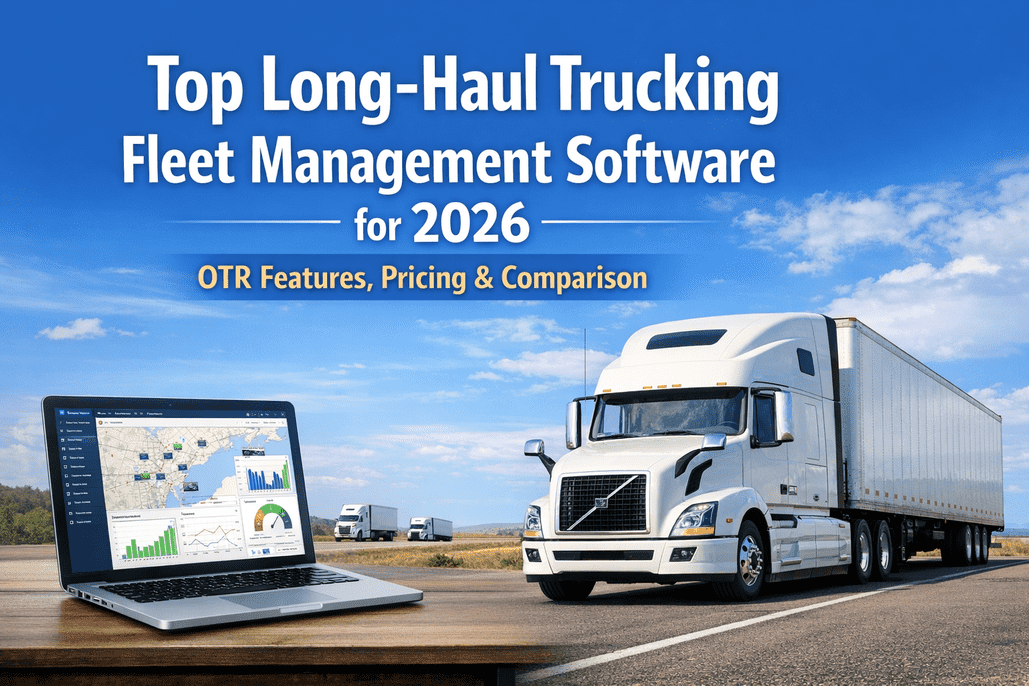
Long-haul trucking operations face a unique set of management challenges that local and regional fleets never encounter. When your trucks run 500 to 2,500 miles per load across multiple states, the software managing those operations needs to handle ELD compliance across jurisdictions, HOS optimization that maximizes legal driving hours without violations, IFTA fuel tax reporting across dozens of state lines, real-time GPS tracking through cellular dead zones, cross-country route optimization that accounts for truck restrictions, and dispatch coordination for drivers who are out for days or weeks at a time. The wrong platform costs OTR fleets $50,000 to $200,000 annually in compliance fines, fuel waste, deadhead miles, and preventable breakdowns. The right platform pays for itself within months. This guide compares the leading fleet management software options for long-haul trucking in 2026, breaks down the features that matter most for OTR operations, and helps you evaluate which solution fits your fleet size, budget, and operational priorities. Book a demo to see how FleetRabbit handles long-haul fleet operations.
Long-Haul Fleet Software Comparison: 2026 Market Landscape
The OTR fleet management market in 2026 is dominated by a handful of established players, each with distinct strengths. Understanding where each platform excels - and where it falls short - is essential for making the right investment. Here is how the leading platforms stack up across the features that matter most to long-haul operations.
See the Full Feature Comparison With Your Fleet Data
Our team will walk you through every feature in this comparison using your actual fleet profile - truck count, routes, compliance requirements, and budget - so you can make a confident decision.
Essential Features for Long-Haul Fleet Software
Not all fleet management features carry equal weight for OTR operations. A last-mile delivery fleet might prioritize proof-of-delivery and customer notifications. Long-haul carriers need a different stack entirely. Here are the capabilities that directly impact profitability, compliance, and safety for interstate trucking operations.
The FMCSA ELD mandate requires approximately 3.4 million drivers and three to four million commercial vehicles to use certified electronic logging devices. For long-haul carriers, HOS compliance is not a feature - it is the foundation. The software must automatically record driving time from the engine ECM, track the 11-hour driving limit, 14-hour on-duty window, mandatory 30-minute break, and 70-hour/8-day cycle. Violations have dropped sharply since the ELD rollout, but FMCSA continues to tighten enforcement and has begun removing non-compliant devices from the registry. Your platform must provide real-time remaining drive time visibility to both drivers and dispatchers, automatic duty-status switching, violation prediction alerts at least 30 minutes before a potential infraction, and audit-ready log exports that survive FMCSA scrutiny. ELD compliance costs exceed $500 annually per truck - but a single HOS violation can cost $1,000 to $16,000, making a reliable compliance engine the highest-ROI feature in any trucking platform.
Long-haul trucks spend days on the road across multiple states. Dispatchers need sub-second GPS updates to coordinate pickups, deliveries, and relay operations in real time. Beyond basic location dots on a map, the platform should provide truck-legal routing that accounts for bridge heights, weight restrictions, hazmat zones, and state-specific commercial vehicle regulations. Samsara updates GPS every second, Motive every 1-2 seconds, and Omnitracs every 2-5 seconds. For OTR operations, faster refresh rates mean more accurate ETAs, better load planning, and reduced driver phone calls. In 2025, Samsara also introduced satellite connectivity that maintains tracking through cellular dead zones - a significant advantage for carriers running through rural mountain, desert, and plains corridors where cell coverage is spotty. Route optimization should also factor in driver HOS remaining time, fuel stop locations with pricing, truck parking availability, and weather conditions along the planned route.
Fuel is the largest variable operating cost for long-haul trucking, typically consuming 30-40% of total operating expenses at $60,000 to $80,000 per truck annually. Effective software integrates with fuel cards (Comdata, EFS, WEX, Fleet One) to capture every transaction, calculates cost-per-mile by truck and by driver, identifies fuel theft or unauthorized purchases, and monitors idle time that burns fuel with zero productive miles. IFTA quarterly tax filing is an administrative burden unique to interstate trucking. Every state-line crossing must be recorded with mileage allocation, and fuel purchases must be matched to the states where fuel was burned. Manual IFTA tracking costs 8-12 hours per truck per quarter. Automated platforms capture GPS-based state crossings, match them with fuel card data, and generate filing-ready quarterly reports in minutes. Omnitracs has particularly strong IFTA automation that goes beyond report generation into pre-filled filing, while Samsara and Motive both provide solid automated reporting.
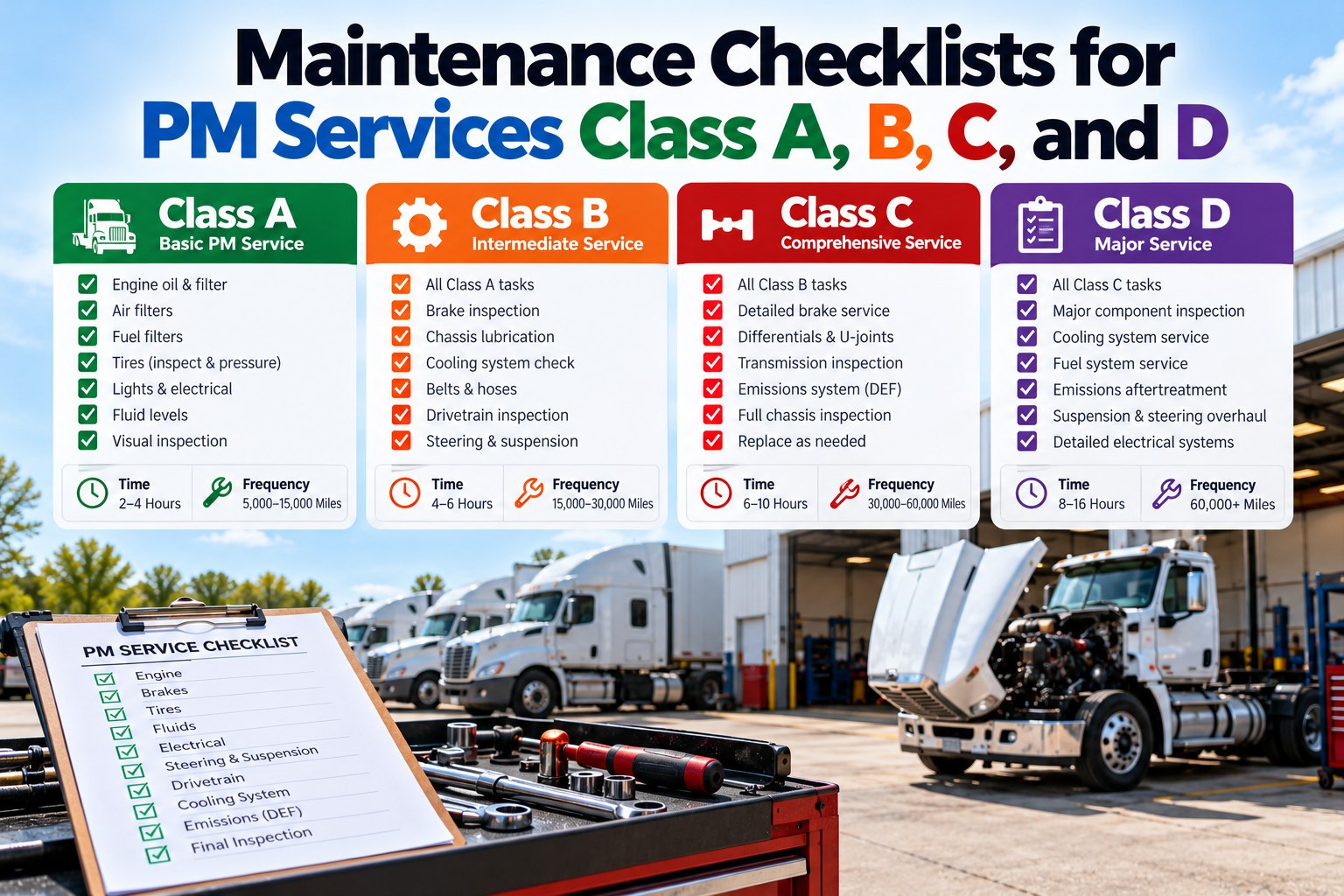
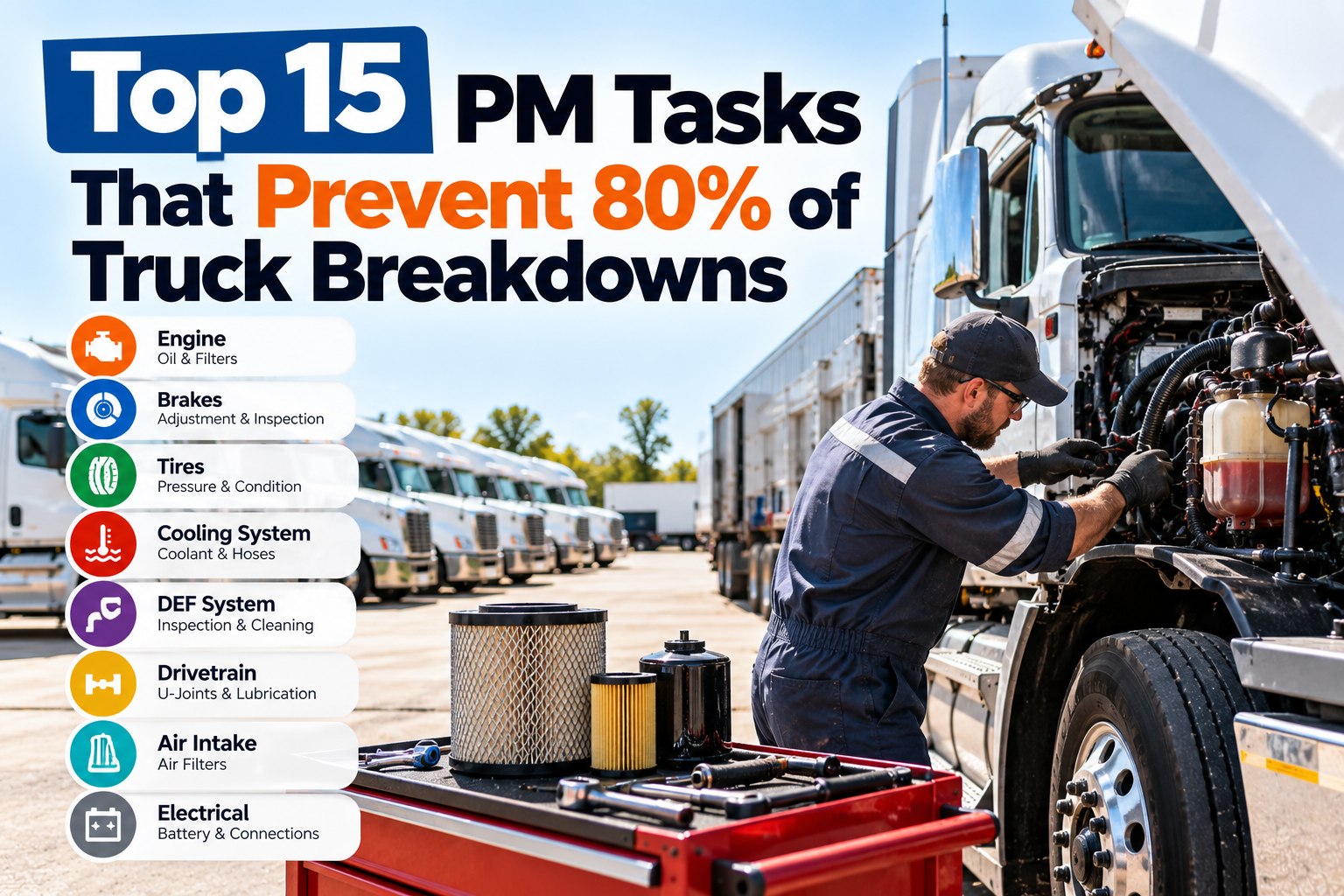
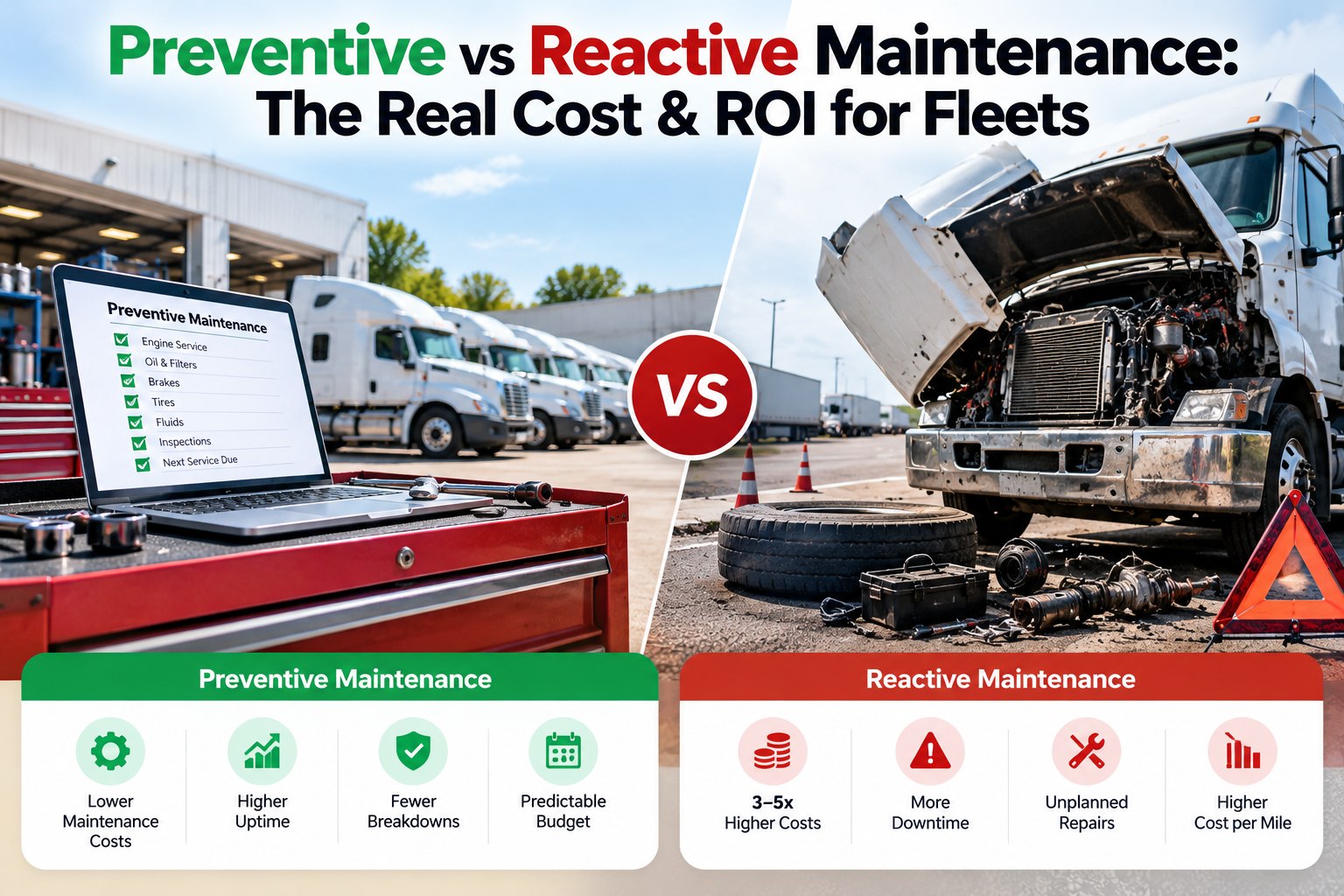
A Class 8 truck breakdown 1,500 miles from home costs 3-5 times more than a scheduled repair at your home terminal. Road service calls average $350-$600 for minor repairs and $2,000-$5,000+ for major failures, plus the driver is down for hours or days waiting for parts and service in unfamiliar territory. Preventive maintenance software must track service schedules by miles, hours, and calendar intervals, monitor engine fault codes via telematics, alert maintenance managers before a component reaches its service threshold, and integrate with a nationwide repair shop network for emergency service. Digital DVIR (Driver Vehicle Inspection Reports) is now explicitly accepted in electronic format by the FMCSA as of 2025 regulatory updates, eliminating the need for paper copies. The best platforms support photo-verified inspections where drivers photograph defects during pre-trip and post-trip inspections. FleetRabbit provides comprehensive PM scheduling, work order management, and photo-verified DVIR - areas where competitors like Samsara and Motive offer only basic alert functionality.
Speeding contributes to 18% of all fatal crashes where a truck is at fault, according to the American Trucking Associations. Long-haul drivers face particular pressure to speed when HOS clocks are running down and deliveries are tight. The fleet management platform should monitor speeding events, hard braking, rapid acceleration, and following distance - then translate that data into driver scorecards that inform coaching rather than punishment. AI-powered dash cams have become a competitive differentiator. Both Samsara and Motive offer dual-facing HD cameras that use computer vision to detect distracted driving, cell phone use, tailgating, and stop-sign violations in real time. Samsara reports that one client, Liberty Energy, achieved a 50% reduction in collisions through AI-powered in-cab alerts. For long-haul fleets where drivers are unsupervised for days at a time, camera-based safety monitoring is the closest equivalent to having a safety manager in every cab.
Pricing Landscape: What OTR Fleets Actually Pay
Fleet management software pricing in 2026 is rarely transparent. Most vendors require a sales call and custom quote, making apples-to-apples comparison difficult. Pricing varies based on fleet size, selected features, contract length, and hardware choices. Here is a general overview of pricing models across the major platforms to help you plan your evaluation.
Get a Custom Pricing Comparison for Your Fleet Size
Tell us your truck count, current software, and top priorities. We will show you exactly what FleetRabbit costs for your operation and how it compares to what you are paying now.
Choosing by Fleet Size: What Works Best
The right software depends heavily on fleet size. A 10-truck owner-operator has very different needs and budget constraints than a 500-truck enterprise carrier. Here is how to match your fleet size to the right platform approach.
Priority: Low cost, ELD compliance, basic maintenance tracking, IFTA reporting. Small carriers face disproportionate financial burdens from ELD requirements - compliance costs exceed $500 annually per truck. Avoid platforms that require 3-year contracts or expensive hardware investments. Look for monthly billing, plug-and-play setup, and included maintenance features.
Best fit: FleetRabbit (free tier, no lock-in), Motive (monthly plans from ~$25/vehicle)
Priority: Full compliance suite, dispatch optimization, fuel management, driver safety coaching, maintenance scheduling. At this size, the cost of downtime, violations, and fuel waste is significant enough to justify a more robust platform. Integration with TMS and payroll systems becomes important for eliminating manual data entry.
Best fit: FleetRabbit (comprehensive features, competitive pricing), Samsara (deep features if budget allows 3-year commitment)
Priority: Enterprise-grade analytics, multi-terminal management, API integrations with existing TMS/ERP, advanced safety programs with insurance discounts, detailed audit trails for FMCSA inspections. At enterprise scale, per-vehicle cost matters less than total capability and integration depth. Samsara and Omnitracs both offer extensive enterprise features, but FleetRabbit provides equivalent functionality at lower total cost.
Best fit: FleetRabbit (scalable, API-ready), Samsara (deepest enterprise catalog), Omnitracs (legacy compliance)
2026 Regulatory Updates Affecting Long-Haul Software
The regulatory landscape for interstate trucking continues to evolve, and your fleet management software must keep pace. Several 2025-2026 changes directly impact what your platform needs to support.
Frequently Asked Questions
The best long-haul trucking software depends on your fleet size, budget, and operational priorities. For fleets that need comprehensive maintenance management, DVIR compliance, and dispatch tools without enterprise pricing or long-term contracts, FleetRabbit offers the best value. Samsara provides the deepest overall feature catalog with satellite connectivity but requires a multi-year commitment. Motive offers strong ELD compliance with more flexible contract terms. Omnitracs excels at deep compliance and audit trail capabilities for carriers under heavy FMCSA scrutiny but typically requires multi-year contracts. All three enterprise competitors use quote-based pricing - contact their sales teams for current rates. Schedule a demo to see which features matter most for your operation.
Fleet management software for long-haul trucking typically ranges from $20 to $60+ per vehicle per month depending on the platform, feature package, and contract terms. Most enterprise providers like Samsara, Motive, and Omnitracs use quote-based pricing that varies by fleet size, features selected, and contract length. Add-ons like AI dash cams increase costs further. Hardware costs range from included (bundled with contract) to several hundred dollars for purchased devices. FleetRabbit offers a free tier with core features and paid plans that are significantly lower than enterprise competitors, with no long-term contract required. Always request current pricing directly from each vendor as rates change frequently.
Yes. The FMCSA ELD mandate requires electronic logging devices for all commercial motor vehicle drivers who are required to maintain records of duty status (RODS). This includes virtually all long-haul truck drivers operating in interstate commerce. Limited exceptions exist for drivers using paper RODS for fewer than 8 days per 30-day period, short-haul exempt drivers, drive-away/tow-away operations, and drivers of vehicles manufactured before 2000 (though this exemption is under FMCSA review for potential elimination). Non-compliance penalties range from $1,000 to $16,000 per violation, and drivers can be placed out of service during roadside inspections for ELD violations.
FleetRabbit provides comprehensive fleet management capabilities that cover the core needs of OTR operations - including ELD compliance, HOS tracking, DVIR with photo verification, preventive maintenance scheduling, work order management, dispatch tools, and IFTA reporting. Where FleetRabbit particularly outperforms Samsara and Motive is in maintenance management depth, offering full preventive maintenance programs and work order workflows that competitors provide only as basic alert features. FleetRabbit also offers significantly more flexible pricing with no long-term contracts required. For fleets that rely heavily on AI dash cameras as a primary safety tool, Samsara and Motive have more mature camera hardware ecosystems, though FleetRabbit integrates with third-party camera systems. Book a demo to compare features side-by-side with your current platform.
Several significant FMCSA regulatory changes took effect in 2025. Electronic DVIRs are now explicitly accepted without paper backup requirements. MC numbers were eliminated in favor of USDOT numbers as the universal carrier identifier. CDL holders no longer need to self-report moving violations to their state licensing agency. The Pro-Trucker Package withdrew speed limiter rulemaking and funded commercial truck parking initiatives. Two HOS pilot programs were launched to evaluate more flexible driving time options. The FMCSA also removed non-compliant ELD devices from the registry and is considering extending the ELD mandate to pre-2000 model year vehicles. Your fleet management software should already support all these changes in its compliance modules.
See Why Long-Haul Carriers Are Switching to FleetRabbit
Comprehensive ELD compliance, full maintenance management, photo-verified DVIR, dispatch tools, and IFTA reporting - all without the enterprise price tag or 3-year contract lock-in.