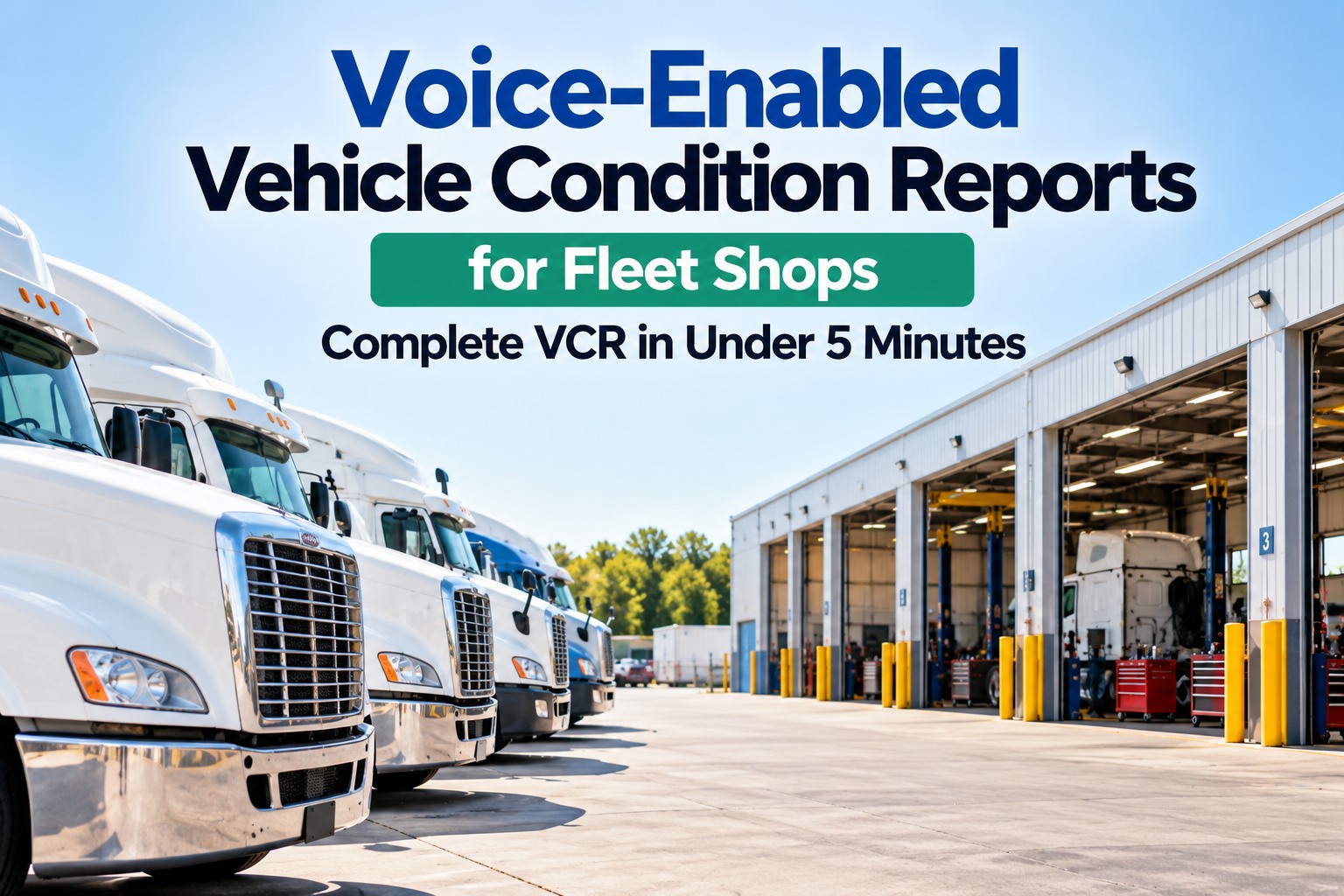
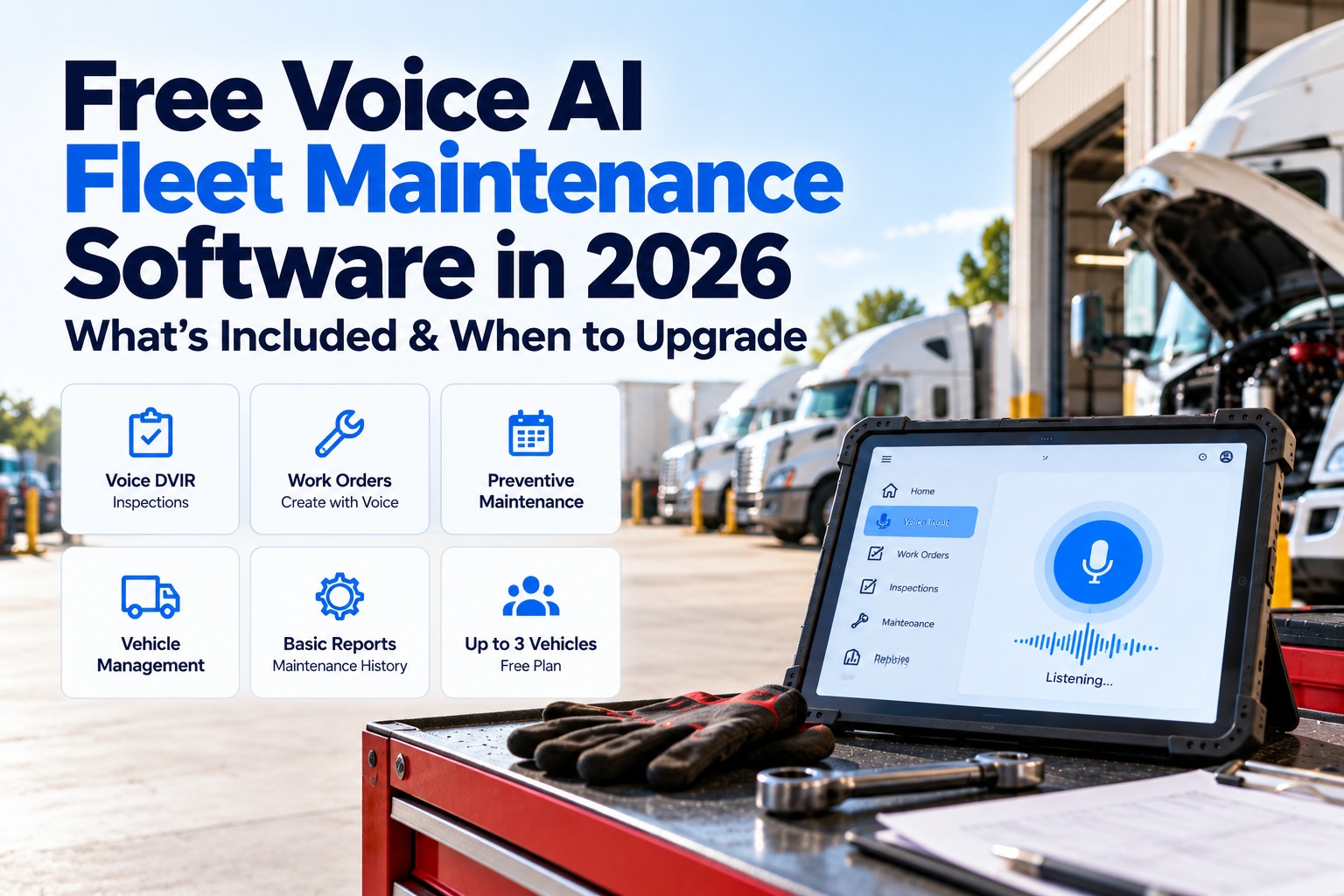
A voice-enabled vehicle condition report lets a driver or shop technician narrate a full walk-around, zone by zone, and turns the spoken description into a structured, timestamped record: what was checked, what was found and what needs repair. Done in a set order, a thorough walk-around fits in under five minutes, and nobody has to hold a clipboard. The record becomes more important now that electronic inspection reports are explicitly allowed under federal rules. Watch a walk-around get narrated into a report, or read the voice AI guide for fleet technicians.
VOICE VEHICLE CONDITION REPORTS · FLEET SHOPS AND DRIVERS
Walk Around the Truck Once, Talk the Whole Time
Eight zones, one pass, one voice. Describe what you see as you walk and let the report write itself, with defects flagged and ready to turn into work orders.
TARGET TIME FOR A FULL WALK-AROUND
4:35
eight zones, hands free
What the 2026 eDVIR Rule Changed and What It Didn't
FMCSA's electronic DVIR rule took effect March 23, 2026. It amends the driver vehicle inspection report rules in 49 CFR 396.11 and 396.13 to state explicitly that reports may be completed, signed and kept electronically. FMCSA described electronic reports as already permitted, and made it explicit to encourage adoption.
NOW EXPLICIT
- Complete DVIRs in electronic format
- Use electronic signatures
- Keep records electronically under 49 CFR 390.32
- Paper remains a valid alternative
UNCHANGED
- Report defects that affect safe operation
- Carrier certifies repairs or that none were needed
- Keep reports for three months
- Driver reviews the previous report before driving
One Walk, Eight Zones, Under Five Minutes
A fixed route keeps the report complete and the walk short. Follow the same sequence on every vehicle so nothing gets skipped. The times below are a target for a routine walk-around, not a guarantee, and a vehicle with defects will take longer.
1
Front and lights
Bumper, grille, headlights, windshield, wipers.
0:25
2
Cab and gauges
Warning lamps, horn, mirrors, seat belt, air pressure gauge.
0:35
3
Engine bay and fluids
Oil, coolant, belts, hoses, visible leaks.
0:35
4
Driver side
Steer and drive tires, wheels, lug nuts, brake chambers, fuel tank.
0:40
5
Coupling area
Fifth wheel, kingpin, air and electrical lines.
0:30
6
Trailer body and cargo
Doors, landing gear, floor, securement, damage.
0:45
7
Passenger side
Tires, wheels, brake components, lights, mirrors.
0:40
8
Rear
Taillights, reflectors, mud flaps, bumper, license plate.
0:25
Total target4:35
Narrate one of your own trucks
Pick any unit in the yard and walk it with us. You will see the report build zone by zone.
How to Say It So the Report Is Usable
Voice only helps when the description is specific. A defect needs a location, a condition and a measure, so the shop can act without walking out to look. Here is the difference zone by zone.
Tires
USABLE
"Steer left tire, tread about six thirty-seconds, no sidewall bulge, pressure good."
Brakes
USABLE
"Driver side drive axle brake chamber, pushrod stroke in range, no air leak heard."
Lights
USABLE
"Rear left taillight out, lens intact, bulb needs replacing."
Body
VAGUE
"Some damage on the trailer."
USABLE
"Trailer rear door, driver side, dent about hand-sized, paint scraped, no cargo exposure."
One Report, Three Jobs
DRIVER
Pre-trip and post-trip
A daily record that defects were found and reported, signed electronically, with anything that affects safe operation routed to the shop.
SHOP
Intake and release
A condition report when a unit enters the bay and another when it leaves, so new damage and completed repairs are both on record.
HANDOFF
Lease, rental and driver swap
A narrated walk-around at pickup and return shows who had the vehicle when a dent, leak or missing item appeared.
From Spoken Defect to Work Order
Narrate
Describe each zone as you walk.
→
Structure
Findings are sorted by zone and component.
→
Sign
The driver or technician signs electronically.
→
Route
Defects become prioritized work orders.
Make the Walk-Around Your Best Record
FleetRabbit's voice AI reads checklist items aloud, takes spoken answers and converts defects into work orders, with an electronic, timestamped DVIR record.
See how voice becomes a work order.
Hands-free narration
Electronic signature
Defects to work orders
Timestamped record
Frequently Asked Questions
What is a voice-enabled vehicle condition report?
It is a walk-around inspection report created by speaking. The driver or technician describes each zone of the vehicle, and software converts the narration into structured findings with a timestamp and signature.
Is an electronic DVIR allowed?
Yes. FMCSA's final rule, effective March 23, 2026, states explicitly that DVIRs under 49 CFR 396.11 and 396.13 can be completed, signed and retained electronically. Paper is still acceptable, and the underlying obligations did not change.
How long must DVIRs be kept?
The rules call for keeping the original report, the certification of repairs and the certification of the driver's review for three months from the date the report was prepared.
Can a walk-around really take under five minutes?
For a routine unit with no defects, a fixed eight-zone route can fit in about that time. Findings take longer to describe, and a first-time user will be slower. Time your own crew in a pilot.
What should a condition report include?
Vehicle and odometer, date and time, each zone checked, defects with location and severity, the person's signature, and any photos or notes that back up a damage finding.
Can voice replace photos?
For defect description, yes, but damage disputes often need images. Treat voice as the structured record and add photos where evidence matters, such as lease returns.
Does it work in noisy yards?
Results depend on wind, engines and microphone quality. FleetRabbit's guide reports strong accuracy in noisy testing, so pilot it in your yard and check the first reports.
Read the full voice AI guide.
Five Minutes Now, a Defensible Record Later
A narrated, signed and timestamped walk-around gives the shop what it needs to act and gives you proof of what was found. Start with three vehicles.
Free tier for up to 3 vehicles · No credit card required · Electronic, timestamped records
October 3, 2026By Sam Parker
All Blogs