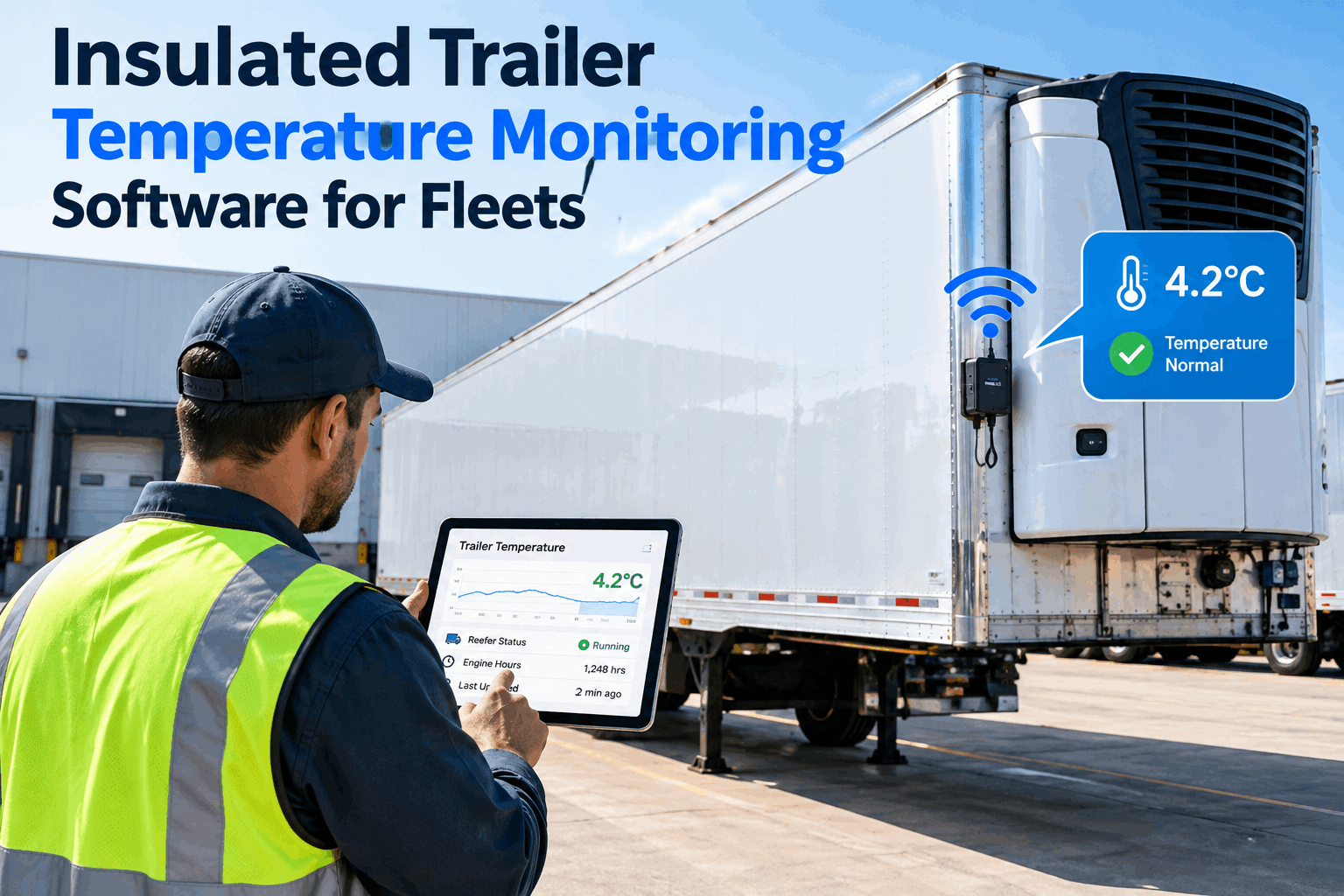
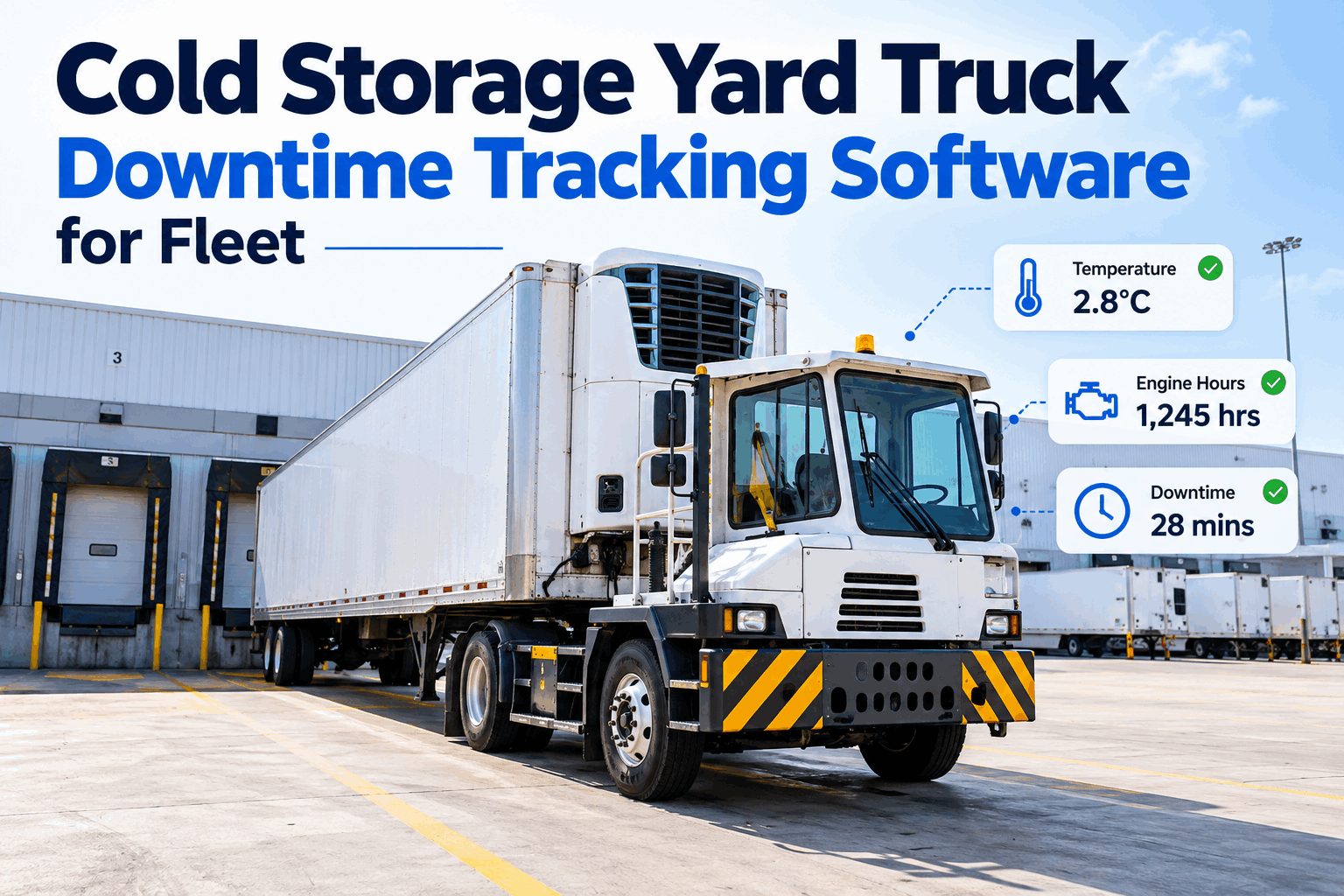
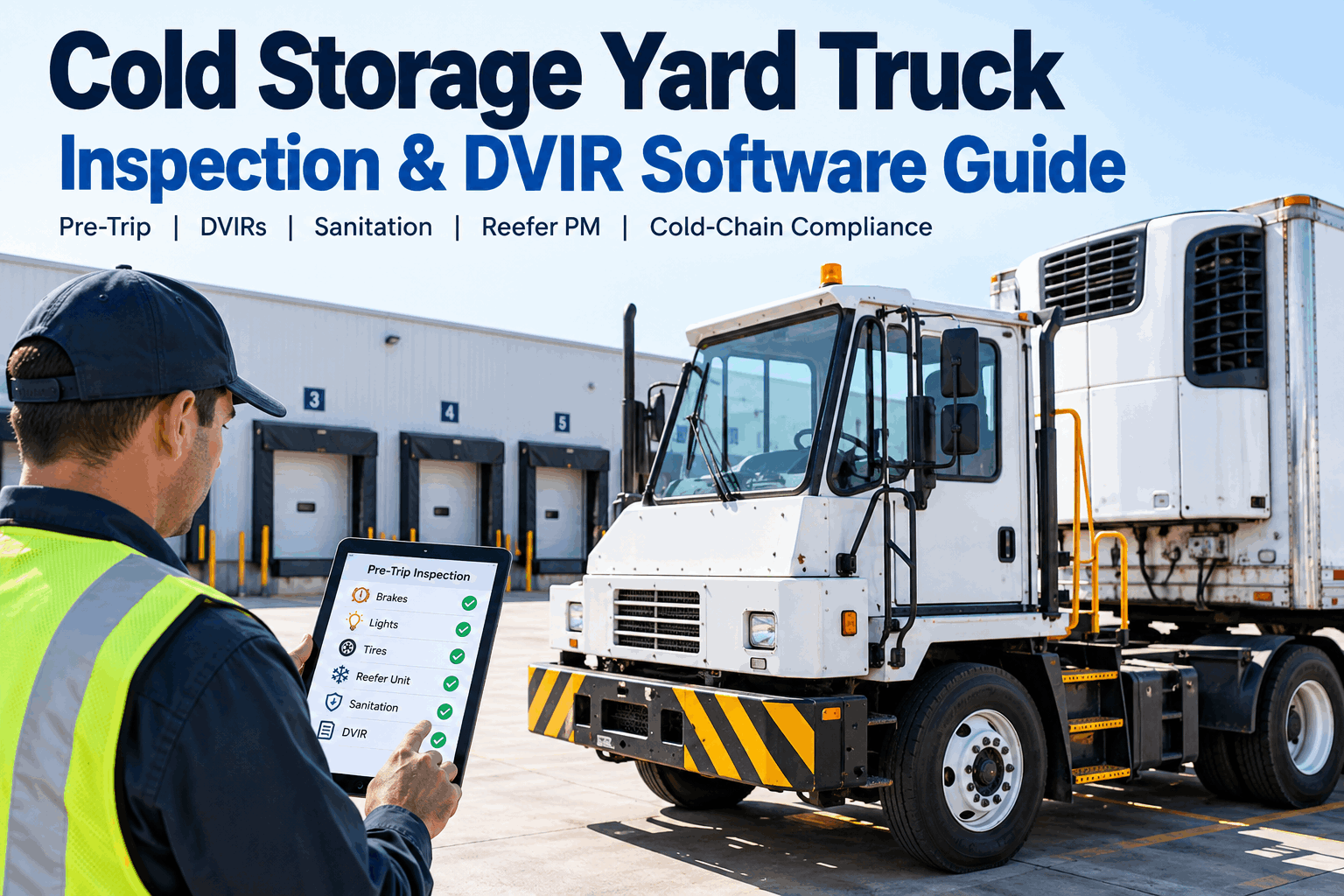
When a refrigerated truck delivering dairy products to a regional grocery chain runs 8°F above spec for three hours because the reefer unit's maintenance was overdue and nobody flagged the temperature excursion until the load arrived—the cost isn't just a rejected delivery. It's a full product recall investigation, potential FDA FSMA violation, a destroyed load worth $28,000, a lost customer account, and the liability exposure from a food safety incident that digital cold chain monitoring would have caught within minutes. Food and beverage distribution operates on tolerances that other industries don't face: a two-degree temperature deviation can render a $40,000 load unsellable, and a single FSMA documentation gap can trigger a facility-wide audit that halts operations for days. Talk to our team about building a cold chain fleet operation that protects product integrity, maintains FDA compliance, and keeps refrigerated fleets running at maximum efficiency.
Complete Guide 2026
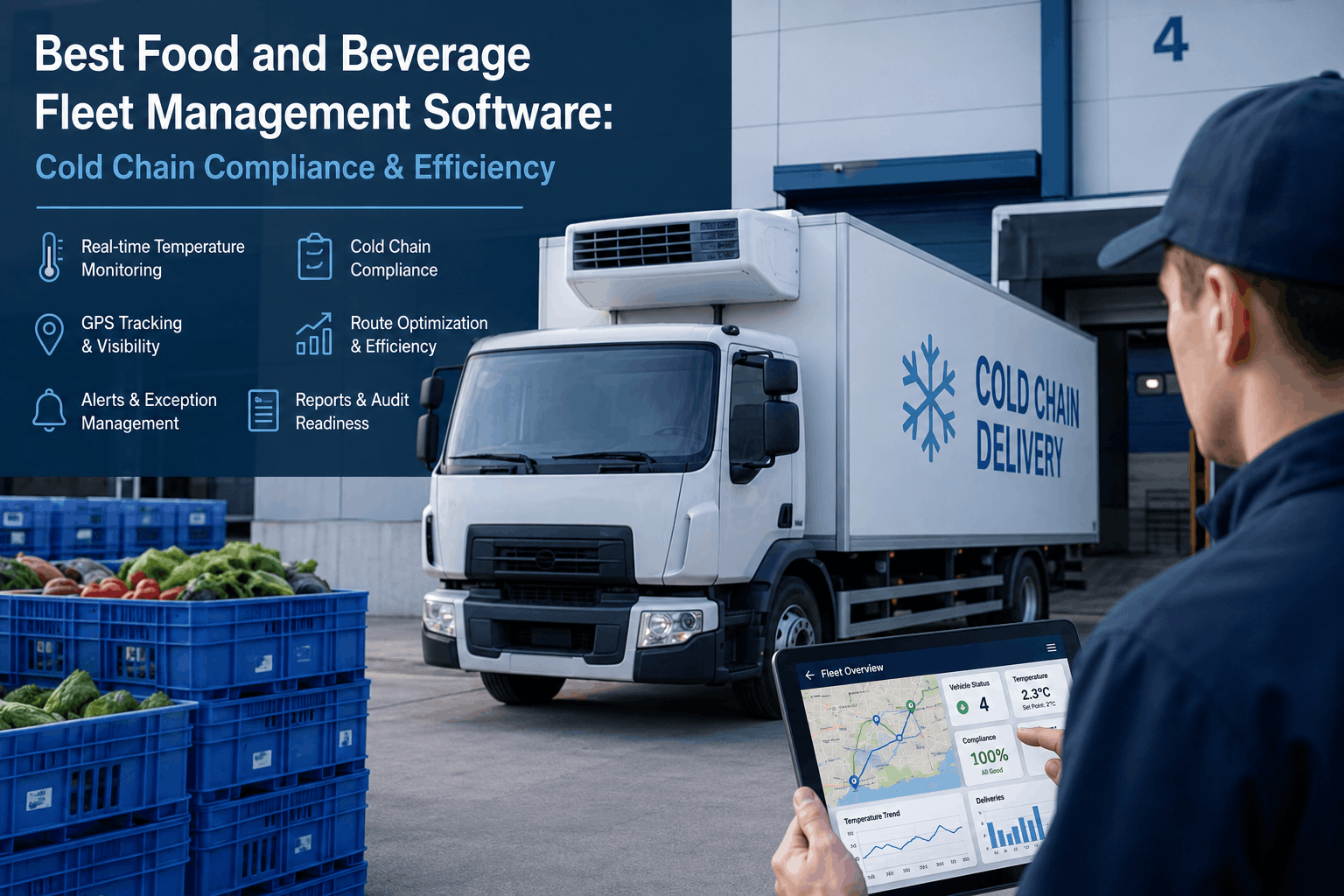
Best Food & Beverage Fleet Management Software: Cold Chain Compliance & Efficiency
Real-time temperature monitoring, FDA/FSMA compliance, digital sanitation checklists, and preventive maintenance for refrigerated fleets—everything food distribution operations need in one platform.
$28K+
Average cost of a single temperature-compromised load rejection
94%
Temperature excursions caught before delivery with real-time monitoring
FSMA §204
Traceability records required for high-risk food categories under FDA rule
62 days
Average reduction in compliance prep time with digital fleet documentation
Why Cold Chain Fleet Management Demands Specialized Software
Standard fleet management platforms were built for dry freight, construction equipment, or municipal vehicles—not for the multi-layered compliance reality of food and beverage distribution. Refrigerated fleet operations must simultaneously track temperature data at zone level across multiple compartments, maintain FDA FSMA traceability records, enforce pre-trip sanitation protocols, document reefer unit preventive maintenance, manage food-grade cleaning chemical inventories, and produce audit-ready compliance packages on demand. Generic fleet software handles none of this. The result is food distributors stitching together three or four disconnected tools—a basic GPS tracker, a spreadsheet for temperature logs, a paper sanitation checklist binder, and a separate CMMS for reefer maintenance—creating documentation gaps that multiply compliance risk every day.
Six Critical Gaps in Generic Fleet Software for Food Distribution
No Temperature Logging
78%
Generic platforms have no reefer temperature integration—excursions go undetected until load rejection or FDA audit reveals missing records.
FSMA Documentation Gaps
65%
No structured traceability records, leaving distributors exposed to §204 enforcement actions and recall response failures that cost millions.
Paper Sanitation Checklists
71%
Digital sanitation verification absent—drivers sign paper forms that disappear, creating unenforceable food safety protocols across the fleet.
Reefer PM Disconnected
58%
Refrigeration unit maintenance tracked separately from vehicle maintenance—creating missed PM intervals that cause catastrophic mid-route failures.
No Multi-Zone Visibility
44%
Multi-temperature vehicles (fresh/frozen/ambient zones) have no zone-specific monitoring—a single average reading masks critical zone failures.
Audit Package Scramble
83%
When FDA investigators arrive, distributors spend days assembling records from spreadsheets, email threads, and paper binders—compounding compliance risk.
The Cold Chain Compliance Pipeline: From Pre-Trip to Delivery Proof
Effective food and beverage fleet management follows a documented compliance pipeline with clear checkpoints at every stage of the delivery cycle. Each stage requires specific digital documentation—temperature records, sanitation sign-offs, driver certifications, and delivery confirmations—that collectively create the unbroken chain of custody FDA FSMA demands. When this pipeline is managed digitally with automated alerts and audit trails, no temperature excursion goes undetected, no sanitation step gets skipped, and every delivery produces compliance documentation automatically.
7-Stage Cold Chain Compliance Pipeline
Each stage generates required documentation, alerts, and compliance records
Digital sanitation checklist completed on mobile device. Photo evidence of clean compartments. Chemical usage logged.
T-60 min
›
Temperature logged at load-ready confirmation. Zone-specific setpoints verified. Reefer PM status checked before departure.
T-30 min
›
Product temperature at loading captured. Load manifest linked to vehicle. Compartment sealed with digital timestamp and driver sign-off.
T-0
›
Continuous temperature telemetry by zone. Automated excursion alerts at configurable thresholds. GPS + temp data correlated.
En Route
›
Alert dispatched to driver, dispatcher, and QA. Corrective action documented. Load hold decision triggered if threshold exceeded.
Real-Time
›
Delivery temperature captured at unload. Customer signature or digital POD. Load condition photographed. Receiver acknowledgment stored.
At Stop
›
Full trip temperature log archived. FSMA §204 traceability record completed. Maintenance trigger generated if reefer anomaly detected.
Auto
Digitize Your Cold Chain Compliance Pipeline End-to-End
FleetRabbit's food and beverage fleet platform tracks every delivery from pre-trip sanitation to delivery proof—with real-time temperature alerts, automated FSMA documentation, and reefer maintenance integration that eliminates compliance gaps and load rejections.
FDA FSMA Compliance Requirements & Response Standards
The FDA Food Safety Modernization Act imposes documentation requirements on food distributors that paper-based fleet operations cannot reliably satisfy. FSMA's Sanitary Transportation rule (21 CFR Part 1, Subpart O) and the Food Traceability rule (§204) create specific record-keeping obligations tied directly to fleet operations—temperature controls, sanitation procedures, previous cargo documentation, and traceability event records. A tiered compliance approach ensures that highest-risk food categories receive the most rigorous documentation while all operations maintain baseline FSMA standards.
FSMA Compliance Tiers & Documentation Standards
Frozen & Refrigerated Ready-to-Eat | §204 High-Risk Food List
Continuous temp logging (≤15 min intervals)
Full KDE traceability records
Sanitation records per trip
Previous cargo documentation
Excursion corrective action log
2-year record retention. FDA investigation response within 24 hours. Zero tolerance for temperature excursion without documented corrective action.
Fresh Produce, Dairy, Meat & Poultry | Temperature-Controlled
Trip-start and trip-end temp records
Pre-trip sanitation sign-off
Driver food safety training certification
Reefer PM documentation current
Receiver temperature at unload
Periodic in-transit monitoring required. Written procedures for temperature deviation response. All records digitally archived minimum 12 months.
Shelf-Stable, Dry Goods, Packaged Foods | Ambient Transport
Load manifest documentation
Vehicle cleanliness verification
No incompatible cargo cross-contamination
Pest control status current
Driver training on food safety basics
Standard Sanitary Transportation documentation. Annual driver training refresher. Vehicle inspection records maintained per FSMA baseline requirements.
Beverages, Non-Perishable, Exempt Categories
Trip documentation on file
Vehicle maintenance records current
Basic sanitation evidence
Driver qualifications on file
Customer delivery confirmation
Baseline FSMA documentation retained. Good Manufacturing Practice standards observed. Digital records preferable for audit defensibility even at baseline tier.
Before & After: What Specialized Fleet Software Changes for Food Distribution
The transformation from disconnected tools to an integrated food and beverage fleet management platform doesn't just improve compliance scores—it fundamentally changes the economics of cold chain distribution. When temperature excursions are caught in real time instead of at delivery, when reefer PM is scheduled before failures occur, when sanitation documentation is digital and date-stamped, and when FSMA records are generated automatically rather than assembled under audit pressure, the entire operation shifts from reactive damage control to proactive quality management.
From Reactive to Real-Time: Transform Your Cold Chain Operation
FleetRabbit's food and beverage fleet module delivers real-time temperature monitoring by zone, automated FSMA documentation, digital sanitation enforcement, reefer PM scheduling, and one-click FDA audit packages—cutting load rejection rates by 90% while achieving full cold chain compliance.
Building FDA Audit-Ready Documentation Packages
The FDA inspection is where cold chain documentation quality is tested under pressure. An investigator from FDA's Office of Regulatory Affairs can request traceability records, temperature logs, sanitation records, and driver training documentation covering the previous two years—and expect production within 24 hours under FSMA §204. Distributors who build their documentation package from the first trip of every vehicle, not in a scramble when the investigator appears, pass audits in hours rather than days. When every delivery automatically captures timestamped temperature logs, GPS-correlated excursion events, sanitation photo evidence, and a complete chain-of-custody timeline, the FDA package assembles itself. Book a Demo.
FDA Audit-Ready Documentation Package Components
01
Temperature Records
Continuous per-zone temperature logs
Pre-load, in-transit, and delivery readings
Excursion events with timestamps and GPS
02
Sanitation Documentation
Digital pre-trip sanitation checklist with photo
Chemical usage log by vehicle and date
Driver sign-off with timestamp
03
FSMA §204 Traceability
Key Data Elements (KDEs) per shipment
Critical Tracking Events (CTEs) documented
Product lot and supplier linkage records
04
Vehicle & Reefer Maintenance
Complete reefer unit PM service history
Refrigeration unit calibration records
All repair work orders by vehicle
05
Driver Qualifications
Food safety training certifications on file
PCQI or equivalent training records
Expiration tracking and renewal history
06
Excursion Response Log
Corrective actions taken per excursion event
Load hold / rejection decisions documented
Supervisor review and sign-off records
Industry Perspective: Compliance as Competitive Advantage
"
The food distributors gaining market share right now aren't just delivering product reliably—they're using their compliance infrastructure as a sales tool. When a national grocery chain asks our prospective clients to demonstrate their cold chain documentation capability, the distributors running FleetRabbit can pull up a complete temperature history, sanitation record, and FSMA traceability package for any delivery in the past two years in under ten minutes. Their competitors spend three days looking for the same records. That documentation capability—the ability to prove every load was handled correctly—is now a procurement criterion for major retail accounts. Compliance has stopped being a cost of doing business and started being a reason customers choose you over the competition. The real-time temperature monitoring alone prevents four to six load rejections per truck per year, and the predictive reefer maintenance catches compressor failures before they happen mid-route in summer heat. The ROI is immediate—most operations pay back the platform cost from the first prevented load rejection.
— Regional VP, National Temperature-Controlled Distribution Operation implementing FleetRabbit
94%
Reduction in temperature excursion-related load rejections
<4 hrs
FDA audit documentation response time vs. 3–5 day industry average
$340K
Average annual savings from prevented load rejections per 50-unit fleet
The food and beverage distributors achieving both compliance excellence and operational efficiency share a common platform: real-time temperature monitoring that catches excursions before delivery, automated FSMA documentation that eliminates audit scrambles, digital sanitation enforcement that makes food safety protocols unbypassable, and predictive reefer maintenance that prevents catastrophic mid-route failures. When these capabilities connect in a single fleet management platform, cold chain compliance transforms from the department that generates fines into the operation that wins major retail accounts. Start building your compliant cold chain operation with the temperature monitoring, FSMA documentation, and reefer maintenance tools your fleet needs.
Protect Every Load. Pass Every Audit. Prevent Every Breakdown.
FleetRabbit's food and beverage fleet platform delivers real-time cold chain monitoring, automated FDA/FSMA compliance documentation, digital sanitation checklists, reefer PM scheduling, and driver food safety certification tracking—transforming your refrigerated fleet from a compliance liability into a competitive advantage.
Frequently Asked Questions
How does FleetRabbit handle multi-zone temperature monitoring for multi-temp trailers?
Multi-temperature trailers carrying fresh, frozen, and ambient product simultaneously require zone-specific monitoring—a single average reading is meaningless when a frozen zone failure can destroy product while ambient zones read normal. FleetRabbit supports per-zone temperature sensor integration for multi-compartment vehicles, displaying live readings for each zone on a single dashboard screen. Each zone has independently configurable alert thresholds—frozen zones at -10°F to 0°F, fresh zones at 32°F to 40°F, and produce zones at their specific setpoints. When a zone deviation occurs, the alert identifies the specific zone, the duration of the excursion, the maximum temperature reached, and the GPS location where the deviation started. This zone-specific data is what FDA investigators need to assess whether product safety was compromised and which compartment's contents require evaluation.
What FSMA §204 traceability records does the platform generate automatically?
FSMA's Food Traceability Rule (§204) requires shippers and receivers of high-risk foods to maintain Key Data Elements (KDEs) for Critical Tracking Events (CTEs) including shipping, receiving, and transformation events. For fleet operations, the shipping CTE requires: the traceability lot code for each food, the quantity and unit of measure, the product description, the location description for the immediate previous source, the location description for the immediate subsequent recipient, the date of shipping, and the reference document type and number. FleetRabbit automatically captures and stores the shipping CTE documentation by linking load manifests to vehicle dispatch records, delivery confirmations, and temperature logs—generating a complete §204 record for each shipment that can be produced to FDA investigators within 24 hours as required. The platform also maintains the 2-year record retention period mandated by the rule.
How does the platform prevent reefer unit failures before they cause mid-route breakdowns?
Refrigeration unit failures mid-route are the most catastrophic event in cold chain distribution—a compressor failure in summer heat can destroy an entire load within two hours. FleetRabbit's predictive maintenance for reefer units combines hour-meter based PM scheduling (reefer units typically require service every 500-1,000 operating hours, separate from vehicle mileage), temperature performance trending (declining cooling efficiency is an early failure indicator that shows up in temperature data weeks before mechanical failure), fault code monitoring from telematics-connected reefer units, and fuel consumption pattern analysis for diesel-powered refrigeration units. When the system detects any of these early warning indicators, it generates a maintenance work order with priority flagging—scheduling the repair during planned downtime rather than waiting for a roadside breakdown. Most reefer compressor failures are preceded by detectable performance degradation over 2–4 weeks that the platform's analytics surface for maintenance teams.
How are digital sanitation checklists enforced to prevent drivers from skipping steps?
Paper sanitation checklists are unenforceable—a driver can sign a form without performing any of the required steps, and there's no way to detect or prove non-compliance until a contamination event occurs. FleetRabbit enforces digital sanitation through several mechanisms: step-by-step mobile checklists that require completion of each item before proceeding to the next; mandatory photo capture at specified checklist points (interior compartment photos before and after cleaning); GPS verification that the vehicle was at the depot or cleaning facility during the sanitation window; time-stamped completion records that distinguish between a properly paced sanitation procedure (30-45 minutes) and a skip-through (under 5 minutes); and work order blocking that prevents vehicle dispatch until the sanitation checklist is fully completed and approved. For vehicles requiring temperature pre-conditioning, the platform enforces the sequence: sanitation complete → pre-cool confirmation → load authorization → dispatch—making compliant behavior the path of least resistance.
What happens when the platform detects a temperature excursion—what's the response workflow?
When a temperature sensor reading crosses the configured alert threshold, the platform triggers a tiered response workflow: an immediate push notification is sent to the driver with the specific zone, current temperature, and setpoint; simultaneously, the dispatcher and QA manager receive an alert with the vehicle's GPS location, excursion duration, and recommended action options (driver correction attempt, route diversion to service facility, or load hold pending QA decision). The driver is prompted to document corrective action attempted (door check, setpoint adjustment, reefer unit reset) and confirm with a timestamped entry. If the excursion continues beyond a configurable secondary threshold or duration, an escalation alert fires to senior QA personnel with a load hold recommendation. All of this—the excursion event, corrective action attempts, QA decisions, and final resolution—is automatically appended to the trip's FSMA documentation record. The entire workflow is preserved as evidence demonstrating that your operation responded appropriately to the excursion, which is critical for both customer dispute resolution and FDA investigation defense.
May 20, 2026
By Taylor
All Posts