Most frozen food has a single line it can't cross. Ice cream has something trickier: it can stay under that line the entire trip and still arrive damaged, because texture doesn't fail at a threshold, it fails from repetition. Every door opening on a multi-stop route lets in a little warmth, the product recovers, and the cycle repeats at the next stop. That repeated small swing, not a single dramatic excursion, is usually what turns a perfect pint into a grainy one. See how FleetRabbit helps frozen fleets manage that cumulative risk.
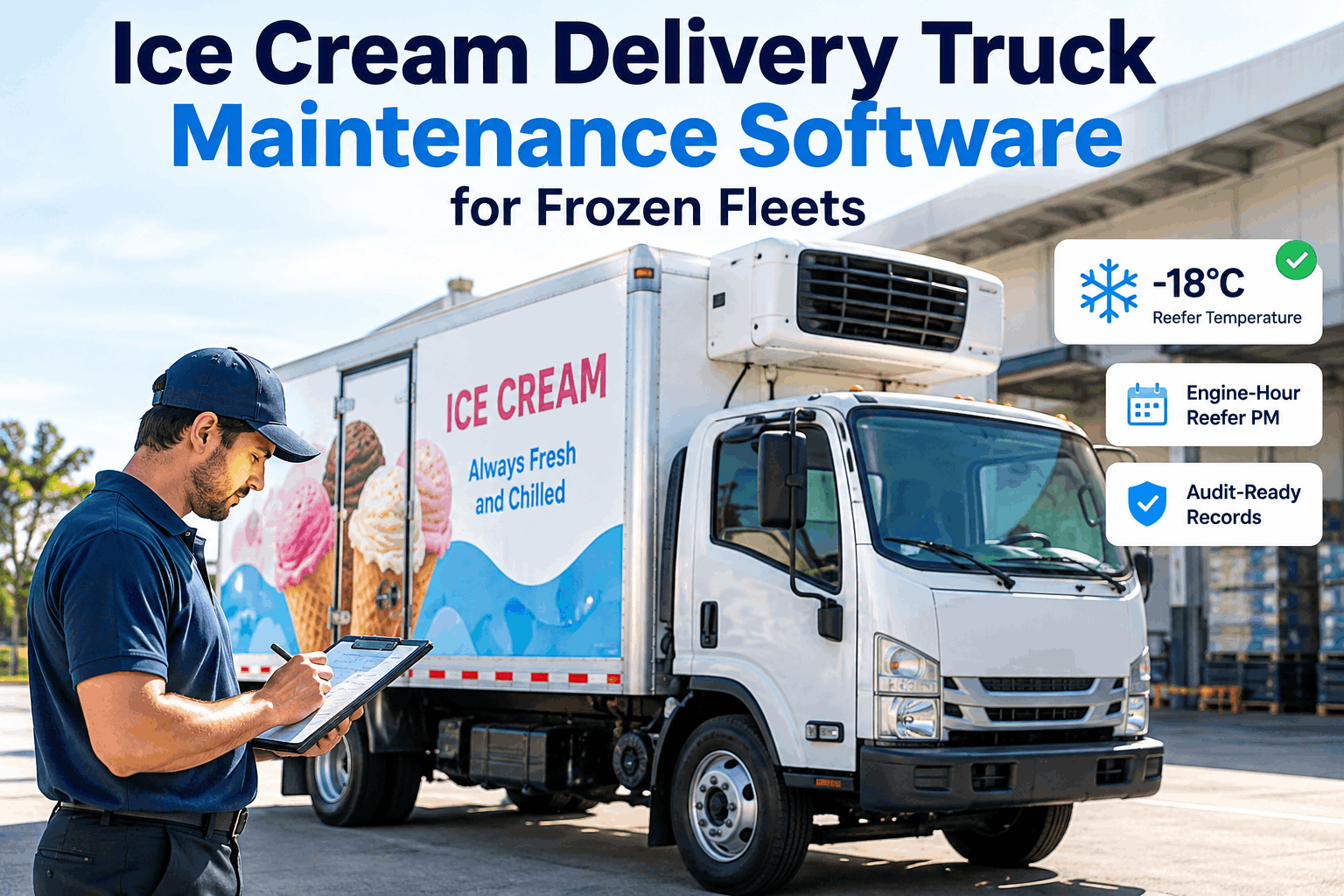
Ice Cream Delivery Truck Maintenance Software for a Product That Damages Without Ever Thawing
Engine-hour reefer PM built for deep-freeze equipment, temperature monitoring that watches the pattern, and audit-ready records for every route.
Heat Shock: The Damage That Isn't an Excursion
In cold-chain terms, an excursion usually means crossing a defined limit. Ice cream can suffer real quality damage without ever technically crossing one. Each time the product warms slightly and refreezes, whether from a door opening, a slow-recovering reefer, or a stop that ran a little long, ice crystals inside the product grow a bit larger. One cycle does almost nothing. A dozen of them across a multi-stop route add up to a texture that's noticeably grainier by the time it reaches the store shelf, even if every single reading stayed within range.
A Multi-Stop Route Is a Series of Small Tests
The bars don't reset to zero between stops the way a single-excursion model would suggest. Each cycle adds a little to the cumulative total, which is exactly why a reefer that recovers quickly after every door opening matters so much more here than on a load that only needs to survive one temperature check at delivery.
A reefer that recovers fast keeps every stop from adding up
Engine-hour PM built around deep-freeze equipment working its hardest. Free for your first three vehicles.
Deep-Freeze Reefers Run Harder Than Standard Chilled Units
Holding a trailer in the high thirties and holding one well below zero are very different jobs for the same category of equipment. A deep-freeze reefer works against a much larger gap between the outside temperature and its target, which means more run time, more cycling, and more wear relative to a standard chilled unit covering a similar route. Engine hours, not miles, are the number that actually reflects how hard that equipment has been working.
Illustrative comparison. Actual load depends on ambient temperature, route and equipment condition.
What Should Trigger Each Service Item
| Task | Best trigger |
|---|---|
| Reefer oil and filters | Engine hours |
| Compressor and electrical | Engine hours |
| Door seals and latches | Calendar, checked daily |
| Setpoint accuracy and recovery time | Calendar, tested directly |
| Insulation and interior condition | Calendar + visual |
What the Record Should Show
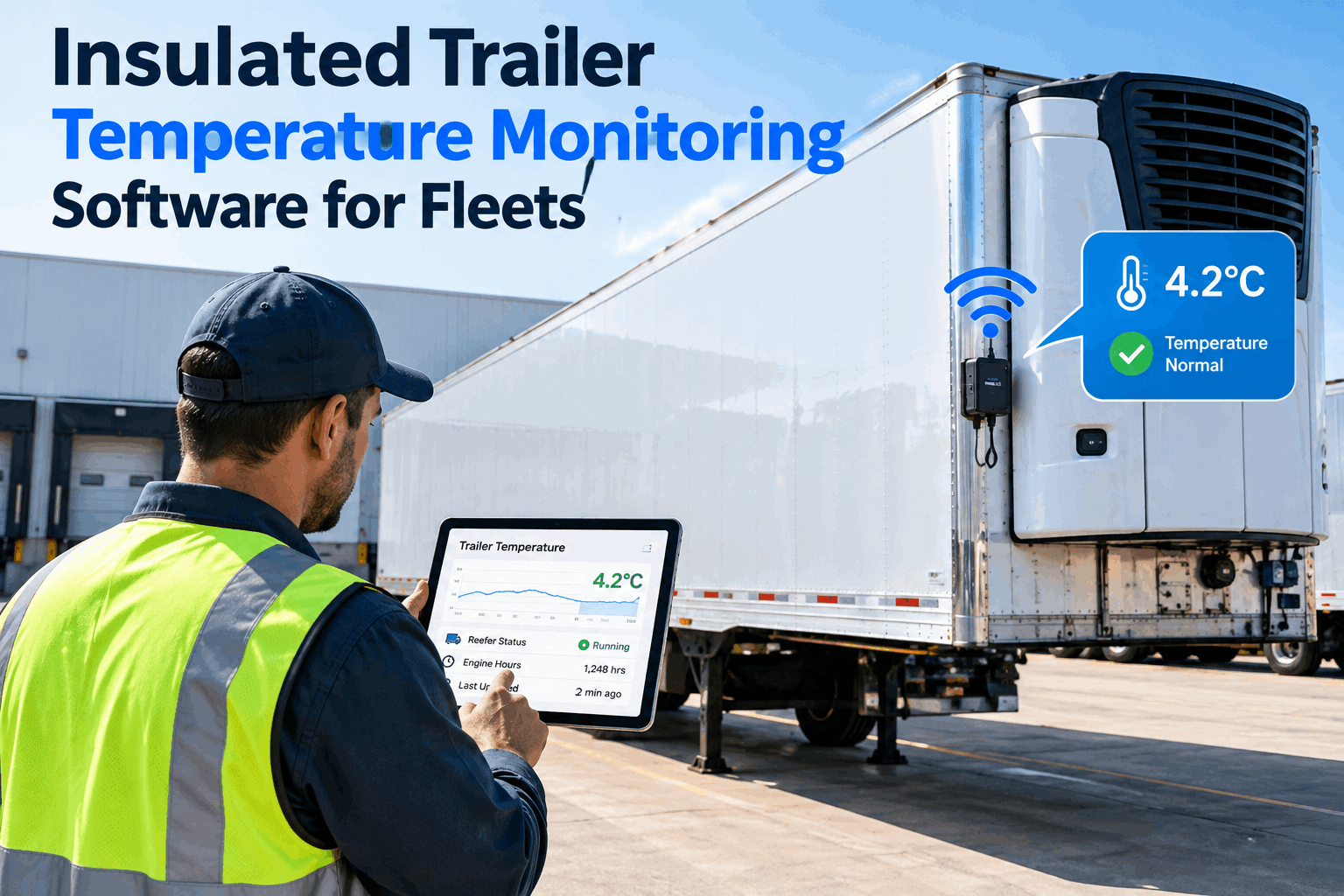
Because the risk here is cumulative rather than a single event, the temperature record matters as much as any individual reading. A full trip log makes it possible to see the pattern, whether recovery times are creeping up over several stops, rather than only confirming that the load never technically crossed a line.
Temperature monitoring is available where your telematics or sensor provider supplies the data. FSMA's sanitary transportation rule touches on temperature control during transport; confirm exact requirements with your compliance team.
What FleetRabbit Gives an Ice Cream Delivery Fleet
Frequently Asked Questions
Yes. Repeated small warming-and-refreezing cycles, common on multi-stop routes, gradually grow ice crystals and degrade texture even when every reading stays within range.
A unit that returns to setpoint quickly after each door opening limits how much each stop adds to the cumulative exposure. A slow-recovering unit lets that exposure build up across the route.
They work against a much larger temperature gap, which means more continuous run time and more wear for a similar route, so engine-hour tracking matters even more here.
Requirements vary by product and manufacturer specification. Confirm your exact thresholds with your supplier and compliance team.
Yes. Start free with three vehicles and scale up as your fleet grows.
Protect the Texture, Not Just the Temperature
Engine-hour reefer PM, full-route temperature logging and audit-ready records in one place. Free for your first three vehicles.