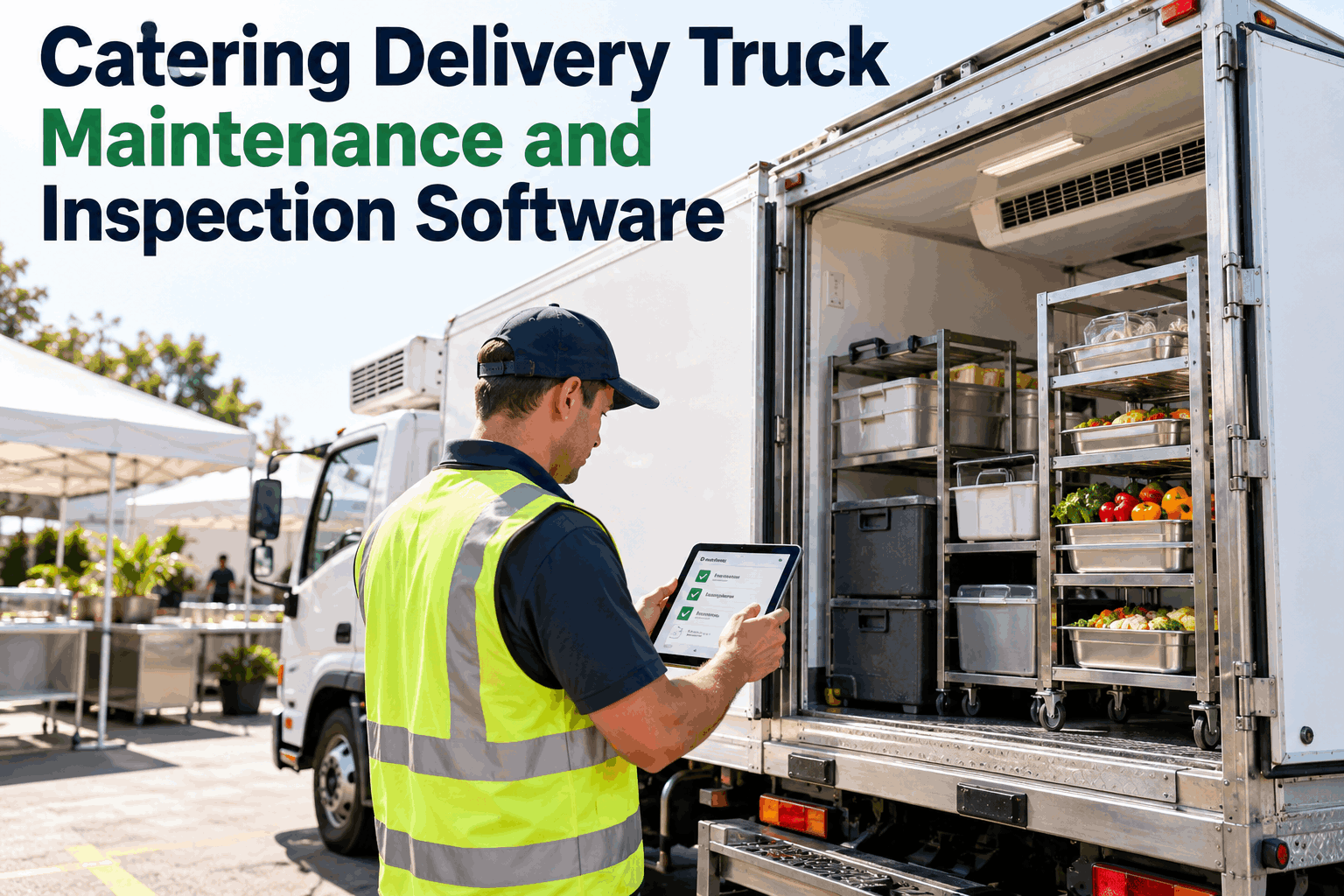
A catering truck runs two opposite jobs at once, keeping some food hot and some food cold in the same vehicle, and it does it against a deadline that doesn't bend. A grocery delivery that's twenty minutes late is an inconvenience. A catering truck that's twenty minutes late is a wedding reception standing around an empty buffet table. Almost nothing else in a fleet has that combination of dual temperature zones and zero schedule slack. See how FleetRabbit keeps both halves of that truck ready.
Catering Delivery Truck Maintenance and Inspection Software for a Vehicle Running Two Jobs at Once
Track hot-holding and cold-holding equipment separately, run pre-trip and sanitation inspections built for ready-to-eat food, and keep every truck ready before the clock starts.
Two Temperature Zones, Two Separate Maintenance Stories
A standard reefer trailer has one job: keep everything cold. A catering truck often has to hold hot food hot and cold food cold in the same run, which means it's really carrying two pieces of equipment with opposite jobs, each with its own failure mode and its own PM needs. Treating the truck as a single reefer asset misses half of what actually needs to be maintained.
Hot-holding side
- Warming units and heating elements
- Chafing dish racks and fuel systems
- Insulated compartment integrity
Cold-holding side
- Reefer unit and compressor
- Door seals and cold compartment integrity
- Setpoint accuracy testing
Why Catering Has Zero Slack
Most delivery operations have some cushion built in, a window instead of an exact minute, a next-day fix if something goes wrong today. Catering doesn't work that way. The event starts when it starts, whether or not the truck is ready, and there's no version of "we'll get it there eventually" that saves a reception, a corporate lunch, or a wedding. That makes a breakdown on a catering route a fundamentally higher-stakes event than the same breakdown almost anywhere else in a fleet.
Give a zero-slack schedule zero surprises
PM and inspections built to catch a problem long before the truck is due at an event. Free for your first three vehicles.
Two Inspections, Higher Stakes
Catering food is very often ready to eat with no further cooking step between the truck and the guest, which raises the bar on sanitation well beyond what a raw-ingredient delivery needs. A mechanical pre-trip check and a sanitation check are both essential, and neither one substitutes for the other.
What's Actually on Board
What Should Trigger Each Service Item
| Item | Best trigger |
|---|---|
| Reefer PM (cold side) | Engine hours |
| Warming unit service (hot side) | Engine hours or calendar |
| Generator service | Engine hours |
| Sanitation inspection | Before every load |
| Chassis (brakes, tires, oil) | Miles or engine hours |
What FleetRabbit Gives a Catering Fleet
Frequently Asked Questions
It's carrying two systems with opposite jobs, hot-holding and cold-holding equipment, each with its own components and failure points, so combining them into one generic schedule misses half the picture.
Most deliveries have some recovery window if something goes wrong. A catering event has a fixed start time with no do-over, so the same delay carries much bigger consequences.
Catering food is very often ready to eat with no further cooking step, which raises the bar on cleanliness compared to food that will be prepared again before serving.
Warming units, an onboard generator if equipped, and chafing or serving equipment all have their own service needs alongside the cold-holding system.
Yes. Start free with three vehicles and scale up as your fleet grows.
Ready for the Event, Not Just the Route
Dual-system PM, two-step inspections and audit-ready records for a truck that has to work twice as hard, on time, every time.