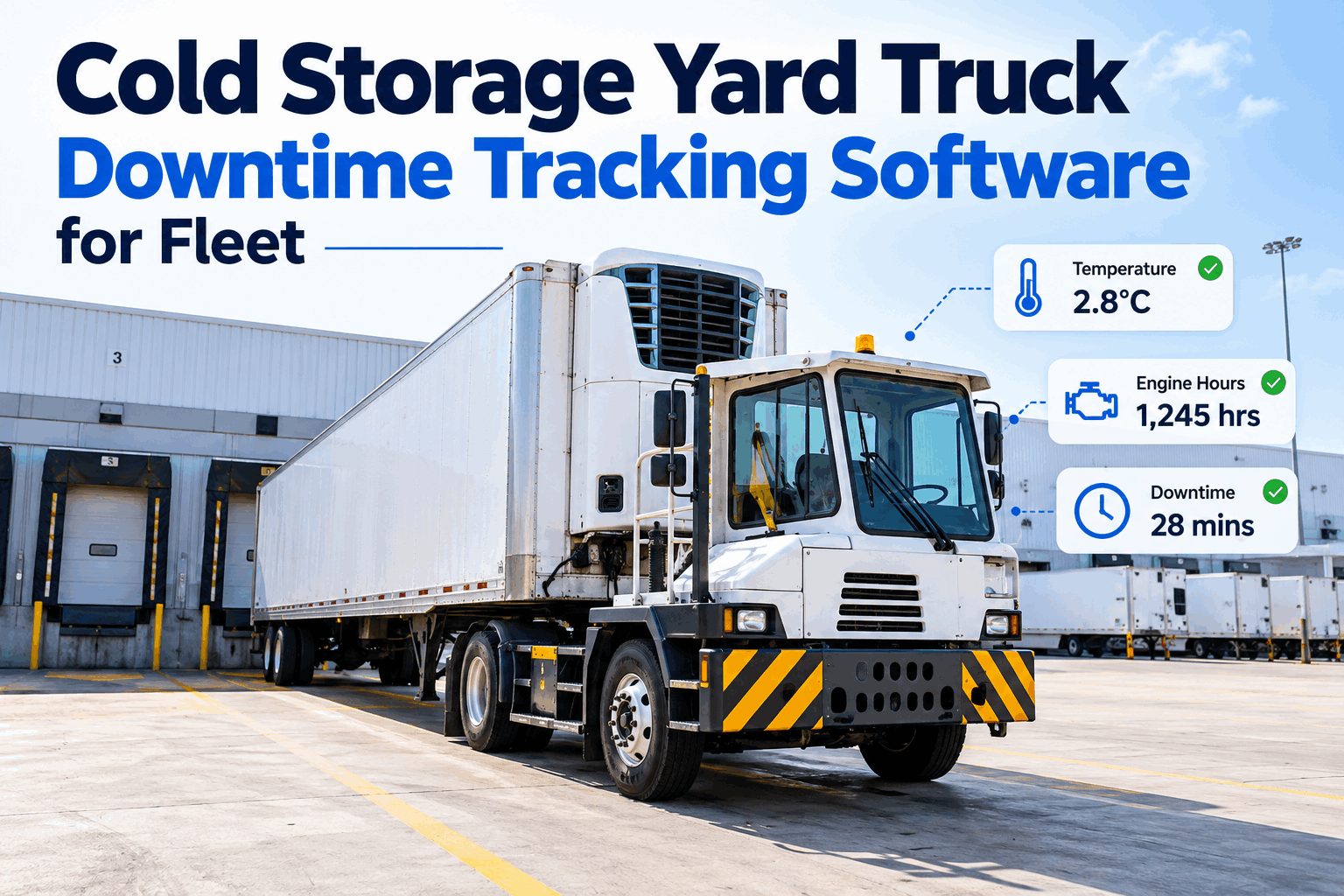
Everyone tracks vehicle downtime as a maintenance metric. In a cold storage yard, it's also a food safety metric, because a trailer sitting disconnected while it waits for a working yard truck isn't just idle, it's a reefer that may not be running. Downtime here doesn't just cost repair time. It can cost the temperature integrity of whatever is sitting inside that trailer. See how FleetRabbit connects downtime tracking to the excursions it actually causes.
Cold Storage Yard Truck Downtime Tracking Software That Connects Repairs to Excursions
See downtime by cause, track how long a trailer waits without power, and catch the pattern before a repair delay becomes a spoiled load.
The Chain Most Fleets Don't Track End to End
A downed yard truck doesn't just sit there quietly. It stops trailers from moving, and a trailer that can't move can also be a trailer that can't get to a power connection or an active reefer setup. Most fleets track the repair timeline and the temperature record as two completely separate things, which means the connection between them, a delayed fix causing a real excursion, often only gets noticed after the fact, if at all.
Downtime Isn't One Problem, It's Several
Lumping every downtime event into a single number hides the pattern. A yard truck that's frequently down for fifth-wheel issues needs a different fix than one that keeps coming back for electrical faults, and neither gets solved by a total downtime figure with no breakdown behind it.
Illustrative breakdown. Your own cause distribution comes from your fleet's actual work order history.
See downtime by cause, not just as one big number
Know what's actually breaking, and how often, before it becomes a pattern. Free for your first three vehicles.
Mean Time to Repair Is the Number That Actually Predicts Risk
Mean time to repair, or MTTR, measures how long it typically takes from a defect being reported to the vehicle being back in service. A shorter MTTR means less time any given trailer spends stuck waiting on a broken yard truck, which directly narrows the window where a temperature risk can develop. Lowering MTTR is less about working faster under pressure and more about catching problems through routine inspection before they turn into a full breakdown in the first place.
Illustrative comparison. Actual MTTR depends on parts availability, staffing and how issues are typically caught.
A Live View of the Yard
The clearest way to catch a developing problem is to see the whole yard at once: which trucks are running, which trailers are connected to power, and which ones have been sitting disconnected longer than they should be.
What Downtime Actually Costs, Beyond the Repair Bill
| Cost driver | Why it adds up |
|---|---|
| Repair itself | Parts and labor for the yard truck |
| Trailer detention | A stuck trailer may sit past its scheduled window |
| Temperature risk | Disconnected time without power is time without cooling |
| Product loss | A real excursion can mean a rejected or discarded load |
| Schedule ripple | One stuck trailer can back up the rest of the dock schedule |
One Number for Every Facility
Operations running more than one cold storage yard often can't compare them fairly without a shared way of measuring downtime. A common metric, tracked the same way at every location, turns "yard B seems to have more problems" into an actual, provable comparison instead of a hunch.
What FleetRabbit Gives a Cold Storage Yard Fleet
Frequently Asked Questions
A trailer that can't be moved may also be a trailer that can't reach a power connection, which means the time it spends stuck waiting is time without active cooling.
Mean time to repair measures how long it takes to get a vehicle back in service after a defect is reported. A shorter MTTR narrows the window where a stuck trailer is at temperature risk.
A single downtime figure hides the pattern. Knowing that fifth-wheel issues are the biggest driver, for example, points to a specific fix rather than a vague sense that things break too often.
Yes. Tracking the same metrics the same way at every facility makes a fair comparison possible instead of relying on impressions.
Yes. Start free with three vehicles and scale up as your operation grows.
Close the Gap Between a Repair Delay and a Real Loss
Downtime tracked by cause, MTTR you can actually improve, and a live view of every truck and trailer in the yard.