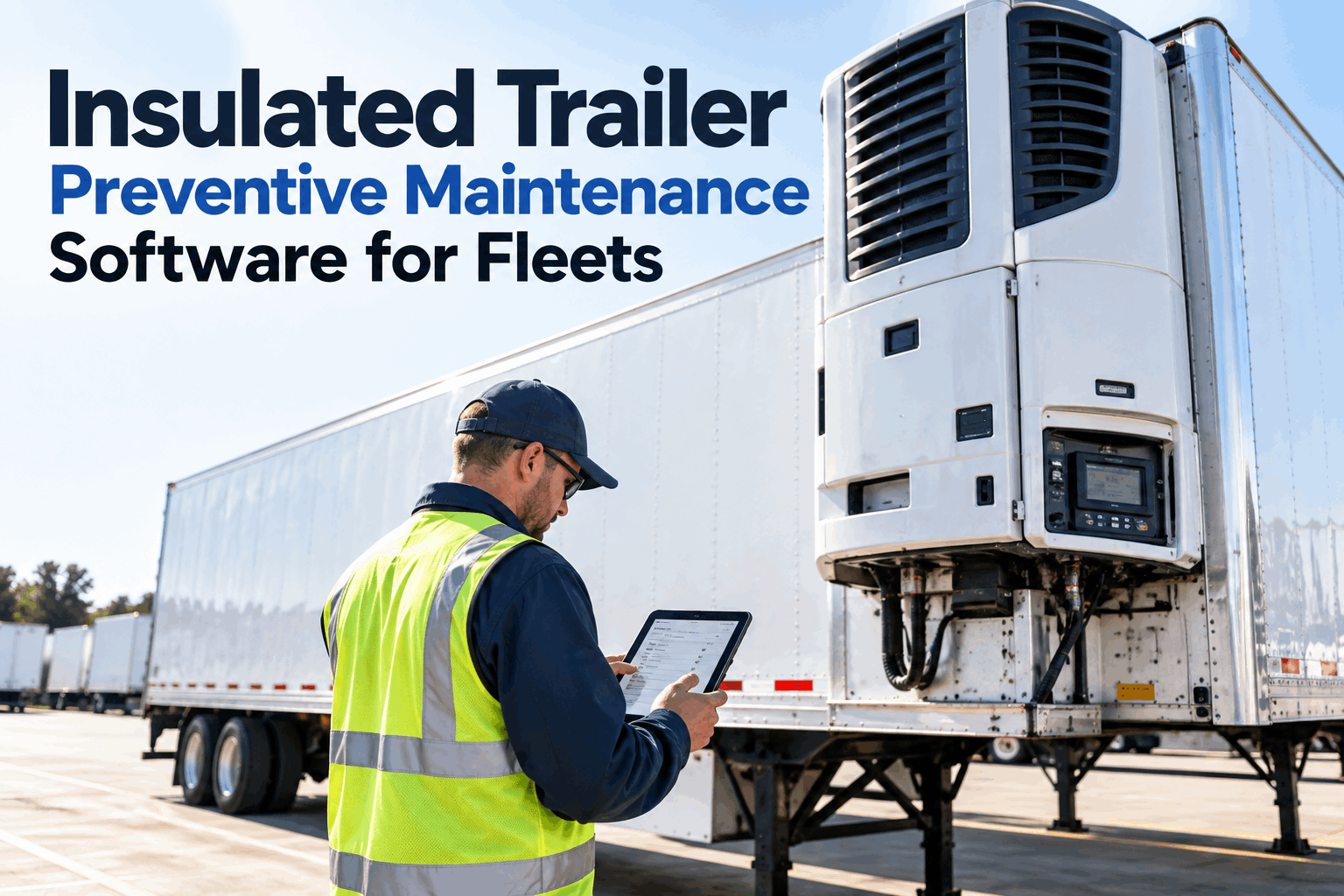
Ask a shop to name the maintenance items on an insulated trailer and you'll likely hear about the supplemental cooling unit, if there is one, and not much else. That's the trap. The insulation itself, the panels, the seals, the floor, is a maintenance item too, it just doesn't have moving parts that squeal or a compressor that stops running to announce a problem. It ages quietly, and a PM plan that only watches the mechanical piece misses the part of the trailer actually doing most of the work. See how FleetRabbit schedules both.
Insulated Trailer Preventive Maintenance Software for the Parts That Don't Make Noise
Schedule structural inspections for panels and seals alongside engine-hour PM for any supplemental unit, so both halves of the trailer get maintained, not just the one with moving parts.
Two PM Tracks, Not One
An insulated trailer really has two separate maintenance stories running at once, and they don't follow the same clock. Confusing them, or worse, only tracking one, is how a fleet ends up thinking a trailer is well maintained because its supplemental unit checks out fine, while the insulation itself has been quietly losing effectiveness for a year.
Structural track
Calendar / visual inspection- Panel condition and dents
- Door seals and gaskets
- Floor and wall integrity
- Signs of moisture intrusion
Supplemental unit track
Engine hours- Oil and filters, if equipped
- Electrical and compressor checks
- Belts and connections
- Setpoint accuracy testing
The Low-Burden Trap
An insulated trailer has far fewer moving parts than a full active reefer, and that's genuinely a maintenance advantage. But it creates a real risk too: a trailer that rarely needs a mechanical repair starts to feel low-maintenance overall, and structural PM quietly falls off the schedule because nothing about it feels urgent. The absence of noise isn't the absence of a maintenance need, it just means the need doesn't announce itself the way a failing compressor would.
Give structural PM the same schedule as anything mechanical
Calendar-based panel and seal inspections, tracked with the same discipline as engine-hour PM. Free for your first three vehicles.
Reseal Before It Fails, Not After
Door seals and gaskets have a working life, and waiting until one visibly fails means the trailer already spent time underperforming before anyone noticed. Proactive replacement on a set interval, rather than a reactive one triggered by a complaint or a temperature problem, keeps the insulation system performing the way it was designed to rather than limping along on a degraded seal.
Illustrative concept. Set your own reseal interval from your trailer manufacturer's guidance and your own wear history.
What Should Trigger Each Item
| Item | Best trigger |
|---|---|
| Panel and wall inspection | Calendar |
| Door seals and gaskets | Calendar, proactive replacement |
| Floor integrity | Calendar + visual check |
| Supplemental unit service | Engine hours |
| Setpoint accuracy test | Calendar, paired with unit service |
| Annual DOT inspection (trailer) | Calendar, regulatory |
One Combined Record, Not Two Half Pictures
A structural inspection log and a supplemental unit's service history tell very different stories on their own. Put together, they answer the question that actually matters: is this trailer, as a whole system, still performing the way it should.
What FleetRabbit Gives an Insulated Trailer Fleet
Frequently Asked Questions
Yes. Panels, seals and the floor all age and lose effectiveness over time, separate from whatever supplemental cooling equipment is on board.
They don't fail with an obvious noise or breakdown the way mechanical parts do, so it's easy to assume a trailer is fine simply because nothing has broken.
Proactively, on a set interval, tends to work better. Waiting for a visible failure usually means the trailer already underperformed for a while before anyone noticed.
The supplemental unit is tracked by engine hours, since its wear follows usage. Structural items are tracked by calendar and visual inspection instead.
Yes. Start free with three vehicles and scale up as your fleet grows.
Maintain the Whole Trailer, Not Just the Loud Half
Structural PM and supplemental unit PM, tracked together, so nothing gets assumed fine just because it's quiet.